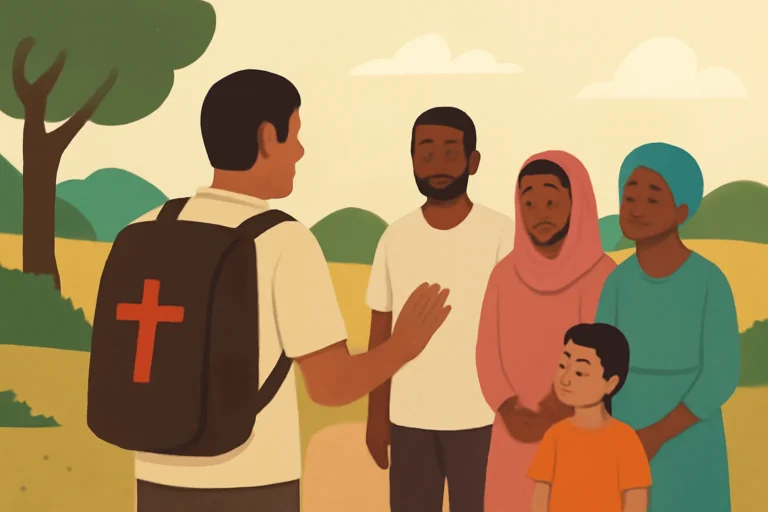
Missionary Movement: History, Global Impact, and Modern Outreach
The missionary movement refers to organized efforts across centuries to share beliefs, values, and resources beyond one’s own community. While the term often evokes Christian campaigns, the broader idea encompasses a spectrum of religious and humanitarian outreach, intercultural encounter, and educational philanthropy that seeks to address human needs while offering spiritual or moral perspectives. This article surveys the long arc of the missions tradition, charts its historical roots, examines its broad global impact, and analyzes contemporary forms of outreach that rely on new technologies, partnerships, and evolving ethical frameworks. By tracing the paths of missionaries, missiologists, and mission-based organizations, we gain insight into how faith-driven movements have shaped societies, institutions, and cultures around the world.
Historical Trajectories: From Ancient Pathways to Global Networks
To understand the history of missions, one must move beyond a single era and recognize multiple waves of cross-cultural exchange. The story unfolds along a spectrum that includes ancient precedents, medieval networks, the early modern expansion of European churches, and the long 19th and 20th centuries when organized evangelism and welfare work connected distant peoples. The following sections offer a compact timeline with core motifs and milestones.
Early Precedents and Cross-Cultural Exchange
Religious outreach in antiquity: In various civilizations, there were intentional efforts to share beliefs with neighboring peoples, often along trade routes or imperial roads. While the term “missionary” is usually used in Christian contexts, comparable movements occurred within Hinduism, Buddhism, Islam, and other traditions, each with its own methods of teaching, translation, and hospitality.
Migration and pilgrimage: Seasonal migrations, mercantile diasporas, and pilgrimage circuits enabled spiritual ideas to travel. Traders and scholars carried manuscripts, oral teachings, and practices across deserts, seas, and mountain passes, creating early forms of transregional communication and cultural exchange.
Translation and literacy cycles: The work of translating sacred texts and teaching literacy opened doors for new communities to access ideas central to faith communities. These linguistic efforts often became foundational for later missionary activities as well as for education.
The Reformation and the Great Century of Missions
The period from roughly the 17th through the 19th centuries marks a deliberate intensification of missionary enterprises within and beyond European society. The renewed zeal of Protestant groups, Catholic orders, and independent missionary societies forged coordinated campaigns with supporting networks of donors, printers, educators, and hospitals. Key features of this era include:
Organized societies: Institutions such as the Society for the Propagation of the Gospel, the London Missionary Society, and various Catholic orders created formal channels for sending workers, raising funds, and appointing field administrators.
Education and literacy: Mission schools and colleges became engines of literacy, curriculum development, and civic skills, often producing generations of local leaders who would later assume responsibility for schooling and community development.
Translation and literature: Bible translations, catechisms, and religious tracts circulated widely, promoting linguistic standardization in new languages and contributing to cultural modernization in some regions.
Medical and social services: Hospitals, clinics, and care for orphans and the poor tied religious motivation to practical care, bridging faith and public service in tangible ways.
Despite these advances, this era also raised complex questions about cultural encounter, colonial power, and the relationship between evangelism and political authority. Critics have argued that some mission initiatives intertwined with colonial expansion, sometimes reinforcing hierarchical structures or suppressing local customs. In response, scholars and practitioners increasingly emphasize contextualization and inculturation—the effort to present faith in locally intelligible terms while preserving core convictions, and to co-create initiatives with respected local partners rather than imposing external norms.
The 20th Century: Decolonization, Indigenous Leadership, and Globalization
The 20th century brought dramatic shifts in how missions operated. New currents included the rise of indigenous churches and leadership, the emergence of Pentecostal and charismatic movements with rapid growth in the Global South, and more formal collaboration with ecumenical networks. Some defining threads:
Indigenization of leadership: Local pastors, theologians, and mission workers assumed roles of authority, shaping the character of outreach in ways that reflected regional cultures and languages.
Ecumenical cooperation: Networks such as the World Council of Churches and regional alliances facilitated shared strategies, resource pooling, and joint humanitarian responses across denominational lines.
Critique and reform: Debates about power, representation, and consent pushed mission enterprises to adopt more participatory, mutually beneficial models and to emphasize local capacity-building rather than external control.
Social and political dimensions: Missionary activity intersected with social reform, education, health, and humanitarian aid, often becoming a bridge between faith-based ideals and secular development goals.
The century’s end brought globalization’s acceleration: faster travel, mass communication, and increasingly interconnected religious landscapes. In many places, mission work evolved into ongoing partnerships that emphasize capacity-building, community development, and sustained presence—sometimes over generations—rather than one-off programs. This shift helped lay the groundwork for contemporary forms of outreach that blend spiritual aims with social impact.
Global Impact: Education, Health, and Social Change
Across continents, the missionary impulse has left a multifaceted legacy. The following themes illustrate how mission work and its successors have affected education, health, language, and culture, as well as how they have spurred debates about modernization, ethics, and sovereignty.
Education and Literacy
School networks: Mission schools often became the first formal education institutions in many regions, introducing curricula, basic literacy, mathematics, science, and vocational training.
Colleges and universities: Some mission-founded colleges grew into major national universities, fostering local leadership, scholarship, and professional training.
Literacy campaigns: Bible translation projects catalyzed literacy by requiring printing, reading, and standardization of local languages.
Health Care, Public Health, and Welfare
Hospitals and clinics: Missionary physicians and nurses established hospitals that served rural and urban populations alike, sometimes pioneering maternal health programs and child care initiatives.
Vaccination and disease control: Public health campaigns, including immunization drives, were often organized in partnership with local authorities, churches, and civic groups.
Social welfare: Orphanages, soup kitchens, and disability services were provided within faith-based frameworks, expanding access to care for marginalized groups.
Translation, Language Development, and Cultural Exchange
Language standardization: Bible translations and literacy efforts produced written forms for dozens of languages, contributing to modern linguistic standardization and educational materials.
Literary and cultural production: Missionaries and local collaborators produced dictionaries, grammars, religious poetry, and historical chronicles that enriched national literatures.
Cultural encounter: The translation process often required deep engagement with local customs, leading to nuanced intercultural dialogue and mutual learning.
Social Change and Civic Life
Beyond religious instruction, missionary-inspired initiatives often intersected with broader social transformations. These included gender education, economic empowerment, and community organizing. In some settings, mission networks supported girls’ education and women’s leadership, while in others they stimulated debates about gender roles, traditional authority, and modern citizenship. In all cases, the relationship between mission activity and social change proved complex and context-dependent, sometimes enabling reform and other times generating tension with ingrained norms.
Modern Outreach: Technology, Partnerships, and New Frontiers
In the contemporary era, the missionary impulse has adapted to secular and religious pluralism, shifting communication channels, and global policy frameworks. Today’s outreach is characterized by collaboration, digital media, humanitarian response, and a renewed emphasis on local leadership. The following subsections highlight how modern missions movements operate in a globalized world.
Online evangelism and education: Websites, streaming sermons, mobile apps, and social media enable rapid dissemination of teaching materials and spiritual formation resources to distant audiences.
African, Asian, and Latin American leadership: As churches and mission groups increasingly reflect global demographics, leadership development emphasizes regional seminary education, translation, and contextual pedagogy.
Cross-cultural storytelling: Video documentaries, podcasts, and narrative arts convey faith-based messages while highlighting local voices and experiences.
Partnership Models, Indigenous Empowerment, and Ethical Practice
Equitable partnerships: Modern outreach emphasizes mutual respect, shared governance, and joint accountability between sending churches or agencies and local communities.
Inculturation and contextualization: Programs are designed to reflect local languages, customs, and social realities, avoiding cultural dissonance or coercive ethnocentrism.
Humanitarian co-ops: Relief and development projects are often implemented through coalitions with local NGOs, governments, and community groups, aligning spiritual aims with humanitarian goals.
Indigenous Leadership, Theological Diversity, and Global South Growth
In many regions, leadership has shifted toward Indigenous pastors, theologians, and lay leaders who articulate faith in ways that resonate with their communities. The result is a broad spectrum of expressions, including:
Pentecostal and charismatic expansion: Rapid church growth and vibrant worship styles contribute to new cultural atmospheres and social networks.
Global South dynamism: Africa, Asia, and Latin America host a rising share of missionary activity, mission-society work, and transnational partnerships that challenge older models centered in Europe and North America.
Educational and medical missions: Contemporary outreach frequently combines spiritual formation with public health, science education, and community development, reflecting integrated approaches to human flourishing.
Ethical Reflections, Critiques, and Responsible Futures
Any comprehensive account of the missions movement must engage with critical questions about power, consent, and cultural sovereignty. Historical episodes reveal how zeal for spreading beliefs could intersect with colonial dominance, economic exploitation, or social coercion. In recent decades, practitioners and scholars have developed frameworks to address these concerns by prioritizing:
Contextualization: Presenting beliefs in ways that are intelligible and meaningful within local life-worlds, rather than imposing external templates.
Partnership and consent: Negotiating aims and methods with local leaders and communities, ensuring that programs meet genuine needs and are not extractive.
Equity and accountability: Building transparent governance structures, monitoring outcomes, and sharing credit with local collaborators.
Beneficiary leadership: Elevating community voices in planning, implementation, and evaluation to promote ownership and sustainability.
Scholars and practitioners also analyze the cultural impact of mission activities: how religious ideas mingle with local customs, how translations shape identity, and how educational infrastructures alter social hierarchies. A balanced assessment acknowledges both the transformative potential of generous service and the need for humility, listening, and reciprocity in cross-cultural encounters.
Global Networks and Thematic Trajectories
To appreciate the breadth of the missionary movement and its modern expressions, it helps to map some central themes, actors, and outcomes that recur across periods and places. The following lists summarize recurring patterns and contemporary emphases that shape current practice.
Theology and praxis synergy: Theological reflection informs practical service, while field experience feeds back into liturgy, preaching, and mission planning.
Education as empowerment: Schools, teacher training, and scholarship programs equip communities to govern themselves and contribute to national development.
Healthcare as bridge-builder: Medical missions create trust and open doors for dialogue, often producing lasting health benefits beyond immediate care.
Language and literacy revolutions: Translation, literacy, and publishing initiatives leave enduring cultural and intellectual legacies.
Ecumenism and interfaith dialogue: In plural settings, inter-religious cooperation can foster mutual understanding and joint social action on shared concerns such as poverty, migration, and climate resilience.
Despite enduring debates about power, identity, and self-determination, the contemporary missionary vocation often emphasizes humility, mutual learning, and shared human flourishing. The modern era invites a reimagining of outreach that honors local leadership, integrates with public policy, and contributes to sustainable development goals in transparent and accountable ways.
Future Trends: Sustainability, Digital Transformation, and Global Citizenship
As the world faces complex challenges—from climate change to inequality—the missionary imagination is increasingly oriented toward sustainable, rights-respecting, and collaborative forms of service. Several trends stand out for their potential to redefine how outreach is conceived and practiced in the coming decades:
Planetary stewardship: Faith-based organizations align with environmental justice projects, reflecting a shared concern for creation care and intergenerational responsibility.
Digital missiology: Artificial intelligence, data analytics, and immersive media create new possibilities for education, evangelism, and cross-cultural outreach.
Community-led metrics: Programs measure impact through indicators developed with local partners, ensuring relevance and accountability rather than top-down success criteria.
Transnational alliances: Cross-border coalitions pool resources, share best practices, and coordinate long-term commitments across regions and denominations.
Equitable memories and histories: Museums, archives, and oral histories preserve diverse narratives of mission, including voices from communities that participated in or resisted these efforts.
In this evolving landscape, the missionary movement remains a human-made project: a pattern of asking questions about meaning, responsibility, and care, and then acting in ways that seek to bless others while remaining accountable to the communities served.
Key Figures, Institutions, and Milestones in the Missionary Narrative
Anyone exploring the arc of outreach and its consequences can profit from a concise inventory of influential actors, organizations, and landmark moments. The list below is by no means exhaustive, but it highlights recurring catalysts that have shaped the journey of evangelism, service, and learning across time and space.
William Carey and the modern missionary movement—often described as a father of modern missions for his emphasis on field-based ministry, language study, and social reform.
Catholic missionary orders—an enduring network that organized religious outreach together with education and health services in Africa, Asia, and the Americas.
Indigenous church leadership—local pastors, theologians, and missionaries who reframed the work to reflect regional contexts.
Ecumenical organizations—networks like the World Council of Churches and regional alliances that promote collaboration across denominational lines.
Humanitarian agencies—organizations that integrate faith-based values with development, disaster relief, and public health.
Variations in Terminology: How We Speak of the Missionary Movement
Language matters when discussing this broad field. Scholars, practitioners, and communities use a range of terms that refer to overlapping ideas but emphasize different aspects. Some common phrases include missionary movement, evangelism, missions movement, missionary activity, mission outreach, cross-cultural mission, and mission service. Each expression carries nuances: some foreground spiritual goals, others highlight social or humanitarian aims, and still others stress scholarly study, church planting, or educational development. Recognizing these variations helps readers appreciate the complexity and richness of the history and practice of faith-based outreach around the world.
Conclusion: A Rich, Complex Legacy and a Dynamic Path Forward
While this article does not use a formal conclusion label, it is worth noting that the missionary movement remains a living tradition, continually reinterpreted by new generations, cultures, and technologies. Its legacy includes remarkable achievements in education, health, literacy, and social reform, as well as enduring debates about sovereignty, cultural integrity, and the ethics of cross-cultural contact. The ongoing vitality of the enterprise depends on listening as much as preaching, partnership as much as paternalism, and partnership with communities as much as preparation from above. In this sense, the modern approach to outreach envisions a future where faith-driven service is integrated with local leadership, global collaboration, and a shared commitment to human dignity and flourishing for everyone, everywhere.