Hebrew Months in Order: A Complete Guide to the Jewish Calendar Months
The Jewish calendar is a richly structured system that blends lunar months with solar adjustments to keep holidays aligned with seasons. Each month has its own character, sacred moments, historical associations, and practical rhythms for daily life. In this guide, we walk through the Hebrew months in order, from Nisan through Adar, including the special two-Adar arrangement in leap years. We’ll explore the names, lengths, typical seasonal timing, and the major holidays or observances that mark each month. To help with understanding, we’ll use variations of the month names and share essential facts you can reference quickly. Whether you’re new to the calendar or seeking a deeper grasp of how the months fit together, this article aims to be a clear, practical guide.
Note on scope: in the sacred year, the months begin with Nisan, making Nisan the first month of the ecclesiastical year. In common civil usage, however, the year often begins in Tishrei, during the festival of Sukkot/Yom Kippur season. The months still appear in the same order, but the starting point for “the year” can shift depending on context. Here, we present the canonical order used in Jewish ritual and monthly cycles, and we point out the leap-year distinction where relevant.
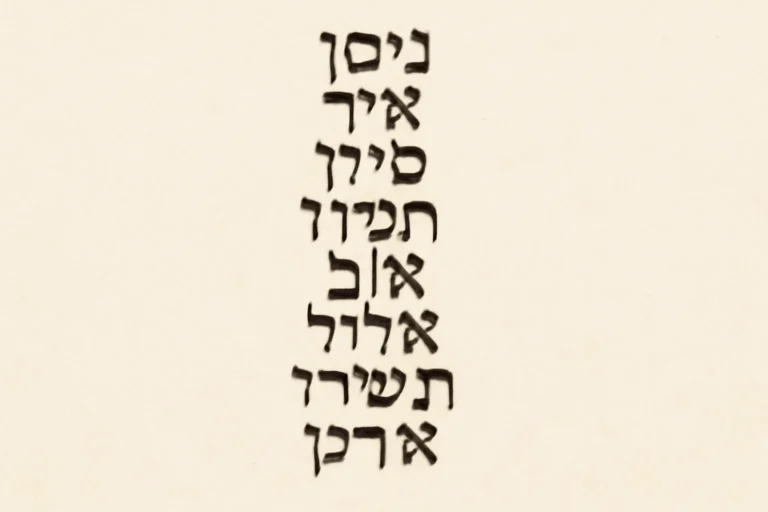
Nisan (ניסן) — Nissan, the First Month of the Sacred Year
Nisan (also spelled Nisan, sometimes Nissan) is the opening month of the biblical-ritual year. In the Hebrew order, it comes right after Adar in the preceding cycle and begins a sequence of days focused on renewal, liberation, and counting.
Hebrew name: ניסן
Transliteration variants: Nisan, Nissan
Length: 30 days
Season and timing: Spring in the northern hemisphere; typically March–April in the Gregorian calendar
Key observances: The month hosts the start of the Counting of the Omer (which begins on the second day of Passover, 16 Nisan, in most calendars). It also includes the early days of Passover (Pesach) preparations depending on the year.
Holy contexts: Liberation themes, agricultural cycles, and the transition from exile-era narratives to renewal and redemption in Jewish memory.
In addition to these features, festivals and liturgical rhythms in Nisan frame a period of reflection and communal celebration. The month borders the leap to Iyar with the Omer counting setting the pace for Shavuot later in the spring.
Quick facts about Nisan
Major holidays: Pesach (Passover) unfolds in the middle of Nisan, beginning with the eve of the 15th and running through 22 Nisan in most years. The Omer counting starts on 16 Nisan.
Part of the cycle: It is the first month of the ecclesiastical year and the bridge to the counting period before the revelation memory of Shavuot.
Seasonal note: The days lengthen in many places as spring progresses, aligning agricultural rituals with memory and liberation themes.
Iyar (אייר) — The Second Month of the Sacred Year
Iyar (also spelled Iyyar or Ayir) follows Nisan in the calendar order and is a month known for both continuity of the Omer count and certain solemn commemorations in various communities.
Hebrew name: אייר
Transliteration variants: Iyar, Iyár, Iyyar
Length: 29 days
Season and timing: Spring-to-early-summer window in the Gregorian calendar (April–May in many years)
Key observances: The middle part of the Omer counting takes place during this month, and many communities observe additional Torah readings and liturgical acts tied to the ongoing spring period.
Seasonal character: A steady, steady pace in the year, bridging the intense introspection of Pesach with later harvest symbolism.
In Iyar, people often track the ongoing Omer count as a practical and spiritual discipline. Communities also reflect on memory, sanctity, and renewal as the calendar moves toward Sivan and the major festival of Shavuot upcoming in late spring or early summer.
Sivan (סיון) — The Month of Revelation and the Festival of Shavuot
Sivan (also spelled Siwan in some traditions) is the month that culminates the Omer counting with the revelation memory of the giving of the Torah at Sinai, celebrated as Shavuot.
Hebrew name: סיון
Transliteration variations: Sivan, Siwan
Length: 30 days
Season and timing: Late spring to early summer; usually May–June
Key observances: Shavuot (the festival of weeks) is the central holiday of this month, commemorating the giving of the Torah. The Omer count typically ends with Shavuot.
Liturgical emphasis: Torah study, gratitude for revelation, and agricultural thanksgiving themes—especially milk and harvest symbolism in many communities.
Shavuot overview
For many Jewish communities, Shavuot is a time of study, all-night learning sessions in some places, and special dairy foods. The tone of Sivan emphasizes covenant, commitment, and education, linking historical memory with present-day practice.
Tammuz (תמוז) — The Month of Fasts and Fire Memorials
Tammuz (also spelled Tamuz or Tamuz) is notable for its emphasis on fast days that mark historical afflictions, as well as the turning point toward the second half of the Hebrew year.
Hebrew name: תמוז
Transliteration: Tammuz, Tamuz
Length: 29 days
Season and timing: Summer in the northern hemisphere; roughly June–July
Key observances: The 17th of Tammuz is a fast day commemorating the breaches of Jerusalem’s walls in ancient times, and it marks a somber pause before the hot summer of dispensation and hope. Some years see additional fasts or commemorations dependent on the calendar’s alignment.
Spiritual tone: A period that prepares the community for introspection and reflection as the year moves toward the heart of autumn holidays.
Av (אׁב) — The Month of Consolation and the Ninth of Av
Av (also spelled Aver in some transliterations) is a month with intense historical associations, especially surrounding communal mourning and remembrance on Tisha B’Av.
Hebrew name: אב
Transliteration variants: Av, Av or Av
Length: 29 or 30 days depending on the year
Key observances: Tisha B’Av (the Ninth of Av) is the major fast of the month, commemorating a series of disasters in Jewish history. The mood of Av often blends sorrow with hope for restoration and resilience.
Seasonal note: Occurs in the heat of summer in many places, creating a distinct atmosphere around fasting, study, and communal memory.
In leap years, the calendar adds a second Adar, creating a two-month Adar sequence. This is essential for keeping holidays aligned with the solar year. The months appear in the following order in a leap year: …
Adar I (אדר א): In leap years, Adar I is inserted first and typically spans 30 days. It is a distinct month whose primary function is to balance the cycle so that Purim (which belongs to Adar II) lands in the proper season.
Adar II (אדר ב): The second Adar, Adar II, contains Purim in most communities and is the month during which the major Purim celebrations are observed. Adar II usually has 29 days, while Adar I can be 30 days in leap years.
Legacy and rhythm: The two Adars illustrate how the modern Hebrew calendar preserves ancient rhythms while accommodating astronomical accuracy.
Elul (אלול) — The Month of Preparation and Repentance
Elul is the month immediately before Tishrei, a period traditionally associated with repentance, self-examination, and spiritual preparation for the new year. In many communities, this is a time of selichot prayers, introspection, and social acts of kindness.
Hebrew name: אלול
Transliteration variations: Elul
Length: 29 days
Season and timing: Late summer or early autumn in the Gregorian calendar
Key observances: Selichot prayers (special penitential prayers) begin to intensify in Elul; communities prepare for Rosh Hashanah and Yom Kippur in the coming month.
Practical notes: Elul is often a time of acts of kindness, hospitality, and outreach, as people ready themselves for the high holidays.
Tishrei is the anchor of the Jewish calendar in the common civil sense. It contains the high holidays and many of the most consequential observances of the year. In Tishrei, the year is marked by a rhythm of creation, introspection, and communal celebration.
Hebrew name: תשרי
Transliteration variants: Tishrei, Tishri
Length: 30 days
Season and timing: Early autumn in the Gregorian calendar; roughly September–October
Major holidays: Rosh Hashanah (1–2 Tishrei) marks the Jewish New Year; Yom Kippur (10 Tishrei) is the Day of Atonement; Sukkot (15–21 Tishrei) includes Shemini Atzeret and Simchat Torah (22–23 Tishrei). These days shape the spiritual and communal life of the year.
Rites and customs: The shofar is sounded on Rosh Hashanah; fasting and atonement define Yom Kippur; Sukkot introduces the sukkah and the Four Species (etrog, lulav, hadassim, aravot); Shemini Atzeret and Simchat Torah celebrate the completion of the annual Torah reading cycle.
MarCheshvan (מרחשון) and Kislev (כסלו) — The Months of Variation and Light
Two months in the autumn and early winter carry distinctive traits. Cheshvan (also spelled MarCheshvan or Mar-Cheshon) is famous for its variable length, sometimes 29 days and sometimes 30, depending on the year’s leap rules. This variability affects the cadence of holidays in the latter part of the year. Kislev (כסלו) often holds the Hanukkah season, which can begin in Kislev and spill into Tevet on occasion, depending on the year’s alignment.
Cheshvan: Length can be 29 or 30 days; the variability is a hallmark of the calendar’s lunar-solar design. Often nicknamed MarCheshvan to emphasize the blend of March and Cheshvan in historical chronology.
Kislev: Length typically 29 days, with the possibility of 30 on certain years; Hanukkah largely sits in Kislev, though borders with Tevet as the festival days unfold.
Seasonal tone: The months bring a shift toward late autumn and early winter in many climates, with themes of light, resilience, and renewal in the communities that observe Hanukkah and other seasonal observances.
Tevet (טבת) — The Month of Tevet Fasts and Winter Light
Tevet sits in the heart of winter for many communities, and it is associated with additional fast days in some years, as well as ongoing study and liturgy in preparation for the ongoing cycle of holy days.
Hebrew name: טבת
Transliteration variants: Tevet
Length: 29 days
Season and timing: December–January in the Gregorian calendar
Key observances: Some years include a fast day on the 10th of Tevet (as a day of remembrance, often commemorating the siege and other historical events around Jerusalem). Hanukkah may still be ongoing depending on the year’s specific alignment, though it commonly concludes by Tevet.
Shevat is known for its environmental and agricultural associations. The 15th day, Tu BiShvat, is celebrated as the New Year for Trees and a day of appreciation for the natural world and the land of Israel.
Hebrew name: שבט
Transliteration variations: Shevat, Shvat
Length: 30 days
Season and timing: Late January–February in the Gregorian calendar
Key observances: Tu BiShvat (15 Shevat) is the centerpiece, often celebrated with fruit and tree-focused rituals, and in modern practice with environmental awareness and planting initiatives.
Adar (אדר) — The Month of Purim and Seasonal Balance (Adar I & Adar II in Leap Years)
Adar is a month with festive energy due to Purim, a joyous holiday that commemorates courage and communal salvation. In leap years, the calendar adds Adar I (אדר א) and Adar II (אדר ב), with Purim traditionally observed in Adar II.
Hebrew name: אדר
Transliteration variations: Adar, Adar II (in leap years: Adar II is the second Adar), Adar I (the first Adar in leap years)
Length: Adar in common years is typically 29 days. In leap years, Adar I is usually 30 days, and Adar II is 29 days.
Season and timing: February–March in the Gregorian calendar, depending on the year
Key observances: Purim (in Adar II in most communities) is the premier holiday of this month, characterized by reading the Megillah, feasting, giving gifts of food (mishloach manot), and charity (matanot la’evyonim). Adar II is the primary home for Purim in leap years, reinforcing the month’s festive spirit.
Contemporary notes: The two-Adar arrangement in leap years demonstrates how the calendar preserves lunar-solar alignment across cycles, ensuring that major festivals land in their intended seasons.
Across the twelve (or thirteen) months of the year, the Hebrew calendar alternates 29- and 30-day months with occasional adjustments to maintain alignment with the solar year. Each month has its own ethos and ritual rhythm. The first half of the year (Nisan through Elul) is often described as the “season of renewal and preparation,” while the second half (Tishrei through Adar) concentrates memory, observance, and celebration. The interplay between lunar cycles and solar timing creates a distinctive cadence—one that blends agricultural life, historical memory, and spiritual discipline.
For readers seeking a practical orientation, here are a few quick references to help you navigate the year:
Seasonal anchors: The high holidays cluster in Tishrei; Passover anchors Nisan; Hanukkah sits within Kislev and possibly into Tevet; Purim falls in Adar II in leap years, or Adar in common years.
Length patterns: Most months alternate between 29 and 30 days, with Adar I often 30 days in leap years and Adar II 29 days, creating a choreography that keeps the lunar months aligned with the solar year.
Leap-year mechanism: The 19-year cycle adds Adar II to balance the calendar and ensure that Jewish holidays remain in their seasonal contexts.
Glossary of Month Variations and Hebrew Terms
To add semantic breadth, here is a compact glossary of variations you might see in calendars, liturgy, and discussion about the months:
Nisan / Nissan — ניסן
Iyar / Iyyar — אייר
Sivan / Siwan — סיון
Tammuz / Tamuz — תמוז
Av / Av — אֲב
Elul — אֱלוּל
Tishrei / Tishri — תשרי
Cheshvan / MarCheshvan / Marcheshvan — חשוון
Kislev — כסלו
Tevet — טבת
Shevat / Shvat — שבט
Adar / Adar I / Adar II — אדר (אדר א / אדר ב)
Throughout this guide, you may notice transliteration variants. The Hebrew spelling of each month remains constant, but the Latin letters used to render the sounds vary across communities and scholarly conventions. Examples include Nisan versus Nissan, Iyar versus Iyyar, and MarCheshvan versus Cheshvan.
Practical Tips for Navigating the Hebrew Months
Keep a calendar handy: When planning travel, study, or family events, a reliable Hebrew-Gregorian calendar helps align the days of rest, fasting, and feasting with personal and communal life.
Know the seasonal anchor: If you want to anticipate major holidays, focus on Tishrei for the high holidays, Nisan for Passover and the Omer, and Adar II for Purim in leap years.
Observe the Omer: The Counting of the Omer spans from 16 Nisan to 5 Sivan (inclusive), and many communities approach this period with daily readings and spiritual practices.
Understand leap years: In leap years, Adar II becomes the home for Purim and several associated customs, while Adar I precedes it; this shift preserves seasonal balance while preserving ancient festival timing.
Variability of Cheshvan/Kislev: The 29- or 30-day length of Cheshvan and the occasional 29/30 variation of Kislev can shift the date ranges of holidays slightly from year to year.
Further Reading and Resources
For readers who want to dive deeper into the mathematical and ritual aspects of the Hebrew calendar, here are several angles to explore:
Calendar calculations: Learn how the Hebrew calendar uses a 19-year cycle to insert leap years and balance lunar months with solar seasons.
Ritual observances: Explore the liturgical readings and melodies associated with each month’s major days, including the special prayers and hymnody around the high holidays.
Historical context: Delve into how the months reflect ancient agricultural and temple-era rhythms, and how those rhythms have evolved in modern practice.
Whether you celebrate in a traditional Jewish community or are studying the calendar for academic or cultural reasons, the Hebrew months in order offer a coherent panorama of memory, festival, and daily rhythm. From the renewal of Nisan to the reflective preparation of Elul and the high-holiday height of Tishrei, each month contributes a unique thread to the tapestry of the Jewish year. By familiarizing yourself with the names, placements, and major observances of each month—including the leap-year Adar I and Adar II arrangement—you can read the calendar not as a static grid, but as a living sequence that shapes practice, study, and community life across generations.