Timeline of the Life of Jesus: A Complete Chronology from Birth to Resurrection
The timeline of the life of Jesus is a narrative that spans from the anticipated birth in a humble setting to the transformative events of the Resurrection. This article presents a structured chronology that traces key moments, locations, and messages across the traditional Gospel accounts, highlighting how the life of Jesus unfolds from birth, through childhood and baptism, into a public ministry marked by teaching and miracles, and finally into the crucifixion, burial, and the pivotal resurrection. While scholars highlight the differences among gospel interpretations, a unified timeline can help readers grasp the arc of his ministry, the geopolitical context of first-century Judea, and the lasting implications for faith, theology, and history.
Few events in religious history are as foundational as the birth of Jesus. The traditional accounts point to a birth in Bethlehem in the period commonly dated to the late BCE era, often placed around 4–6 BCE to align with historical timelines surrounding Herod the Great. The narrative unfolds against the backdrop of Roman rule, Jewish expectations of a deliverer, and a census that brought Mary and Joseph to their ancestral city. The circumstances surrounding the birth emphasize a sense of humility and divine purpose that permeates the gospel witness.
Location: Bethlehem, with a later return to Nazareth in Galilee.
Key figures: Mary, Joseph, shepherds, and angels announced a divine purpose.
The early years: The family’s flight to Egypt and subsequent return, followed by settlement in Nazareth, shaping Jesus’ upbringing and social environment.
Return to Nazareth and Family Life
After the events surrounding the birth, the family’s return to Nazareth in Galilee anchors Jesus’ childhood. The gospel narratives emphasize that Jesus grew in wisdom and favor, engaging with his community and learning a practical trade. Although the canonical texts offer limited details about his adolescence, they portray Jesus as a child who develops in a recognizable pattern—familial devotion, religious formation, and gradual awareness of a special vocation.
The Hidden Years: Preparation and Formation
Many readers encounter a period often described as the hidden years, a time when Jesus is not the central public figure yet is shaping his identity and sense of mission. These years are traditionally linked to his upbringing in Nazareth and his early experiences in a family workshop. The lack of extensive narrative about this phase invites readers to consider the ordinary in which the extraordinary gradually takes shape.
Family vocation: The household would have observed Jewish rituals, Sabbath rest, and devotion to Torah study.
Education and training: Jesus would have learned carpentry or a related craft, developing practical skills alongside spiritual formation.
Community life: The rhythms of village life, synagogue attendance, and formative teachers would contribute to his worldview.
Baptism, Temptation, and the Beginning of Public Ministry
The transition from anonymity to public engagement begins with the appearance of baptism by John the Baptist along the Jordan River. This moment is widely regarded as a formal initiation into a mission that centers on repentance, renewal, and the proclamation of the Kingdom of God. The experience includes a divine affirmation—the Holy Spirit descends as a dove, and a voice from heaven proclaims Jesus as beloved, an event that frames his next phase of ministry.
Baptism: Marks the start of Jesus’ public activity, signaling identification with Israel’s prophetic crisis and anticipated redemption.
Temptation: The desert encounter tests resolve, resolve, and fidelity to God’s calling, shaping a ministry grounded in obedience.
Preparatory period: Post-baptism lessons, engagement with audiences, and the gathering of followers begin in earnest.
Galilean Ministry: Teachings, Parables, and Miracles
The core of Jesus’ life is his public ministry in the Galilee region. This period is characterized by sermons, debates, healings, exorcisms, and a steady expansion of followers. The parables—short stories with spiritual lessons—became a hallmark of his teaching method, revealing the mystery of the Kingdom to those who listened with openness and challenging those who relied on outward displays of righteousness. Miracles demonstrated compassion and authority over natural and spiritual realms, reinforcing the message that the reign of God is breaking into ordinary life.
Sermon on the Mount (or Beatitudes): A foundational collection of teachings on righteousness, mercy, and the ethics of the Kingdom.
Parables: The Good Samaritan, the Prodigal Son, the Sower, and others illustrate spiritual truth and moral instruction.
Miracles: Healings, control over nature, exorcisms, and restorations reveal divine power moving in compassion and justice.
Apostolic call: The disciples are summoned, trained, and deployed to continue the mission and proclaim the gospel.
Locations, Circuits, and Patterns
Jesus’ itinerary across Galilee includes towns like Capernaum, Bethsaida, and Nazareth. He interacts with a broad spectrum of people—from fishermen and tax collectors to religious leaders—navigating the expectations of Jewish law and Roman governance. The repetition of teaching in synagogues, along with dramatic healings, underscores a public ministry rooted in accessibility, compelling messages, and communal transformation.
Apostolic Call, Inner Circle, and Missionary Outreach
As the public work expands, a smaller core group emerges—the Twelve (the apostles). Jesus’ relationship with this inner circle is marked by selection, training, and sending them out to represent him—first in pairs within local districts, then in broader mission. The narrative emphasizes the importance of companionship, trust, and shared purpose as the movement grows beyond a single charismatic figure toward a dispersed community.
Choosing the Twelve: Names and roles assigned; a symbolic foundation for a universal mission.
Empowerment: Authority to teach, heal, and cast out spirits is conferred, signaling the inception of a collaborative mission.
Travel and preaching: Small journeys with itinerant preaching, demonstrations of power, and message dissemination.
Towards Jerusalem: Journey, Opposition, and Teachings on the Way
As the timeline moves toward its climactic center, Jesus’ ministry crosses into Jerusalem for significant feasts and encounters with religious authorities. The journey to the capital region is not merely geographic; it marks a shift in the narrative—from localized teaching to high-stakes confrontation and a series of escalating tensions. In this arc, core themes reappear—humility, service, the paradox of leadership, and the call to faithful endurance.
The Final Week in Jerusalem: Palm Sunday to Resurrection
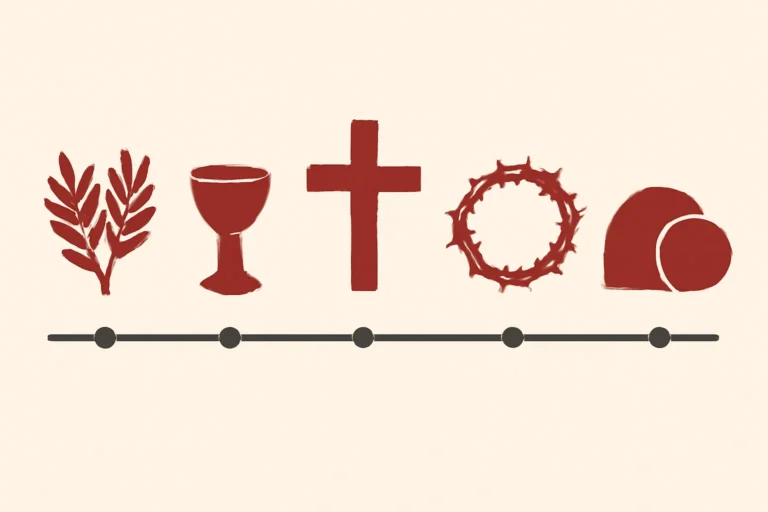
The last week of Jesus’ life comprises a sequence of events that have become central to Christian liturgy and memory. The final week includes triumphal entry, Temple teaching, the Last Supper, arrest, trial, crucifixion, and the astonishing claim of the Resurrection. Across the Gospels, the chronology is nuanced, yet a coherent arc emerges that emphasizes sacrifice, love, and victory over death.
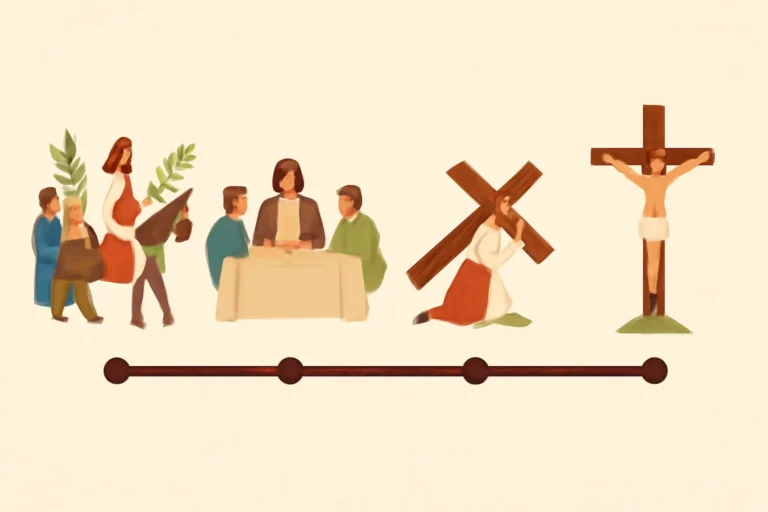
Palm Sunday: Jesus enters Jerusalem riding a donkey as crowds welcome him with expectations of a messianic figure.
Temple activities: Teaching in the Temple courts, debates with religious authorities, and a diagnostic critique of religious leadership.
Last Supper: The final meal with the disciples, during which Jesus institutes the Eucharistic remembrance and speaks of betrayal and imminent suffering.
Gethsemane and arrest: A moment of deep prayer, followed by betrayal and capture by authorities.
Trials: A sequence of political and religious trials that culminate in a sentence of crucifixion.
Crucifixion: The central act of sacrifice—Jesus is crucified at a Golgotha site, bearing the weight of human brokenness.
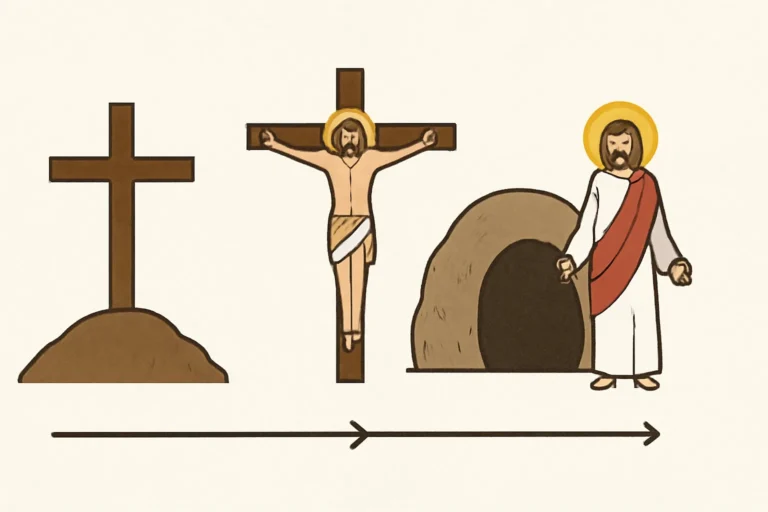
Burial: A prepared tomb, guarded stone, and the expectation of death’s finality, yet with a claim of divine power working beneath the surface.
Crucifixion, Death, and Burial: The Passion narrative
The Passion narrative centers on the death of Jesus as a definitive moment, understood by believers as a substitutionary atonement and a conquest of sin and death. The cross emerges not only as an instrument of cruel execution but as a symbol of divine love and a doorway to reconciliation. The burial in a tomb provided by a devoted follower completes the topography of the event, setting the stage for the most remarkable claims in the Christian tradition: a resurrection that redefines life and time.
Key elements of the Passion
Suffering and betrayal framing the crucifixion within a network of human choices and divine purpose.
Crucifixion: The death on a cross as the culmination of Jesus’ mission in the earthly realm.
Burial: A reserved tomb, an act of care by followers, and the setting for the extraordinary assertion of life after death.
Resurrection and Appearances: The Empty Tomb and the Risen Lord
Early on the first day of the week, according to the accounts, the tomb is found empty, signaling the central claim of the Christian faith: resurrection. The risen Jesus appears to women, to small groups of disciples, and to the apostolic circle, offering reassurance, commissioning, and renewed purpose. The resurrection appearances serve multiple theological functions: demonstrating continuity with the earthly life, validating Jesus’ teaching, and initiating the mission to proclaim good news to all nations.
Empty tomb as the elusive and foundational sign that triggers a wave of belief and questions.
Appearances: To Mary Magdalene, the disciples, and Thomas, among others, each encounter deepens faith and clarifies mission.
Commission: The risen Jesus entrusts the apostles with a mandate to spread the news and baptize in the name of the Trinity.
The Resurrection appearances are often interpreted not only as historical events but as transformative encounters that reframe the meaning of life, death, and identity for early Christian communities. The reactions to these appearances range from doubt to proclamation, illustrating the dynamic tension between faith and inquiry that characterizes the Gospel narratives.
Ascension, Legacy, and the Aftermath
Following a period of post-resurrection ministry, the narrative culminates in the ascension, in which Jesus returns to the heavenly realm. This moment does not end the story but redirects the narrative toward ongoing presence through the Holy Spirit and the mission of the church. The ascension marks a transition from Jesus’ visible earthly ministry to a pervasive and eternal spiritual presence that empowers the early Christian community to continue preaching, teaching, and healing in his name.
Forty days after the Resurrection, Jesus appears to disciples and offers final teachings.
Ascension: Jesus is taken up, promising to be with his followers through the Spirit and the ongoing life of the church.
Commission and preparation: The disciples are equipped to carry forward the work, bounded by a shared mission and spiritual authority.
Timeline Harmonies: Reconciling the Gospel Accounts
Readers often encounter differences in the Gospel narratives regarding the exact timing and sequence of events. A careful examination uses harmonization as a scholarly tool to appreciate both the distinctive emphases of each Gospel and the overarching storyline that the early Christian communities preserved. The harmonized timeline emphasizes how the life of Jesus timeline can be read as a coherent arc that moves from anticipation and birth to a vibrant, mission-driven faith that continues beyond the earthly life of Jesus.
Synoptic alignment: Mark, Matthew, and Luke share a substantial amount of material and chronology, especially in the Galilean phase and the Passion narrative.
John’s distinctive arc: The Gospel of John emphasizes theological themes, the preexistence of the Word, and a different chronology in certain sections, particularly around the passion and post-resurrection appearances.
Historiographical context: The dating and sequencing reflect not only historical events but theological priorities, community memory, and liturgical life.
Variants of the Timeline: Different Phrasings for the Same Journey
To broaden semantic understanding, the life of Jesus is described through various phrases that highlight different aspects of the journey. Some readers refer to this as the life of Christ timeline, others as the Jesus chronology, or the chronology of the Savior’s life. Each variant helps illuminate particular angles—historical dating, theological meaning, or devotional emphasis—without losing sight of the core sequence from birth to resurrection.
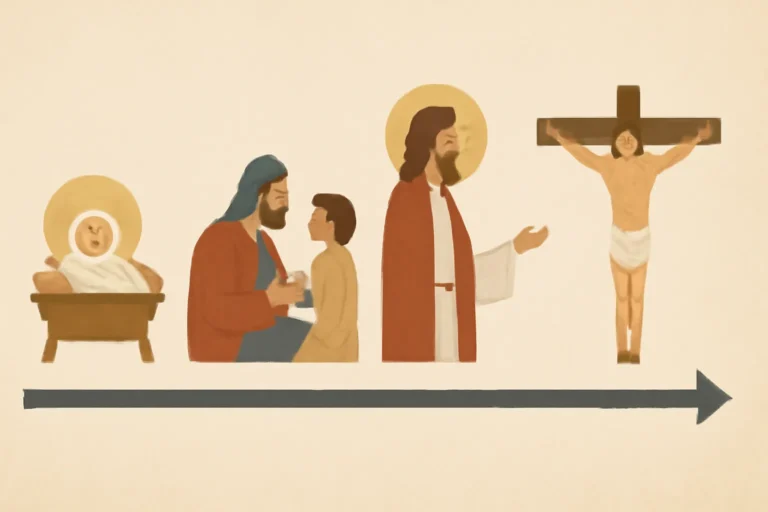
Birth and infancy → Baptism and public ministry → Teachings and miracles → Crucifixion and burial → Resurrection and appearances → Ascension and commissioning.
Life story timeline emphasizes the growing awareness of his vocation and the consolidation of a movement beyond his immediate presence.
Christology-focused timeline places christological claims at the center, connecting events to the understanding of Jesus as the Messiah, the Son of God, and the Lord over all creation.
Historical and Theological Context
A complete chronology does not exist in a vacuum. The timeline of Jesus’ life is deeply intertwined with the historical setting of first-century Judaea under Roman rule, with diverse religious currents—including Pharisaic, Sadducean, Essene, and zealot streams—and with the expectations of faithful Jewish tradition. The historical context enriches the timeline by clarifying why certain events triggered strong reactions, why certain locations became centers of teaching and healing, and how the Resurrection narrative emerged as a decisive conclusion for the early Christian movement.
Geography and travel
From Bethlehem to Nazareth, from the Jordan River to Jerusalem and the surrounding hills, geography plays a crucial role in why events occurred where they did, how audiences encountered Jesus, and how messages resonated with different communities. The itinerant style of ministry allowed Jesus to connect with rural villagers, urban crowds, and temple authorities, creating a multi-layered tapestry of encounters that anchor the life timeline in real places and real people.
Theological themes embedded in the sequence
Across the timeline, several recurring motifs recur with significant depth: the Kingdom of God, redemption, forgiveness, new creation, and the call to discipleship. Reading the events in their sequence allows readers to trace how Jesus’ messages developed—from simple parables and healings to complex teachings about leadership, service, and suffering, culminating in a cosmic act of victory through the Resurrection.
Understanding the timeline of the life of Jesus invites readers to engage with several practical and spiritual implications. First, it provides a framework for studying the Gospels in a way that respects both textual differences and unified themes. Second, it invites reflection on how Jesus’ life invites personal transformation, communal mission, and ongoing reverence for the divine in everyday life. Finally, the chronology aids in liturgical planning and devotional practice, helping communities commemorate key moments—birth, baptism, preaching, passion, resurrection, and ascension—in meaningful order.
Ways to Explore the Jesus Life Timeline
For educators, students, and curious readers, the following approaches can deepen understanding of the life chronology of Jesus without reducing its richness:
Timeline graphics: Visual representations that plot major events on a calendar, map, or layered schema.
Source comparison: Side-by-side readings of Matthew, Mark, Luke, and John to highlight harmonies and tensions in chronology and emphasis.
Thematic study: Group events by themes such as teaching, miracles, leadership, and eschatology to explore how each theme evolves through the timeline.
Liturgical observance: Integrating the timeline into seasonal cycles (Advent, Lent, Easter) to deepen experiential engagement with the narrative arc.
Concluding Reflections on a Complete Chronology
The complete chronology of the life of Jesus from birth to resurrection offers a narrative that is at once historical, spiritual, and transformative. While scholars and readers may debate precise dates or interpretive nuances, the overarching arc remains compelling: a birth in humble circumstances, preparation through hidden years, a public ministry marked by teaching and mercy, a climactic confrontation with powers, a sacrificial death, a triumphant resurrection, and an ongoing mission carried forth by the community that followed him. This is the enduring timeline of the life of Jesus, a pathway that continues to inspire faith, inquiry, and the search for meaning across generations.