Rosh Hashanah in Scripture: Biblical Origins and Meaning
Rosh Hashanah in Scripture: Biblical Origins and Meaning explores the biblical foundations of the festival commonly connected with the name Rosh Hashanah in later Jewish tradition. In the Bible the core ideas are framed by the term Yom Teruah — often translated as the Day of Trumpets — observed on the first day of the seventh month, the month that modern readers recognize as Tishrei. Although the exact phrase “Rosh Hashanah” does not appear in the Biblical text, the scriptural portrait of this time—its date, its call to assemble, its trumpet blasts, and its ritual offerings—provides the ancient backbone for a season that would later be called the New Year in Jewish liturgy. The article that follows surveys the biblical language, the symbolic use of the shofar, the place of this day in the biblical calendar, and how later tradition expands and deepens the vision set forth in Scripture.
Names and Terms: The Biblical Language Behind the Day
In Scripture the core designations center on Yom Teruah, literally the Day of Blasts or Day of Trumpets. The command appears in the context of the Israelite calendar, where the day is fixed on the first day of the seventh month (the seventh month being the biblical month that would later be associated with Tishrei). The primary biblical references are found in the book of Leviticus and the book of Numbers, where the day is described as a holy convocation and a day for the trumpet-blowing before the Lord. In many English translations the language is rendered as a holy assembly, with a command to refrain from ordinary work, and to observe a special ceremony that centers on the sound of the shofar or other trumpets.
Leviticus 23:24 — “In the seventh month, on the first day of the month, you shall have a holy convocation. You shall do no ordinary work, and you shall present an offering made by fire to the LORD.” In some translations this is explicitly tied to the day of trumpet-blowing.
Numbers 29:1 — “And in the seventh month, on the first day of the month, you shall have a holy convocation. You shall do no ordinary work; it is a day of trumpet-blowing for you.” This reinforces the sense that the day is a ritual signal within the annual cycle.
Psalm 81:3 — “Blow the trumpet at the new moon, at the full moon, on our feast day.” While not a direct legislative text about Yom Teruah, this verse situates trumpet blasts within the rhythm of the calendar and the festival life of Israel.
Two primary biblical texts anchor the Day of Trumpets as a festival with a calendaral and liturgical weight. They describe both when it happens and what the people are to do in response. The dates are fixed references within the agricultural and ritual year, and the command to gather suggests a communal, worship-centered posture before God. The trumpet or shofar is the instrument that gives the day its audible identity, calling the people to attention, wakefulness, and reverence before the divine presence. The broader biblical story invites readers to hear the blasts as a summons to remember God’s saving acts, to acknowledge human frailty, and to anticipate a future act of divine mercy and judgment—an overarching biblical motif that shapes the day’s significance across centuries.
Seventh month as the fixed date: The seventh month is repeatedly described as a time for sacred assembly and special offerings, with Yom Teruah occupying the first day of that month in Leviticus 23:24 and Numbers 29:1.
Holy convocation and rest: The biblical text calls for a holy gathering and the cessation of ordinary labor, signaling that this day is set apart from the ordinary rhythm of life.
Trumpet-blowing as liturgical action: The act of blowing trumpets/shofars is not merely decorative; it is a liturgical signal that frames the festival as an encounter with God’s presence and a prompt for careful reflection and worship.
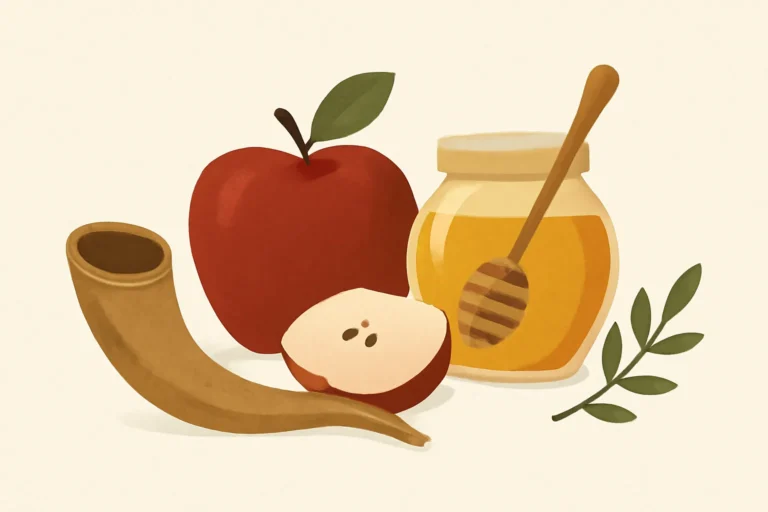
The shofar (ram’s horn) occupies a central symbolic and ceremonial place in biblical imagery of this day. The sound of the horn is the audible marker of the event and a sign that the people should turn their minds and hearts toward God. The biblical witnesses show trumpets and horns functioning in multiple capacities: they signal assembly, accompany worship, celebrate divine victory, and even mark moments of strategic significance in salvation history.
Several scriptural scenes illustrate how trumpet blasts interact with the narrative arc of Israel’s history, helping readers to grasp the deeper meaning of Yom Teruah beyond the calendar date:
Joshua 6:4–5 — The priests carry seven trumpets of rams’ horns before the ark, and the people march around Jericho as the trumpets sound. The blast precedes the miraculous collapse of the city walls, showcasing the trumpet as a divine instrument accompanying covenantal action.
2 Chronicles 5:12–14 — Trumpets, singers, and cymbals accompany the priests as the temple is dedicated; the sound fills the house as the glory of the Lord comes down. This scene presents the trumpet as a sign of divine presence and corporate worship at a crucial moment in Israel’s life.
Psalm 47:5 — “God has gone up with a shout, the Lord with the sound of a trumpet.” The psalm ties the imagery of trumpet blasts to a cosmic celebration of God’s sovereignty and exaltation.
Psalm 81:3 — The psalmist links trumpet blasts to festival calendars and to communal worship, reinforcing the idea that the trumpet’s sound marks festivals and sacred times in Israel’s worship life.
Across these witnesses, the teruah (the “blast” or “cry”) emerges as a sound associated with awakening, exhortation, and a summons to moral and spiritual attention. The biblical pattern connects the audible signal with a divine-human encounter: the people assemble, worship, recall God’s acts, and respond in devotion, repentance, or praise as appropriate to the moment.
Observances in Scripture: What Yom Teruah Demands
In Leviticus and Numbers the festival is described with a concise set of requirements that reflect a theology of worship, remembrance, and covenantal stipulation. While the text concentrates on a single day, it sits within a broader calendar that frames time as a stage for God’s redemptive work. The observances described in Scripture carry implications for personal devotion, communal worship, and the sacrificial system that undergirded the ancient Israelite cultus.
Holy convocation — a sacred assembly that gathers the people for communal worship and instruction.
Refraining from ordinary work — a day set apart from the routine labors of daily life, signaling dependence on God and the seriousness of the moment.
Special offerings — the ritual on this day includes offerings described in the biblical law (Numbers 29 contains the liturgical details for the day’s sacrifices, including the first-day offerings that accompany the holy convocation).
Sounding the trumpets — the act of trumpet-blowing or shofar-blasting stands at the heart of the day, shaping the day’s identity as a festival of divine encounter.
The Place of Yom Teruah in the Biblical Calendar and Its Thematic Echoes
Within the biblical calendar, the Day of Trumpets sits as a hinge between the harvest-centered, earlier-year feasts and the penitential, atonement-centered period that culminates in the Day of Atonement and the Festival of Tabernacles. Although the biblical corpus does not articulate the precise theological project later associated with the Ten Days of Awe, it does present a theme of wakefulness before the Lord and a call to acknowledge God’s sovereignty and mercy. The first day of the seventh month is thus not merely a date; it is a symbolic moment when Israel’s life calendar pauses to recognize the God of history as the faithful judge and rescuer who remembers and renews. As the Psalms and prophetic literature demonstrate, callings to hear and respond to the voice of the Lord are woven into the fabric of Israel’s festivals, and the Day of Trumpets stands as a focal point for that ongoing conversation with God.
From the biblical vantage point, several motifs are especially persuasive for understanding the festival’s meaning in Scripture:
Remembrance — the day invites memory of God’s acts in salvation history and invites the people to recall their covenant commitments.
Awakening — the trumpet blast calls for moral and spiritual wakefulness, a turning toward God with humility and repentance when appropriate.
Divine sovereignty — the imagery of the trumpet aligns with petitions for justice, mercy, and the exercise of God’s rule over the world and over Israel’s history.
Communal worship — the holy convocation and the assembly emphasize the community as the place where corporate worship and repentance take shape in God’s presence.
Rosh Hashanah in Rabbinic and Later Tradition: Expanding Scripture’s Frame
Although the Bible does not use the term Rosh Hashanah to name this day, the linguistic and theological harvest of Scripture provided fertile soil for later Jewish interpretation. The phrase “Head of the Year” or Rosh HaShanah emerges in the rabbinic tradition as the annual turning point that launches a season of reflection, prayer, and repentance. In the Rabbinic era, the day is given a more expansive ethical and spiritual anthropology, including the famous concept of the Ten Days of Awe between the Day of Trumpets and Yom Kippur. While these ten days are not spelled out in the Tanakh, they arise from the biblical sense that a season of introspection and renewal stands at the door of God’s people.
In post-biblical literature and in the liturgical life of the synagogue, the Day of Trumpets becomes a time for:
Prayerful seeking of God’s mercy and guidance for the coming year.
Scriptural reading and confession as the community remembers the covenant and invites personal and communal renewal.
Public soundings of the shofar as a rubric for awakening, repentance, and common worship.
Theological Reflections: Remembrance, Judgment, and Hope
The biblical frame for Yom Teruah centers on a handful of enduring themes that resonate across generations. The Day of Trumpets does not simply mark an arrival of a new calendar; it creates a setting in which the people of Israel are invited to remember how God has acted, to awaken to their present responsibilities, and to hope for God’s future intervention. The biblical imagery suggests that the trumpet’s call is both a reminder of past salvation and a summons to ongoing faithfulness. In this sense, Yom Teruah foreshadows the great themes of judgment and mercy that recur throughout the prophetic literature, while also foregrounding the hope that God’s redemptive purposes continue to unfold in human history.
Remembrance — the day’s very name and ritual imply a memory of God’s mighty deeds in redemption and history, a remembering that renews covenant allegiance.
Judgment and mercy — the call to wakefulness is tied to the moral accountability of the people, while the hope of mercy remains central in the biblical witness.
Hope and renewal — the festival’s cadence points forward to continued divine faithfulness, even as the people turn again to God in worship and prayer.
From Scripture to Practice: How the Bible Shapes the Modern View
Readers today who study Scripture alongside the traditional practice of Rosh HaShanah can appreciate how the biblical voice informs the contemporary observance. The Bible’s insistence on a sacred assembly, a day set apart for trumpet blasts, and a framework of sacrifice and worship makes clear that the festival is about more than a day on the calendar. It is a lived encounter with the God who acts in history, calls the community to repentance, and invites a renewed alignment with divine will. The shift from the biblical language to Rabbinic tradition does not erase the biblical material; rather, it expands and deepens the interpretive field, showing how the spiritual core of the day—wakefulness before God, remembrance of God’s acts, and yearning for divine mercy—remains central across centuries and languages.
For students and readers who wish to explore the biblical roots of the holiday commonly called Rosh Hashanah, here are some practical paths and focal points to consider. The aim is to connect the biblical text with the way it has shaped later tradition, without presuming a wholesale equivalence between the two strands.
Begin with Leviticus 23:23–25 and Numbers 29:1, noting how the first day of the seventh month is described as a holy convocation and a day of trumpet-blowing, coupled with refrain from ordinary work.
Explore the role of the shofar in biblical narratives such as Joshua 6 (the trumpets around Jericho), Psalm 47:5 (God with the trumpet), and 2 Chronicles 5:12–14 (temple dedication). Observe how the trumpet-blast functions as a signal for divine action and communal response.
Note the language of remembrance in the text (where the festival is tied to memory, covenant, and the acts of salvation) and reflect on how memory functions in the life of faith during times of celebration and solemnity alike.
Compare the biblical calendar with later rabbinic expansion to see how the Day of Trumpets becomes the “Head of the Year” and enters a season (the Ten Days of Awe) focused on repentance, prayer, and renewal. Consider what stays constant (the call to wakefulness and worship) and what changes (liturgical practices and theological emphases).
Engage with cross-textual themes such as the interplay between divine judgment and mercy, the communal dimension of worship, and the hope for future deliverance that the trumpet image evokes in both the religious imagination and historical memory.
Case Studies in Scripture: Scenes Where the Air Rings with Trumpets
Three compact biblical scenes illustrate how the trumpet motif operates within the sacred text and offer a helpful lens for readers to approach Yom Teruah in Scripture:
Jericho’s fall (Joshua 6) — The marching and the blast of trumpets culminate in a dramatic act of divine deliverance, showing how a trumpet signals a moment of covenant action and salvation history.
Temple dedication (2 Chronicles 5:12–14) — The musical accompaniment and blown trumpets accompany the visible manifestation of God’s glory, underscoring the day’s identity as a sacred meeting between God and Israel.
Divine sovereignty and praise (Psalm 47:5; Psalm 81:3) — The trumpet appears in the psalms as a symbol of divine kingship and a calendar-like rhythm of worship, emphasizing that the trumpet is a voice of exaltation and call to worship.
In sum, the biblical material surrounding Yom Teruah presents a festival rooted in a concrete calendar moment—the first day of the seventh month—that invites the people to assemble, to worship, to remember God’s acts, and to respond with reverence and faith. The shofar becomes the audible language of that moment, a sound that awakens, consoles, and proclaims the sovereignty of God. The later designation Rosh Hashanah and the associated tradition of the Ten Days of Awe build on this biblical core, expanding the practical and spiritual scope of the season while keeping the heart of the day intact: a wakeful, hopeful encounter with the God who invites His people to reflect, repent, and renew their covenant faithfulness.
For readers who want to continue exploring this topic, a few closing guidance notes may be helpful: use the biblical texts as your primary framework, then read the rabbinic and later liturgical developments as an expansion of the same theological core; pay attention to the terminology—Yom Teruah versus Rosh Hashanah—to distinguish biblical data from later interpretation; and finally consider how the imagery of trumpet blasts in Scripture can illuminate not only ancient worship but also the enduring human longing to hear and respond to God’s call in every generation.
In every frame, the biblical origin of this season remains a chorus about awakening, remembrance, and hopeful anticipation. The Day of Trumpets—the ancient Yom Teruah—continues to challenge readers to listen, to reflect, and to reorient their lives around the God who speaks through history, memory, and proclamation. This is the enduring meaning of the festival as it appears in Scripture, and it is the invitation that carries forward into the living tradition of Rosh Hashanah as it is observed today.