Israel Captivity Timeline: A Comprehensive Chronology of Exile
This article presents a thorough overview of the major exiles and relocations that shaped the historical and religious landscape of the ancient Israelites. Through a careful chronology, this Israel captivity timeline traces the arcs of destruction, deportation, return, and renewal that defined both the Northern Kingdom and the Southern Kingdom, as well as the wider Jewish diaspora that emerged in subsequent centuries. Readers will encounter different phrasings—Israelite captivity timeline, timeline of the Israelite exile, captivity chronology, and similar variations—that all point to the same core sequence of events and their lasting consequences for faith, identity, and community life.
The roots of exile: from united monarchy to divided kingdoms
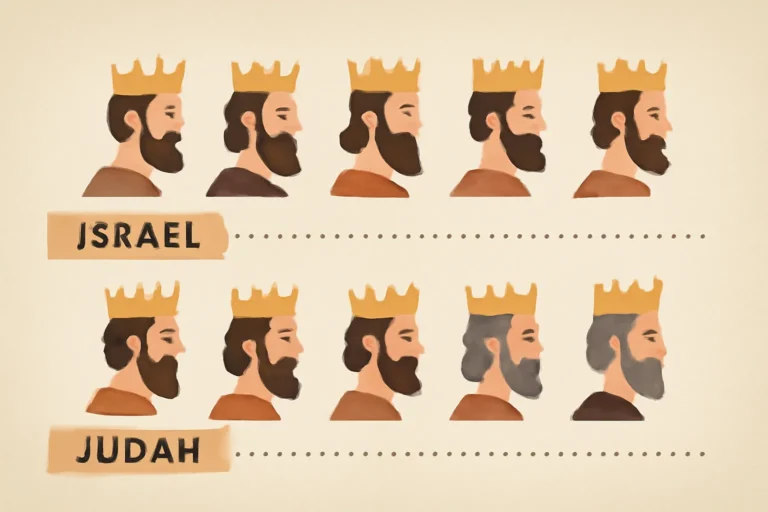
Before the era commonly summarized as the Israel captivity timeline, the political map of the ancient Near East featured a united monarchy under kings chosen from the line of David, followed by a later division into two rival polities: the Northern Kingdom of Israel and the Southern Kingdom of Judah. The split, traditionally linked to internal strife and divergent religious policies in the 10th century BCE, set the stage for different paths of vulnerability to imperial powers. In this early phase, the trajectory of exile is not yet a plan but a looming pattern, as empires grew stronger and domestic stability faltered.
The Assyrian captivity of the Northern Kingdom (Israel)
Conquest of Samaria and deportations (c. 722 BCE)
The Assyrian empire defeated the capital Samaria and dissolved the independent governance of the Kingdom of Israel.
Over time, the population of the former Northern Kingdom blended into a variety of communities, giving rise to the notion of the Ten Lost Tribes in later memory and scholarship.
This phase marks the first large-scale displacement in the Israel captivity chronology. It inaugurates a pattern in which conquest and exile become tools of imperial policy, and it also initiates a long-term dispersion that would influence Jewish memory, theology, and identity long after the conquest itself.
The Babylonian exile of Judah: destruction, deportation, and extinction of a temple-centered religion
First deportations and the fall of Jerusalem (597–586 BCE)
The Babylonian empire began a series of deportations from the Kingdom of Judah, beginning with political elites, administrators, and key religious figures during the reign of King Jehoiachin (also called Jeconiah).
A subsequent wave of deportations intensified after the revolt of Zedekiah and culminated in the destruction of the First Temple in 586 BCE.
The destruction of the temple and the capital city left a profound theological and social rupture. The temple had been the center of sacrifice, festivals, and national identity; its loss reshaped Jewish religious life and memory.
The Israel captivity timeline here moves from political-military events to a lived experience of exile. Exiles in Babylon faced a new world: different language, new cities, and a community that had to reimagine worship and social organization away from the temple precincts. Yet this period also generated intense writing, prophetic activity, and community formation that would influence later returns and reforms.
The Babylonian exile: life in exile and the formation of a diasporic consciousness
Exilic communities and prophetic voices
In Babylon and other diasporic centers, exiled Judeans maintained a sense of covenantal identity even as they adapted to foreign landscapes. The books of Daniel, Ezekiel, and other texts reflect a people navigating loyalty, faith, and hope under foreign rule.
Communities established centers of learning, preserved their sacred texts, and continued ritual life within the constraints of exile, laying groundwork for a later return.
The exilic period becomes a crucible for ideas about monotheism, divine justice, and the relationship between homeland, temple, and exile—a theme that would recur in later phases of the Israel captivity timeline.
The Persian restoration: the end of exile and the return to Zion
Cyrus’s edict and the repatriation (538–537 BCE)
With the Persian conquest of Babylon, the Edict of Cyrus emerged as a landmark document allowing exiled peoples, including Judeans, to return to their ancestral homelands and to rebuild their temples and communities.
For the Israel captivity timeline, this moment marks the shift from exile to return as a political and religious project. The decree enabled the first organized wave of returnees to make their way back to Jerusalem and surrounding towns.
Returns were not uniform or wholesale; rather, they occurred in stages, with different groups heading back under various leaders and with varying aims—some focusing on rebuilding the altar, others on restoring governance and agriculture.
Rebuilding the Second Temple and early post-exilic life (537–515 BCE)
The initial phase of return included the restoration of the altar of burnt offerings and the rebuilding of the altar rites, followed by groundwork for broader religious and civic life.
The main project—the construction of the Second Temple—progressed slowly and faced opposition, but it eventually reached completion in 515 BCE.
Completion of the temple was a turning point in the Israel captivity timeline, signaling a renewed focus on worship, priestly roles, and the reestablishment of ceremonial life within a reconstituted Jerusalem.
Ezra, Nehemiah, and the consolidation of a post-exilic community
Ezra’s arrival and reform (458 BCE)
Ezra the scribe led a significant wave of returnees, emphasizing adherence to Torah, religious purity, and the reorganization of the community around scriptural authority.
This phase of the chronology highlights the tension between foreign influences and the desire to maintain covenantal continuity. It also underscores the role of religious leadership in shaping community norms after the exilic period.
Nehemiah, serving as a cupbearer to a Persian king, secured permission to rebuild the gates and walls of Jerusalem, restoring municipal security and enabling residents to live in a stable capital again.
Alongside temple reform, wall-building represented a physical and symbolic restoration of communal life, protecting the returned population and signaling political viability within a broader imperial framework.
The broader arc: from exile to identity within successive empires
Hellenistic and Roman transitions and the persistent memory of exile
Following the Persian era, the region underwent sweeping cultural and political shifts under Greek influence and later Roman rule. These transitions did not erase the prior chapters of the exile, but they layered the exilic memory with new political realities.
Jewish communities spread across the Mediterranean basin—within Egypt, Asia Minor, and beyond—while the idea of return persisted as a sacred longing and a historiographical throughline in texts and liturgy.
In broader terms, the ongoing narrative of exile and return functioned as a powerful motif in Jewish thought, informing later diaspora experiences and shaping expectations for future redemption and restoration in theological discourse.
The destruction of the Second Temple and the long-term implications
The surge of turmoil under Roman rule culminated in the destruction of the Second Temple in 70 CE, a catastrophic event that transformed Jewish religious life, shifting emphasis toward rabbinic authority and synagogue-centered practice.
Even as the temple was lost, the ongoing exilic chronicle persisted in memory and practice. The sense of being a people dispersed among many lands—and of awaiting a future restoration—continued to shape identity, liturgy, and scholarship for centuries.
Key milestones within the Israel captivity timeline: a consolidated chronology
c. 930–722 BCE — The division of the united monarchy into the Northern Kingdom of Israel and the Southern Kingdom of Judah becomes a precondition for later exiles and narratives.
722 BCE — The Assyrian conquest of Samaria, leading to the deportation and resettlement of many Israelites in distant provinces; emergence of the memory of the Ten Lost Tribes.
597–586 BCE — The Babylonian exile of Judah intensifies: political leaders and temple personnel are displaced, and the First Temple in Jerusalem is destroyed in 586 BCE.
539–537 BCE — The fall of Babylon to the Persians and the Edict of Cyrus inaugurate the return and restoration process.
537–515 BCE — Returnees begin building the Second Temple and reestablish religious life in Jerusalem; altar rites resume and civic structures are rebuilt.
458 BCE — Ezra returns with a mission to reform and teach the people according to the Torah, reinforcing covenantal identity within the post-exilic community.
445 BCE — Nehemiah leads the effort to reconstruct the walls of Jerusalem, facilitating social and political organization within a fragile autonomy under Persian authority.
70 CE — The Second Temple is destroyed by Rome, marking a new phase in Jewish history where diaspora life becomes predominant in many regions of the Mediterranean world.
Interwoven themes: memory, return, and reform across the Israel captivity timeline
Across the Israel captivity timeline, several themes recur with enduring resonance for Jewish history and religious thought. The tension between vulnerability and resilience—between exile and return—shapes how communities interpret divine promises, understand sacred space, and organize their social and spiritual life. The early expulsions and deportations are not merely episodes of political power; they become central to the way later generations imagine belonging, worship, and national destiny. The post-exilic period demonstrates that revival is possible even after losing the center of worship, while the memory of destruction and exile continues to inform prayer, liturgy, and ethical reflection for centuries thereafter.
Why this chronology matters: learning from the Israel captivity timeline
Understanding the causes and consequences of exile
Historically, captivity is not only a military outcome but a catalyst for cultural adaptation, religious reform, and the writing of foundational texts that shape communal identity for generations.
The narrative arc of conquest, deportation, restoration, and reconstitution offers a framework for analyzing how ancient communities maintain cohesion under external pressure and how leadership, theology, and communal institutions respond to crisis.
Scholars use the Israel captivity timeline to examine continuity and change in sacred literature, political organization, and ritual life across centuries and empires.
For readers of religious and historical texts, the exile motif provides a lens through which to understand enduring questions about homeland, memory, covenant, and hope for return.
Frequently encountered variants of the Israel captivity timeline
As you explore this subject, you will encounter several ways of naming or framing the sequence of events. These phrases all point to the same core historical period and are used in different scholarly and theological contexts:
Israel captivity timeline (emphasizing the broader arc across both kingdoms and the diaspora)
Timeline of the Israelite exile (focus on the experience of exile and displacement)
Israelite deportation chronology (highlighting forcible relocations by empires)
Captivity chronology (a concise label used in comparative studies of ancient Near Eastern exiles)
In every variant, the central events, dates, and individuals shed light on how the people who would become the Jewish people navigated crisis, preserved tradition, and eventually rebuilt a renewed center for worship and community life.
A lasting legacy: the Israel captivity timeline in memory and practice
The stories embedded in this Israel captivity timeline endure in both memory and practice. They inform liturgical cycles, such as prayers that commemorate loss and longing, and they influence the ethical emphasis on justice, mercy, and collective responsibility. The thread from exile to return—woven with humility, faith, and communal effort—continues to inform Jewish thought and religious life, demonstrating how a people can transform captivity into a resource for renewal and resilience. This comprehensive chronology thus serves not only as a historical map but also as a narrative guide for understanding how exile shapes identity, fidelity, and hope across generations.