The Second Temple stands as one of the most significant monuments in ancient religious history. It did not appear in a single moment of construction, but rather emerged through two major phases spanning different centuries and rulers. The short answer to who built the Second Temple is that it began under the leadership of Zerubbabel and the high priest Jeshua during the Persian period after the exile, and it was later transformed into a monumental complex by Herod the Great in the Roman era. For a modern reader seeking to understand the question from multiple angles, this article unpacks the two distinct phases—the initial rebuilding after the Babylonian captivity and the later, expansive renovation attributed to Herod—while situating them within the broader political and religious context of the time.
The two major chapters of a rebuilt sanctuary
The phrase Second Temple is used to distinguish the temple rebuilt in Jerusalem after the destruction of the First Temple by the Babylonians in 586 BCE from the original Solomonic temple. The rebuilding project that produced the Second Temple did not arise from a single plan or a single ruler; rather, it was a complex endeavor that reflected the interests and authority of a string of actors—Persian kings, Jewish religious leaders, and returning exiles. The two most widely recognized leaders connected with this initial project are Zerubbabel, the governor, and Jeshua (also rendered Yehoshua or Joshua), the high priest. Together they served as the human faces of a community seeking to restore a central place of worship, legal order, and ritual life after a protracted period of exile and interruption.
Zerubbabel and the initial rebuilding campaign
Who led the mission to rebuild?
In the biblical narratives, the rebuilding of the altar and sanctuary kicked off with a return from exile initiated under the decree of the Persian king and the practical leadership of Zerubbabel and Jeshua. Zerubbabel, a descendant of King David, served as governor of Judah under Persian sovereignty, while Jeshua functioned as high priest. The two leaders symbolize the fusion of political authority and religious office that the community believed would legitimize the project and secure its ongoing support. The effort was framed as a restoration of proper worship, not simply a construction project; the ritual life of the people depended on having a functioning sanctuary that could accommodate the Levitical orders and the prescribed sacrifices.
From the perspectives of biblical sources, the initial builders included a cadre of priests, scribes, and laypeople who returned with the exiles and brought with them the provisions and materials needed to begin the work. The voice of prophecy in the period—through figures like Haggai and Zechariah in the post-exilic era—urged the people to prioritize the Temple’s reconstruction. Their messages provided moral and spiritual motivation, reinforcing the conviction that the rebuilt sanctuary would be a center of national identity as well as religious devotion.
Historical tradition indicates that the foundations of the Second Temple were laid in the aftermath of the exile, with the project progressing through phases that reflected the available resources, political permissions, and the community’s religious priorities. The early work focused on reestablishing the basic framework of the sanctuary and preparing the space for ongoing worship. The plan followed a recognizable pattern of temple architecture from the era: a sanctuary (the Holy Place) and a Holy of Holies, surrounded by the courts and furnished with the instruments and vessels required for daily and seasonal sacrifices. The exact architectural details are a matter of scholarly study and debate, but the broad outline is well attested: a functioning temple complex was brought back into operation to reconstitute the cult, reconstitute ritual life, and reaffirm the covenantal relationship between God and the people of Israel.
During this period, the temple was built to be functional and symbolic, a site where the priests could offer sacrifices, where the community could celebrate Passover and other holy days, and where the Torah could be taught and read in public. The completion of the initial rebuilding is traditionally dated to the period of the Persian monarchs, and the text in Ezra 6:15 indicates a dedication around the time when Darius I was king—often read as evidence that the temple was completed and rededicated after a period of labor and revision under imperial oversight. The language of the biblical record emphasizes that the Second Temple was a reconstituted shrine that carried forward the liturgical and ceremonial life of the people, even as it faced political and social pressures from surrounding powers and local factions.
Completion and dedication: the early Second Temple era
Timeline and significance
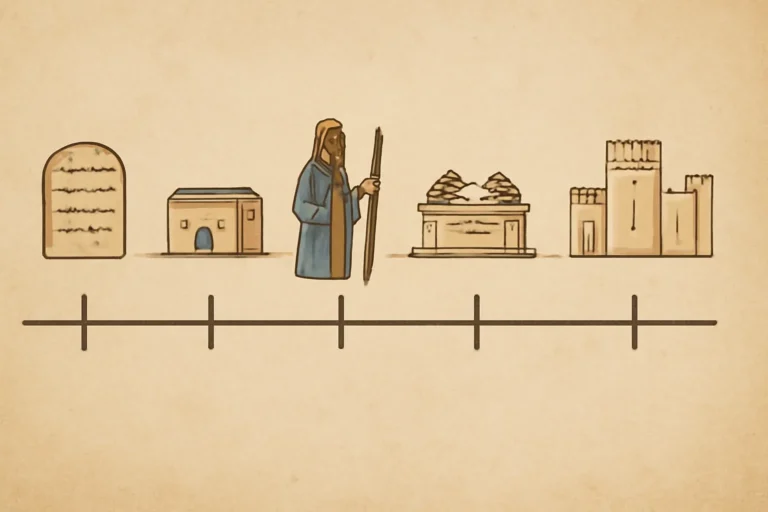
Scholarly consensus places the completion of the initial Second Temple around the mid-6th century BCE—commonly dated to approximately 516 BCE, with dedication following soon after. This marks a key turning point: after the exile, the community reestablished a place where worship could be conducted in the tradition of the preceding temple era, yet they were operating within the framework of the Persian imperial system. The dedication is described in Ezra and Nehemiah and reflected in later prophetic exhortations. The importance of this event goes beyond architecture; it signaled a restoration of a religious center, a political symbol of continuity for the Jewish people, and a place where the Torah and priestly functions could be exercised in a stable, recognized setting.
Within the narrative of the return and rebuilding, the Second Temple is often described not simply as a building but as a renewed covenant space. The community’s memory of Solomon’s Temple loomed large, even as they embraced a new design, new ritual arrangements, and a new political reality under Persian rule. This dual memory—old sacred heritage and new post-exilic legitimacy—would shape Jewish religious life for centuries to come and set the stage for later debates over what form the temple should take under different political circumstances.
Herod the Great’s renovation: a second phase in the temple’s story
The business of expansion and renovation
Centuries after Zerubbabel and Jeshua laid the foundations of the Second Temple, the figure of Herod the Great emerges from Roman-era history as the implements of a grand project. In the late years of the Herodian kingdom, Herod undertook an ambitious program of architectural renewal that vastly transformed the Temple complex. This phase did not replace the earlier structure; rather, it reimagined and expanded it into a monumental and highly engineered precinct that would be known for its grandeur and for its scale. Herod’s work began around 20 BCE or thereabouts and proceeded in several stages, driven by political motives, religious imagination, and a desire to honor the city’s significance within the wider Roman world.
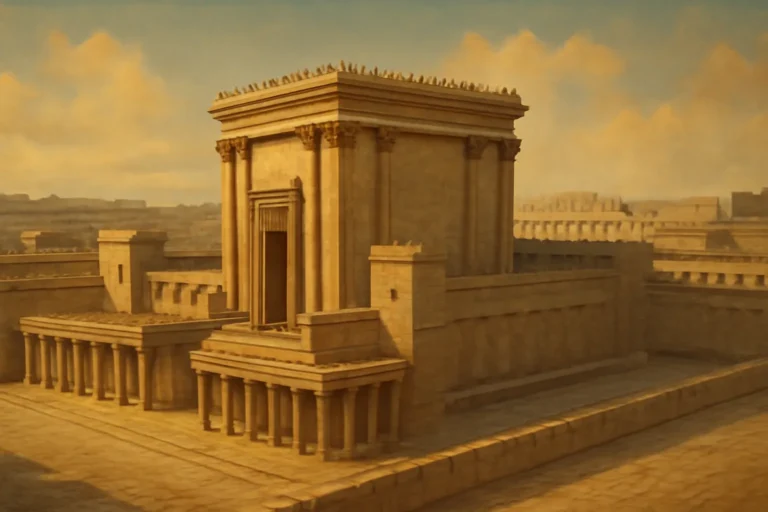
Herod’s reconstruction aimed to rehabilitate and enlarge the entire Temple Mount complex, not just the sanctuary itself. The resulting complex included a much larger platform, massive stonework, and a program of architectural features designed to inspire awe, reinforce Jewish identity, and accommodate large numbers of pilgrims. This effort earned the Temple a new name in history—the Herodian Temple—to distinguish it from the earlier, more modest Second Temple. While the sanctum sanctorum (the Holy of Holies) remained a central focus of worship, the surrounding courts, porticoes, and retaining walls were expanded and retouched to produce a more impressive, ritual-rich environment.
Scope, design, and enduring features
The Herodian expansion entailed the construction of an enormous platform that redefined the Temple Mount as a massive ceremonial space. Estimates of the platform’s size are around 35 acres, making it one of the largest ceremonial platforms in the ancient world. The work included not only the temple building itself but also the surrounding porticoes, gates, porches, and walls that enabled a controlled flow of pilgrims and the performance of liturgical rites on a grander scale. In architectural terms, the Herodian Temple blended classical Mediterranean design with local sacred architectural traditions, producing a structure that would be legendary for its beauty and its engineering.
Several elements became iconic in this phase:
– The expanded platform, which controlled the pilgrimage route and sheltered vast crowds during festivals.
– The Temple’s outer courts and numerous gates enabling access for different groups within Jewish society.
– The elaborate propylaea and vestibules that framed the approach to the sanctuary.
– The retention of a central sanctuary space, which while renovated, maintained continuity with the earlier Second Temple concept.
Herod’s project was not merely about aesthetics; it was also a statement of political power in a region under Roman sovereignty. The temple complex thus functioned as a political symbol as well as a religious center, attracting pilgrims from across Judea and beyond, and serving as a focal point for Jewish religious life until the catastrophic events of 70 CE during the Roman siege of Jerusalem.
It is important to note that the renovation did not erase the earlier Second Temple tradition. Rather, it reframed that tradition within a monumental, imperially sanctioned project. The religious leadership, priestly functions, and the Torah-centered practices continued, but within a setting that reflected a second, larger phase of temple-building. The difference between the initial rebuilding led by Zerubbabel and Jeshua and the later Herodian expansion lies in scope, scale, and the political theater surrounding the work. For students of history and religion, the transformation is a case study in how religious architecture evolves under shifting political regimes while preserving core liturgical purposes.
Key sources and how scholars interpret the builders of the Second Temple
Biblical accounts and their emphasis on builders
Two biblical books—Ezra and Haggai/Zechariah—provide the principal accounts of Zerubbabel and Jeshua as the builders who revived the temple cult after the exile. In Ezra 3–6, the narrative emphasizes the people’s return, the laying of the foundations, opposition from adversaries, and eventual completion and dedication. The text underscores the role of the king’s decree in enabling the project and highlights the leadership of the political-religious pair, Zerubbabel and Jeshua, as the constructors of the renewed sanctuary. For many readers, this trio—kingly authorization, priestly leadership, and the returning community—embodies the essence of who built the Second Temple during its earliest phase.
Historical and textual corroboration outside the biblical corpus
Beyond the Hebrew Bible, historians and archaeologists examine the period to understand the practical realities behind the rebuilding. The Persian Empire’s administrative structure and its policy toward conquered peoples provided a framework within which a return and rebuilding could occur. The presence of edicts and decrees from kings such as Cyrus the Great, Cambyses, Darius I, and others is documented in various archaeological and textual sources. These sources help scholars interpret the political permission that enabled Zerubbabel and the community to reconstruct the temple precincts. In the Roman era, the later expansion by Herod the Great is well documented in contemporary sources from the period, including the writings of Josephus. His works recount the transformation of the temple precincts and the scale of Herod’s architectural enterprises, offering a complementary view to the biblical narratives.
Why this history matters: the impact of the two-building phases
Religious life and ritual continuity
One of the most enduring questions about the Second Temple concerns how a rebuilt sanctuary could maintain continuity with the earlier temple traditions while adapting to new political realities. The Zerubbabel–Jeshua phase reestablished the cult and allowed a reconstituted priesthood to resume sacrifices and rituals. Later, Herod’s renovation did not replace these sacred duties but reframed the environment in which they occurred. The result was a temple system capable of accommodating large congregations and a broader ritual life—one that could still anchor Jewish worship even as the wider world entered the imperial era.
The rebuilt temple became a powerful symbol of Jewish identity. It stood as a reminder of a people returning from exile and reasserting their covenantal obligations. The Second Temple era thus became a central chapter in Jewish memory, shaping liturgy, festival practices, and the sense of a people tied to a sacred geography. When Herod later transformed the site, he added magnificence to a space already charged with symbolic meaning. For many observers, the Temple Mount’s grandeur under Herod became a testament to the enduring aspiration that a house of worship could reflect both divine presence and political sovereignty.
Frequently asked questions and clarifications about the builders
Was Zerubbabel the sole builder? No. While Zerubbabel is the key political figure associated with the rebuilding, the actual construction involved many priests, Levites, and returning exiles under his leadership. The project was a collective effort that combined leadership with communal labor.
Did Herod build the original Second Temple? No. Herod did not inaugurate the initial sanctuary; he dramatically expanded and renovated the existing temple complex centuries later, around the turn of the era. His work is best described as a second, transformative phase rather than the first construction.
Were there other figures involved? Yes. In addition to Zerubbabel and Jeshua, prophets like Haggai and Zechariah played important roles in motivating the people to complete the work, while later chroniclers and historians added context about the complex’s expansion under Herod.
How precise are the dates? The dating is often approximate because the biblical and historical sources come from different genres and timeframes. The initial completion is commonly placed around 516 BCE, while Herod’s expansion began in the late 20 BCE and continued into the early first century CE, with the destruction of the temple occurring in 70 CE.
What is the distinction between the “Second Temple” and “Herodian Temple”? The term Second Temple traditionally refers to the post-exilic sanctuary originally rebuilt under Zerubbabel. The name Herodian Temple refers to the later, grand renovation and enlargement carried out by Herod the Great, which gave the temple complex its famous monumental form.
Conclusion without a heading: what to carry forward
While this article does not use a concluding heading, the synthesis is clear: the question of who built the Second Temple is best answered in two linked parts. The initial construction was a communal and leadership-driven effort led by Zerubbabel and Jeshua under Persian auspices, marking a crucial moment in post-exilic Judah. The later transformation by Herod the Great demonstrates how a sacred space can be reimagined to reflect new political realities and imperial resources while keeping the core religious purpose intact. Taken together, these two phases reveal a story of continuity and change—how a sacred space can endure through different ages, serving as a focal point for worship, memory, and communal identity across centuries.
Supplementary notes on the temple’s broader context
To understand the story of the Second Temple, it helps to situate it within the larger arc of ancient Near Eastern religious architecture. Temples in this period were not merely buildings; they were the centers of ritual action, representation of covenantal relationship, and hubs of social and political life. The builders—whether the returning exiles under Zerubbabel or the imperial architect-king Herod—crafted spaces that could carry intense symbolic weight as well as practical duties. The temple’s architecture, its courtyards, and its access points were designed to manage crowds, facilitate rites, and embody theological claims about divine presence among the people. The dual history—an initial rebuilding under local and national leadership, followed by a monumental expansion under a foreign ruler—reflects a dynamic interplay between devotion and state power, a theme that resonates in the broader history of religious architecture across civilizations.