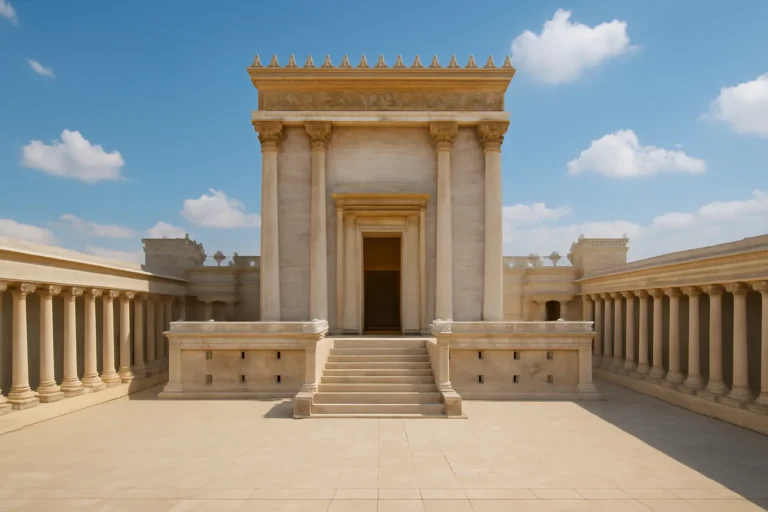
Rebuilding the Third Temple: History, Belief, and Geopolitics
Across millennia, the city of Jerusalem has stood as a focal point for religious longing, political contention, and scholarly debate. Among the most enduring and controversial ideas is the notion of rebuilding the Third Temple on the Temple Mount, a site revered in multiple faiths and central to long-running conflicts and conversations about sovereignty, prophecy, and ritual. This article surveys the history that underpins the concept, maps the beliefs that sustain it, and analyzes the geopolitical currents that shape its potential future. By tracing the threads of history, faith, and power, we can better understand why the question of rebuilding the Third Temple continues to resonate in public life, religious practice, and international diplomacy.
Historical Origins and Timeline of the Third Temple Concept
The idea of a rebuilt temple in Jerusalem has deep roots in Jewish scripture, liturgy, and collective memory. It is anchored in the legacy of two great sanctuaries: the First Temple, traditionally associated with King Solomon, and the Second Temple, which stood for several centuries after a rebuilt version of Solomon’s temple and became the focal point of Jewish worship until its destruction by the Romans in 70 CE.
To appreciate the trajectory of the concept, it helps to anchor it in a chronological frame that connects ancient history to modern imagination. The following milestones sketch a lineage rather than a precise forecast:
Solomon’s Temple (First Temple) and its destruction in antiquity. The fall of the First Temple is a rupture that enters prophetic and liturgical memory, shaping later expectations even as historical memory evolves.
Herod the Great’s expansion of the Second Temple in the late 1st century BCE, creating a grand sanctuary that would be, in Jewish memory, both magnificent and incomplete without a definitive divine revelation or messianic era.
The destruction of the Second Temple by Rome in 70 CE marks a pivotal moment in Jewish history and the onset of a long diaspora. For many sources, the idea of a future temple becomes a matter of eschatological hope rather than immediate political strategy.
Rabbinic and medieval speculation increasingly treats the temple as a symbol of ultimate restoration and moral order, even as ordinary life in the Diaspora or in later Christian Europe reframes the temple as a future event tied to the coming of a messianic age.
Early modern and modern awakenings—increasing interest in Zionism, biblical archaeology, and religious reform movements translates temple restoration from a purely liturgical dream into a symbol capable of mobilizing communities and shaping political narratives.
Contemporary discourse reframes the rebuilding the Third Temple question within debates about sovereignty, security, and regional stability. While some religious proponents emphasize ritual renewal, others insist that such a project would require profound theological consensus and political accord that are not yet in place.
Across these centuries, the subject has often appeared as a spectrum rather than a single program. Some strands imagine a literal rebuilding of an architectural structure and ritual precincts; others treat the Third Temple as a spiritual ideal, in which the temple’s presence is reinterpreted through ethics, prophetic expectation, or a reconstituted priestly order. The historical record shows that the temple idea travels through religious poetry, liturgical calendars, and political rhetoric, sometimes in harmony with state power and other times in opposition to it.
Religious Significance and Beliefs
What makes the Third Temple so potent in belief systems is not only the physical act of rebuilding but the theological and eschatological promises often linked to it. Jewish tradition presents the temple as the center of divine revelation, a place where high-priestly rites would reassert covenantal bonds between God and the people. Yet within Judaism, there is a wide spectrum of views about if and when such a project should occur, who would oversee it, and what the prerequisites might be.
Judaism and the Messianic Expectation
Many within Jewish thought connect the idea of a restoration of the Third Temple to messianic expectations. In some readings, the temple’s return is associated with the arrival of a divinely chosen leader who will gather the dispersed and inaugurate a new era of peace. In others, the temple remains a future symbol of divine presence rather than a concrete restoration plan. This diversity reflects a longstanding tension between a historical longing for a sacred center and a more symbolic, ethical, or spiritual understanding of temple presence.
Historically, the temple is not merely a building but a complex system of rites, sacrifices, and priestly service. Should a construction of the Third Temple ever occur, adherents debate which rites would be reinstated, how the priestly lines would be organized, and what modern interpretive frameworks would govern ancient practices. Some scholars and communities emphasize continuity with Second Temple rituals, while others envision a reimagined liturgy that accommodates contemporary norms, ethics, and inclusivity.
Other Faiths and the Temple Mount
For Muslims, the Temple Mount is home to the Haram al-Sharif (Noble Sanctuary), including the Noble Shrine and the Al-Aqsa Mosque. The sanctity of this site in Islam intersects with Jewish expectations in ways that have historically produced friction, negotiations, and occasional flashes of violence. Christian traditions also engage with the site through its biblical associations, linking it to the life of Jesus and to broader eschatological expectations found in Christian scripture. These overlapping religious meanings render any discussion of rebuilding the Third Temple deeply geopolitical as well as theological.
Even when people diverge on whether a temple should be rebuilt or what form it would take, there is a shared curiosity about architectural and ceremonial details. The Second Temple era provides a rough template for sacred space: precincts surrounding a Holy of Holies, an altar for offerings, and spaces reserved for priests. Modern discussions often blend ancient imagery with contemporary concerns about safety, access, and international law.
Location and layout considerations center on Temple Mount, but any plan for a Third Temple would have to reckon with the current sovereignty and religious control of the site by the Jordanian Waqf and Israeli authorities.
Ritual order debates consider whether traditional priestly service would resume, how to handle the sacrificial rites, and what modern spiritual roles would be included.
Architectural symbolism can range from a literal reconstruction to a symbolic reimagining that preserves the sanctity of the space without reproducing ancient ceremonial specifics.
Material culture questions involve ancient materials, relics, and the possible integration of modern technologies with age-old liturgical imperatives.
In many scholarly discussions, the idea of reconstructing the Third Temple is treated as a theoretical and aspirational topic rather than a practical blueprint. Critics argue that the logistics, religious authority, and political conditions make literal rebuilding impractical or dangerous in the short term. Proponents, by contrast, insist that the temple’s restoration could serve as a powerful symbol of unity, redemption, and covenantal continuity, provided that it occurs within a framework that respects human rights and pluralistic governance.
Contemporary Movements and Public Discourse
In the modern era, the debate about the rebuilding the Third Temple is not confined to theological treatises. It has inspired organizations, political movements, and media narratives that shape public discourse and policy. Some groups emphasize a literal project, while others advocate a cautious, interpretive approach that centers on advocacy, education, or ritual renewal without a call for immediate construction.
Religious Zionist Organizations
Several strands within religious Zionism frame temple restoration as a national and spiritual objective tied to Jewish sovereignty and religious privilege over sacred sites. These movements often connect the temple project with broader national aspirations, civic responsibility, and the protection of Jewish lifeways in the land. Critics warn that equating land rights with exclusive religious authority risks deepening regional tensions and undermining minority protections.
Messianic and Eschatological Groups
Some groups are motivated by specific theological narratives that link temple rebuilding to the imminent arrival of a messianic era or divine redemptive acts. Their rhetoric can be highly symbolic, focusing on the moral renewal of communities, the restoration of covenantal observance, or the moral lessons embedded in the temple’s history. It is important to distinguish between theological imagination and political strategy, as the latter can have real-world implications for security and diplomacy.
Scholarly and Interfaith Dialogues
Academic and interfaith initiatives often approach the subject with methodological caution. Historians, archaeologists, and theologians explore temple-related traditions across Judaism, Christianity, and Islam, seeking to understand how memory and sacred space influence contemporary politics. These conversations emphasize restraint, mutual recognition of sacred spaces, and the importance of avoiding actions that could inflame tensions among religious communities.
The question of rebuilding the Third Temple cannot be fully understood without examining the broader geopolitical landscape in which the idea surfaces. The Temple Mount/Al-Haram al-Sharif is one of the most sensitive flashpoints in the Middle East, a site where claims of historical entitlement intersect with questions of sovereignty, security, and human rights. Any discussion of physical reconstruction engages a matrix of actors, including state authorities, religious communities, international bodies, and neighboring populations.
Israel, Palestine, and Security Dilemmas
Israel’s legal and political framework, its security needs, and its relationships with Palestinian authorities and neighboring states create a complex environment for any talk about temple-related transformations. Even debates about symbolic recognition, policy guidelines, or temple-related rituals can influence security calculations, risk assessments, and diplomatic channels. The potential for provocation exists on multiple fronts, including protests, violence, or external pressures from regional actors with divergent agendas.
Muslim Custodianship, sovereignty, and access
In the current arrangement, the Temple Mount is managed within a precarious balance of sovereignty and custodianship. The Jordanian Waqf administers much of the Muslim holy sites with access regulations in place. Any proposal to advance physical construction would require negotiation across national, religious, and international lines, as well as careful attention to the rights and safety of pilgrims and residents. The geopolitics of this site illustrate how a ritual aspiration can escalate into a matter of statecraft and international diplomacy.
International Law and Diplomacy
International actors have long engaged in the question of Jerusalem’s status and sacred spaces. The legality of altering the status quo, the rights of worship for different faith communities, and the responsibilities of occupying authorities are all central to debates about any potential temple-related changes. Advocates for cautious engagement emphasize the importance of protecting religious freedom, maintaining stability, and pursuing resolution through dialogue. Critics of rapid or unilateral action warn that provocative steps could destabilize a fragile regional balance.
Legal, Ethical, and Practical Considerations
Beyond religious belief and geopolitical strategy, there are a set of practical and ethical questions that shape discussions about rebuilding the Third Temple. Law, policy, and ethics intersect in complex ways when sacred space becomes a matter of public policy and international concern.
Legal status of the site, including ownership, administration, and access rights for worshippers of different faiths.
Historical preservation and archeological concerns, including the protection of artifacts, sanctuaries, and ancient structures that may be uncovered or affected by construction.
Human rights implications, especially for non-Jewish residents and worshippers who rely on access to holy sites for their own religious practices.
Risk management related to public safety, potential clashes, and the humanitarian costs of conflict or escalations tied to sacred space narratives.
Ethical debates also arise about the use of sacred space for political leverage. Critics argue that turning a densely symbolic site into a litmus test for national identity can marginalize minority voices and heighten sectarian tension. Proponents, conversely, might frame the discussion as a legitimate assertion of religious freedom and cultural continuity. The tension between universal rights and particular claims is at the heart of many translational discussions about sacred architecture and public life.
Public Discourse, Media Representation, and Educational Perspectives
The concept of third temple reconstruction or related terms appears across media landscapes—from scholarly journals to opinion pieces, documentary films to social media debates. How the idea is framed can influence public opinion, policy considerations, and even grassroots organization. A careful, nuanced approach helps readers distinguish between symbolic language, policy proposals, and devotional impulse.
Media Narratives and Framing
News coverage often emphasizes risk, symbolism, and policy tension. In some outlets, temple-related debates are presented as part of a broader story about Israeli-Palestinian relations, religious pluralism, and international diplomacy. In others, sensational language may foreground sensationalist scenarios or prophetic fantasies. For readers and policymakers, understanding the difference between symbolic rhetoric and concrete political proposals is essential for grounded analysis.
Education and Interfaith Learning
Educational initiatives can illuminate the diverse meanings attached to the temple idea. For students, researchers, and community leaders, engaging with primary sources—from rabbinic writings to Ottoman and British Mandate-era records—helps reveal how different eras interpreted the temple’s role. Interfaith education can foster mutual respect and reduce misperceptions by highlighting shared values, such as commitment to ethical conduct, dignity of all worshippers, and the sanctity of sacred spaces.
Comparative Perspectives: Historical Precedents for Sacred Rebuilding
Across different cultures, religious traditions have imagined the reconstruction of sacred centers as a means of reconstituting community life, reasserting divine presence, or signaling a new epoch. While the specifics differ, several common themes recur in comparative studies of sacred architecture and political religion.
Ritual renewal as a forum for moral renewal within a community, often tied to ethical reforms and social cohesion.
National symbolism where architecture becomes a tangible manifestation of collective memory and political identity.
Cataclysm and reconstruction narratives in which destruction becomes a catalyst for reformation, reconciliation, or renewed faith.
The study of these patterns helps scholars anticipate how debates about the Third Temple might evolve in response to changing demographics, leadership, and international relations. It also invites caution about drawing direct parallels between past temple-building efforts in other contexts and the unique religious and political calculus surrounding Jerusalem.
Potential Scenarios and Policy Implications
Though the subject remains speculative in many respects, it is prudent to consider a range of hypothetical scenarios and their possible outcomes. This section is not a blueprint but a framework for understanding how different choices could unfold in practice.
Symbolic reaffirmation in which leaders and communities emphasize spiritual renewal, ethical reform, and education without altering the physical status quo of the site. Such an approach prioritizes dialogue and mutual respect.
Legal and diplomatic pathways where any discussion of sacred space is coupled with negotiations that guarantee access, protection of minorities, and adherence to international law. This scenario foregrounds risk management and crisis prevention.
Contested physical reconstruction in which proposals for rebuilding the temple become a flashpoint that tests governance structures, security arrangements, and international mediation mechanisms. This path could destabilize regional security if not managed with broad, inclusive consensus.
Non-physical restoration through cultural, educational, and commemorative projects that honor ancient traditions without altering the current status of the site. This approach seeks to deepen understanding while avoiding confrontation.
In any of these trajectories, the role of civil society, international actors, and religious communities is crucial. Transparent dialogue, respect for pluralism, and a shared commitment to human dignity can help reduce the risk of conflict while preserving space for legitimate spiritual expression.
Ethical Reflections and Responsible Engagement
Engaging with the topic of rebuilding the Third Temple demands humility about the limits of human foresight and respect for diverse beliefs. Ethical scholarship emphasizes responsible language, avoidance of sensationalism, and a commitment to the well-being of all communities affected by sacred space narratives. It also invites readers to recognize the difference between aspiration, political strategy, and pastoral care—three distinct but sometimes overlapping motives that shape discussions about Jerusalem’s future.
When discussing temple-related topics, responsible engagement includes:
Clearly distinguishing between theological aspiration and political action.
Acknowledging the plurality of voices within Judaism, Islam, and Christianity about sacred space, access, and ritual practice.
Respecting the human rights and safety of all worshippers and residents who rely on the site for daily life and spiritual expression.
Promoting constructive dialogue that seeks to reduce tension and enhance mutual understanding among communities with competing claims.
Concluding Perspectives: The Longevity of a Complex Idea
The question of rebuilding the Third Temple has persisted because it sits at the intersection of enduring religious longing, communal memory, and tangible political consequences. It is not a single plan but a family of ideas—some literal, some symbolic, some policy-oriented, some devotional. Across centuries, this concept has traveled through eras of empire, revolution, and nation-building, adapting to changing circumstances while retaining its core resonance for many who seek a sense of divine proximity, moral order, and historical continuity.
In diverse settings around the world, the discussion continues to unfold in ways that reflect local realities—land, laws, demographics, and diplomatic relationships—while remaining deeply connected to the ancient narrative that begins with Jerusalem and ends, for many, in a future restoration of a sacred center. Whether viewed as a spiritual goal, a political symbol, or a subject of scholarly inquiry, the idea of the Third Temple remains a powerful lens on faith, memory, and the complexities of life in a city that holds many loyalties and hopes.
As observers, scholars, and participants navigate this terrain, the goal is not simply to predict outcomes but to foster a more informed, respectful conversation. By exploring the layers of history, belief, and geopolitics that underpin the concept of rebuilding the Third Temple, readers gain a richer understanding of why the Temple Mount continues to command attention—and why the conversation about its future will likely endure for generations to come.