Jewish Exile Timeline: A Comprehensive History of Exile and the Jewish Diaspora
The history of the Jewish people is deeply rooted in the experience of exile, dispersion, and ongoing return. From ancient captivities to modern migrations, the arc of this narrative is not a single moment but a long, interconnected timeline of displacements and resettlements. This article presents a comprehensive chronology of the exile and diaspora in Jewish history, highlighting how communities formed, adapted, and preserved identity wherever they lived. It uses a broad sense of exilic timelines to cover biblical, classical, medieval, and modern movements, while emphasizing how each era produced distinct forms of communal life, religious expression, and cultural continuity.
Ancient beginnings: the Babylonian exile and the early diasporas
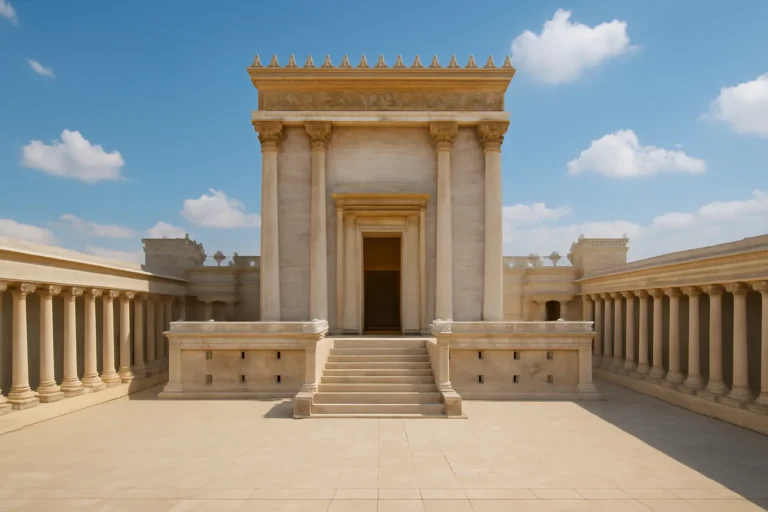
Long before the common era, the Jewish people faced a profound kinship with the land of Israel and a parallel experience of displacement. The first major exilic event in recorded history is the Babylonian exile, which shaped Jewish memory and legal-religious development for centuries. Babylon, under the Neo-Babylonian Empire, conquered the Kingdom of Judah, destroyed the First Temple in Jerusalem, and removed a substantial portion of the population to exile within Mesopotamia. This moment is often dated to 587–586 BCE, when the city’s walls fell and the Temple was set aflame, an event that would give rise to a crisis of sovereignty and faith, as well as a reconfiguration of religious leadership and practice.
The destruction of the First Temple and the chief priesthood’s exile created a shift from central temple worship to a Torah-centered, community-based life in diaspora communities.
Several waves of exiled leaders and artisans contributed to the spiritual and legal foundations that would later inform the written and oral traditions of Judaism.
The Babylonian exile catalyzed the emergence of important interpretive centers, including schools and academies that would carry forward the text-bearing traditions into exile and beyond.
After several decades, a decree by the Persian conqueror Cyrus the Great allowed some Jews to return to Zion. This set into motion a parallel arc: a movement toward homeland restoration and the development of a Second Temple period in Jerusalem, paired with a persistent diaspora in the surrounding regions. The period of return is often framed as a two-stage process—the initial return led by leaders such as Zerubbabel and Ezra, followed by Nehemiah’s reforms—though not all Jews left Mesopotamia or the Persian heartland, and many sustained vibrant communities in exile for generations.
The Persian era and the rise of the Judaic diaspora across the Mediterranean
Under the Achaemenid, then later Hellenistic and Roman dominions, the Jewish communities navigated a shifting political landscape while deepening their religious literature, law, and identity. The Persian period (roughly 6th–fourth centuries BCE) offered a relative degree of autonomy and the possibility of rebuilding the temple, and it is during these centuries that the concept of a diaspora—communities living outside their ancestral homeland—takes on a broader, more enduring character.
The establishment of return narratives alongside sustained residence in places like Babylon, Egypt, and the Levant shaped early forms of community life, charitable institutions, and scholarly activity.
The spread of Jewish life along the Mediterranean coasts included settlements in Alexandria, Cyrene, and other ports, creating a transregional network that would influence later rabbinic scholarship and halakhic development.
Textual production, including the early compilations of biblical and post-biblical writings, reflected the dual identity of a people tied to Zion but continually relocating as a people of law, prayer, and memory.
Hellenistic influence and the evolving sense of exile
As Greek culture and the language of the day spread through the region, Jewish communities engaged with new ideas about religious authority, cosmopolitan life, and the status of Jewish law within larger empires. The term exile took on both literal and metaphorical senses: exile from a guaranteed temple-centered worship, and exile from a fully autonomous political sovereignty that many Jews had hoped to regain.
Destruction, dispersion, and the Roman era: the Second Temple to the emergence of the Jews in the diaspora
The Roman conquest dramatically redefined the Jewish experience of exile. In 70 CE, the Destruction of the Second Temple accelerated a major turning point, transforming a once-centralized religious life anchored in the Temple into a widespread, text-centered, and polycentric form of Judaism in exile. The aftershocks of the revolt against Rome, and the subsequent suppression of the Bar Kokhba revolt (132–136 CE), intensified the dispersion of Jewish communities, a phenomenon commonly described as the Roman exile or the early Christian and post-classical diasporas that followed in its wake.
The destruction of the Temple and the reshaping of Jewish worship around synagogues and rabbinic study marked a new era of religious authority and communal resilience.
Loss of political sovereignty in the land of Israel did not erase the longing for Zion; instead, it intensified creative responses to exile, including liturgical shifts and the writing of foundational texts.
Communities flourished in the Mediterranean basin, with notable centers in Alexandria, Asia Minor, North Africa, Italy, and later in the European heartlands.
The late antique and early medieval periods saw the consolidation of diverse Jewish communities across the Roman Empire and, after its division, into the Byzantine realm and beyond. The term diaspora became a robust descriptor for a people living in multiple jurisdictions, maintaining distinct linguistic and cultural practices while sharing a common religious tradition. The life of the Jewish people in exile during this era was not only about survival; it was also about adaptation, learning, and the cultivation of a transmitted memory rooted in sacred texts and communal ritual.
Medieval diversification: the Iberian Golden Age and the looming expulsions
Between roughly the 8th and 12th centuries, Jewish communities in the Iberian Peninsula enjoyed a remarkable period of cultural flourishing often described as a Golden Age. Scholars, poets, scientists, and philosophers thrived within Muslim-ruled territories that allowed a high degree of religious tolerance, convivencia, and exchange. This era produced significant contributions to philosophy, medicine, astronomy, poetry, and religious thought, shaping a lasting memory of coexistence and cross-cultural exchange.
The Iberian diaspora of knowledge extended across cities like Cordoba, Granada, Seville, and Toledo, where Hebrew scholars collaborated with Muslim and Christian scholars in translating and commenting on classical texts.
Jews in the Iberian realm developed distinctive liturgical traditions, dialects of Judeo-Arabic and Ladino, and a complex legal culture that maintained Jewish life within a broader multi-religious society.
The era culminated in a sequence of expulsions that would redefine the exile timeline for Iberian Jews and ignite waves of migration to the Ottoman Empire and beyond.
However, a shift in political winds led to rising restrictions and eventual expulsions. The late medieval period is marked by several decisive events that would alter the exilic trajectory of Jewish communities in Western Europe:
In 1492, the Expulsion of Jews from Spain marked a watershed moment in the Iberian diaspora, forcing thousands to seek new homes across the Mediterranean and Atlantic worlds.
In 1497, the Expulsion from Portugal compounded the displacement, pushing many Iberian Jews toward the Ottoman Empire, North Africa, and Western Europe.
Converso and Marrano communities emerged in response to pressure, with some Jews outwardly converting while maintaining religious practice in secret—a phenomenon that influenced debates on Jewish identity and memory for generations.
Movement and adaptation: the Ashkenazi march into Central and Eastern Europe
In the wake of Iberian expulsions, many Jews moved into Central and Eastern Europe, establishing enduring communities known today as Ashkenazi Jewry. This period was characterized by migration, settlement in new political jurisdictions, and the formation of distinctive religious and liturgical traditions, including the development of Yiddish as a living language for daily life, prayer, and culture. The exile chronology during the medieval and early modern periods often centers on the creation of ghettos, the negotiation of legal status within Christian authorities, and the deepening of rabbinic scholarship in centers such as Prague, Kraków, and Lublin.
Decade-by-decade movements across the Central and Eastern European landscape created a mosaic of Jewish communities with varying degrees of autonomy and security.
The emergence of intellectual and religious leadership—rabbis, scholars, and poets—helped preserve Jewish law, ritual practice, and education in diaspora contexts.
Economic life, marriage patterns, and cultural production in exile contributed to a robust maintenance of Jewish identity under pressure and constraint.
The Ottoman gateway: Sephardic and Jewish refugees in the Ottoman Empire
Following the Iberian expulsions, the Ottoman Empire became a central refuge for Sephardic Jews. The Ottomans welcomed forced migrants from Spain, Portugal, and other parts of Europe, where they integrated into existing communities and contributed to urban and economic networks. Cities such as Salonika (Thessaloniki), Izmir, Cairo, and Istanbul became vibrant hubs of Jewish life. The Ottoman era thus represents a crucial branch of the diaspora timeline that allowed Sephardic and other Jewish communities to preserve religious life, practice, and learned culture even as they lived far from their ancestral homeland.
The Sephardic diaspora in the Ottoman world produced a rich splendor of liturgical traditions, musical forms, and poetry in Ladino and Hebrew.
Economic roles included merchants, artisans, financiers, and scholars who connected communities across the empire and to Europe and North Africa.
Legal and religious autonomy varied by region and era, yet communities commonly maintained robust networks of study, charity, and mutual aid.
The modern transformation: emancipation, migration, and the rise of the diaspora in the modern era
The modern period redefined exile in profound ways. The spread of nationalist movements, liberal constitutions, and emancipatory reforms opened new avenues for Jewish integration in many European societies while often increasing pressure in others. The emergence of Zionism in the late 19th century added a new dimension to the exile timeline: the idea that political nationhood in a Jewish homeland could complement or even supersede the experience of dispersion. In parallel, waves of immigration to the Americas, and later to other parts of the globe, created a truly global diaspora network that persists to this day.
The emancipation process allowed Jews to participate more fully in civic life, education, and commerce, while still maintaining distinct religious and cultural identities.
The rise of political Zionism, led by figures such as Theodor Herzl, reframed exile as the possibility of return through political sovereignty and national revival.
Massive migrations in the late 19th and early 20th centuries created large Jewish communities in the United States, Canada, Argentina, South Africa, and elsewhere, intensifying the global dimension of the Jewish diaspora.
The Holocaust and the forced displacement of war years
Among the most tragic periods in the long exile timeline of the Jews is the Holocaust, a genocidal assault during World War II that led to the murder of six million Jews and the forced displacement of survivors across war-torn Europe. This catastrophe not only decimated communities but also reshaped global concepts of refuge, human rights, and international responsibility. The aftermath of the war catalyzed mass migration, with survivors seeking safety in the United States, Palestine (which would become Israel), and other locales. The trauma of displacement and the urgent demand for safe haven reinforced the centrality of memory in Jewish life and the urgency of a Jewish homeland for many in the postwar generation.
The Holocaust produced a profound refugee crisis, with survivors carrying the burden of loss while building new lives in distant lands.
The international community established frameworks for humanitarian protection and refugees, influencing how Jewish exiles and others navigated displacement in subsequent decades.
With the founding of the State of Israel in 1948, a new dimension of Jewish life—one grounded in sovereignty and homeland—became a central part of the exile timeline and return narrative.
The postwar era: restoration, aliyah, and the continuing diaspora
After 1948, the establishment of Israel created a focal point for Jewish return and migration. The period is marked by large-scale aliyah (Jewish immigration to Israel) and a parallel maintenance of vibrant diaspora communities around the world. The postwar world also saw new forms of exile, including displacement due to conflict, persecution in various regions, and economic migration that carried Jewish communities into North America, Europe, Africa, and Asia. The modern exilic timeline thus remains dynamic, as Jewish communities adapt to changing political, social, and cultural landscapes while maintaining ties to shared memory, ritual practice, and education.
The early decades of Israel’s existence spurred successive waves of aliyah, including mass migrations from Europe, the Middle East, North Africa, and later Ethiopia and the former Soviet Union.
In the Jewish diaspora of the United States and other countries, Jewish institutions—synagogues, schools, philanthropic organizations, and cultural centers—thrived, maintaining a robust sense of community continuity across generations.
Memorial culture, archives, and scholarly work preserved the lessons of past exiles, helping to explain why the idea of homeland remains central to many Jewish identities.
Key phases in the exile and diaspora chronology
To appreciate the scope of the Jewish exile timeline, it helps to summarize major shifts into a sequence of phases. The following timeline highlights landmark events, each representing a turning point in exile, diaspora formation, or return.
586 BCE — Destruction of the First Temple and the onset of primary exile into Babylon.
538–516 BCE — Persian permission to return and rebuild the Temple, beginning the Second Temple era and a partial homeland restoration.
70 CE — Destruction of the Second Temple by Rome, accelerating the shift toward a widespread diaspora and the emergence of synagogues and rabbinic life as key centers of authority.
135 CE — Bar Kokhba revolt fallout; expulsion and renaming of the region foster further dispersion and the consolidation of distinct diaspora networks.
5th–15th centuries — Medieval diaspora expansion across Europe, North Africa, and the Mediterranean, including the Iberian Golden Age and eventual expulsions in 1492 and 1497.
1492–1497 — Iberian expulsions drive Sephardic migration to the Ottoman Empire, North Africa, and Western Europe, reshaping the balance of Jewish communities.
18th–19th centuries — Emergence of Ashkenazi communities in Central and Eastern Europe with renewed intellectual leadership and institutional life amid varying political climates.
1948 — Establishment of the State of Israel, creating a modern focal point for Jewish return and ongoing aliyah alongside sustained diaspora life.
Post-1948 — Global diaspora persists, with communities adapting to new realities in the United States, Canada, Africa, Asia, and Europe, while memory of exile remains central to Jewish identity.
Understanding the diaspora mosaic: regional trajectories and cultural forms
The global Jewish diaspora is not a monolith but a mosaic of regional experiences, each with its own language, liturgy, and social structure. Across centuries, three broad strands of exile and settlement have stood out: the Sephardic and Ladino-speaking communities of the Iberian and Mediterranean world; the Ashkenazi communities of Central and Eastern Europe; and the diverse Jewish communities of the Middle East, North Africa, and later Sub-Saharan Africa and Asia. Each stream contributed distinct ritual practices, legal authorities, and intellectual traditions that have remained part of the broader Jewish civilizational fabric.
Sephardic and Ladino heritage developed in the Iberian diaspora and its Mediterranean outgrowths, profoundly influencing liturgy, musical traditions, poetry, and philosophy.
Ashkenazi heritage emerged from the Central and Eastern European milieu, shaping synagogue structure, Talmudic study, and Yiddish culture that traveled with communities around the world.
Communities in the Middle East and North Africa built their own distinctive practices, such as Judeo-Arabic literature, medieval theological debates, and unique calendrical and ritual calendars.
In addition to cultural distinctions, the diaspora timeline shaped economic and political strategies for survival, including mutual aid, charitable endowments, and the avoidance or negotiation of legal restrictions. The resilience of Jewish education, scholarship, and religious life across continents is a defining feature of the exile and diaspora experience. The exile memory continues to inform modern Jewish thought about homeland, security, and identity in a global context.
Modern reflections: memory, migration, and the enduring exile narrative
In contemporary times, the exile timeline remains a living frame for understanding Jewish life. The memory of ancient captivities, medieval expulsions, and modern displacements informs debates about national belonging, minority rights, and cultural continuity. The ongoing presence of Jewish communities around the world demonstrates how a people can sustain a strong sense of identity while thriving in diverse social and political landscapes. This narrative also highlights the paradox of exile: a condition of displacement that, over time, creates new centers of vitality, learning, and leadership that contribute to a global Jewish civilization.
In Israel and the diaspora, ongoing aliyah continues to reflect the aspirational arc of the exile timeline, linking ancient memory with modern political life.
The educational and cultural infrastructures of the diaspora provide enduring links to ancestral texts, histories, and rituals that anchor communal life across generations.
Contemporary Jewish communities confront new forms of displacement—economic, political, or social—while drawing on the same historical repertoire of resilience, mutual aid, and continuity.
How to read the Jewish Exile Timeline: themes and through-lines
To understand this long arc, consider several recurring themes that run through multiple eras and geographies:
Displacement and memory — Exile is as much a memory as a movement; ritual, liturgy, and storytelling preserve the sense of rootedness even when physical residence is far away.
Adaptation and continuity — Jewish communities adapted to local languages, laws, and cultures while maintaining core practices and laws.
Relation to land and homeland — The longing for Zion or homeland remains a persistent current, reinterpreted through religious, ethical, and political lenses over time.
Intellectual and cultural resilience — Rabbinic study, poetry, philosophy, science, and scholarship thrived in diaspora settings, spanning centuries and continents.
Migration as a driver of pluralism — The diaspora catalyzed diversity within a shared religious and cultural framework, contributing to a rich, global Jewish civilization.
As you navigate the exile and diaspora chronology, you will encounter a recurring motif: exile is not merely loss but also a catalyst for community building, learning, and transnational exchange. The long-term effect of this history is a networked tradition that persists in memory, ritual, language, and institutions—whether in the heart of a city, a distant shtetl, or a modern Israeli city.
Key figures and sources that illuminate the exile timeline
Throughout the centuries, certain figures and scholarly movements have helped illuminate the experience of exile and the logic of diaspora:
Rabbinic authorities who systematized Jewish law and ritual in exile contexts, ensuring continuity of practice across generations and geographies.
Poets, philosophers, and scientists who produced a literature of memory that preserved a sense of Zion and longing within diverse communities.
Historians and ethnographers who documented the migration patterns, architectural forms of community life, and the evolution of synagogues, yeshivot, and charitable institutions across continents.
Primary sources include biblical texts that reflect exilic experiences and prophetic commentary that speaks to longing for homeland; rabbinic collections such as the Talmud and midrashic literature that codified law and practice; liturgical texts that preserve memory of exile and return; and modern historical works that trace migration patterns, demographic changes, and political developments shaping the Jewish diaspora from antiquity to today.
In brief: the enduring arc of exile, diaspora, and homeland
From the Babylonian exile to the present-day global Jewish community, the exile timeline has defined how Jews observed faith, built institutions, and navigated political life. The thread that runs through this entire history is a persistent commitment to memory and belonging, even as communities adapt to new environments and opportunities. The diaspora has not only dispersed Jews across the world; it has also sustained a dynamic, resilient culture capable of mutual aid, education, and creative expression in countless contexts. Understanding this long arc helps illuminate why the concept of a homeland remains a powerful and nuanced facet of Jewish identity—one that continues to evolve while honoring the memories of generations past.
In studying this comprehensive chronology, readers can appreciate how each era contributed to a larger, interconnected story: an exilic history that is as much about memory and community as it is about geography and politics. The Jewish exile timeline, in its many phases, remains a living, instructive history—one that scholars, students, and readers can explore through the primary texts, communal memories, and ongoing experiences of Jewish life around the world.