Meaning and Significance of Baptism in the Catholic Church
In Catholic teaching, Baptism—often called the Sacrament of Baptism—is the foundational entry point into thelife of grace. It is more than a ceremonial rite; it is a divine action that opens a person to the mystery of Christ, reconciles them with God, and integrates them into the Church, the Body of Christ. The Catholic Church holds that through this sacrament, the believer is purified from sin, reborn as a child of God, and given access to the other sacraments. The rite is celebrated with reverence for its profound spiritual reality and its lasting effects on the soul.
The act of baptism in the Catholic tradition is performed with water and the Trinitarian formula—“I baptize you in the name of the Father, and of the Son, and of the Holy Spirit.” This explicit invocation of the Holy Trinity underscores the communion with the Triune God that baptism inaugurates. The sacrament is not an isolated event; it places the baptized person within the life of Christ, within the Church, and within a mission to witness to the gospel.
There are several common phrases used to describe this sacred act that reflect its breadth: Catholic baptism, Baptism in the Catholic Church, baptismal rite, and the sacramental birth of the believer. Each term highlights a facet of the same sacramental reality: cleansing from sin, new life in Christ, and entry into a living relationship with God and with other believers.
The impact of Baptism in the Catholic Church also extends to the destiny of daily life. Catholics understand that baptism equips a person for discipleship: to grow in virtue, to persevere in faith, and to participate in the liturgical life of the Church. The graces received in this sacrament empower the Christian community to pursue holiness, serve others, and participate in the universal mission of spreading the gospel.
Theological Foundations of Baptism
The Catholic understanding of Baptism is rooted in both Scripture and Sacred Tradition. It is a key element of what the Church calls the “Saved by grace through faith and baptism” dynamic, where God’s grace acts in human freedom to unite us to Christ.
Scriptural Roots
Several passages of Scripture ground Catholic beliefs about baptism:
Matthew 28:19-20 (the Great Commission): Jesus commands his apostles to go and make disciples of all nations, baptizing them in the name of the Father, and of the Son, and of the Holy Spirit, and teaching them to observe all that he commanded.
John 3:5 (Jesus speaks of rebirth in water and Spirit): “No one can enter the kingdom of God without being born of water and Spirit.”
Mark 16:16: “Whoever believes and is baptized will be saved.”
Acts 2:38 (Peter’s preaching on Pentecost): a call to repentance and baptism for the forgiveness of sins, with the gift of the Holy Spirit.
Tradition and the Magisterium
From the earliest centuries of the Church, Christians understood baptism as the means by which one is drawn into the life of Christ and incorporated into the Church. The Church Fathers repeatedly described baptism as a rebirth, an washing away of sin, and a participation in the Paschal mystery of Christ. The Magisterium—the teaching authority of the Church—has consistently safeguarded the essential form and matter of baptism, emphasizing its efficacy and necessity in the life of the believer.
The Trinity and the Sacred Signatures
The Trinitarian formula—“in the name of the Father, and of the Son, and of the Holy Spirit”—is non-negotiable in the Catholic rite. This naming binds the sacrament to the Triune God and establishes the source of grace that fills the person with divine life. The essential elements of baptism—water as the matter, the form (the invocation of the Trinity), and a proper intention by the minister—are surrounded by meaningful signs and symbols that reinforce the believer’s new identity.
The Catholic baptismal ceremony unfolds in a structured sequence that blends liturgical prayer, catechesis, and sacred signs. While the specifics can vary by parish and rite (Latin Rite, Eastern Catholic Churches, etc.), the core elements remain consistent. Below is an overview of the typical process, followed by notes on variations for infants and adults.
Preparatory Rites
Before the water is poured or the candidate is immersed, the Church invites the community to prepare for a sacred encounter with God’s mercy.
Reception into the community of believers, sometimes through a brief welcoming or rite of admission for a baptized person who seeks full communion with the Catholic Church.
Liturgical catechesis or brief instruction for parents of infants or for the catechumens/adults preparing for baptism, highlighting the meaning and responsibilities of being baptized.
Renunciations and profession of faith are typically recited later, but the overall mood is one of turning away from sin and turning toward God.
Liturgy of the Word
The liturgy of the Word is a time for the gathered faithful to hear the Word of God proclaimed and to reflect on the faith they profess. A homily may be given to help the assembly understand the meaning of baptism in daily life, especially for the parents and godparents of infants or the catechumens preparing for entry into the Church.
Renunciations and Profession of Faith
In the rite for infants, the parents and godparents answer on behalf of the child. In rites for adults, the catechumens themselves respond. The renunciations and the profession of faith—often recited from the Creed—affirm:
The renunciation of Satan and all his works
The profession of faith in the Father, Son, and Holy Spirit
The commitment to live as a follower of Christ within the Church
The Baptismal Liturgy
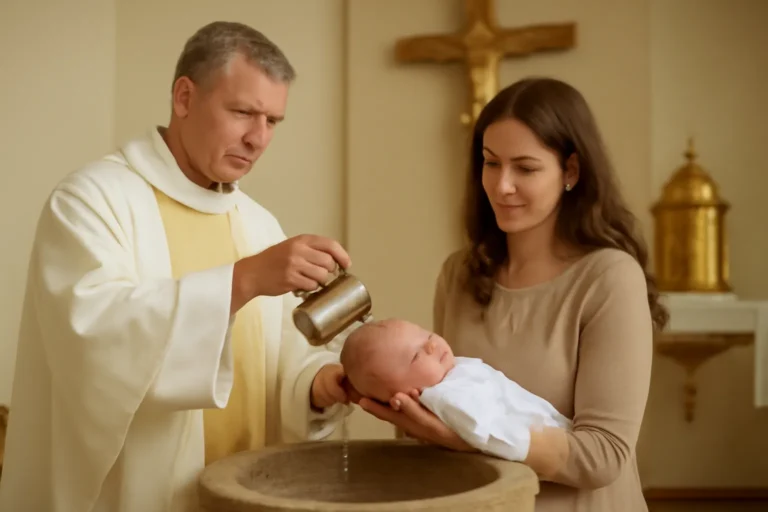
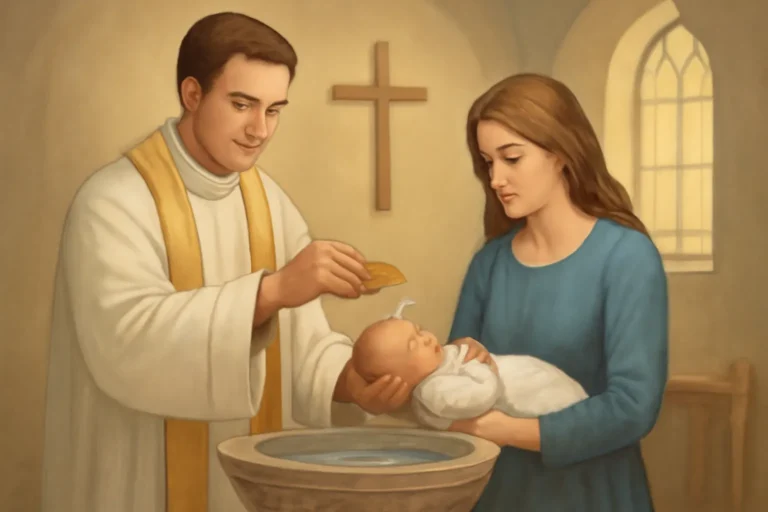
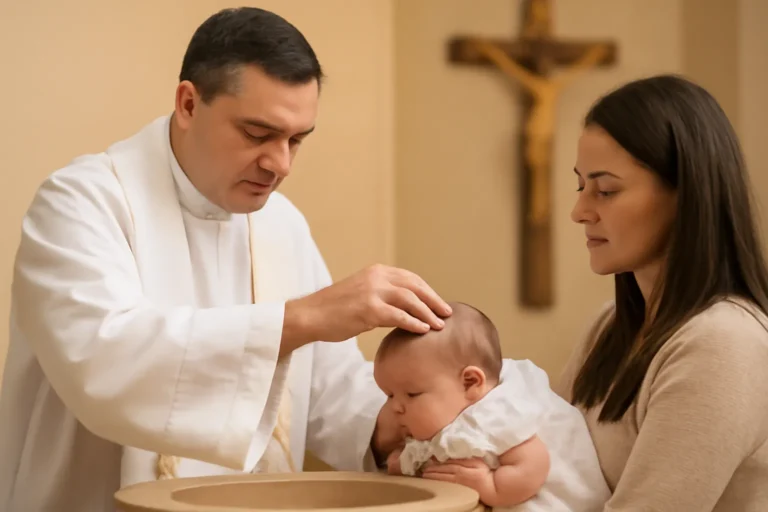
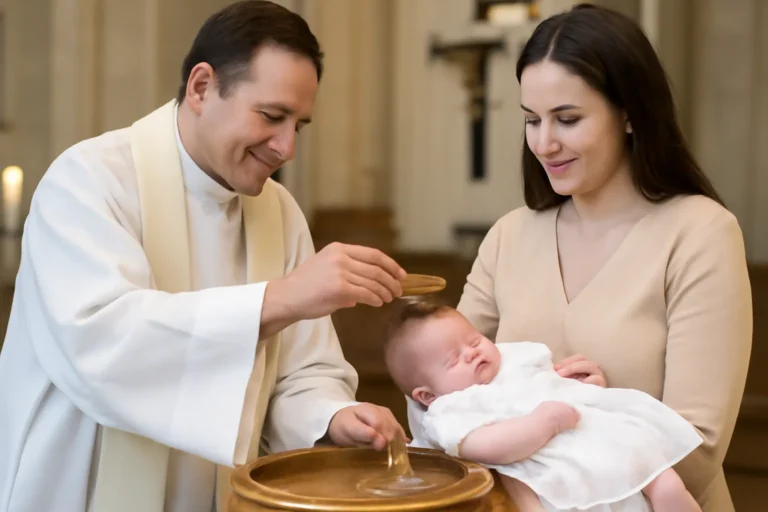
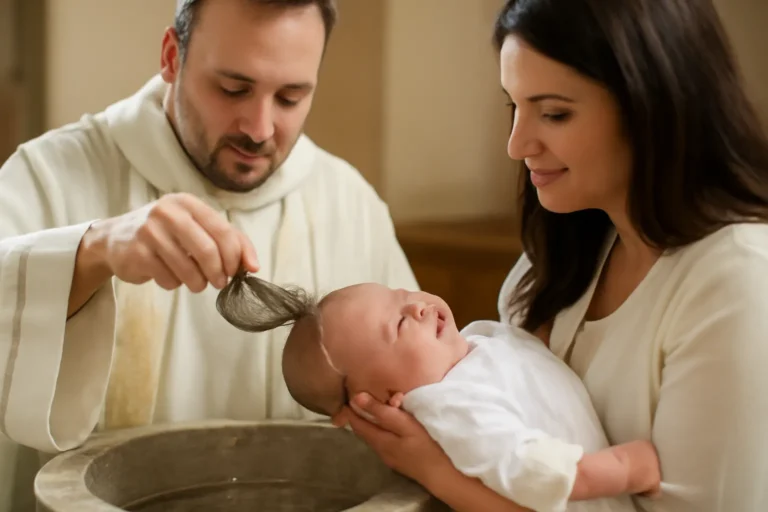
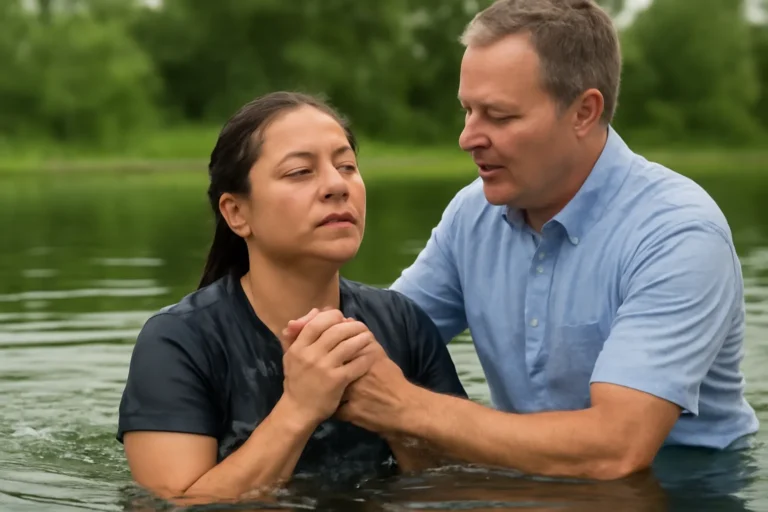
The core moment is the baptism with water, which may occur by pouring water three times on the head (the usual practice in the Latin Rite) or by immersion in some communities. The water acts as the sign of cleansing and spiritual rebirth. In most Latin-rite celebrations, the officiant pronounces the form—“I baptize you in the name of the Father, and of the Son, and of the Holy Spirit”—while pouring water over the candidate’s head.
Immediately after the baptism, essential signs are conferred to ratify and strengthen the new life in Christ.
The Rite after Baptism and the Post-Baptismal Rites
Following the baptism, several symbolic rites reinforce identity and commitment:
Anointing with sacred chrism on the crown of the head, signifying the filling with the Holy Spirit and the sharing in the mission of Christ the priest, prophet, and king.
Clothing with a white garment to symbolize purity and the new life in Christ.
Lighting of the baptismal candle held by the newly baptized or presented to the infant by the sponsor(s), symbolizing Christ as the light of the world.
A blessing prayer and possibly a brief procession to symbolize belonging to the Church.
A baptismal certificate is issued, serving as a record of the sacrament and a reminder of the recipient’s place in the Church. In many parishes, the catechetical formation or preparation record is noted so that the baptized person can later receive the other sacraments in due course.
Infant Baptism vs. Adult Baptism (RCIA) in the Catholic Church
Infant Baptism
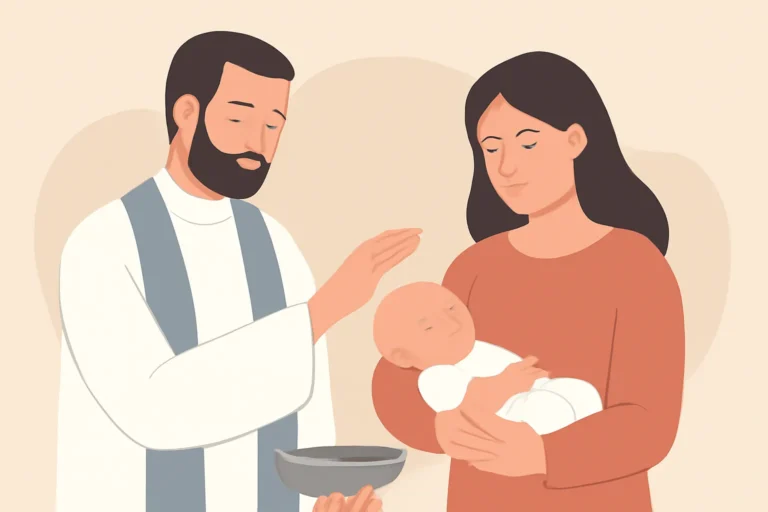
Infant baptism is a longstanding Catholic practice rooted in the understanding that all human beings are born into sin and need God’s grace from the earliest moments of life. The parents, with the help of one or two godparents, pledge to raise the child in the Catholic faith and to provide religious education. The Church teaches that the sacrament removes the stain of original sin, strengthens the soul with sanctifying grace, and initiates the child into the Christian community.
The responsibilities of godparents are to support the parents in the child’s faith formation, model Christian living, and assist the baptized person in remaining faithful to Christ in daily life. The requirements for godparents typically include being baptized (and ideally confirmed and a practicing Catholic), being at least a certain age, and living in accord with the Catholic faith.
Adult Baptism: RCIA Pathway
For adults who have not yet been baptized, the Church offers the Rite of Christian Initiation for Adults (RCIA). This catechetical formation accompanies candidates through a period of preparation, which includes learning about the faith, participating in the church’s liturgical life, and engaging in the life of the parish community. The initiation sacraments—Baptism, Confirmation, and Eucharist—are typically conferred in a single celebration or across a series of celebrations, often at the Easter Vigil.
The RCIA process emphasizes conversion, faith, and ongoing formation. It invites new members to enter into the fullness of Catholic life, including sacramental sharing in the life of the Church and continued participation in the liturgical and sacramental life thereafter.
Symbols and Signs in Catholic Baptism
The Catholic baptismal rite uses several meaningful signs that convey spiritual truth and identity. Here are the most prominent ones:
Water: The cleansing symbol that signifies purification from sin and new life in Christ. Water is the standard matter for the sacrament.
Trinitarian formula: The words spoken by the minister that invoke the Father, the Son, and the Holy Spirit, binding the recipient to the Triune God.
Sacred chrism: The holy oil used for anointing, signifying the gift of the Holy Spirit, strengthening, and consecrating the baptized for their life in Christ.
White garment: Symbolizes purity and the new Christian life; it marks the convert or child as a member of the baptized.
Baptismal candle: A symbol of the light of Christ and the expectation that the baptized walk as children of light.
Sign of the cross on the forehead, or a brief blessing, signifying belonging to Christ and the spiritual warfare against sin.
Role of Parents, Godparents, and the Parish Community
The parents have the primary responsibility to educate and raise their child in the Catholic faith, providing religious formation and ongoing catechesis. Godparents support the faith journey, serving as witnesses and mentors in Christian life. The Catholic Church requires that godparents be baptized and, preferably, confirmed Catholics who practice their faith. In some cases, one sponsor may suffice if the diocese allows it.
The parish community plays a crucial role by welcoming the newly baptized, offering ongoing formation, and integrating the new member into the liturgical life of Sunday worship and the sacraments. The parish also provides ongoing catechesis for families and individuals to help them grow in faith and live out their baptismal call.
The Catholic Church teaches that baptism is valid when the matter is water, the form is the Trinitarian invocation, and the intention is proper (the minister intends to perform the sacrament according to the Church’s norms). When these conditions are met, baptism creates a real sacramental grace that is not repeated. The Church recognizes baptisms performed by other Christian communities if they were conducted with proper form and intention and using water. When there is doubt about the validity of a baptism, the Church may administer a conditional baptism to ensure the person is properly incorporated into Christ and the Church.
In cases where a baptism has occurred but there is uncertainty about the form (for example, a missing or unclear record) or the person seeks full Catholic communion after practicing in another tradition, the Church may provide pastoral guidance. This guidance helps ensure the baptized person is properly integrated into Catholic life, while respecting the dignity of the person and the sincerity of prior faith experiences.
What is the essential meaning of baptism in the Catholic Church?
The essential meaning is that Baptism makes a person a member of Christ and the Church, cleanses from sin, and infuses sanctifying grace. It is the doorway to the other sacraments and the Christian life.
Is infant baptism required in the Catholic Church?
While it is a longstanding and highly common practice, infant baptism reflects the Church’s belief that grace is available to all, including newborns, and that parents and godparents have the responsibility to raise the child in the faith. The Church also recognizes adult baptism for those who come to the faith later in life through RCIA.
Can baptism be repeated?
In Catholic theology, a baptism is valid once, because it is a permanent sacramental action that initiates a person into Christ and the Church. If there is doubt about the validity of a baptism administered in another Christian denomination, the Church may perform a conditional baptism to ensure full sacramental reality.
After baptism, the new Christian is invited to continue growing in faith through participation in the sacraments, especially the Eucharist and Confirmation, and through ongoing catechesis and moral formation. The Church encourages a life of prayer, service, and witness to the gospel.
What is the role of sponsors or godparents?
Sponsors or godparents accompany the baptized person in the faith journey, offering spiritual guidance, support in catechesis, and consistent witness to a Christian life. They are to be practicing Catholics who can reasonably fulfill this role and help the faithful grow in their relationship with Christ.
What is the difference between baptism and confirmation?
Baptism initiates the Christian into Christ and the Church; Confirmation strengthens and seals the baptized with the Holy Spirit, empowering them for mission. In the Catholic tradition, these are distinct sacraments, each with their own grace and significance, though both are essential to complete the process of full sacramental initiation in many rites.
Is there a difference between infant baptism and baptism for adults?
The underlying grace is the same, but the context differs. Infant baptism is typically followed by catechesis and first reception of the Eucharist as the child grows. Adult baptism, often part of the RCIA pathway, is accompanied by explicit instruction, confession of faith, and a more explicit professional faith by the candidate.
Practical Considerations for Families and Parishes
Planning ahead: Families should consult with their parish to choose a suitable date, understand the requirements for parents and sponsors, and learn about post-baptismal catechesis or preparation for the Eucharist and Confirmation.
Liturgical timing: Baptisms are frequently scheduled on Sundays or feast days, and in many parishes, they occur within the Mass or as a separate celebration. The parish calendar will provide guidance.
Emergency baptisms: In danger of death, any Catholic or even a non-C Catholic can perform baptism using the proper form and water. The intention is to do what the Church intends and to entrust the person to God’s mercy.
Documentation: A baptismal certificate is issued to document the sacrament, which is essential for the continuity of faith formation and for the reception of subsequent sacraments.
Conclusion: A Living Tradition of Grace
The Catholic Church regards Baptism as the living entrance into a life of faith, the beginning of a journey with Christ, and the adoption into the Body of Christ through the Spirit. While the ritual emphasizes outward signs—water, oil, garments, and candles—the real focus is the transformation of the heart and the ongoing formation of a person within the Church. The sacrament remains a powerful testament to God’s mercy, inviting each believer to a life of love, service, and communion with God and with others.
For anyone seeking a deeper understanding of their own baptism or exploring baptism for themselves or a loved one, thoughtful dialogue with a priest or catechetical leader can illuminate how this sacrament continues to shape faith, hope, and charity in daily living.