Baptism for Catholics: Your Complete Guide to Catholic Baptism
Baptism in the Catholic Church is more than a ceremony; it is the foundational Sacrament that initiates a person into the life of faith. For Catholics, baptism is the doorway to the other sacraments, a transformative action of God’s grace, and a public profession of faith that unites the baptized to Christ and to the Church. This guide offers an in-depth overview of Catholic baptism, its theology, practical steps, and what families and individuals can expect before, during, and after the rite.
Baptism is one of the seven Sacraments of the Catholic Church. It remits original sin and any personal sins, begins the sanctifying grace within the soul, and makes the believer a member of the Church, the Body of Christ. In Catholic teaching, baptism is the sacramental gateway to salvation, enabling a person to participate fully in the life of Christ and the Church.
In Catholic understanding, to be baptized is to be washed clean by water and the Holy Spirit, to be marked as a child of God, and to be incorporated into the life of Christ. The ceremony itself centers on the Trinitarian formula, with prayers, rites, and symbols that convey the mystery of grace in tangible signs.
Theology of Baptism: Key Concepts
A Catholic baptism conveys several essential spiritual realities that are rooted in Scripture and sustained by Sacred Tradition. The following concepts are central to a Catholic understanding of this sacrament:
Grace and transformation: Baptism confers sanctifying grace, reshaping the person’s relationship with God and with the Church.
Original sin and personal sin forgiven: The sacrament repairs the rupture caused by sin, restoring friendship with God.
Adoption as God’s child: The baptized are welcomed as members of God’s family, heirs to the life of grace and the Kingdom of God.
Membership in the Church: Baptism unites the individual with the Body of Christ and commits them to the mission of the Church in the world.
Participation in the Paschal Mystery: Baptism unites the believer to Christ’s death and resurrection, symbolized by the immersion in water and the rising to new life.
Another important aspect is the unity of the sacraments: baptism prepares the way for confirmation and the Eucharist, forming a coherent path of initiation into the Catholic life.
Who Can be Baptized? Eligibility and Requirements
In Catholic practice, baptism is offered to infants, children, and adults who profess the Catholic faith or are willing to be initiated into it. The Church teaches that baptism is valid for anyone who desires it with the proper intention and faith, though different circumstances require appropriate preparation.
Infant baptism: Typically celebrated when the parents and godparents commit to raising the child in the Catholic faith and to catechesis appropriate for the child’s age.
Adult baptism: Often occurs through the RCIA (Rite of Christian Initiation of Adults) process, which includes inquiry, catechesis, discernment, and full initiation.
Re-baptism is not permitted in the Catholic Church; once validly baptized, a person is not re-baptized, as the sacrament is a single, indelible spiritual mark.
There are special provisions for those who desire baptism but who are not yet able to profess faith fully, such as children who are being raised in families seeking full initiation for their children or those who are catechized but cannot yet receive the sacrament due to circumstances. In all cases, the Church emphasizes a sincere faith and a genuine readiness to enter into the life of Christ and the Church.
The baptismal rite varies slightly depending on whether the candidate is an infant or an adult, but the core elements and meanings remain consistent. The ceremony is marked by prayer, the blessing of water, the baptismal act, the anointing with sacred chrism, the white garment, and the lighting of the baptismal candle, each signifying a distinct facet of the grace being conferred.
Core elements and symbols
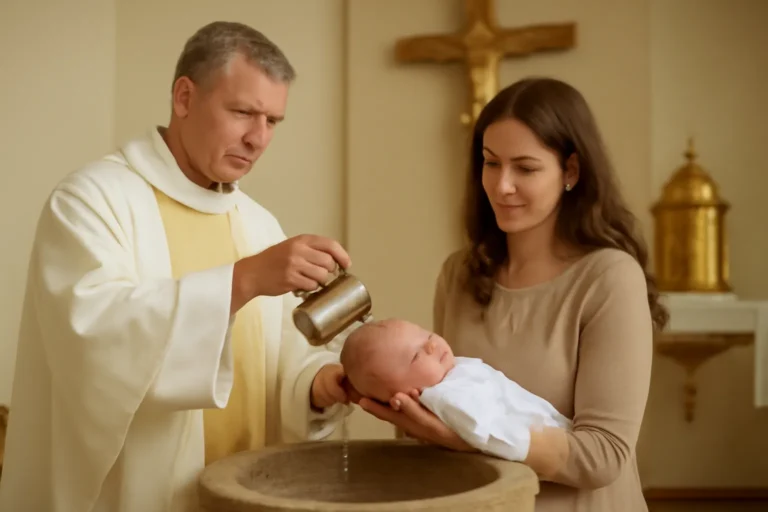
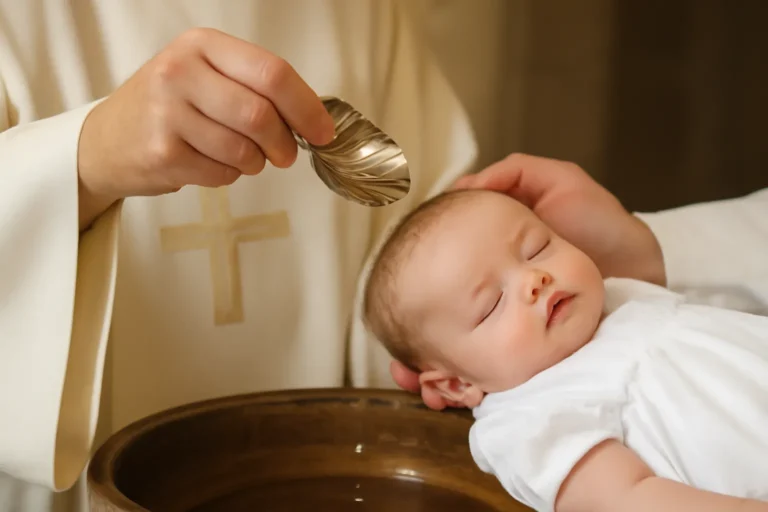
Water: A sign of cleansing, birth, and new life in Christ. The celebrant may pour water three times over the head or immerse the person once, depending on the tradition of the parish and the health and safety considerations.
Name aloud: The person being baptized receives the given name, symbolizing the personal invitation of God’s grace into a specific human life.
Trinitarian words: The minister says, “I baptize you in the name of the Father, and of the Son, and of the Holy Spirit,” invoking all three persons of the Holy Trinity.
Anointing with chrism (sanctifying oil): The oil of chrism symbolizes the person being sealed with the Holy Spirit and set apart for God’s mission.
White garment: The new Christian is clothed in a white garment, representing purity and the new life in Christ.
Paschal candle and baptismal candle: The baptismal candle, often lit from the paschal candle, symbolizes the light of Christ now present in the life of the baptized.
Overview of the rite for infants and adults
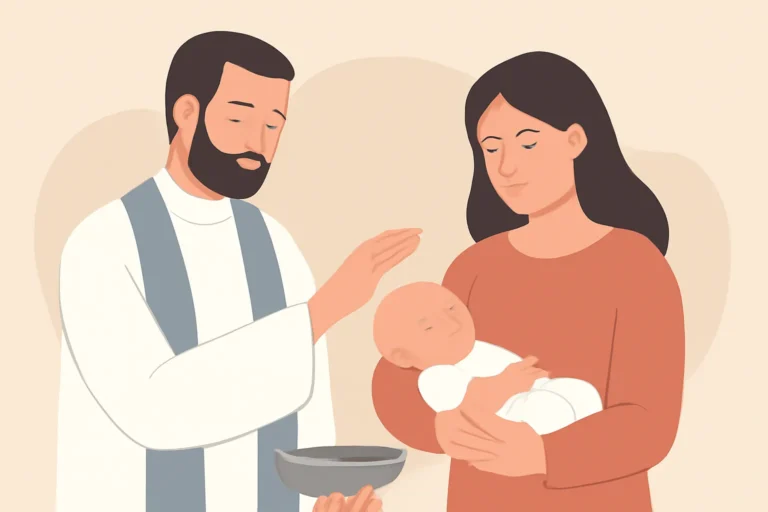
Infant baptism: Parents and godparents declare their faith and undertake to instruct the child in the faith; the priest or deacon baptizes, confirms in the rite, and blesses.
Adult baptism: The adult undergoes a more extensive catechetical process (often RCIA) that leads to reception of the Baptism, Confirmation, and Eucharist in a single Easter celebration or at another suitable time.
In Catholic liturgy, the rite is not merely a private event but is celebrated within the worshiping community. The parish community gathers to witness and to support the new member in the journey of faith. The baptismal ceremony thus creates an enduring bond between the baptized and the Church community.
Rite of Baptism: Practical Steps and Sequence
Understanding the practical sequence can help families and sponsors prepare thoughtfully for the sacrament. Below is a typical outline of steps in a Catholic baptism:
Introductory rites: The celebration begins with the entrance of the clergy, a greeting, and the opening prayers. For infant baptisms, there may be a baptism preparation session with parents and godparents beforehand.
Litany of the saints or prayers for the child: The community prays for the child, asking for intercession and protection.
Blessing of the water: The priest blesses the water, invoking the Holy Spirit to give grace to the baptized.
Profession of faith and the baptismal vows: Parents and godparents (or the adult candidate, if applicable) profess faith in the Triune God and renounce sin and evil.
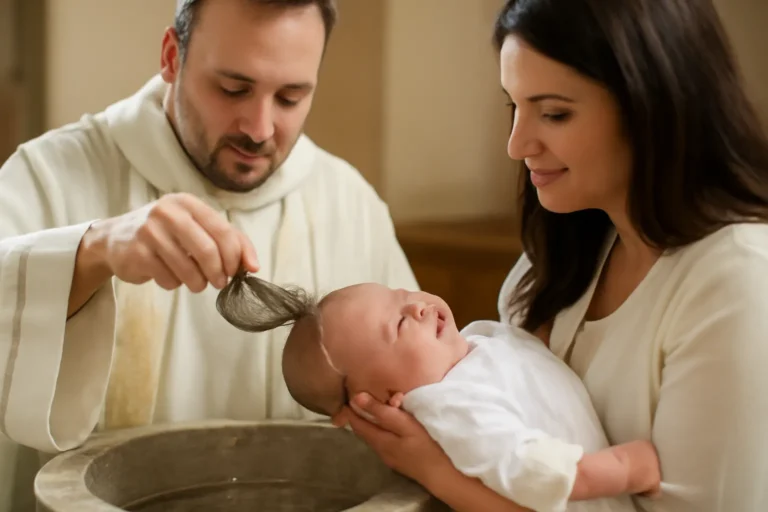
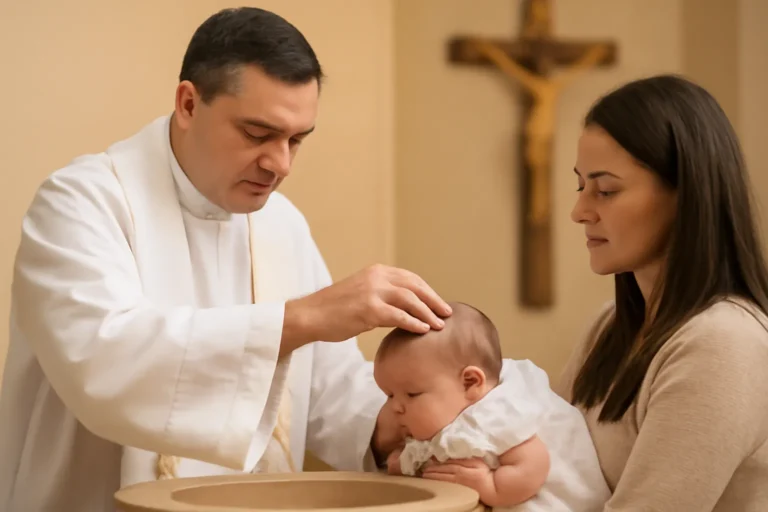
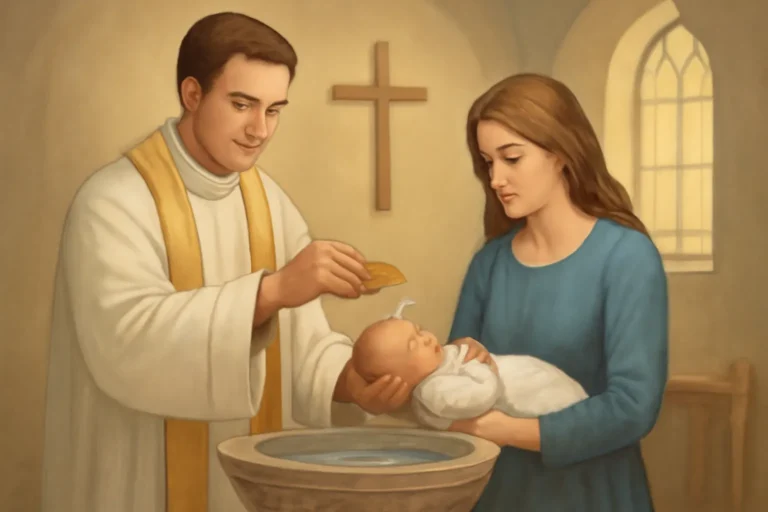
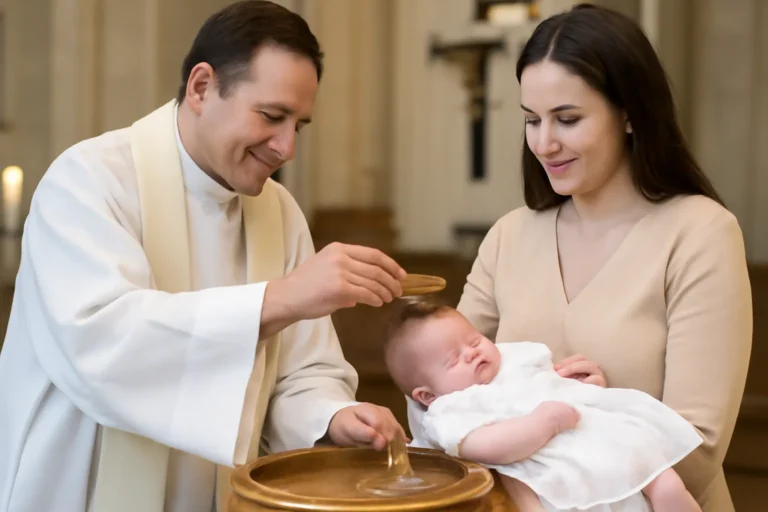
The baptismal action: The celebrant pours or immerses the candidate in water while words of the rite are spoken, “I baptize you in the name of the Father, and of the Son, and of the Holy Spirit.”
Weighing the anointing, garment, and candle: The anointing with chrism, the presentation of the white garment, and lighting of the baptismal candle follow the baptismal act.
Liturgy of the Eucharist (if part of a larger rite): In many parish celebrations, the liturgy continues with the Eucharist, uniting the newly baptized to the body of Christ.
Some parishes may adapt certain elements to accommodate family circumstances or local customs, but the essential grace and symbolism remain constant across the Catholic world.
Infant vs Adult Baptism: Distinctions and Common Ground
While the theological effects of baptism are the same regardless of age, the experience and preparation differ:
Infant baptism: Focuses on the faith of the parents and godparents. Catechesis for the child happens as the child grows, with ongoing formation and reception of the other sacraments in due time.
Adult baptism: Centered on personal faith and commitment. Adults typically engage in a structured program to understand the faith, discern the decision to be baptized, and then participate fully in the liturgical rites of initiation.
In both cases, the intention to live a life in Christ and to participate in the Church is essential. The Church encourages families to nurture faith within the home as well as through parish life, catechesis, prayer, and community service.
Godparents and Sponsorship
Godparents (sponsors) play a significant role in Catholic baptism. They are witnesses to the faith and allies in the spiritual formation of the child or adult being initiated. The requirements typically include:
Spiritual suitability: A godparent must be a practicing Catholic who has received the Sacraments of Initiation (Baptism, Confirmation, Eucharist).
Age and status: Godparents must be at least 16 years old and not be bound by any canonical impediment.
One or two godparents: In many parishes, there is room for one or two sponsors, with at least one godparent of the same gender as the child, though this can vary by diocese.
Professional faith: Godparents demonstrate a living faith in Jesus Christ, participate in the sacraments, and are ready to assist in the faith formation of the baptized.
In addition to a godparent, a sponsor who supports the child’s spiritual growth is a valued role, even if not formally a godparent. The church encourages families to choose sponsors who model consistent Christian living and active participation in parish life.
Baptismal Vows, Creeds, and Oath of Faith
The baptismal rite includes the profession of faith and the installation of the baptized into the Church’s life. The vows are a personal and communal commitment to live as a disciple of Christ. Key elements include:
Profession of faith: The baptized person’s faith is expressed, either personally or through the parents and godparents for infants.
Renunciations: The candidate rejects sin, Satan, and all its works and false promises, committing to follow Christ’s teachings.
Creed recitation: In some contexts, the Nicene or Apostles’ Creed is recited as a public declaration of faith and belief in the Triune God.
These vows emphasize the lifelong nature of baptism as a commitment to ongoing growth, prayer, and service within the Church.
Once baptized, the Catholic enters into a daily rhythm of faith that includes prayer, participation in the liturgical life of the Church, and ongoing catechesis. Some important realities after baptism include:
Sanctifying grace sustains a life of virtue and grace. The baptised person is called to ongoing conversion and growth in holiness.
Parish affiliation: The baptized are invited to join parish life, participate in sacraments, serve others, and contribute to the community.
Spiritual motherhood and fatherhood: The baptized receive a mission to witness to their faith in family, work, and society.
In daily life, baptism is a reminder that Christians are called to cooperate with grace, love neighbor, forgive offenses, and seek justice and mercy in their communities.
Preparation for Baptism: Catechesis, RCIA, and Family Readiness
Preparation is essential to ensure a meaningful and reverent celebration. The preparation path depends on age and prior faith formation:
Infants and young children: Parents undertake catechesis to learn about the faith and the responsibilities of raising a child in the Catholic tradition. Godparents are involved in this preparation as well.
Adults and older children: Through the RCIA process, candidates receive Instruction in Catholic doctrine, participate in rites that accompany their journey, and prepare for full initiation during the Easter Vigil or a suitable liturgical time.
Practical considerations: Parishes may differ in how they conduct classes, the frequency of meetings, and the integration of baptism with other sacraments, such as Confirmation and Eucharist.
Preparation not only informs the mind but also forms the heart to live the faith authentically. Fathers, mothers, and guardians are encouraged to cultivate a home environment of prayer, Scripture reading, and charity in daily life as a complement to formal catechesis.
Common Variations and Practical Realities
Catholic baptism can vary in practice in different regions and cultures, but the essential grace remains the same. Some variations include:
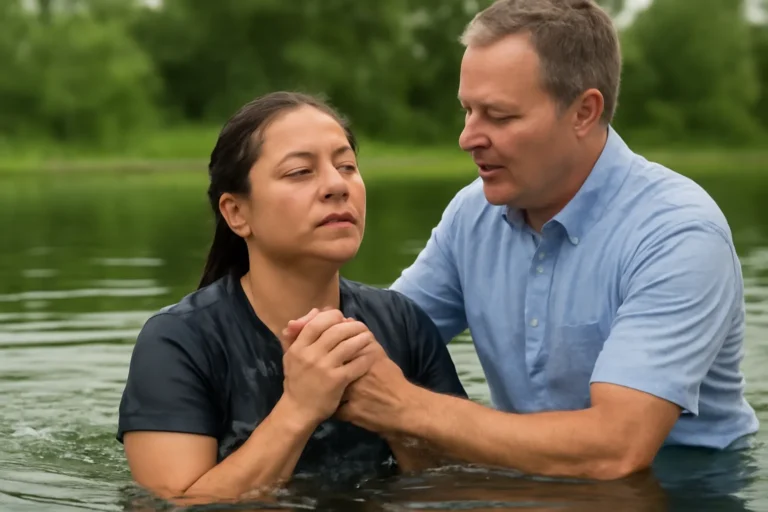
Mode of baptism: The sacrament can be conferred by pouring (affusion), immersion, or a combination, depending on liturgical norms, health considerations, and local custom. The Church allows for pouring if immersion is impractical.
Location: Baptisms can occur in a parish church, a baptistery, or, in some circumstances, outside the church building, with the community present.
Timing: Infant baptisms are often scheduled on Sundays after Mass or during a dedicated baptism service, while adult baptisms typically occur during a Sunday Mass or during the Easter Vigil.
Music and liturgical adaptation: Parishes may incorporate local languages, hymns, and customs, provided they preserve the integrity of the rite and the sacred nature of the celebration.
Regardless of local customs, Catholics should expect a reverent, catechetical, and communal celebration. Families are encouraged to coordinate with their priest or deacon to understand the specifics of their parish’s practice and to prepare well in advance.
Yes, the Catholic Church teaches that baptism is necessary for salvation as it is the ordinary means by which one is cleansed of sin and united with Christ and the Church. However, there is also a doctrine of “baptism of desire” and “baptism of blood” for those who, through no fault of their own, do not know Christ but seek truth and do God’s will as they understand it.
Can someone be baptized more than once?
No. Baptism leaves an indelible spiritual mark on the soul, making re-baptism unnecessary and invalid.
What if a baby dies before being baptized?
The Catholic Church entrusts infants to the mercy of God. The concept of “limbo” as a theological hypothesis is not a formal teaching; the Church encourages prayer for the child and trust in God’s mercy.
What is the role of godparents?
Godparents accompany the family in faith, support the child’s catechesis, and serve as spiritual mentors to help the baptized grow in faith.
How long does preparation take?
Preparation timelines vary by parish and whether the candidate is an infant or an adult. RCIA typically lasts several months, while infant baptism preparation is often shorter and coordinated with the baby’s family schedule.
Glossary of Terms
Baptism: The sacramental act that initiates a person into the Church and bestows sanctifying grace.
Chrism: Sacred oil used to anoint the baptized as a sign of confirmation with the Holy Spirit.
Eucharist: The sacrament of the Body and Blood of Christ, the source and summit of Catholic life, typically received after Baptism.
RCIA: The Rite of Christian Initiation of Adults, the process through which adults are prepared for baptism, confirmation, and Eucharist.
Paschal candle: A large candle symbolizing the risen Christ, from which the baptismal candle is lit.
Water: A primary sign of cleansing, new life, and spiritual rebirth in the baptismal rite.
Resources for Families, Catechists, and Parish Leaders
For those preparing for Catholic baptism, or for teachers and parish leaders seeking to deepen their understanding and practice, the following categories of resources can be helpful:
Official catechetical texts and parish catechism guides from your diocese or national bishops’ conference.
RCIA manuals that outline the stages, rites, and formation content for adults preparing for baptism.
Liturgical rubrics detailing the approved forms and options for the baptism ceremony in your local diocese.
Pastoral guidance from priests and deacons about scheduling, preparation timelines, and multicultural considerations.
Engaging with reliable resources helps ensure that the baptism remains a sacred, well-ordered, and meaningful experience for the candidate and for the church community that witnesses it.
Conclusion: Embracing a Lifelong Journey
While this guide is comprehensive, baptism is best understood and appreciated through participation in the life of a local parish. The Catholic faith invites each baptized person to grow in relationship with God, to participate in the sacramental life of the Church, and to answer Christ’s call to love God and neighbor. Whether you are welcoming a child into the Catholic family, preparing to be baptized as an adult, or supporting someone else through the baptism journey, you are joining a venerable tradition that has shaped the faith of millions across two millennia.