Baptism Ceremony: A Step-by-Step Guide to Planning, Traditions, and Meaning
A baptism ceremony is among the oldest and most enduring rituals within Christian communities. It marks a public act of faith, a spiritual awakening or reaffirmation, and a formal welcome into a faith family. The way this rite is conducted can vary widely—from a quiet, contemplative rite at a chapel to a festive public ceremony at a church, a pool, or even at the shoreline. Regardless of the setting, a well-planned baptism becomes a meaningful memory for the person being baptized, the family, and the community that witnesses it. This article provides a comprehensive, practical, and respectful guide to planning, understanding, and honoring the diverse traditions associated with baptism, baptismal rites, and related ceremonies.
Overview of the baptism rite
At its core, a baptismal rite expresses several core ideas. It is often understood as:
Entrance into the faith community or a reaffirmation of belonging within the body of believers.
Symbolic cleansing or the washing away of old life aspects in light of a new life in Christ.
Public profession of faith or a commitment to follow the teachings associated with the faith tradition.
Sacramental grace, in many traditions, seen as imparting divine favor or blessing that accompanies the outward act.
The form and emphasis of the ceremony depend on the denomination, culture, age of the initiate, and the local community’s customs. Some communities emphasize immersion in water, while others practice pouring or sprinkling. Some baptisms are administered by a pastor or priest, and others are led by lay leaders with the supervision of a congregation. Regardless of the method, the structure often includes a combination of prayers, a declaration of faith or vows, the receiving of the water, a symbolic garment or candle, and a blessing for the family and the congregation.
Step-by-step planning: a practical guide to organizing a baptism ceremony
Planning a baptism, whether for an infant, a child, or an adult, benefits from a structured timeline and clear responsibilities. Below is a step-by-step guide designed to help families coordinate logistics, symbolism, and community involvement.
Clarify the type of baptism and doctrinal alignment.
Decide whether the baptism will be for an infant, a child who is old enough to participate, or an adult convert.
Confirm the doctrinal expectations with the officiant, pastor, or priest: what form of baptism is preferred (immersion, pouring, or sprinkling) and whether confirmation or first communion will follow.
Identify whether the ceremony will occur within a church service, at a separate ceremony, or as part of a larger celebration.
Choose the date, venue, and time.
Coordinate with the place of worship or another suitable location (e.g., a chapel, a pool, or a coastal setting).
Consider seasonality, family travel, and accessibility for elderly relatives or guests with mobility needs.
Schedule a suitable time that allows for a comfortable flow of the liturgy and reception, if applicable.
Select the officiant and leadership.
Secure a pastor, priest, minister, or authorized lay leader who can guide the service and explain the theology behind the rite.
Discuss the order of service, preferred readings, and responses with the officiant.
Invite sponsors or godparents and key participants.
Explain the role of sponsors or godparents, including spiritual support, practical involvement, and ongoing encouragement.
Confirm attendance and willingness to participate in the rite, including readings, vows, or prayers if requested.
Plan the liturgy and readings.
Choose sacred passages that resonate: short verses or paragraphs from scripture, liturgical prayers, and hymns.
Decide who will read the chosen passages and what prayers will frame the rite.
Decide on water method and symbolism.
Confirm whether immersion, pouring, or sprinkling will be used; clarify the amount of water and the symbolism attached to it in your tradition.
Prepare any additional symbols such as a baptismal candle, white garment, cross, or oil (chrism) if the tradition includes them.
Arrange attire, symbols, and keepsakes.
Choose a special baptismal gown or white clothing, along with a baptismal candle and a keepsake booklet or certificate.
Decide who will present the candle, the garment, or other symbolic items during the ceremony.
Rehearse the service.
Hold a brief rehearsal with the participants to review the order of service, cues for readings, and the movements at the water.
Provide a simple script or outline to reduce uncertainty for the family and sponsors.
Coordinate logistics for guests and media.
Prepare guest seating plans, program booklets, and any photography or video guidelines.
Communicate expectations about photography during the rite, especially regarding the baptism of a child.
Safety, accessibility, and environment.
Ensure water safety for all participants, especially children or the elderly, if immersion or moving water is involved.
Provide a quiet space for nursing mothers, accessibility seating, and accommodations for people with disabilities.
Document the moment.
Arrange for a baptism certificate or record copy, and verify how the event will be noted in church or civil records.
Consider capturing the event with photos or a short video montage to share with family members who cannot attend.
Plan the aftercare and memory.
Organize a reception or meal after the ceremony if desired, including dietary considerations and seating arrangements.
Prepare a keepsake box or album to protect mementos like the garment, candle, and any written prayers.
Provide ongoing spiritual support.
Offer guidance on baptismal vows, faith formation, and community involvement for the new member or family.
Encourage continued participation in worship, catechesis, or spiritual disciplines as appropriate to the tradition.
While the exact form of the rite varies, certain elements tend to recur across communities, helping faithful participants to recognize, remember, and reflect on the meaning of the moment.
Water as the primary sign of cleansing, rebirth, and admission into the faith community. The water type and application method can symbolize different things within various traditions.
Immersion, pouring, or sprinkling as the method of baptism. Each method carries its own theological emphasis and practical considerations.
White garment or a light-colored robe representing purity, new life, and the removal of sin.
Baptismal candle held or lit to symbolize the “light of Christ” and the illumination of the believer’s path forward.
Oil (chrism) or anointing in some denominations to signify sealing or blessing and a calling to service.
Godparents or sponsors who pledge spiritual mentorship, support, and guidance for the baptized person.
Vows or public profession of faith in which the person or their guardians affirm belief and intention to follow the teachings of the faith.
Blessings and prayers offered by the officiant and the community, often including intercessions for the child, family, and church body.
Participation of the community through responses, hymns, and the act of witness; the crowd becomes part of the sacred moment.
Scripture readings and hymns that frame the narrative of God’s mercy, grace, and invitation to new life.
Traditions and variations: how baptism looks in different contexts
Christian denominations and their baptism practices
Across Christian traditions, the baptism rite is a powerful common thread, yet it wears different garments in different communities.
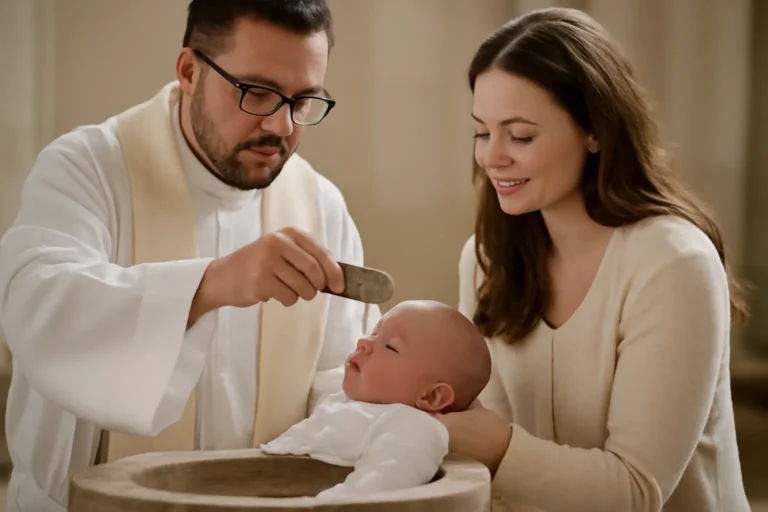
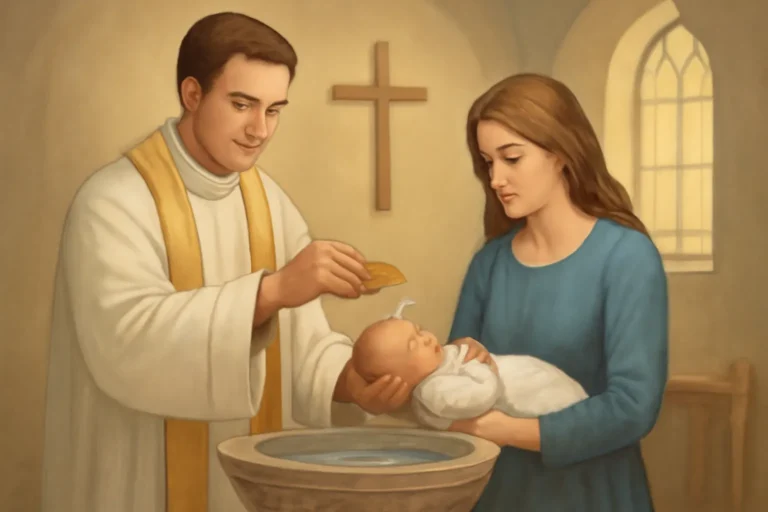
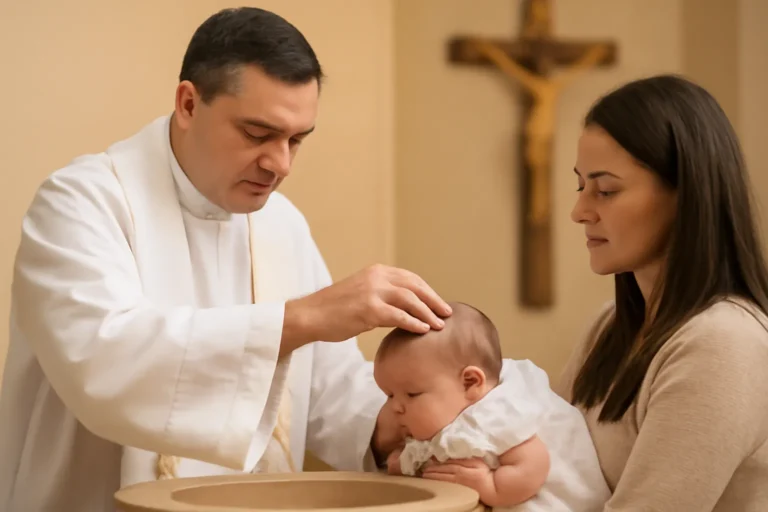
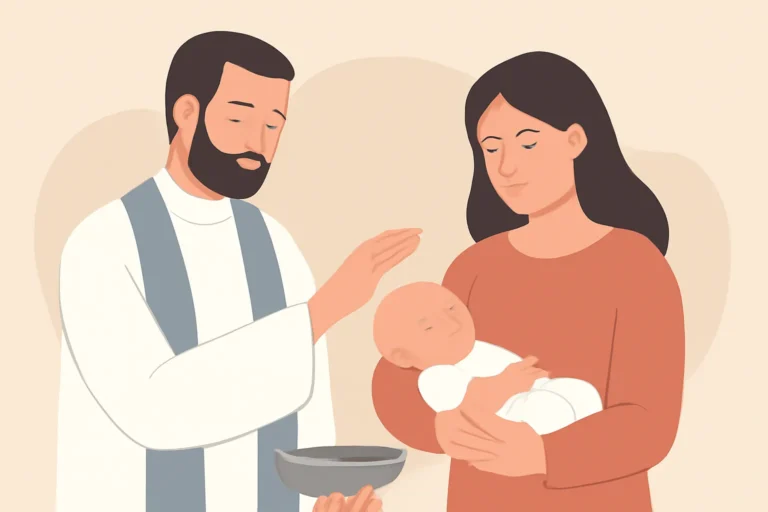
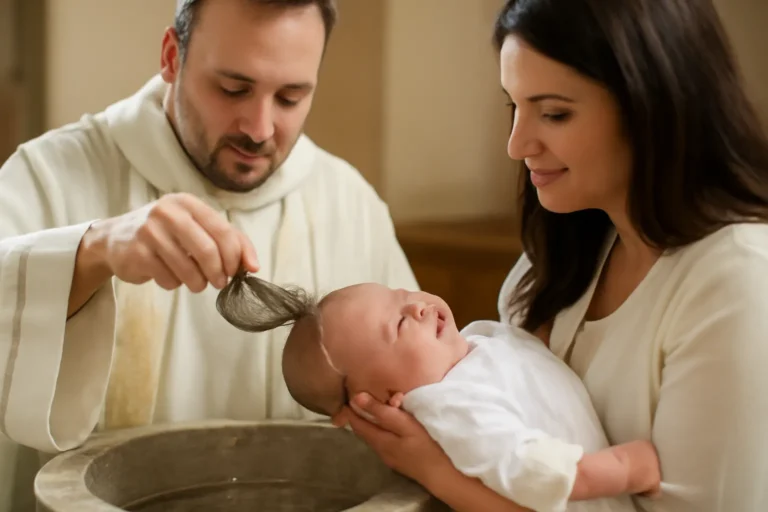
Catholic and many historic mainline churches often practice infant baptism using pouring of water over the head. The ceremony may include the use of chrism (holy oil), a baptismal font, the presentation of a white garment, and the lighting of a baptismal candle. The practice is typically embedded within a broader liturgy that includes the Eucharist and the laying on of hands in some contexts, with confirmation occurring later in adolescence or adulthood.
Orthodox traditions commonly emphasize full immersion or a combination of immersion and pouring, especially in baptism that occurs shortly after birth. The rite is deeply liturgical and often involves a series of prayers, anointings with myrrh, and a formal chrismation (anointment with oil) after baptism, symbolizing the gift of the Holy Spirit.
Protestant expression ranges widely. Some congregations practice infant baptism with sprinkling or pouring, while others emphasize believer’s baptism by immersion when the candidate can consciously profess faith. The structure—scripture, preaching, and baptismal vows—tends to be more flexible but still reverent.
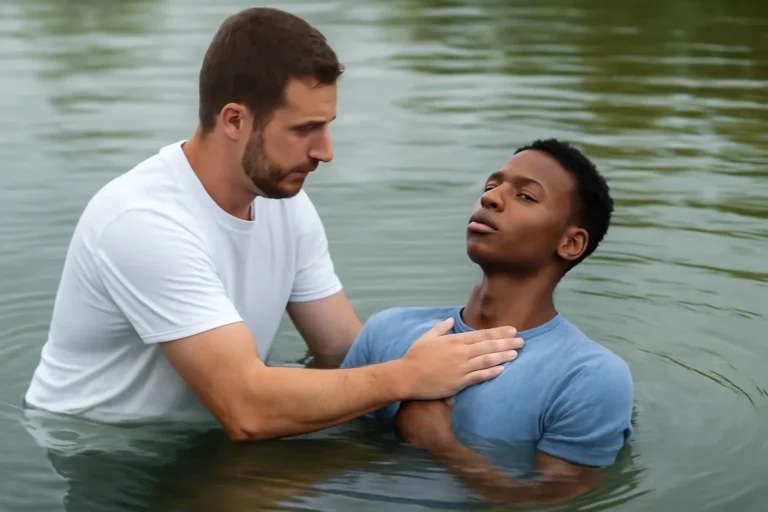
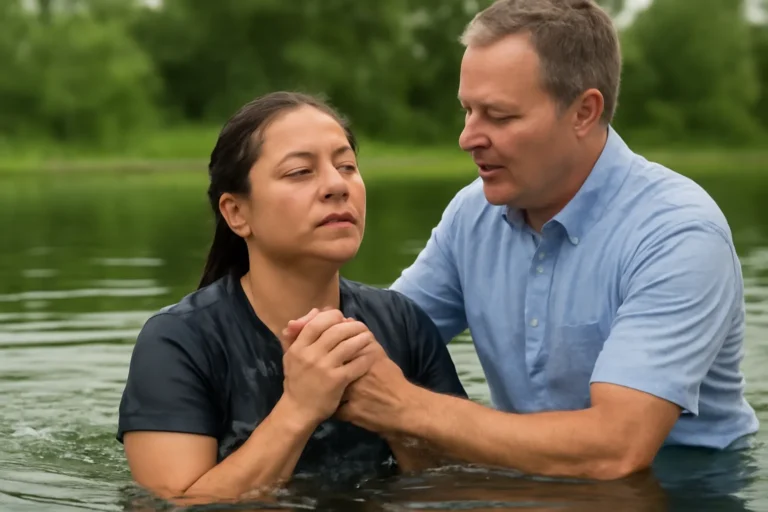
Baptist communities typically emphasize adult or believer’s baptism by immersion, underscoring personal faith confession and the symbol of dying to sin and rising to new life.
Anglican/Episcopal and many Methodist traditions maintain both infant baptism and adult baptism, with a liturgical form that is closely patterned on the church’s worship book and often followed by additional rites such as first communion or confirmation.
Lutheran and some Reformed churches celebrate baptism with water and a strong emphasis on grace, often combining it with a catechetical instruction process for the baptized person and family.
A ceremony that includes a family blessing, a procession, or a special musical selection to mark the moment.
Localized rituals that incorporate community symbols, such as a family Bible presented to the baptized person or a symbolic “washing of sins” reenactment in a way that respects the tradition’s theology.
Nontraditional venues like outdoor pools, hotel ballrooms, or natural water bodies where the rite is adapted to ensure safety and accessibility.
Interfaith and intercultural families blending practices to honor both faith identities while remaining faithful to the central meaning of baptism.
The meaning and theology of baptism
The deeper significance of the baptism rite rests on theological convictions about who God is, who we are, and how God engages humanity. While details vary, the following themes recur across many traditions.
Grace and the gift of new life. Baptism is often understood as an expression of divine grace that initiates a life-long journey of faith, rather than as something earned by moral merit.
Union with Christ. The rite is often framed as communion with the life, death, and resurrection of Jesus Christ, through which believers are incorporated into the church’s body.
Identification with the community. Baptism publicly acknowledges membership in a faith community and commits the baptized to support one another in discipleship.
Covenantal language. For many traditions, baptism is the sign of a covenant with God, echoing biblical language about inclusion, promise, and responsibility.
Identity and vocation. The rite frequently points toward a future of growth, service, and spiritual formation—whether through personal devotion, community involvement, or ministry within the church.
Given these layers of meaning, the planning of a baptism is not just logistical; it is an act of formation for the family, the sponsor communities, and the faith community that gathers to witness the event.
Practical considerations for host families and congregations
Beyond theology, practical considerations help ensure a smooth and respectful experience for everyone involved.
Venue selection: Consider space, acoustics, accessibility, and the ability to accommodate a water rite if immersion or a large number of participants are anticipated.
Water considerations: Ensure temperature safety, clean water, and a plan for controlling splashing or slips. For infant baptism, keep the environment comfortable for the child and caregivers.
Safety and supervision: Especially when water is involved, have a trained person present, clear supervision, and a plan to pause or adapt if anyone becomes uncomfortable.
Photography and media: Set expectations with the officiant and family about flash usage, mobile devices, and when photos may be taken without disrupting the rite.
Family roles and responsibilities: Clarify who will light candles, present symbols, read scripture, and deliver prayers to avoid confusion during the service.
Communication with guests: Provide a clear program, directions, and a note about dress code or cultural expectations to help attendees participate respectfully.
Record-keeping: Arrange for baptismal certificates, church records, and, if applicable, civil registration to ensure the rite is officially recognized.
Post-ceremony plans: Decide whether to host a reception, a meal, or a simple gathering, and communicate timing and logistics to guests.
Involving families, sponsors, and the community
The spiritual journey that begins with baptism is nurtured by ongoing support from families, godparents or sponsors, and the broader faith community. Thoughtful preparation helps everyone participate with clarity and reverence.
Godparents or sponsors should be chosen for their willingness to support the baptized person’s faith journey, to encourage them in spiritual growth, and to model a life consistent with the vows taken during the rite.
Family preparation may include practice readings, a short explanation of the rite for siblings, and a discussion about the meaning of baptism in the family’s own tradition.
Congregational welcome: The church or community can respond with prayers, songs, and a blessing that include the new member’s name and family context.
Tradition in practice: samples of service structure
While every community will tailor the ceremony to fit its theology and culture, a typical baptism service often follows a familiar arc. The following outline is for illustrative purposes and can be adapted to suit your tradition.
Processional and gathering, often with a hymn or short prayer as participants enter.
Please be seated moment and a brief introduction by the officiant outlining the purpose of the rite.
Proclamation of faith or a declaration of intent, which may be a personal confession for adults or a family affirmation for infants.
Readings and prayers chosen by the family and officiant, often including passages about water, life, and faith.
Water rite: the baptism itself, whether by immersion, pouring, or sprinkling, followed by a short blessing.
Symbols and signs: presentation of the baptismal garment, Bible, candle, or oil, with brief explanations of their significance.
Vows and commitments: the person being baptized or guardians speak faith commitments or promises on their behalf by proxy.
Communal blessing and a concluding prayer, often accompanied by a reception or fellowship moment if appropriate.
Recessional and the distribution of mementos or certificates to the family and sponsors.
The baptism ceremony is not a conclusion but the beginning of a journey in faith and community life. Thoughtful follow-up can help all participants grow in their understanding and practice.
Spiritual formation: consider a plan for catechesis, baptismal classes, or a faith formation track suitable for the age of the baptized person.
Continued participation: encourage attendance in worship, participation in small groups, and involvement in service opportunities.
Family remembrance: preserve the memory with a keepsake box, photo album, or a dedicated page in a family scrapbook.
Record maintenance: ensure the baptism is properly documented in both the church’s records and, if required, civil registries.
Community inclusion: invite the new member and family into ongoing congregational life, including mentoring relationships with established members of the faith community.
Common questions and practical answers
Families planning a baptism often have practical questions about scope, timing, and theology. The following short Q&A is designed to clarify common concerns. If you have a unique situation, consult your officiant or church leadership for guidance.
Who can be baptized?
The baptism is typically offered to infants through adults, depending on the denomination’s theology and the local church’s practice. For infants, guardians and sponsors participate in the vows; for adults, the person themselves makes a faith declaration.
What is required to baptize an infant?
Usually sponsors agree to support the child’s faith journey, and parents commit to raising the child in the faith. The rite involves water, utterance of the baptismal formula, and sometimes the presentation of a candle and a white garment.
Can baptism be performed in non-church settings?
Yes, some communities perform baptism in chapels, outdoor pools, or natural bodies of water when weather and safety permit. The officiant’s consent and the congregation’s readiness determine suitability.
What about godparents or sponsors?
They are chosen for spiritual mentorship and ongoing support, not merely as ceremonial participants. Their role is to help nurture the baptized person’s faith as they grow.
Is baptism required for salvation?
Beliefs about salvation vary by tradition. Many denominations teach that baptism is a meaningful sign of grace and obedience, while others emphasize it as a necessary step within a broader path of faith and grace.
Accessibility, inclusivity, and respectful practice
A responsible baptism ceremony embraces accessibility and inclusivity, ensuring that every participant can participate with dignity and clarity. This includes providing:
Clear language and translations or explanations when needed for non-native speakers.
Physical accessibility arrangements, including seating, ramps, and accessible restrooms.
Family-centered adjustments for young children, seniors, and people with special needs.
Respect for diverse family structures and cultural backgrounds, while remaining faithful to the theological core of baptism within the chosen tradition.
In contemporary practice, many churches welcome mixed traditions, intercultural families, and guests from various backgrounds. Thoughtful planning helps maintain the sacred character of the rite while honoring the identities of those present.
Preserving the meaning: keepsakes and memory items
A baptism ceremony is a moment many families wish to remember for a lifetime. Practical keepsakes help preserve the memory and reinforce the spiritual significance for years to come.
Certificate or official record: a tangible document recognizing the baptism, often suitable for framing or inclusion in family records.
Baptismal garment or robe preserved as a family heirloom or as a keepsake for future children.
Special candles or keepsake candles that can be lit at anniversaries, confirmations, or other milestones.
Photo or video documentary capturing the moment for future generations.
Notes or prayers written by the officiant or family, to be read again at future milestones in the baptized person’s faith journey.
Ethics and respect for tradition
When planning a baptism, it is essential to approach the rite with reverence for the tradition’s theology and for the people involved. This includes respecting the symbolic meanings of the elements (water, oil, candle, garment), honoring the commitments made, and acknowledging the spiritual dimension that many participants bring to the ceremony.
A thoughtful approach also recognizes that family, culture, and personal history inform how a baptism is experienced. It is appropriate to invite conversations about expectations, boundaries, and the level of formality that feels right for the participants and the community. The quality of listening, the clarity of roles, and the openness to adapt while preserving the integrity of the rite are all crucial to a meaningful baptism.
Closing notes: embracing the journey of baptism for families and communities
A well-planned baptism ceremony is more than a scheduled event; it is a shared moment of spiritual formation, communal welcome, and sacred memory. By aligning planning with the theological meanings of the rite, honoring the participants’ needs, and respecting the traditions of the community, you can create a ceremony that is both deeply meaningful and beautifully organized.