Chaplain vs Priest: Key Differences in Roles and Responsibilities
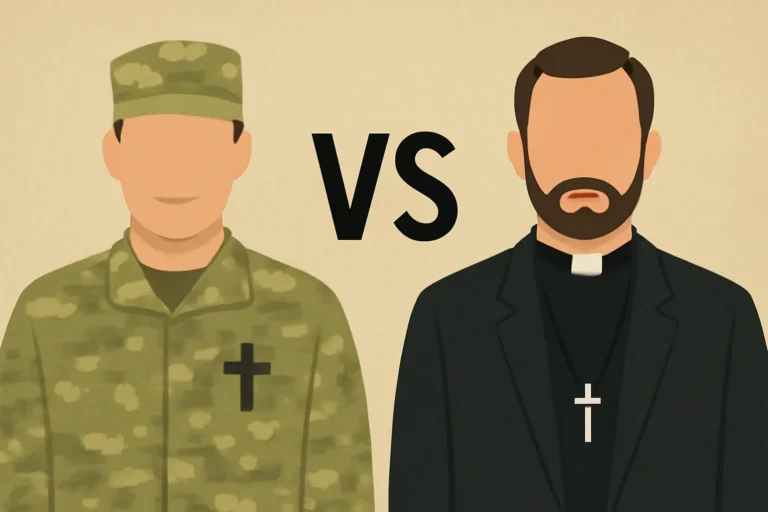
Across many faith traditions, the terms chaplain and priest describe roles that share a commitment to spiritual care and communal leadership, yet they arise from different histories, authorities, and day-to-day duties. In this article, we explore the chaplain versus priest distinction with attention to how each role functions in various settings, the training and ordination involved, and the kinds of responsibilities that shape their work. The aim is to provide a clear, informative comparison that helps readers understand not only the formal differences but also how these roles address the spiritual and emotional needs of people in diverse environments.
Defining the Roles: what a chaplain is and what a priest is
What is a chaplain?
A chaplain is typically a trained spiritual caregiver who provides religious and moral support in environments outside a traditional parish. Chaplains operate in settings such as hospitals, universities, the military, jails, hospices, corporate campuses, and disaster zones. They are often commissioned or credentialed rather than ordained in a single ecclesial hierarchy, and their work emphasizes meeting people “where they are,” regardless of specific denominational affiliation. The core functions of a chaplain include listening, counseling, ritual presence, and facilitating access to religious or spiritual resources that are relevant to the individual in that moment.
What is a priest?
A priest is generally understood as an ordained minister with sacramental responsibilities within a specific religious tradition, most commonly in Catholic, Orthodox, and certain Anglican or Protestant churches. Priests are entrusted with the authority to perform sacred rites, preside over worship, administer sacraments, teach doctrine, and provide pastoral leadership within a parish or diocese, depending on the denomination’s structure. The priestly role is often deeply rooted in a sacramental economy—celebrating the Eucharist (or equivalents), offering absolution, anointing, and other liturgical acts, and exercising a formal ministry that is connected to a particular church’s canonical framework and lineage.
Key differences in responsibilities
Core duties of chaplains
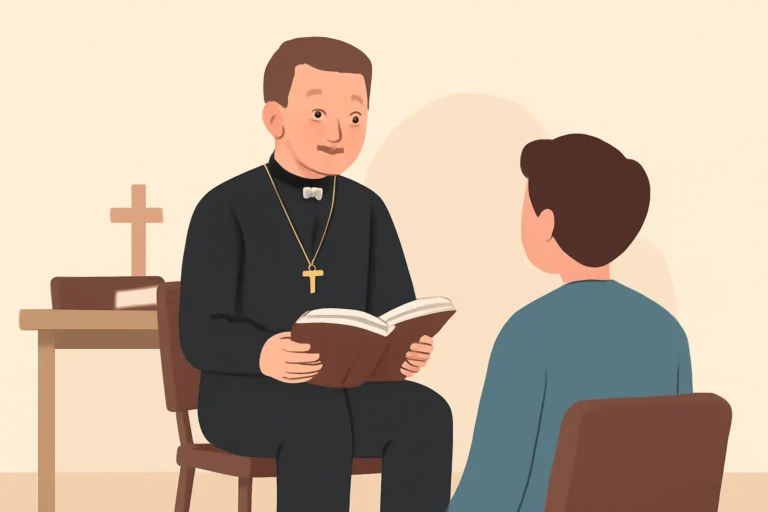
Spiritual care and counseling: Chaplains offer emotional and spiritual support, often through empathetic conversation, crisis intervention, and guidance tailored to individual beliefs and backgrounds.
Presence and accessibility: They serve as a compassionate presence in hospitals, prisons, military units, or campuses, helping people feel seen and supported during difficult times.
Interfaith and ecumenical facilitation: In many contexts, chaplains work with people of diverse faiths or no faith, helping them navigate spiritual needs and connecting them with appropriate resources.
Rituals and rites of meaning: While not always performing formal liturgies, chaplains may conduct or facilitate blessings, memorials, prayer circles, or quiet reflections that meet immediate needs.
Advocacy and care coordination: They often collaborate with medical staff, counselors, and social workers to ensure that spiritual care is integrated into overall support plans.
Core duties of priests
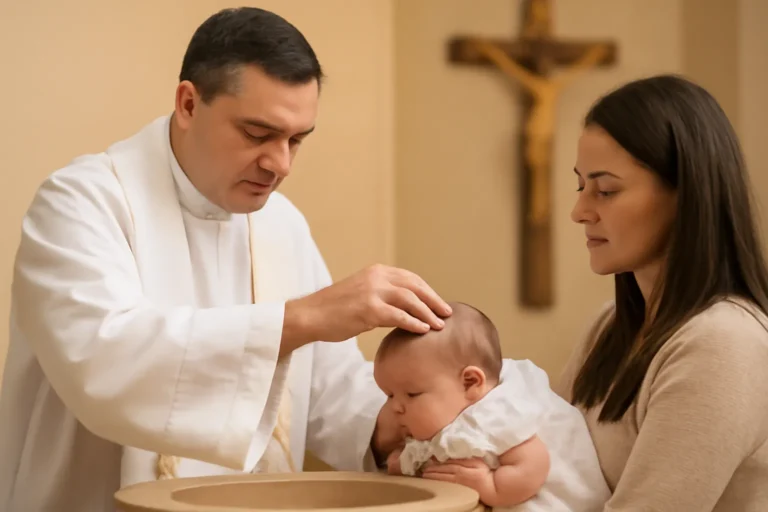
Liturgy and sacramental ministry: Priests typically preside over worship services, administer sacraments such as the Eucharist, baptism, confirmation, marriage, and anointing of the sick, depending on tradition.
Clerical teaching and preaching: They provide doctrinal instruction, catechesis, and pastoral sermons aimed at guiding faith formation within a congregation.
Pastoral governance: In many traditions, priests oversee parishes or congregations, lead staff and lay leadership, and shape spiritual direction and community life.
Ordained authority and accountability: Priests operate under a formal ecclesial authority, with responsibilities anchored in canon law, church governance structures, and theological norms.
Pastoral care within a ministry setting: While their focus includes the broader parish, their care is often centered on members of a defined community and their sacramental life.
Contexts and environments: how role differences play out in real settings
Military, chaplaincy, and disciplined environments
The chaplaincy model is particularly prominent in military organizations, where military chaplains provide spiritual support to service members and their families, independent of the soldiers’ or officers’ faith backgrounds. Their presence can help with moral decision-making, morale, and coping with deployment stress.
In this setting, chaplains typically operate under a unique combination of military regulations and civilian ethics, emphasizing confidentiality, cultural sensitivity, and the ability to navigate complex secular environments while honoring diverse beliefs.
Healthcare environments
Hospital chaplains offer comfort to patients, families, and staff, assisting with end-of-life decisions, fear, grief, and questions about meaning. They may coordinate with medical teams to address spiritual dimensions of healing, while respecting patients’ autonomy and beliefs.
In facilities that follow a particular religious tradition, a priest may also serve in hospital settings, but the chaplain’s role is especially notable for its broader accessibility to people of all backgrounds, not limited to a single faith group.
Education and campus life
Campus chaplains provide religious literacy, ethical reflection, and support for students and staff across faiths. They may lead interfaith dialogues, organize service opportunities, and offer crisis counseling on campus.
Priests or clergy associated with campus ministries often focus on building a specific denominational community, teaching within that tradition, and conducting canonical rites for students who are members of their church.
Correctional settings and community safety
Chaplains in prisons address issues of rehabilitation, moral development, and spiritual well-being for inmates and staff, frequently coordinating with social workers, legal representatives, and counselors.
In some contexts, a priest may be called to provide sacramental services or pastoral care within the constraints of the correctional system, complementing the broader chaplaincy framework.
Training, education, and ordination: pathways to these vocations
Chaplaincy preparation
Chaplaincy preparation varies widely, but several common elements recur across traditions and settings:
Formal education: A bachelor’s degree is often followed by graduate studies in theology, pastoral care, counseling, or a related field. Some jurisdictions require a master’s degree in divinity, theology, or chaplaincy studies.
Clinical or field training: Practical experience through internships, residency programs, or supervised clinical hours helps develop skills in counseling, crisis intervention, and interfaith communication.
Commissioning or credentialing: Rather than ordination, chaplains may receive commissioning from a military branch, hospital system, or professional chaplaincy association, which recognizes the minimum competencies for spiritual care in specific settings.
Interfaith competence: Given the diverse populations served, chaplains often receive training in cross-cultural and interfaith dialogue, ritual flexibility, and respectful engagement with multiple religious traditions.
Priestly formation and ordination
The path to priesthood is typically structured within a specific tradition and involves deeply rooted theological study, spiritual formation, and canonical rites:
Candidate discernment: Individuals seeking priesthood undergo discernment processes to confirm a sense of call and suitability for ordained ministry.
Seminary education: Priest candidates often attend a seminary or theological college where they study scripture, dogmatics, liturgy, pastoral care, and church history.
Ordination: The culmination is a formal ordination ceremony, conferring sacramental authority and the assignment to a particular parish or mission context.
Ongoing formation: After ordination, priests continue to engage in ongoing education, spiritual development, supervision, and leadership training within their ecclesial community.
The chaplain’s authority often rests in a combination of religious affiliation, institutional commissioning, and professional body standards. Chaplains are expected to uphold confidentiality, ethics, and compassionate care, but they do not typically hold sacramental authority beyond the scope of their commissioned role.
Priests, by contrast, derive authority from sacramental ordination within a specific church tradition. This authority enables them to perform sacraments, oversee worship, and provide leadership in governance structures. In many cases, a priest’s duties are tied to a defined jurisdiction—parish, diocese, convent, or order—subject to episcopal oversight or equivalent supervision in their tradition.
Accountability structures
Chaplains are accountable to the institutions they serve (for example, a hospital ethics committee or a chaplaincy board) and to professional associations that set practice standards for spiritual care, confidentiality, and ethical conduct.
Priests are answerable to their ecclesial hierarchy, canonical law, and the governing bodies of their church. They may report to bishops, abbots, or other authorities, and their pastoral actions are often reviewed within parish councils and synodal processes.
Interfaith and ecumenical roles
Both chaplains and priests may engage in interfaith or ecumenical work, but their scope and approach differ in meaningful ways:
Chaplains frequently operate in pluralistic environments where multiple faith traditions intersect. Their training emphasizes inclusivity, religious literacy, and the ability to coordinate with diverse spiritual communities. They work to ensure that people of all beliefs have access to meaningful care, even if their own faith tradition is not the primary resource in a given moment.
Priests often participate in ecumenical dialogues and cooperative ministries within their own tradition and with other Christian churches. While they may extend pastoral care beyond their own parish, their primary accountability and liturgical life are anchored in their own ecclesial community.
Public perception and common misconceptions
Public understanding of the chaplain versus priest distinction can be shaped by media representations, cultural expectations, and institutional contexts. Here are some common misconceptions clarified:
Misconception: Chaplains are unordained or non-religious figures. Reality: Chaplains are religious or spiritual professionals who may be ordained in their tradition or commissioned by their institution; their authority often lies in spiritual care skills rather than sacramental power.
Misconception: Priests cannot work outside a parish. Reality: Priests can and do serve in hospitals, universities, missions, and other settings, but their canonical duties are anchored in sacramental and liturgical authority within their tradition.
Misconception: Chaplains belong to a single faith. Reality: Many chaplains are intercultural and interfaith specialists, trained to support people from diverse beliefs and to coordinate resources across religious boundaries.
Misconception: A priest’s only role is performing sacraments. Reality: Priests also preach, teach, counsel, oversee parish life, and provide pastoral leadership, though sacramental responsibilities are a defining feature in many traditions.
Paths, careers, and professional trajectories
Diverse career paths for chaplains
Hospital chaplaincy in medical centers, hospice care, or palliative programs.
Military chaplaincy within national armed forces or veterans’ organizations.
Campus chaplaincy serving universities, colleges, and seminaries with interfaith programs.
Interfaith chaplaincy working in corporate, community, or government settings to support diverse populations.
Prison or detention center chaplaincy focusing on rehabilitation, moral formation, and personal growth.
Parish priest leading a local congregation, presiding at worship, and coordinating community life.
Educational roles such as seminary faculty, religious education director, or preaching pastor with a focus on catechesis.
Missionary and specialized ministries in charitable organizations, diocesan outreach, or international work.
Pastoral leadership within diocesan structures, including oversight of deacons, parishes, and ministry programs.
Similarities and overlaps: where chaplaincy and priesthood intersect
Despite their distinct frameworks, the roles share several core elements. Both chaplains and priests are dedicated to pastoral care, meaningful ritual, and the promotion of human dignity. Both may engage in confidential conversations, crisis response, and ethical discernment, and both seek to foster hope, resilience, and community. In many settings, chaplains and priests collaborate, with chaplains providing immediate spiritual support that complements a priest’s liturgical and sacramental leadership.
Historical roots and the evolution of the roles
The idea of spiritual caregiving in institutions has evolved over centuries. Traditional priestly roles emerged from a long history of church governance, sacramental life, and urban or rural parish ministry. The modern chaplaincy movement, while rooted in religious devotion, grew significantly in settings where formal parish structures were absent. The shift toward institutional chaplaincy reflects social changes, including increased secularization, greater pluralism, and the recognition that spiritual care can be integral in secular institutions just as it is in religious communities.
Practicing responsibly in either role requires adherence to ethical norms and professional guidelines. Some shared principles include:
Confidentiality and trust as foundational elements of the helping relationship.
Respect for autonomy and the diverse beliefs of individuals seeking care or guidance.
Non-coercive care that honors the person’s values and spiritual resources.
Boundaries and accountability to ensure safe, ethical practice in any setting.
Practical guidance: choosing between chaplaincy and priestly ministry
For individuals exploring vocational directions or for organizations planning spiritual services, consider the following practical distinctions and decisions:
Context matters: If the aim is broad-based spiritual care across faiths in secular environments, chaplaincy is often the more natural fit. If the aim is sacramental leadership and local parish governance within a specific tradition, priestly ministry is typically the path.
Commitment level: Chaplaincy frequently emphasizes ongoing training, credentialing, and institutional collaboration, while priesthood centers on ordination, canonical duties, and a long-term call within a particular church family.
Interfaith competence: Chaplains usually need strong interfaith skills and cultural humility; priests may focus more deeply on doctrinal instruction and sacramental life within their tradition, though ecumenical work is common in many contexts.
Understanding the distinction between chaplaincy and priestly ministry helps illuminate how communities can meet spiritual needs in diverse settings. The chaplain’s strength lies in being a flexible, accessible, and ecumenical presence who can accompany people through crisis, transition, and life’s ordinary moments across a spectrum of beliefs. The priest’s strength lies in sacramental leadership, doctrinal guidance, and the sustained spiritual governance of a faith community. Both roles honor humanity, foster meaning, and support moral and emotional well-being, though they do so through different channels, training pathways, and organizational structures. When people and institutions align resources with these distinct capacities, they create a robust web of spiritual care that can adapt to the challenges and opportunities of modern life.