Believer’s baptism refers to the practice of baptizing a person after they have professed personal faith in Jesus Christ. It is sometimes called believer baptism, credobaptism (a scholarly term emphasizing belief as the prerequisite), or adult baptism in contexts that stress the individual’s conscious choice. Across many churches that teach this doctrine, the central conviction is that baptism belongs to those who have made a credible confession of faith, rather than to infants who cannot yet articulate belief.
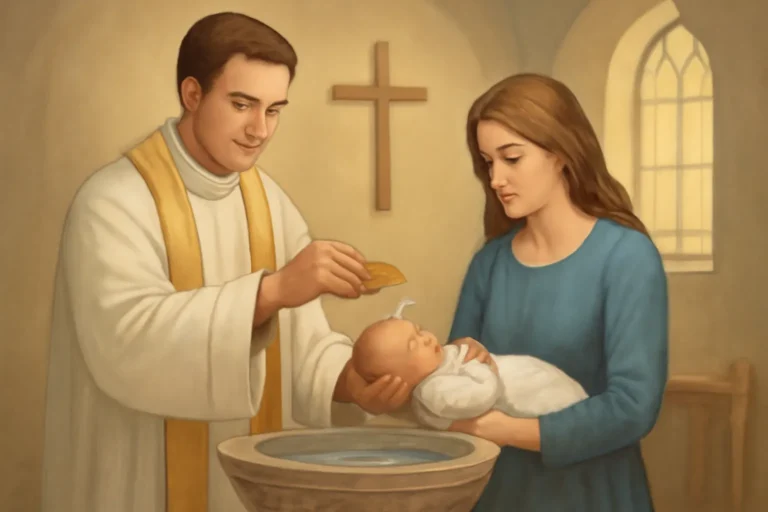
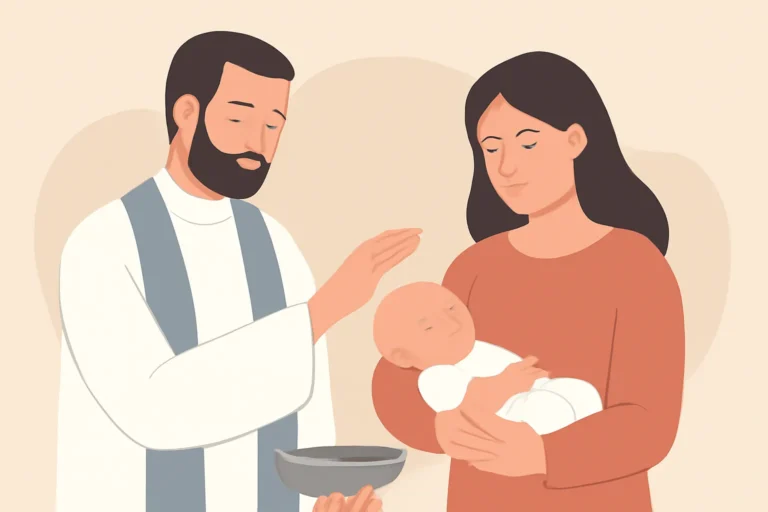
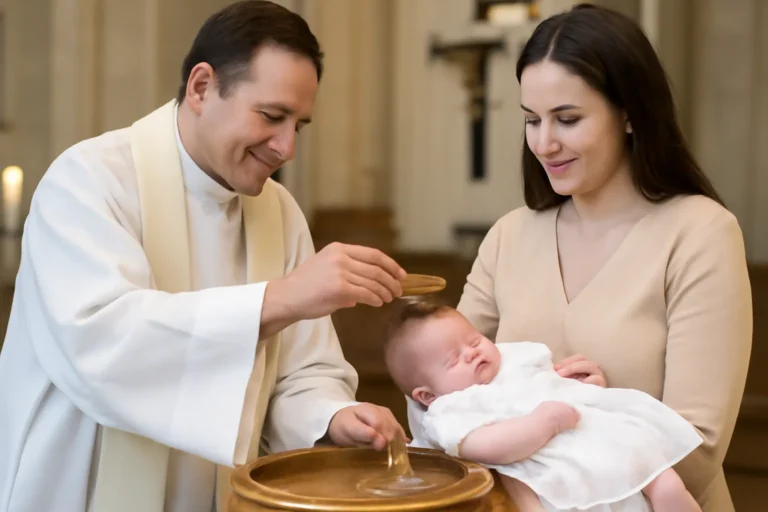
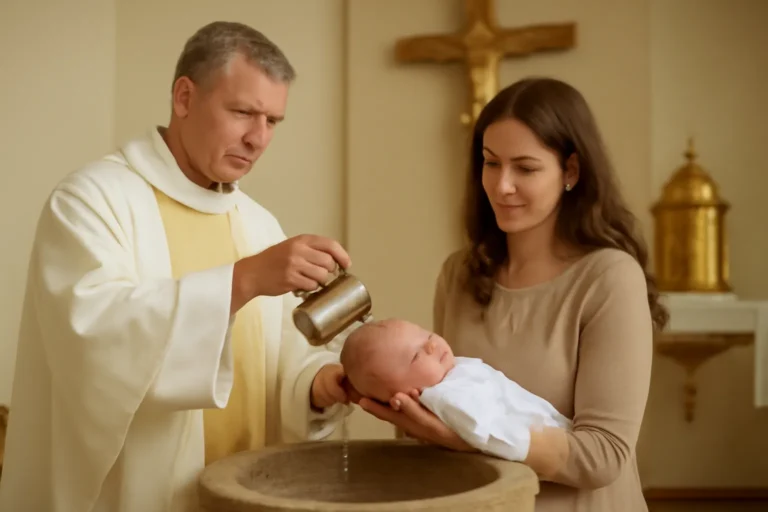
In contrast to infant baptism, which is administered to children as a sign of inclusion in the covenant community (often performed as part of a family or parish rite), the practice of believers baptism is framed as a public profession of personal commitment. The language used by churches that practice this model often stresses that baptism follows an inner conversion and a conscious decision to trust in Christ. The outcome is not merely a ceremonial act but a symbolic declaration to the community that the individual has identified with the death, burial, and resurrection of Jesus.
A common way to describe this form of baptism is that it is a symbolic act of obedience that testifies to the inward reality of faith. The ceremony itself often emphasizes the gospel: a person who has turned from sin and trusted in Christ publicly proclaims the good news and submits to a ritual that visibly communicates that faith to others. Because of this, some churches prefer the label credible profession of faith baptism to highlight the sequence: belief → confession → baptism.
Key features of this approach
Personal faith as the essential prerequisite
Public testimony before the church community
Immersion or pouring as the chosen mode in different traditions
Identity with Christ’s death and resurrection as the interpretive frame
Church membership often linked to baptism, though this varies by tradition
Variations in wording and emphasis
Some communities refer to this practice as adult baptism or disciples’ baptism, highlighting the link between faith in Jesus and a new discipleship path. Others emphasize the term credobaptism, which underscores belief as the essential precondition. Although the names differ, the core idea is shared: baptism is reserved for those who have personally embraced the gospel and are ready to declare it publicly.
Historical and Theological Background
Origins in the New Testament
The roots of believer’s baptism are often traced to the New Testament accounts of conversion and baptism. The pattern in the early church, as seen in the Book of Acts and the epistles, is that baptism follows faith and repentance. For example, when people respond to preaching about Jesus, they are urged to repent and believe, after which they are baptized. The Great Commission record in Matthew 28:19–20 and the contrast between belief and baptism in several scenes (for instance, Acts 2:38; Acts 8:36–38) are cited by advocates as scriptural warrant for this order.
In the narrative of Acts, baptism often comes after a clear confession of faith. A notable example is the story of the Ethiopian eunuch, who asks, “What prevents me from being baptized?” and immediately receives baptism after a profession of belief (Acts 8:36–39). The insistence on a personal response to the gospel and a public practice of faith forms a consistent thread in the early Christian movement and has shaped later theologians and church leaders who advocate for credobaptism as the normative practice for those who are old enough to understand and articulate their faith.
Development Through the Reformation and Beyond
During the Reformation era, debates about baptism became a focal point of disagreement between Catholic, Lutheran, and Reformed authorities and the various groups that would eventually be known as Baptists and Anabaptists. The Anabaptists in particular rejected infant baptism as unbiblical in their view, arguing that baptism should be reserved for individuals who consciously profess faith in Christ. This stance gave rise to the phrase re-baptism in some contexts, not to reject baptism itself, but to insist that baptism should follow personal conversion rather than family or cultural ties.
Over the centuries, various denominations developed distinctive traditions around baptism while preserving the core conviction that it is for those who have personally trusted in Jesus. In many Protestant and evangelical communities today, believers baptism is a central practice that aligns with a high view of individual responsibility in responding to the gospel. Meanwhile, other Christian traditions retain infant baptism as a means of recognizing God’s grace within the covenant and emphasize infant-safeguarded education and faith formation as the primary path toward eventual personal baptism.
How It Happens
The typical sequence in a local church
While practices vary, there is a generally shared sequence that many churches follow when administering believers baptism:
Hearing the gospel: The person encounters the message about who Jesus is, what he did on the cross, and what it means to trust him for forgiveness and new life.
Repentance and faith: The individual expresses repentance from sin and places personal trust in Christ as Savior and Lord.
Profession of faith: The candidate publicly confesses belief in Jesus, often through a short testimony or affirmation of doctrinal points.
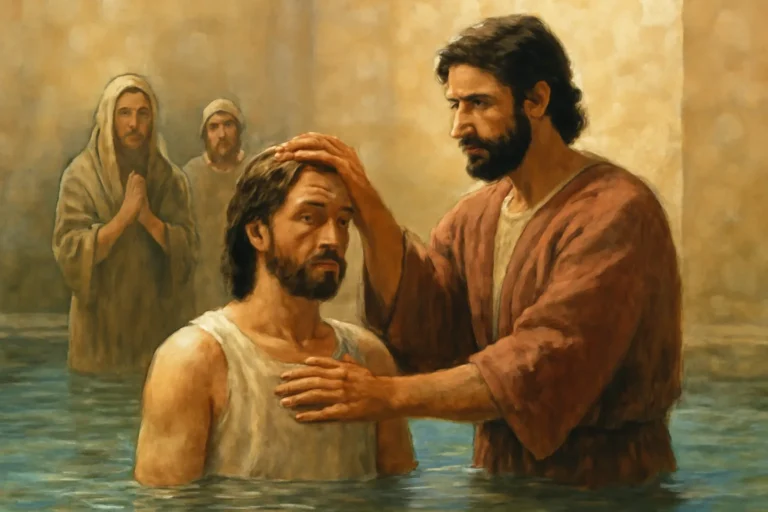
Baptism by immersion (or another mode, depending on tradition): The person is immersed in water or baptized by another method such as pouring or sprinkling as permitted by the local church.
Public declaration before the church: The baptism becomes a communal witness, inviting the congregation to support and hold the new believer accountable in the path of discipleship.
Integration into church life: Baptism is commonly followed by catechesis, spiritual formation, and regular participation in the life of the local body.
Modes of baptism and their meanings
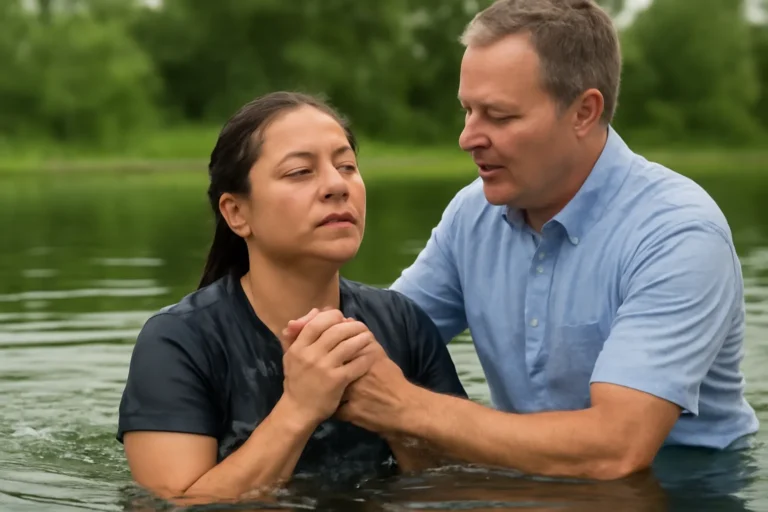
The dominant mode in many churches practicing believer’s baptism is immersion, where the candidate is fully submerged in water. Proponents argue that immersion best symbolizes the believer’s identification with Christ’s death, burial, and resurrection. This symbolism is often described in concise terms: death to sin, burial with Christ, and resurrection to new life.
However, not all traditions use immersion exclusively. Some congregations practice pouring or sprinkling as a valid mode due to theological, historical, or practical reasons. When baptism is conducted by pouring or sprinkling, teachers explain that the essential element is not merely the water on the body but the spiritual act of trusting in Christ and publicly declaring that trust. In any case, the symbolic meaning remains central: the person moves from an old life to a new life under grace.
Preparatory steps and discernment
In many churches, candidates for credobaptism undergo a period of preparation. This may involve a series of interviews with pastors or elders, a brief catechesis, or a written or verbal statement of faith. The aim is to ensure that the candidate has a coherent understanding of the gospel, repentance, and discipleship. Some traditions require an explicit declaration of belief in core doctrines such as the Trinity, the authority of Scripture, and the person and work of Christ.
Why It Matters
The significance of believer’s baptism goes beyond a one-time ritual. For adherents, it is a formative moment that anchors personal faith in a visible, communal act. The practice is often framed as an expression of obedience to Christ’s command and a public witness to the transformative work of the gospel in a person’s life.
Personal faith and obedience
At the heart of this practice is the conviction that faith in Jesus should be publicly declared and publicly celebrated. Baptism becomes a tangible demonstration of the inner change God has wrought in a person’s life. The act is not seen as earning salvation, but as the first public step of obedience after salvation and a powerful reminder that Christians are to live in community with others who share faith in Christ.
Community and accountability
When someone is baptized in a local church, it often signals their entrance into a network of accountability and support. The church family commits to welcome the new believer, to teach sound doctrine, and to encourage ongoing spiritual growth. The ritual thus helps to shape a shared identity among believers and strengthens the sense of belonging to the body of Christ.
The public dimension of the rite gives witness to the broader community that a life has been changed by the gospel. This public dimension is sometimes described as a form of evangelistic proclamation, inviting others to consider the claims of Christ and to join in the journey of discipleship. In this sense, baptism functions as a bridge between private faith and public life.
Theological implications
Theologically, proponents of believer’s baptism often anchor their view in the logic of the New Testament narrative and in the interpretation of baptism as an ordinance that follows faith. They frequently argue that salvation by grace through faith is distinct from the physical rite itself, but the rite remains a meaningful sign of that grace and a means of strengthening faith in the person who is baptized and in the church that witnesses it.
Practices Across Traditions
Across Christian traditions, there is a spectrum of approaches to baptism. The core agreement among those who practice believer’s baptism is that faith precedes baptism, and that baptism has a significant symbolic and communal function. Yet the details vary, including the eligibility criteria, the mode, and the surrounding church discipline or instruction.
Baptists and evangelical churches
In many Baptist congregations and other evangelical assemblies, believer’s baptism by immersion is seen as the norm. Candidates are usually teenagers or adults who can articulate a personal faith in Christ. Baptism is often connected to church membership and is followed by baptismal vows or a subsequent period of discipleship training. The emphasis is strongly on voluntary faith and the visible public response to the gospel.
Nonconformist and Anabaptist lineages
The Anabaptist tradition, historically critical of infant baptism, emphasized the voluntary nature of baptism and the inseparability of discipleship from baptism. In these streams, the act is deliberately a conscious choice made by the baptized person, with ongoing conversion and life in the Spirit as continuing requirements of discipleship.
Reformed and some Presbyterian contexts
In Reformed or Presbyterian churches, infant baptism is common as a sign of the covenant, but many congregations welcome the practice of believer’s baptism when someone comes to faith later in life or in mid-life. In these settings, the practice of adult confession and baptism often accompanies reaffirmation of faith, membership renewal, and catechetical instruction.
Anglican and Methodist expressions
Anglicans and Methodists may practice infant baptism and also accept believer’s baptism later as a profession of faith. Some churches hold a two-stage path—infant baptism with later personal affirmation and baptism in response to faith as an explicit act of obedience. In these traditions, both infants and adults may be incorporated into the church family in different but connected ways.
Churches with diverse windows of practice
In some denominations, a Christian may be baptized by immersion after professing faith, even though infant baptism is the standard in the broader tradition. Others emphasize a “believers’ baptism” practice within missionary or campus ministry settings where young adults are exposed to the gospel and make a public confession of faith before baptism.
Common questions in this landscape
Is baptism necessary for salvation? Most who practice believer’s baptism see baptism as an important step of obedience and public witness, not a requirement that saves a person. Salvation is understood to come by grace through faith in Christ, with baptism as a subsequent response to that grace.
Can someone be re-baptized? Some individuals who move between traditions or who experience a significant conversion may seek baptism again, though many churches discourage repeated baptisms for the same person unless there is a compelling ecclesial reason.
What about infant children in the family? In traditions that practice infant baptism, believers often support the idea of baptism for infants as a sign of covenant inclusion, while leaving open the subsequent, conscious profession of faith through believer’s baptism at a later stage.
Common Questions and Debates
Infant baptism vs believer’s baptism
A central debate concerns whether infant baptism is appropriate or necessary. Proponents of believer’s baptism usually argue that baptism should follow a personal decision of faith. They often point to passages that seem to present baptism as a response to belief and repentance. Opponents of this view hold that infant baptism can be an expression of a covenantal grace and an initiation into the church that is not dependent on individual verbal assent at the moment of baptism.
A common question is whether the rite itself saves a person or merely represents what has already occurred in a person’s heart. In credobaptist theology, baptism is not the means of salvation but a visible sign of faith. The essential saving work is believed to be the work of God through faith in Christ; baptism is the public, obedient response to that saving work.
In churches that emphasize believer’s baptism, the expectation is that individuals who come to faith will be baptized as soon as possible. When death interrupts that process, theologians discuss this with care, often affirming that God understands the heart behind a person’s faith even if the outward sign is not complete. This question is handled differently among denominations, reflecting divergent understandings of grace, faith, and the role of the church.
Practical Considerations for Churches and Candidates
For churches that practice modern believer’s baptism, several practical considerations help ensure the rite remains a meaningful, respectful, and biblically grounded act.
Preparation: A process of learning, questioning, and confirming faith helps ensure that candidates understand the significance of the rite, its solemnity, and its public character.
Pastoral discernment: Local pastors or elders typically assess whether an applicant’s profession of faith is genuine and informed. This is not a test of virtue but a pastoral check on understanding and commitment.
Environment and setting: Some churches hold the ceremony in a baptismal pool, a river or lake, or a dedicated baptismal font. The choice often reflects doctrinal preference and logistical practicality.
Accountability and follow-up: Baptism is regarded as the start of a lifelong journey. Churches often pair the rite with ongoing spiritual formation, mentoring, and integration into small groups or accountability channels.
Public narrative: Sharing brief testimonies can help the wider community understand what God has done in the candidate’s life, providing inspiration and a model of Christian witness for others.
For individuals considering this practice, questions to wrestle with may include “What is my understanding of the gospel?” and “Do I sense a personal call to identify publicly with Christ through baptism?” The guidance of a pastor or a trusted mentor is often part of the journey, helping candidates articulate their faith clearly and humbly.
Conclusion in Practice: A Living, Public Step
While the precise theological framing and the ritual details may differ from one tradition to another, the practical core of believer’s baptism remains intact: faith in Christ expressed in a public act that symbolically aligns the believer with Jesus’ death, burial, and resurrection. It is a powerful marker of new identity, a concrete expression of conversion, and a communal invitation to others to witness and participate in the life of discipleship.
In many churches, this rite is not simply a moment but a turning point. It precedes deeper formation in the faith, deeper involvement in the church’s mission, and deeper participation in the life of the Spirit-filled community. For those who are exploring this path, it is wise to read the gospel accounts, study what various traditions teach about baptism, and consult with church leaders to understand how believer’s baptism functions within a particular community of faith.
In the end, whether one uses the term believer’s baptism, credobaptism, adult baptism, or disciples’ baptism, the aim is the same: to honor Christ, to testify to the grace that transforms a life, and to invite others into a faith that is both personal and shared within a community of believers.