What Is a Minister? A Clear Guide to the Role and Duties
Across nations and traditions, the term minister appears in surprising variety. In some countries it names a member of the executive who heads a government department; in others it denotes a religious leader entrusted with spiritual guidance and sacramental duties. In still other contexts, the word is used for leaders of organizations or for officials tasked with serving the public. This article offers a thorough, practical guide to what a minister is, the different kinds of ministers, their core duties, and the structures that support them. By examining both political and religious uses of the term, we can gain a clearer picture of the responsibilities, powers, and limitations that accompany the role.
What is a minister? A broad definition across spheres
The root idea of a minister is someone who serves others within a framework of authority. In political life, a minister is typically a public official who leads a government department, sets policy direction, and implements laws and regulations. In a religious setting, a minister is a person who provides spiritual leadership, conducts rites, and cares for a community’s wellbeing. In organizational contexts, a minister can be a senior official responsible for a particular program or mission. Because the term spans these domains, the precise job description varies by country, tradition, and institutional design. What all these roles share is a common structure of accountability, responsibility, and public or communal service.
Political ministers: roles, structure, and daily life
The cabinet, portfolios, and the executive framework
In many democracies, a minister belongs to the executive branch and is a member of the cabinet. Each minister typically holds a portfolio—the set of policy areas, programs, and staff that fall under their supervision. Examples include health, education, finance, foreign affairs, defense, and environment. The portfolio defines not only the subject matter but also the budget, regulatory powers, and strategic priorities for that department.
Within the cabinet, ministers coordinate with one another through collective decision-making while retaining individual responsibility for their own departments. The head of government (such as a prime minister or equivalent) provides overall leadership, while the minister of a department translates broad policy goals into concrete programs, legislation, and administration.
Typical duties and core tasks
Policy development: Propose, analyze, and refine public policies within the minister’s area of responsibility.
Legislation and regulation: Draft laws, regulations, and rules; respond to parliamentary scrutiny; defend proposals in debates and committee sessions.
Administration and delivery: Manage ministries, agencies, and public programs; oversee service delivery to citizens.
Budgetary oversight: Prepare and defend the department’s budget; monitor expenditures; adjust priorities in light of fiscal constraints.
Representation: Speak for the department in public forums, international meetings, and diplomatic settings when relevant.
Implementation and evaluation: Monitor performance, measure outcomes, and adjust programs in response to results and feedback.
These duties demand a combination of policy acumen, political judgment, managerial skill, and public communication. Ministers often work with senior civil servants, subject matter experts, and stakeholders from industry, civil society, and the public to shape and implement policy.
Accountability and oversight
A central feature of the ministerial role is accountability. Ministers are answerable to the head of government, the legislature, and, ultimately, the voters. Mechanisms of accountability include:
Question time and committee appearances in parliament, where ministers must justify decisions, answer questions, and face scrutiny.
Budget approvals and financial reporting that reveal how funds are spent and whether programs achieve stated goals.
Public service ethics rules that guard against conflicts of interest, nepotism, or improper influence.
Resignation or dismissal in cases of political scandal, policy failure, or loss of confidence from the cabinet, party, or public.
It is important to recognize that the accountability framework for ministers varies by system. In some countries, ministers are political appointments tied to the party in government; in others, there are independent oversight bodies or enhanced parliamentary committees that supervise their conduct and performance.
Becoming a minister: common pathways and prerequisites
The route to becoming a government minister differs around the world, but several common elements appear in many systems:
Membership in the legislature (or a direct appointment by the head of government in special cases) provides the political linkage to lawmaking and accountability.
Leadership or seniority within a political party often signals trust, experience, and the ability to steward a portfolio.
Evidence of competence in policy areas, public administration, or governance helps build credibility with colleagues, civil servants, and the public.
Coalition-building or party support, especially in multi-party systems, where ministers may be drawn from different factions or regions.
Ethical and legal clearances to avoid conflicts of interest and ensure public trust.
When appointed, a minister may gain access to a policy staff, a public communications team, and a dedicated secretariat within the ministry to help manage workloads, coordinate with agencies, and navigate cross-departmental issues.
Key relationships and the minister’s daily cadence
A minister’s role is highly collaborative. The day-to-day rhythm often includes:
Briefings from departmental officials, allied ministries, and external experts.
Meetings with stakeholders including industry groups, unions, think tanks, and civil society organizations.
Parliamentary engagements such as debates, committee hearings, and presenting policy proposals.
Public communications through press conferences, official statements, and social media outreach.
Internal management tasks like staff reviews, performance metrics, and organizational restructuring when necessary.
In practice, ministers must balance speed and deliberation, ensuring timely action while maintaining careful analysis, cross-party acceptance where possible, and long-term strategic thinking.
The minister in religious contexts: church leadership and pastoral roles
Spiritual leadership, preaching, and sacramental duties
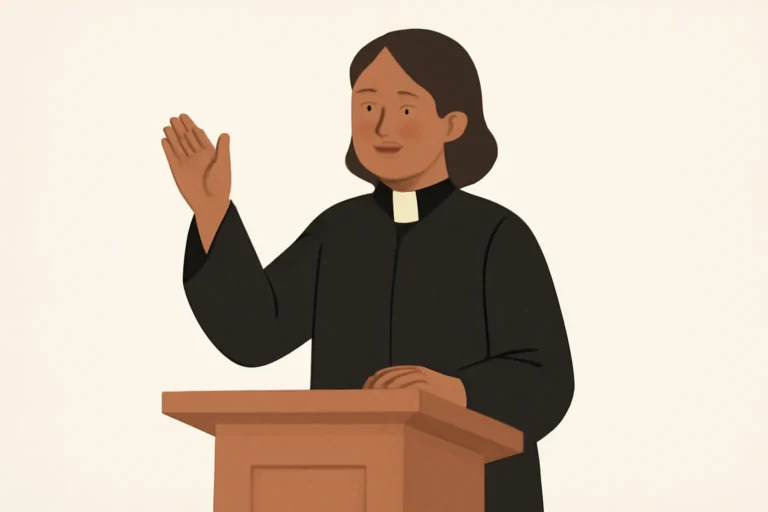
Outside the political realm, the term minister often denotes a church leader, especially within Protestant Christian traditions. A church minister typically serves as a spiritual guide, delivering sermons, providing pastoral care, and presiding over rites such as baptisms, weddings, and communions. In this context, preaching is a central activity, but so is listening to congregants, counseling individuals and families, and helping people navigate life’s difficult moments.
Church governance and community leadership
Beyond pulpit duties, a religious minister often participates in church governance. This can include leadership of a local parish, oversight of programs for youth, outreach and charity work, and collaboration with lay leaders and other clergy. The ministry may oversee a staff of administrative personnel and volunteers, manage church properties, and supervise educational programs such as catechism or Bible study.
Differences among religious traditions
Terminology and roles vary across faiths. Some traditions use “pastor,” “minister,” or “reverend” interchangeably, while others reserve certain terms for specific offices. In some denominations, ministers receive formal theological training and ordination, whereas in others, leadership is shaped by apprenticeship, community consensus, or lay ordination. In all cases, the core function is to serve the spiritual needs of the community, interpret sacred teachings, and model ethical conduct.
How a minister’s office works in practice: the machinery that enables leadership
The effectiveness of a minister depends in large part on the institutional machinery that supports them. This includes staffing, policy units, and procedural rules that govern decision-making, accountability, and service delivery.
Policy teams and research units that provide evidence, forecasts, and analyses to inform decisions.
Executive secretariats that help coordinate with other ministries, the head of government, and legislative bodies.
Public communications offices that craft messages, explain complex policies to the public, and respond to media inquiries.
Audits and evaluation offices that assess program effectiveness and ensure compliance with laws and regulations.
Civil service or public service staff who implement policies and deliver programs under ministerial direction.
Because a minister governs through these structures, the relationship with civil servants and agency leaders is crucial. A productive minister fosters a culture of evidence-based decision-making, clear accountability, and respectful collaboration across factions and agencies.
Notable variations by jurisdiction and tradition
The concept of a minister changes depending on the country’s constitutional design and historical development. A few broad patterns include:
Parliamentary systems: Ministers are often members of the legislature, and their political fate is tied to party support. Democratic accountability is exercised through parliamentary votes, committees, and public debate.
Presidential systems: Some ministers (often called secretaries of state or cabinet chiefs) may be appointed by the president and may not be elected members of the legislature. The balance between executive authority and legislative oversight varies.
Constitutional monarchies: The ministerial role typically aligns with a ceremonial head of state or a constitutional framework, with real policy power held by a prime minister or equivalent.
Religious jurisdictions: In ecclesiastical governance, ministers serve within spiritual hierarchies and church synods, with appointment or ordination processes that reflect doctrinal and denominational norms.
Even within a single country, there can be differences between “senior ministers” who lead major departments and “ministers of state” or “junior ministers” who assist with specific tasks within a portfolio. The nomenclature may also reflect historical titles that persist despite changes in governance structures.
Myth: A minister can do anything they want without limits. Reality: Ministers operate within legal, constitutional, and political constraints, along with ethical standards and public accountability.
Myth: Ministers always have final say. Reality: They often rely on input from civil servants, experts, and ministers from allied portfolios; decisions are typically collaborative and sometimes require parliamentary approval.
Myth: Ministers are always in power whenever their party wins. Reality: Governments can be unstable; coalitions, votes of no confidence, or internal party dynamics can lead to reshuffles or changes in leadership.
Myth: The religious minister is only concerned with spiritual matters. Reality: Many church leaders also oversee administration, finances, community outreach, and pastoral education, weaving spiritual and practical leadership together.
Case studies and illustrative examples
To illuminate how the ministerial role plays out in real life, consider these hypothetical scenarios that reflect common challenges and decision-making processes:
Scenario A: A health minister faces a budget shortfall. The minister must allocate limited funds between hospitals, public health campaigns, and new technology. The process involves consulting with hospital administrators, medical researchers, and patient advocacy groups, presenting options to the cabinet and parliament, and monitoring outcomes after implementation.
Scenario B: A religious minister guides a community through a period of transition. The minister leads worship, offers counseling to congregants, manages staff, and coordinates with the church council to address financial sustainability, community outreach programs, and interfaith initiatives.
Scenario C: A minister negotiates international cooperation. In foreign affairs or trade, the minister engages with counterpart ministers, drafts agreements, and aligns national policy with international norms while considering domestic interests and public opinion.
Paths to service: building the experience and credentials
People become ministers through diverse routes, but several common themes recur:
Public service or political leadership, with track records in policy, administration, or community work.
Legislative experience, such as serving as a member of parliament or a representative, which provides familiarity with lawmaking and oversight.
Policy specialization, where expertise in a field (health, finance, education, etc.) earns recognition and trust from colleagues and the public.
Ethical standing and communication skills, which support transparent leadership and effective public engagement.
Training and preparation can also include formal study in public administration, law, economics, or political science; leadership programs; or mentorship within a political or religious organization.
Ethics, accountability, and the public trust
Two themes recur across ministerial roles: ethics and public trust. Ministers must navigate potential conflicts of interest, ensure fair treatment of citizens, and uphold the rule of law. Ethical frameworks often require transparent decision-making, disclosure of interests, and adherence to codes of conduct. When trust is eroded—by perceived favoritism, opaque decision processes, or mismanagement—governing bodies may demand accountability, prompt reforms, or even leadership changes.
The minister’s toolkit: skills that support effective leadership
While the specific duties of a minister vary, several core competencies recur across contexts:
Policy analysis and the ability to translate evidence into practical programs.
Strategic planning to balance near-term needs with long-term goals.
Communication—clear, persuasive messaging for diverse audiences, including the public, media, and legislators.
People management to lead permanent civil servants, temporary staff, and external consultants.
Negotiation and diplomacy when coordinating with other ministries, international partners, or community groups.
Fiscal literacy to understand budgets, financial constraints, and program costing.
In religious settings, additional competencies may include theology, pastoral care, and community organizing, alongside the spiritual responsibilities that define the vocation.
Global perspectives: how different systems shape the office of the minister
While the word “minister” is used worldwide, the office’s character reflects local governance traditions, constitutional design, and cultural expectations. For example:
In some parliamentary democracies, ministers serve as both lawmakers and executives, with the party in power bearing responsibility for policy outcomes.
In certain presidential systems, ministers may be more insulated or subject to separate appointment processes, which can shift the balance between political accountability and administrative independence.
In constitutional monarchies, executive power may be concentrated in a prime minister or equivalent, while ministers still drive policy within parliamentary structures.
Within religious governance, variations exist between denominations, with some governing bodies emphasizing collegial leadership (synods, councils) and others concentrating authority in a single ordained minister.
These variations influence how decisions are made, how power is distributed, and how the public perceives ministerial leadership.
Key terms to know when studying or discussing ministers
Portfolio – the line of responsibility for a department or policy area.
Cabinet – the core group of senior ministers who coordinate policy and government action.
Ministerial responsibility – the obligation to answer for the behavior and performance of one’s department.
Civil service – the professional body of public servants who implement government policy.
Ordinatio or ordination – religious processes by which someone becomes a minister or priest within a denomination.
Accountability mechanisms – the procedural tools (parliamentary questions, audits, committees) that ensure ministers remain answerable to the public.
Understanding these terms helps clarify how the minister’s role functions within a larger system of governance and community life.
Practical considerations for stakeholders: citizens, voters, and communities
For citizens and constituents, knowing what a minister does helps in several practical ways:
It clarifies whom to contact for specific services or policy concerns within a department.
It highlights how budget decisions affect public goods such as education, health, and infrastructure.
It emphasizes the importance of participation in public debates, public consultations, and elections to influence who holds ministerial office.
It explains the process by which laws and regulations are shaped, debated, and implemented in practice.
For students, researchers, or professionals studying governance, language about ministers also reveals the normative expectations of leadership: integrity, competence, transparency, and a commitment to serving the public good.
A final reflection: the essential idea behind the title “minister”
At its core, the role of a minister is about service—serving a constituency or a community, serving a nation, or serving a faith community. That service is exercised through careful policy design, disciplined administration, and accountable leadership. Whether you encounter a political minister steering the ministries responsible for health, education, or finance, or a religious minister guiding a congregation through rites, worship, and care, the thread that unites these positions is a deliberate, ongoing commitment to the well-being of others within a framework of rules, ethics, and shared purpose.
In a rapidly changing world, the job of a minister remains complex and demanding. It requires balancing competing claims, learning from data and experience, communicating clearly, and nurturing trust with the public or the community. The more stakeholders understand the scope, limits, and mechanisms of ministerial power, the more effectively governance and spiritual leadership alike can fulfill their duties in service of the common good.
Whether examining the term in a government cabinet or within a church, the role of a minister is ultimately about stewardship—of resources, of policy direction, and of people’s trust. That is the through line that helps make sense of this multifaceted position around the world.