Easter Sunday Resurrection Account: How Jesus Rose Again
The story of the Easter Sunday resurrection account is a foundational narrative for the Christian faith. It centers on the claim that Jesus of Nazareth, who was crucified and buried, rose from the dead on the first day of the week. This event is described in the four Gospels with nuanced details and distinctive emphases, yet it converges on a single core assertion: the tomb was found empty, and the risen Christ appeared to certain witnesses who proclaimed the news that transformed their lives and, through them, the world. In this article, we explore the Easter Sunday resurrection account from multiple angles: the textual echoes across the Gospel narratives, the roles of the witnesses, the sequence of appearances, the theological significance, and the practical implications for faith and worship today. We will use a variety of terms to describe this event—such as the Easter Sunday resurrection account, the Easter Sunday resurrection narrative, the resurrection on Easter Sunday, and the empty tomb narrative—to help readers see how the same event is read and understood in different passages.
Easter Sunday Resurrection Account: How Jesus Rose Again
The central claim of the Easter Sunday resurrection account is that Jesus rose from the dead, proving his identity as the divine Son and inaugurating a new phase of human history. The way this claim is framed varies from gospel to gospel, yet the common thread is the discovery that the tomb was empty and that Jesus appeared alive in glorified, tangible form to individuals and groups. This section surveys the core elements of the Easter Sunday resurrection narrative as it unfolds in the Gospel records, emphasizing what each account contributes to the larger story.
The context before the dawn
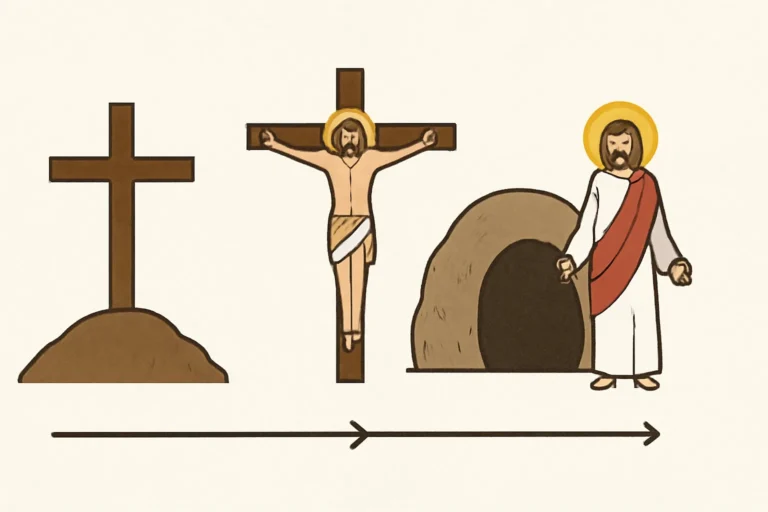
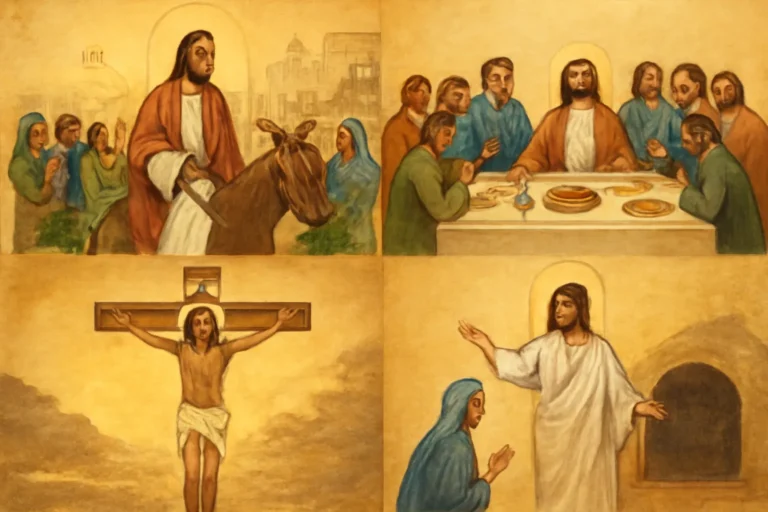
In the days leading up to the Easter Sunday resurrection, events center on Jesus’s crucifixion and burial, followed by a communal grief among his closest followers. The crucifixion is presented as a culmination of Jesus’s mission, a sacrificial act believed by early Christians to reconcile humanity with God. The place of burial is described as a borrowed tomb, which becomes the unexpected stage for a dramatic turn in human history. The women who come to the tomb early in the morning represent faithfulness and devotion, and their encounter with the preserved scene of the tomb prompts a shift from lament to proclamation. The empty tomb becomes the first sign-point of something extraordinary, a signal that defies ordinary expectations and invites interpretive reflection.
The discovery of the empty tomb
Across the Easter Sunday resurrection account, the discovery of the tomb’s emptiness is presented as a shared moment of astonishment. In each Gospel, certain women—often named, sometimes not—arrive at the tomb and find that the stone has been rolled away. The stone rolled away is not merely a physical detail; it is a visible sign that the circumstances surrounding Jesus’s death have begun to be overturned. The women encounter a divine messenger or messengers who utter a form of the angelic proclamation that the risen Jesus is no longer in the tomb. The message is clear and transformative: He is not here; he has risen (in paraphrase), and the news must be carried to others who will bear witness.
The angelic proclamation and the message to witnesses
In the Easter Sunday resurrection narrative, the role of angels or angelic messengers is central to the transition from sorrow to proclamation. The angelic voices announce that the living condition of Jesus has shifted from death to life, and they invite the faithful to remember Jesus’s own predictions about his death and resurrection. This proclamation functions as a bridge between the experience of the empty tomb and the experiential encounters later described by witnesses. The emphasis on angelic proclamation underscores the sense that something extraordinary is happening beyond human expectations, a divine act that confirms Jesus’s authority and mission.
The Gospel portraits: varying details of the Easter event
Each Gospel writer presents a distinctive angle on the Easter Sunday resurrection account, preserving continuity while offering unique emphases. Readers encounter a composite picture when the four portraits are read together. The following subsections outline the primary features in each Gospel’s account, highlighting how these variations contribute to the overall theological message.
Matthew’s account: a royal proclamation and commissioning on a mountain
In Matthew’s gospel, the Easter Sunday resurrection account culminates in a dramatic appearance and a commissioning of the disciples. After the initial discovery by the women, an angel appears and invites the women to report to the disciples that Jesus has risen. The emphasis then shifts to a post-resurrection appearance of Jesus to the women and, importantly, to a later scene in which the risen Jesus meets the disciples on a mountain in Galilee. This meeting culminates in the commission: go, make disciples of all nations, teaching and baptizing in the name of the Father, Son, and Holy Spirit. Matthew’s presentation stresses Jesus’s authority and the global commission, linking the resurrection to a missionary mandate that extends beyond Palestine to the nations.
Mark’s account: a more succinct or debated ending
The Gospel of Mark offers a compact or sometimes debated portrayal of the resurrection event, depending on textual traditions. In its shorter, earlier manuscripts, Mark ends with the women fleeing from the tomb in fear and saying nothing to anyone because they were afraid. Later manuscript traditions add a longer ending that includes appearances of Jesus to Mary Magdalene, two disciples on the road to Emmaus, and the disciples in Jerusalem. Even with variability, the essential claim remains: the risen Jesus is active and speaks to the disciples, though the emphasis on immediate, visible resurrection appearances can differ. Mark’s account invites readers to consider how fear, misunderstanding, and proclamation intersect with faith in light of what God has accomplished through the resurrection.
Luke’s account: detailed encounters and the road to Emmaus
Luke provides a rich, narrative-driven Easter Sunday resurrection account characterized by careful attention to witnesses and surrounding events. The women discover the empty tomb, and two men in dazzling apparel reiterate the message that Jesus has risen. Luke then follows with appearances of the risen Jesus to two travelers on the road to Emmaus, where Jesus explains the Scriptures, opening the disciples’ minds to understand how the Messiah had to suffer and rise. Finally, Jesus appears to the Eleven in Jerusalem, offering peace and inviting belief. Luke emphasizes Christ’s continuity with the scriptural story, his access to the disciples for instruction, and the breaking of bread as a meaningful sign of recognition. The narrative underlines that the resurrected Christ is the fulfillment of prophecy and the living presence among his followers.
John’s account: intimate encounters and personal recognition
John’s Easter Sunday resurrection account centers on intimate encounters and personal recognition. Mary Magdalene’s initial discovery and her conversation with the risen Jesus, whom she initially mistakes for the gardener, highlight Jesus’s personal presence in the midst of grief. The risen Jesus later appears to the disciples, bestowing peace and sending them with a mission. John also includes the famous appearance to Thomas, who originally doubts and then confesses, “My Lord and my God.” This Gospel emphasizes relational encounter, the tangible reality of the risen Jesus, and the transformation of fear into faith through the recognition of Jesus’s wounds and his risen life.
The role of witnesses: women, apostles, and early believers
A distinctive feature of the Easter Sunday resurrection account is the prominent role of witnesses, particularly women, whose testimony becomes foundational for the early church’s proclamation. The narratives consistently present a convoy of witnesses who testify to the empty tomb and to encounters with the risen Jesus. In many settings, the women are the first to receive the news and to bear the message to others, challenging social norms of the time and highlighting the reliability of their testimony in the earliest Christian communities. The apostles and disciples, in turn, receive direct encounters with the risen Jesus, which serve as the basis for their subsequent preaching, mission, and leadership. This pattern—women as the first messengers, followed by the apostles as confirmers and leaders—underlines the communal and communal-ecclesial nature of the Easter Sunday resurrection account and its aftermath.
The sequence of appearances: from the tomb to the gathered community
The Easter Sunday resurrection account presents a sequence that moves from the tomb to the dispersed followers and, ultimately, to the gathered community of believers. The practical and theological implications include:
Empty tomb discovery as the first public sign that the death of Jesus could not be the final word.
Angelic testimony that confirms the risen Jesus’s presence beyond the tomb and points toward later appearances.
Personal encounters with the risen Christ that transform fear into faith and skepticism into proclamation.
Post-resurrection appearances to groups and individuals, which establish a shared memory and a common faith among the earliest followers.
Commission and mission as the resurrection’s logical outcome, pushing the community outward to bear witness to the ends of the earth.
The Emmaus road narrative and the Jerusalem appearances
A key pattern within the Easter Sunday resurrection account is the movement from private or small-group recognition to public proclamation. In Luke’s account, the Emmaus road narrative illustrates how Jesus’s presence is recognized only as the scriptures are opened and as the breaking of bread occurs. The subsequent appearance to the disciples in Jerusalem culminates in a shared experience of peace, empowerment, and commissioning. These connected episodes demonstrate that the risen Jesus remains, in a tangible sense, with his followers even when they do not immediately recognize him, and they show how divine revelation and communal worship converge in the life of the church.
The theological significance of the risen Jesus
The Easter Sunday resurrection account is loaded with theological meaning that extends beyond historical curiosity. Several core themes recur across the Gospel narratives:
Validation of Jesus’s identity as the Son of God and Messiah, whose death accomplished salvation and whose resurrection confirms divine endorsement.
Conquest of death as a decisive victory that redefines the human condition and offers hope for all who believe.
Fulfillment of prophecy that connects Jesus’s life, death, and resurrection to the scriptural witness about the Messiah.
New creation imagery, suggesting that the resurrection signals a renewed creation in which fear, sin, and despair are confronted and overcome.
Transformation of witness—fear becomes courage, confusion becomes proclamation, and ordinary followers become messengers for a global movement.
The Easter Sunday resurrection account thus becomes the theological anchor of Christian faith, supplying both the content of belief and the motive for living in light of that belief. The risen Jesus is not a past event only; the narratives insist that the living presence of the risen Christ continues to awaken, guide, and empower the church through the Holy Spirit.
Historical considerations and scholarly reflections
Students and readers often ask how historians and theologians assess the Easter Sunday resurrection account. Important notes in this area include:
Historical plausibility is judged not only by the discovery of the empty tomb but also by the rapid emergence of Christian faith and the willingness of early followers to confront danger and persecution in light of their belief in the risen Jesus.
Varieties among the Gospel traditions reflect different theological aims and audience contexts. The gospel writers crafted narratives that conveyed faith, not merely a chronological diary of events.
Empty tomb as a shared motif across multiple sources suggests that the early church rooted its proclamation in a specific historical claim about the tomb’s status, even as interpretations of what the resurrection meant varied among communities.
Resurrection beliefs in early Christianity grew into a robust set of creedal statements and confessions, underscoring that the Easter Sunday resurrection account laid the groundwork for a new religious movement centered on Jesus’s life, death, and triumph over death.
Scholarly discussion balances literary analysis with historical inquiry, acknowledging that the Easter Sunday resurrection account emerged from a complex web of eyewitness testimony, memory, community practice, and divine interpretation. This balanced approach helps readers appreciate both the historical dimensions of the narrative and its enduring theological significance.
The Easter Sunday resurrection account in early Christian proclamation
The early church’s preaching and liturgy repeatedly anchored its message in the belief that Jesus rose from the dead. The apostolic preaching, often summarized as the kerygma of Jesus’s life, death, and resurrection, loaded the Easter Sunday resurrection account with transformative power for those who heard it. In Paul’s letters, especially 1 Corinthians 15, the earliest Christian communities are urged to regard the resurrection as the central affirmation of faith: if Christ has not been raised, then Christian preaching is in vain and faith is in vain. The argument places the Easter Sunday resurrection account at the heart of doctrinal and practical life, shaping how communities interpret suffering, vocation, and hope.
Impact on worship, ethics, and the life of the church
The resurrection on Easter Sunday deeply informs Christian worship and ethical living. The risen Jesus is invoked in prayers, hymns, and liturgical rituals that celebrate victory over death and the guarantee of life in God. Ethical exhortations often center on living as people who belong to the resurrected Christ—people who pursue justice, mercy, and peace because they trust in the resurrection’s promise. The Easter Sunday narrative thus becomes a catalyst for a worshiping community that seeks to embody the values of the kingdom of God in daily life, mission, and service.
Seasonal rhythms of the church year align with the Easter celebration, extending the impact of the Easter Sunday resurrection account into weeks of reflection and proclamation.
Christians are encouraged to emulate the courage of the apostles as they bear witness to the risen Christ in diverse cultures and contexts.
Confession of the risen Lord aligns with a life of discipleship that expects transformation, repentance, and renewed hope.
As with any major religious narrative, multiple questions and misunderstandings can arise. Here are some common points of clarification that can help readers engage more thoughtfully with the Easter Sunday resurrection account:
Physical resurrection versus spiritual presence: The Gospels describe the risen Jesus as having a tangible, physical presence—he speaks, eats, and is recognized by touch in some scenes—while also possessing a transformed, glorified form that transcends ordinary limits.
Differences among the Gospel portraits: The four Gospels provide complementary angles rather than a single, uniform diary. The variations reflect different theological emphases and audience contexts rather than internal contradictions about essential truth.
Why the tomb mattered: The empty tomb is not a magical claim; it is a historical and theological claim that the early church used to interpret Jesus’s ongoing presence and mission in the world.
Role of women: The prominent presence of women as first witnesses challenges cultural norms of the time and highlights the credibility attributed to their testimony in early Christian communities.
What the Easter Sunday resurrection account means for readers today
For contemporary readers, the Easter Sunday resurrection account offers several practical and devotional implications:
Hope in the face of suffering: The belief that death does not have the final word can provide resilience in personal trials, collective tragedies, and global crises.
Invitation to trust: The risen Jesus extends an invitation to trust in God’s promises, even when present circumstances are challenging or incomprehensible.
Call to witness: The Easter Sunday proclamation invites believers to share good news with others in word and deed, following the example of the early church.
Transformation of life: Encounter with the risen Christ is portrayed as life-changing, shaping ethics, priorities, and relationships in everyday settings.
Practical reflections for readers and worshippers
In light of the Easter Sunday resurrection account, individuals and faith communities can consider several practical practices to engage this story more deeply:
Regular scripture study: Read the Gospel accounts side by side to observe how each writer presents the Easter narrative and what that reveals about Jesus’s identity and mission.
Prayerful reflection: Use moments of prayer to reflect on what it means for your life to live in light of the resurrection’s claims about victory and new creation.
Worship that centers the risen Christ: Create or participate in worship experiences that celebrate the reality of the risen Jesus and the ongoing presence of the Spirit in the church.
Acts of mercy and witness: Let the Easter message translate into concrete acts of compassion, justice, and outreach that demonstrate the transformative power of the resurrection in the world.
Variations in emphasis across Christian traditions
Across Christian traditions, the Easter Sunday resurrection account is celebrated with different emphases—yet the core conviction remains unwavering: the risen Jesus is alive and active in the church. Some traditions stress the historical reliability of the tomb’s emptiness and the eyewitness testimonies, while others emphasize the salvific significance of the resurrection for personal faith and eternal life. Still others highlight the cosmic implications of the resurrection, viewing it as the decisive moment in the renewal of creation and the defeat of sin and death. All these perspectives are anchored in the same foundational claim: Jesus rose again, a declaration that has shaped theology, liturgy, ethics, and mission for two millennia.
Closing reflections on the Easter Sunday resurrection account
The Easter Sunday resurrection account remains one of the most influential narratives in world history. Its impact extends from the pages of ancient manuscripts to the spiritual and practical life of people today. Whether one approaches the account as a historical memory, a theological proclamation, or a source of inspiration for living with hope, the essential claim persists: the risen Jesus is alive, and his life redefines the meaning of life, suffering, sacrifice, and purpose. As you engage with the Easter Sunday resurrection narrative in its Gospel-based variety, you may find yourself drawn toward a deeper trust, a renewed sense of vocation, and a more expansive imagination for what it could mean for you to live as a person who believes in the risen Christ.
If you would like to explore further, consider reading the four Gospel passages in parallel, consulting scholarly introductions to the resurrection narratives, and reflecting on how the Easter message has shaped your own faith journey. The Easter Sunday resurrection account invites ongoing dialogue between tradition, interpretation, and lived experience, a conversation that continues to illuminate the meaning of life, hope, and the promise of life beyond death.