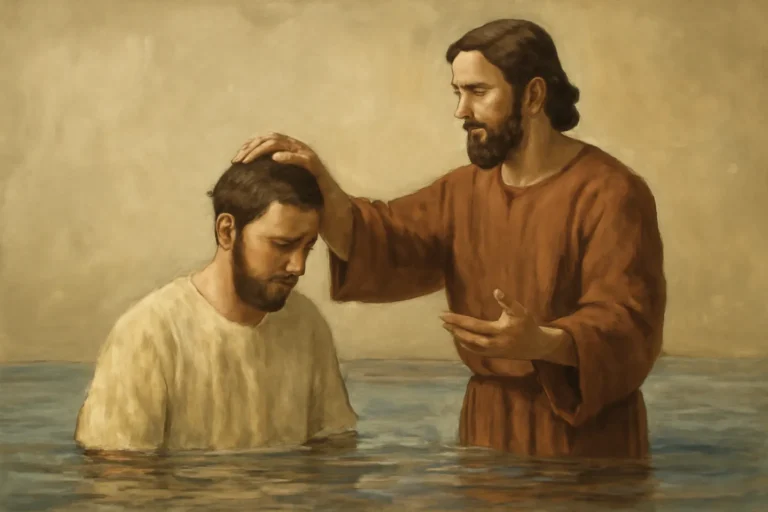
The question of how baptism relates to salvation has occupied the attention of Christians across centuries, cultures, andchurch traditions. This broad conversation is not merely about a single ritual; it engages the very foundations of how people understand faith, grace, covenant, and the process by which a person is incorporated into the people of God. In many traditions, the debate centers on whether baptism is merely a public proclamation of an inward decision, or whether it is a divinely ordained means of grace that participates in or even effects justification. Across the spectrum, scholars and pastors speak about faith, grace, repentance, and the role of community in the journey toward God. The varied emphases produce a family of related questions: What is the relationship between belief and baptism? Is baptism necessary for salvation, or is it a symbolic act following faith? What about infants who cannot profess faith, or adults who come to faith after years outside the church?
In this article, we survey the major scriptural perspectives that shape the ongoing baptism and salvation debate. We will look at how scripture is used to support different positions, how early Christian practice informs modern doctrine, and what practical implications arise for churches and individuals. The aim is not to settle every controversy, but to illuminate the key lines of reasoning, the breadth of evidence cited, and the pastoral implications that emerge when communities wrestle with these questions in light of scripture and tradition.
Primary Scriptural Foundations Often Cited in the Debates
The scriptural bedrock for discussions about baptism and salvation includes verses that mention belief, repentance, water baptism, and the reception of grace through faith. The same passages are employed differently by traditions that emphasize different theological priorities.
New Testament Basis: Belief, Repentance, and Baptism
A common line of reasoning notes that many New Testament accounts pair belief with baptism as part of the evangelistic proclamation and the initiation into the Christian life. For example:
Mark 16:16 — “He who believes and is baptized will be saved; but he who does not believe will be condemned.”
Acts 2:38 — Peter’s instruction: “Repent, and each of you be baptized in the name of Jesus Christ for the forgiveness of your sins; and you will receive the gift of the Holy Spirit.”
Acts 22:16 — An exhortation to arise, be baptized, and wash away sins, calling on the name of the Lord.
Romans 6:3-4 — The imagery of dying and rising with Christ through baptism: a participation in a Christ-centered transformation.
These verses are used, in various traditions, to argue that baptism is closely tied to the reception of grace and the transformation that accompanies saving faith. Some readers emphasize the imperative—“repent and be baptized”—as a sign that baptism is inseparable from the gospel call.
Christ’s Commission and the Great Commission
The commissioning of the church in the Gospels is frequently invoked to support the practice of baptizing new converts. Notable texts include:
Matthew 28:19-20 — “Go therefore and make disciples of all nations, baptizing them in the name of the Father and of the Son and of the Holy Spirit, teaching them to observe all that I have commanded you.”
Acts 8:12-13 and Acts 8:36-39 — Contexts in which people believed the evangelistic message and were baptized, sometimes in close sequence.
1 Peter 3:21 — A classical passage that is interpreted in different ways: as a figure of baptism that corresponds to a good conscience toward God, or as a symbol of salvation through the flood-like passage of death to life.
Proponents of believer’s baptism often stress that Christ’s Great Commission requires disciples to be taught and then baptized, but only after faith has been professed. Those who argue for baptismal regeneration or for a more sacramental view of baptism cite these passages as pointing to baptism as the means through which God acts to bring a person into the new life, sometimes in tandem with faith.
Theological Frameworks: How Different Traditions Interpreted the Relationship Between Faith, Works, and Baptism
Across the history of Christian thought, interpretations of how faith, grace, and baptism relate to salvation have varied. Three broad families of interpretation recur in modern discussions.
Grace-Cum-Baptism: Baptism as Means of Regeneration
Some traditions teach that baptism is not merely an outward sign but an instrument by which God confers grace and participates in salvation. This view is common in the Roman Catholic and Eastern Orthodox traditions, where baptism is typically understood as a sacrament that conveys spiritual life (regeneration) and the forgiveness of sins, often in conjunction with faith and the invocation of the Holy Spirit.
Key claims emphasize that the sacrament is efficacious apart from the person’s mental assent at the moment of baptism.
Scriptural supports are read through a sacramental lens, focusing on phrases such as “born of water and Spirit” or the emphasis on God’s saving action in baptismal rites.
Believer’s Baptism: Faith-Centered Initiation
In many Protestant and evangelical circles, the emphasis is on faith as the condition for salvation, with baptism understood primarily as a public declaration of faith and a symbol of repentance and transformation. Advocates stress:
Baptism is an ordinance or act of obedience after one has exercised personal faith.
Salvation is described as a gift of grace received through faith, not earned by ritual actions.
Some quote passages like Acts 16:31 (“Believe in the Lord Jesus, and you will be saved”) to emphasize faith as the decisive factor, while making room for baptism as a sign of unity with the body of Christ.
Symbolic and Covenant-Centric Readings
A third set of perspectives reads baptism primarily as a sign of inclusion within the covenant people of God and as a symbolic rite that points to the inner transformation produced by grace. In this frame:
Baptism affirms the community’s identity and the believer’s participation in the church’s shared story.
Justification is understood as God’s act of declaring a sinner righteous by faith, with baptism highlighting the response of faith rather than constituting the means of salvation itself.
Historical Trajectories: From the Early Church to the Reformation and Beyond
The ways Christians interpreted the relationship between baptism and salvation have evolved through time, often shaped by debates about grace, church authority, and the nature of faith. A glance at historical development clarifies why contemporary debates still resonate in local churches today.
From the Patristic Era to the Middle Ages
In the early centuries, baptism often occurred in infancy within many local Christian communities. The baptismal ritual was tied to catechetical instruction, church membership, and the forgiveness of sins. The Fathers frequently described baptism as a means by which divine grace cleanses and initiates the baptized into the new life in Christ. While practices varied, the sense that baptism plays a crucial role in incorporation into the church remained strong.
The Reformation and Divergence
The Reformation brought renewed attention to the relationship between faith and baptism. Reformers such as Martin Luther and John Calvin emphasized the authority of Scripture and the concept of justification by faith through grace. Some Reformers retained infant baptism and reinterpreted it within a covenantal framework, while others emphasized believer’s baptism as essential to a conscious response to the gospel. The spectrum of views widened, setting the stage for modern debates about the necessary conditions for salvation and the status of baptism as an instrument of grace versus a public testimony.
Modern Variations and Ecumenical Dialogues
In contemporary times, many churches engage in ecumenical dialogue to explore common ground while acknowledging persistent differences. Debates around the mode of baptism (immersion vs. sprinkling), the age at baptism (infant vs. adult), and the role of baptism in salvation continue to shape confessional statements, catechetical curricula, and pastoral practice.
Contemporary Positions: A Snapshot of Major Perspectives
The landscape of modern Christianity includes a diverse array of approaches to baptism and salvation. Understanding these positions helps communities dialogue with charity and clarity.
Catholic and Orthodox Traditions: Sacramental View of Baptism
In Catholic and Orthodox contexts, baptism is typically seen as an indispensable sacrament through which God grants grace, cleanses sin, and incorporations the believer into the Church. Key features include:
The belief that baptism is effective by its very act, often described as a regeneration or new birth initiated by God.
The catechetical process that accompanies infants and children, leading to confirmation or chrismation in many traditions.
The understanding that salvation is a process that involves faith, grace, and ongoing participation in the life of the church.
Protestant Mainline and Evangelical Traditions: Faith, Conversion, and Baptism as Sign
In many Protestant communities, salvation is understood primarily as God’s gracious gift received by faith. Baptism is highly valued as a public profession of faith and a formal rite of obedience. Distinguishing features include:
Baptism is an outward sign of inward faith, often practiced after a person professes belief in Christ.
Immersion is commonly emphasized in churches that practice believer’s baptism, though other modes are accepted in some circles.
Justification by faith is foregrounded, with baptism seen as a meaningful response rather than a required mechanism for salvation.
Baptist and Anabaptist Traditions: Explicit Believer’s Baptism and Local Church Authority
Among Baptists and some Anabaptist groups, baptism is reserved for those who can consciously profess faith. The public baptism serves as a declaration of trust in Christ and an entry into the church’s covenant community.
Baptism is viewed as a symbol of the inward transformation wrought by the gospel.
Salvation remains rooted in personal faith, repentance, and trust in Christ’s redeeming work.
Mode matters to many adherents (immersion is preferred) but is often less of a concern than the believer’s confession of faith.
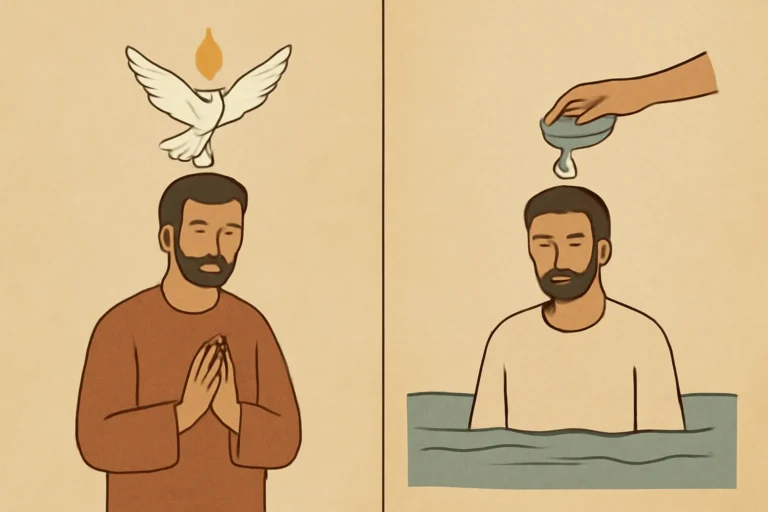
Pentecostal and Charismatic Perspectives: Water Baptism and the Baptism in the Spirit
Some Pentecostal and charismatic communities emphasize the distinction between water baptism and the Holy Spirit baptism. They may teach:
Water baptism as an important public witness, while Spirit baptism is presented as a separate, later experience confirming salvation and empowering ministry.
Salvation through faith in Christ, with baptism as an act of obedience that confirms that faith.
Across these perspectives, a common thread is the recognition of grace as the foundation of salvation, with baptism functioning within that grace in diverse ways. The diversity invites careful hermeneutics and pastoral sensitivity when communities discuss who should be baptized, when, and for what purpose.
Key Debates About Mode, Eligibility, and Timing: Practical Questions in the Contemporary Church
The ongoing conversation often centers on three practical questions that influence church life: the mode of baptism, the eligibility of infants, and the timing of the rite in relation to faith and catechesis.
Mode of Baptism: Immersion, Sprinkling, or Pouring?
The question of how to baptize has sparked significant discussion. The biblical text describes baptism in various settings and with different imagery, leading to diverse practices:
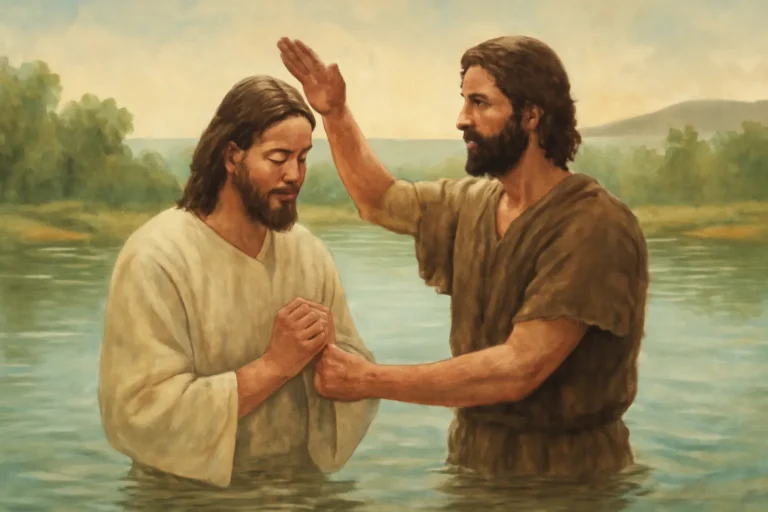
Immersion: Emphasized in traditions that stress a full immersion into water as a symbolic burial and rising with Christ.
Sprinkling or Pouring: Used in communities where immersion is impractical or when infants are baptized; seen as symbolically aligning with cleansing and new life.
Respect for continued interpretation: Some churches hold that the mode is theologically secondary to the significance of the act as obedience to Christ’s command.
Infant Baptism vs Believer’s Baptism: Who Should Be Baptized?
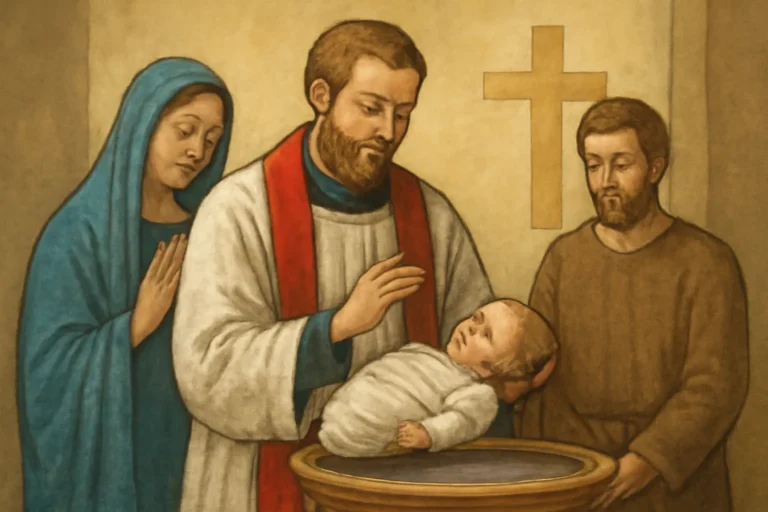
The eligibility question has historically divided churches. Proponents of infant baptism argue that baptism initiates the child into the covenant community and that grace can operate in the child’s life through God’s action. Advocates for believer’s baptism argue that personal faith should precede baptism, and that the individual must publicly confess faith in Christ.
Infant baptism often rests on covenant theology and church tradition.
Believer’s baptism emphasizes personal repentance and faith as prerequisites for baptism.
Some communities practice a mixed approach, baptizing infants with later confirmation or a reaffirmation of faith by the individual.
Timing: Baptism Before or After Profession of Faith?
The sequence of faith and baptism can differ. Some traditions baptize infants and then provide catechesis leading to confirmation. Others require a personal profession of faith before water baptism. This timing debate has implications for how the church understands salvation, assurance, and discipleship.
Theoretical discussion about baptism and salvation takes on concrete shape when pastors and lay leaders shepherd families, catechumens, and those who are curious about Christianity. Several pastoral themes consistently emerge.
Compassion and clarity: Communicating the gospel clearly while honoring diverse beliefs and questions.
catechesis: Providing systematic teaching about Christian faith, repentance, and the meaning of baptism within a community context.
Pastoral sensitivity to trauma and background: Acknowledging that individuals may come from varied religious or nonreligious backgrounds and that baptism is meaningful within personal narratives.
Respect for conscience and informed consent: Recognizing that some believers may approach baptism later in life, after a period of learning and discernment.
In practical terms, many churches adopt an intentional catechetical process for those considering baptism, including:
Orientation sessions explaining the meaning and significance of baptism, the church’s beliefs about salvation, and what faith entails.
Opportunities for questions, doubts, and exploration of scripture in community settings.
Mentoring or sponsorship by a mature believer to accompany the candidate through the process of faith and baptism.
To aid readers who are navigating the baptism and salvation debate in practical terms, here are some commonly asked questions and concise responses.
Is baptism required for salvation?
Answers vary by tradition. Some Christian groups affirm that baptism is essential as a means of grace, while others grant that salvation is secured by faith in Christ and that baptism is a response to that faith. The balance between faith as trust in Christ and baptism as obedience to Christ is the hinge of this question in many confessional statements.
This is a debated topic with different theological outcomes. Some traditions emphasize God’s mercy and the possibility of salvation for those who would have believed if given the opportunity, while others maintain that baptism is the normative pathway in God’s economy. The biblical data require careful interpretation and pastoral discretion.
In sacramental traditions, baptism is often described as the cleansing of sin. In other frameworks, forgiveness is described as the result of faith in Christ, with baptism signaling that forgiveness has already been received through grace. The distinction between “already granted” and “sign becoming effective” can be nuanced and varies by tradition.
The scriptural basis for infant baptism is debated. Proponents appeal to covenantal language and early church practice, while opponents emphasize explicit personal faith as a prerequisite for baptism. The debate often turns on how one reads the family of God in biblical terms and how one interprets passages related to household conversions and the baptism of households.
What is the simplest way to approach this topic in a local church setting?
A constructive approach emphasizes pastoral humility, careful exegesis of key biblical passages, and a willingness to listen across theological boundaries. It invites catechesis, dialogue, and practices that honor conscience while remaining faithful to core gospel convictions.
For churches and individuals seeking to engage the baptism and salvation debate with integrity, several guiding principles can help create a constructive conversation.
Ground the conversation in scripture: Constant reference to core biblical passages, plus a careful note of how different traditions interpret them.
Honor historical wisdom: Recognize the insights of the ancient churches and reformers while remaining open to contemporary understanding.
Be precise about terms: Distinguish between terms like regeneration, justification, sanctification, and the various senses of baptism (water baptism, baptism in the Spirit, sacramental grace, etc.).
Practice humility in disagreement: Embrace the reality that well-meaning Christians can interpret the same texts differently without doubting one another’s faith.
Prioritize pastoral care: Ensure that people seeking baptism or grappling with salvation are treated with love, clarity, and spiritual nourishment.
A thoughtful approach considers both the theological textures and the lived realities of congregations. In practice, this often means offering education about different positions, inviting respectful dialogue, and keeping the focus on the gospel of Jesus Christ—his life, death, resurrection, and call to follow him in faith.
For learners, teachers, and pastors, approaching the baptism and salvation debate with sound hermeneutics is essential. Below are guiding questions and methodological suggestions.
What is the primary action described by the text—belief, baptism, or both—and what is the surrounding context?
Do the verses function as prescriptive commands, descriptive accounts, or theological images? How does the setting influence interpretation?
What is the relationship between faith and works in the passage, and how do surrounding scriptures address justification and grace?
How do historical contexts shape the meaning of baptism for different communities?
What is the pastoral implication for people who have differing practices in their churches?
By engaging with these questions, students and teachers can cultivate a robust understanding of how baptism figures into the larger story of salvation, without reducing complex traditions to a single label.
The ongoing baptism and salvation debate reveals a vitality in the Christian tradition: faithful communities wrestling with how God acts in the world, how people respond in faith, and how the church lives out the gospel in worship, mission, and daily life. The diversity of conclusions is not necessarily a sign of disunity alone; it can be a sign of a living, sincere pursuit of truth within the breadth of Christian experience. In the end, many would agree that:
Salvation is by grace through faith in Christ.
Baptism is a meaningful rite that signals one’s identification with Christ and the church, whether viewed primarily as a sign, a means of grace, or a combination of both.
Healthy disagreement is best navigated with love, learning from Scripture, and listening to one another with humility.
As communities continue to explore what scripture teaches about baptism and salvation, the goal remains to proclaim the gospel faithfully, nurture disciples, and welcomed all who seek to grow in the grace of God.