Chronology of the Gospels: A Comprehensive Timeline of Matthew, Mark, Luke, and John
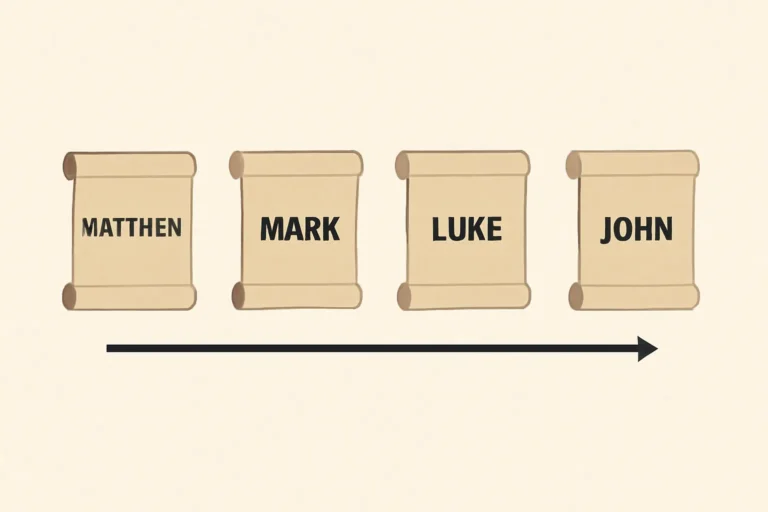
The study of the chronology of the gospels invites readers to consider not just what happened, but when and how the four Gospels—Matthew, Mark, Luke, and John—present the life, ministry, death, and resurrection of Jesus. This article surveys the major lines of inquiry about the timeline of the gospels, while offering a detailed, readable synthesis of how scholars approach a harmonized sequence as well as how each Gospel writer shapes events to suit theological purposes. By exploring the gospel chronology from multiple angles, readers gain a clearer sense of whether the sources agree, where they diverge, and what those differences reveal about early Christian communities and their memories.
To grasp the timeline of the four gospels, it helps to distinguish between mere ordering and the reasons behind that order. Each Gospel writer selects and arranges material to emphasize specific themes—such as the messianic identity of Jesus, the fulfillment of Scripture, or the revelation of Jesus’ mission to the world. This leads to a multi-layered picture: a chronological thread that can be traced through roughly similar episodes across the synoptic narratives, alongside Johannine selections that signal a distinctive theological cadence. When we speak of chronology and harmonization, we are often balancing two tasks: reconstructing a plausible sequence of events and understanding how each author’s narrative logic invites particular readers to recognize Jesus in new ways.
The Synoptic trio: Matthew, Mark, and Luke
The synoptic gospels—Matthew, Mark, and Luke—share a substantial amount of material and frequently present similar sequences. The question of how their timelines relate to one another has driven much scholarly debate, culminating in several influential models. The most widely discussed framework is the Markan priority and the two-source hypothesis, which together claim that Mark’s Gospel was the first written and that Matthew and Luke used Mark as a source plus another common source known as Q.
Markan priority, the two-source hypothesis, and what they imply for chronology
Mark’s concise framework provides a backbone for many events: John the Baptist’s ministry, the call of the disciples, the Galilean ministry, the journey toward Jerusalem, the passion, and the resurrection narrative are treated in a streamlined sequence that many readers recognize as a backbone for other gospels.
Matthew and Luke’s expansions often add material not found in Mark, including infancy narratives (in Matthew and Luke), additional parables, and postresurrection appearances. In terms of chronology, they frequently expand or reorder Mark within a broader theological frame rather than presenting a strictly new sequence.
Two-source hypothesis suggests that Matthew and Luke independently drew from Mark and from a hypothetical collection of Jesus’ sayings called Q. If so, the shared material among the synoptics often aligns with Mark’s order, while additional material in Matthew and Luke sometimes reshapes the timeline to fit their themes.
Consequence for readers: understanding the synoptic chronology encourages readers to notice where a shared sequence is likely Mark-based, and where Matthew or Luke tailor events to reflect their community’s insights, expectations, or scriptural fulfillments.
Alternative models and the logic of chronology
Farrer hypothesis preserves Markan priority but eliminates the need for Q by positing that Matthew used Mark, and Luke used both Mark and Matthew. Chronology in this model follows Luke’s arrangement as a composite of Mark’s narrative plus Matthew’s expansions.
Augustinian and other harmonizing schemes attempt to create a single, continuous narrative by stitching together the four Gospels, sometimes smoothing or reordering episodes to reduce apparent conflicts. Critics argue that such harmonization can flatten distinctive theological aims of each Gospel.
Literary and redaction-critical approaches focus on how each author edits material to address their audience. Chronology, then, is not merely a timeline but a reflection of editorial decisions that reveal theological emphasis and pastoral concerns.
Where the synoptic trio emphasizes a relatively compact sequence of public ministry, the Gospel of John presents a more episodic and epoch-spanning portrayal that sometimes moves readers through events in a different order or with longer gaps between major milestones. The Johannine timeline is often described as theological chronology rather than a straightforward historical ledger, because its sequence foregrounds identity claims, miracles as signs, and prolonged discourses that illuminate who Jesus is.
Key markers of John’s chronology include:
Disputed timelines regarding Passover and the timing of Jesus’ crucifixion are a central point of scholarly discussion. Some readings propose Jesus’ ministry culminates around multiple Passovers, while others emphasize a single, climactic Passover. The difference matters for how we align John with the synoptics.
Prolonged public ministry in various Judean settings and in Jerusalem, with fewer explicit travel itineraries, but deliberate shifts between Galilee, Judea, and Jerusalem that align with John’s thematic concerns.
Extended dialogues and signs—for example, the dialogue with Nicodemus, the Samaritan woman at the well, and the discourse-filled chapters—help anchor the chronology through theological milestones rather than a step-by-step itinerary.
Approaches to harmonizing the four gospels
Many readers and scholars want a single coherent timeline that incorporates all four gospels. Different approaches offer various advantages and trade-offs. The practice of harmonization recognizes both the value of a unified narrative and the inevitability of differences among the sources.
Common harmonization strategies
Event-by-event mapping: constructing a composite sequence by lining up comparable events (such as Jesus’ baptism, temptations, and the feeding of the multitudes) across the four gospels, while noting divergences in timing and details.
Thematic harmonization: prioritizing theological coherence over strict chronological alignment, so the sequence is arranged to highlight messianic signs, fulfillment of prophecy, and the revelation of Jesus’ identity.
Historical windows and approximate dating: employing broad timeframes (for example, a few months for a Galilean ministry) rather than precise dates, acknowledging scholarly uncertainty while preserving a plausible arc of events.
Historically, Tatian’s Diatessaron (a second-century attempt to weave the four gospels into one continuous narrative) stands as one of the most famous early experiments in gospel harmonization. Modern disciples of harmonization often prefer a careful, critical approach: they treat harmonized timelines as pedagogical tools rather than definitive historical records, with clear acknowledgment of the interpretive choices involved.
A unified timeline of the life of Jesus as reflected in the Gospels
What follows is a synthesized, seminar-friendly outline that reflects major episodes typically recognized across the gospels. The aim is not to erase differences but to present a coherent storyline useful for study, teaching, or personal reflection. The timeline below uses a broad, historical-imagined sequence that aligns roughly with the standard scholarly consensus on the sequence of major events, while signaling where John’s chronology and the synoptic accounts diverge.
Phase 1: Preparatory background and early ministry
Conception and infancy narratives (found in Matthew and Luke) present Jesus as the Messiah in continuity with biblical promise, not as a blank slate. These passages establish themes of divine sovereignty, fulfillment, and the inclusion of the nations.
Public ministry begins with John the Baptist’s call for repentance and baptism, which marks the official introduction of Jesus to his movement. In Mark and Matthew, this moment also foreshadows Jesus’ authority and mission.
Call of the disciples and initial miracles—such as healings, exorcisms, and authoritative teaching—announce the arrival of the kingdom of God and begin to form the core group that travels with Jesus.
Phase 2: Galilean ministry and the growing public profile
Teaching in parables and authoritative instruction demonstrates Jesus’ method of schooling the crowds in the kingdom’s values and surprises the religious authorities with interpretive depth.
Miracles as signs—control over nature, healings, and displays of power—serve as both demonstrations of divine authority and pointers to the fulfillment of Scripture.
Conflicts with religious leadership intensify as Jesus challenges institutional boundaries, interpretations of the law, and expectations about the Messiah.
Travel toward Jerusalem culminates in a climactic set of episodes: last teachings, confrontations, and paradoxes that reframe Jesus’ mission in terms of sacrifice and redemption.
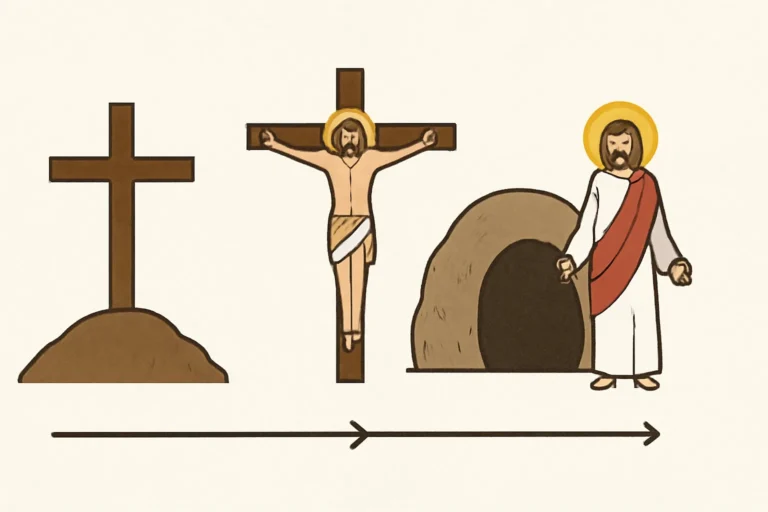
Passion Week includes key moments such as the Last Supper, Jesus’ arrest, trials, crucifixion, and burial. In synoptic gospels, these events form a compact, intense sequence; John’s account adds distinct discourses and signs to the same core events.
Resurrection appearances provide the foundational proclamation of victory over death and the commissioning of the apostles to go and tell the world about Jesus.
While a unified timeline is helpful for teaching and study, it is essential to appreciate the temporal variances that scholars discuss. Several factors influence the dating and sequencing of events in the gospels:
Different audiences and theological aims—each Gospel writer shapes chronology to speak to the concerns of his readers.
Literary design over strict chronology—order may reflect a narrative architecture designed to highlight key themes and signs rather than a historian’s record-keeping.
Dating debates about when Jesus began his public ministry, how long it lasted, and how many Passovers are reflected in John’s account—these questions affect the way we place events on a timeline.
Chronology by Gospel: a closer look at the individual narratives
To understand the chronology within each gospel, it helps to summarize the distinctive sequences and how they relate to the broader narrative arc. Here is a compact, by-Gospel map of the major stages:
Matthew’s timeline emphasis
Infancy in Matthew frames Jesus as the promised fulfillment of Israel’s scriptures, connecting Jesus’ birth to the prophetic expectations of the tradition.
Jesus’ teaching and kingdom pattern include long discourses (such as the Sermon on the Mount) that shape the ethical center of Matthew’s chronology.
Churchly and eschatological outlook culminates in a community-building ending that ties Jesus’ mission to future hope and mission beyond the crucifixion and resurrection.
Mark’s timeline focus
Compact, fast-paced narrative with a sense of urgency, driving toward the passion narrative as the dramatic climax.
Galilean ministry followed by a deliberate move to Jerusalem, with strong emphasis on the signs that reveal Jesus’ authority and the misunderstanding of his mission by many leaders.
Passion narrative is concise but potent, delivering a powerful theological statement about sacrifice and the revelation of the Son of God.
Luke’s sequence and emphasis
Historical breadth in Luke’s order—more expansive travel narrative, more attention to marginalized groups, and a focus on the repentance, mercy, and inclusivity embedded in Jesus’ ministry.
Infancy material in Luke, particularly the Nativity and childhood episodes, sets a broader frame that informs the missionary impulse of the later chapters.
Jerusalem journey leads to a culminating emphasis on salvation through Jesus, with a strong parabolic and ethical dimension threading the narrative.
John’s distinctive order
Theology-first chronology places Jesus’ identity and mission at the center, with signs and discourses woven into the sequence to reveal who Jesus is.
Multiple visits and feasts—John’s timeline sometimes situates Jesus in Jerusalem for multiple feasts, and the chronology may appear to drift from Galilee to Judea in stages that reflect thematic concerns.
Prolonged ministry and discourses give readers a sense of depth and engagement with Jesus as the Logos, culminating in the crucifixion and resurrection as triumphs that redefine the meaning of life and faith.
Understanding the chronology of the gospels has practical implications for how readers interpret the text, teach it, and apply it to contemporary life. A few guiding considerations help students and lay readers engage thoughtfully with the material:
Acknowledge diversity of purpose—each Gospel writer is addressing a particular audience with different concerns. Chronology should be read in light of this purpose, not as a neutral, purely historical ledger.
Use harmonization judiciously—harmonized timelines can be valuable teaching tools, but readers should also recognize the interpretive choices involved and the potential for over-simplification.
Balance narrative and theology—the chronology serves as a vehicle for theological themes about identity, mission, sacrifice, and salvation, rather than a mere chronology of dates.
Practical guidance for students and curious readers
When approaching the chronology of the gospels, consider the following practical steps to deepen understanding:
Compare parallel passages across Matthew, Mark, and Luke to identify shared sequences and distinctive additions. Create a simple side-by-side outline to make the similarities and differences visible.
Note the narrative tempo—Mark often moves quickly into action, while Luke and Matthew linger with parables and teachings. Recognize how tempo affects perception of time in the text.
Track theological motifs—look for how each Gospel uses chronology to advance themes like messiahship, kingdom, fulfillment of prophecy, and witness to faith.
Consult harmonization resources selectively—use harmonized outlines for classroom discussion, but also consult critical studies that highlight authorial intent and community context.
Methodological notes for scholars and teachers
Scholars often operate with a blend of textual criticism, historical background, and literary analysis when addressing the chronology of the gospels. Some guiding methodological notes include:
Textual variants can alter precise sequencing in marginal details; a careful edition and apparatus help identify where such variants occur and how they affect chronology.
Historical dating relies on cross-referencing external sources (historical records, Roman governance, lunar calendars for festival timing) while remaining mindful of the primacy of the evangelists’ theological aims.
Redactional sensitivity invites readers to notice how each author shapes the chronological arc to articulate identity and mission, rather than to deliver a textbook-style chronology.
Glossary of key terms for the gospel timeline
Understanding the study of the gospels benefits from clarity about these terms related to chronology and interpretation:
Synoptic Problem — the question of how Matthew, Mark, and Luke are related in terms of sources and order.
Markan Priority — the hypothesis that Mark was the first written gospel and served as a source for Matthew and Luke.
Q Source — a hypothetical collection of Jesus’ sayings considered by some scholars to account for material shared by Matthew and Luke but not found in Mark.
Diatessaron — an ancient harmony of the four gospels compiled by Tatian in the 2nd century; a landmark example of attempting a single, continuous chronology.
Harmonization — the process of aligning events from the four gospels into a single chronological sequence or narrative flow, often used for teaching or devotional purposes.
Johannine chronology — the timeline and sequencing particular to the Gospel of John, often distinguished by its theological framing and distinctive signs and discourses.
Additional resources for exploring gospel chronology
Readers who want to dive deeper into the complex topic of the gospel chronology can consult a range of materials, from introductory overviews to specialized monographs. Some recommended pathways include:
Introductory surveys that compare the synoptic chronology across Matthew, Mark, and Luke and explain the major hypotheses about sources and redaction.
Monographs on the Johannine timeline that address how John’s signs and discourses shape his unique sequence.
Annotated harmonies that present a step-by-step, event-by-event reconciliation of the four gospels, suitable for classroom use or self-study.
Commentaries that focus on literary structure, genealogy, and prophecy fulfillment as they relate to the ordering of events.
Concluding note on the dynamic nature of gospel chronology
Readers should recognize that the study of the chronology of the gospels is inherently interpretive. The four Gospels provide overlapping but distinct windows into the life of Jesus, and their timelines reflect the communities and purposes that shaped them. By engaging with the various models, readers gain a richer sense of how early Christians understood Jesus’ life and mission, and how those early testimonies were preserved, shared, and taught across generations. The result is a compelling comprehensive timeline that respects both the unity and the diversity of the gospel accounts, inviting ongoing inquiry and thoughtful reflection.