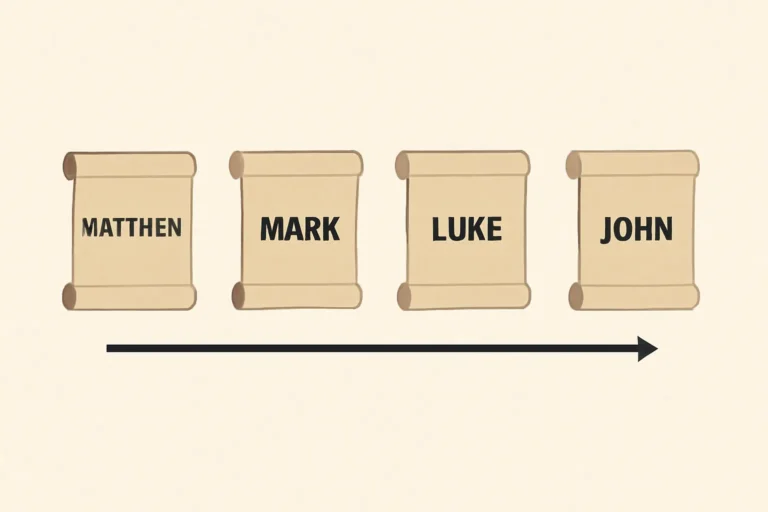
Teachings of Jesus Timeline: From Parables to Sermons
The teachings of Jesus timeline traces a pedagogical arc from subtle, everyday lessons to expansive, constitution-like sermons. This article surveys how the messages of Jesus develop across time and geography, highlighting how parables lay groundwork for ethical instruction, how the Sermon on the Mount crystallizes core values, and how later discourses and post-resurrection teachings broaden the scope to mission and communal life. Read as a chronology, the arc reveals a flexible pedagogy that moves from concrete situations to universal principles, and from private insight to shared practice.
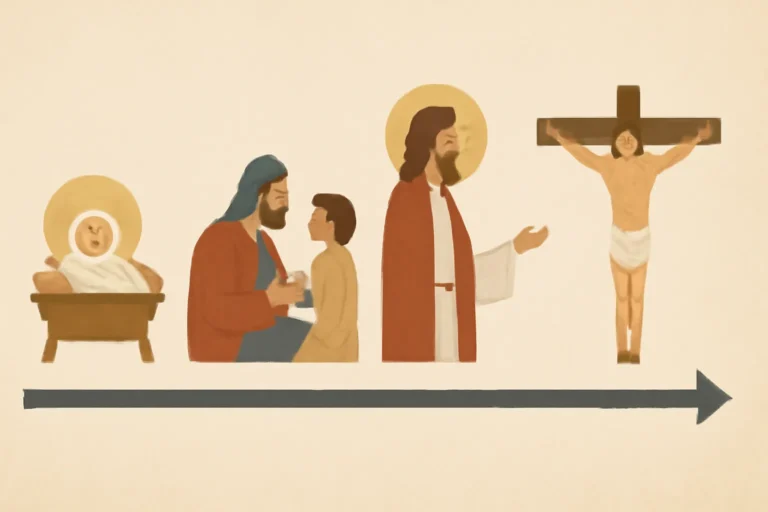
The public life of Jesus begins with a sequence of events that shape the timeline of Jesus’ teachings. While scholars debate the exact dates, most agree on a progression: the baptism and temptation signal the formal entry into ministry; a period of Galilean activity follows, marked by parables and short discourses; and a climactic phase in Jerusalem culminates in expository sermons, confrontations, and post-resurrection instruction. Across this journey, the essential themes emerge: the Kingdom of God, ethical renewal, mercy, justice, and faithful discipleship.
The Galilean Phase: Parables as the Early Curriculum
In the Galilean region, Jesus emphasizes accessibility and insight through parables. These compact stories use familiar situations—farming, harvesting, farming, family, and social interaction—to reveal deep spiritual truths. The teaching method itself becomes part of the message: listeners are invited to reflect, interpret, and then imitate. This marks a transition from abstract doctrine to experiential learning in real life.
The Parabolic Method Emerges
The parables serve several functions in this stage of the timeline. They:
Engage the listener with vivid imagery and surprise endings.
Encourage humility or contemplation for those who seek, and conceal truth for those who resist.
Provide transferable ethical models that could be practiced in daily life.
Among the most influential parables are the Prodigal Son, the Good Samaritan, the Sower, the Mustard Seed, and the Weeds Among the Wheat. Each one introduces a facet of the Kingdom of God that is not always aligned with human expectations—humility, mercy, risk, growth from small beginnings, and the discernment of true belonging.
Iconic Parables and Their Early Lessons
Good Samaritan: redefining neighborly love beyond boundaries of ethnicity or religion.
Prodigal Son: mercy, repentance, and the lavish grace of the father figure.
Sower: receptivity of the heart and the varying outcomes of hearing the word.
Mustard Seed: the potential for small beginnings to become expansive, transformative forces.
Parable of the Great Banquet: the widening invitation to God’s table, beyond expected guests.
The Sermon on the Mount: The Ethical Core of the Timeline
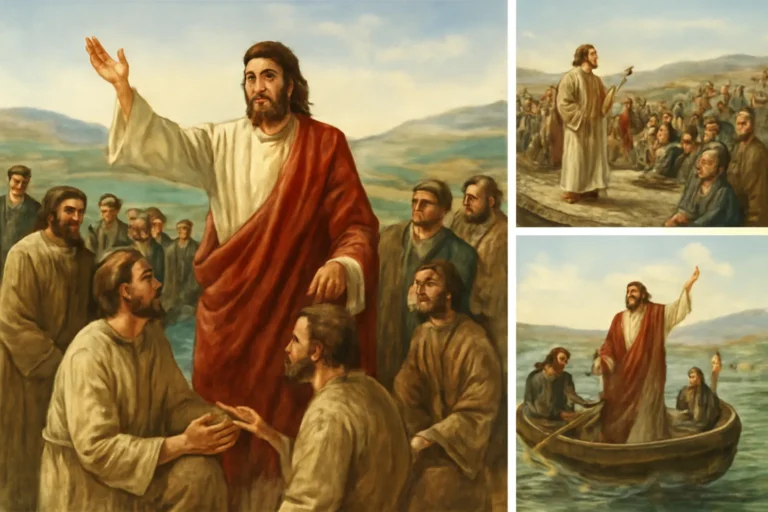
A watershed moment in the teachings timeline is the assembly of core ethical instructions in the Sermon on the Mount. Found in the Gospel of Matthew (chapters 5–7), this sermon crystallizes how followers should live in light of the coming Kingdom. It moves from outward religious performance to inner motives and daily acts that reflect genuine discipleship.
The opening Beatitudes announce a counterintuitive economy of blessing: the meek, the poor in spirit, those who mourn, and the persecuted are affirmed. This marks a shift from conventional success metrics to a vision in which humility, mercy, and purity of heart are the criteria of belonging in the Kingdom.
Blessed are the poor in spirit, for theirs is the Kingdom of Heaven.
Blessed are the meek, for they will inherit the earth.
Blessed are those who hunger and thirst for righteousness, for they will be satisfied.
Ethics of the Kingdom: From External Observance to Inner Transformation
The Sermon on the Mount reframes several familiar commandments into a more demanding ethical standard. It emphasizes intentional righteousness and authenticity in worship, prayer, and generosity. The famous statements about anger, lust, oath-taking, retaliation, and loving enemies push readers toward a more radical standard—one that seeks reconciliation and non-violence in daily life.
Turn the other cheek and offer a peaceful response to aggression.
Practice charitable giving in a sincere, private way rather than for public display.
Pray with sincerity, using models like the Our Father, which centers on dependence on the Father and daily provision.
Law, Prophets, and the Fulfillment Motif
A crucial piece of the timeline is the claim that Jesus does not abolish the Law but fulfills it. This positions his teachings as a renewal of the prophetic tradition, interpreting righteousness through love, mercy, and trust in God. The Golden Rule—do unto others as you would have them do unto you—becomes a practical centerpiece for interpersonal ethics, while the Greatest Commandment to love God and neighbor frames all other aspects of conduct.
Parables as a Timeless Teaching Tool in the Timeline
Even as the Sermon on the Mount anchors the timeline in a single incident, Jesus continues to teach through parables in various settings. The interplay between parables and direct teaching offers a balanced model: parables invite interpretation, while sermons clarify aims and application. In later passages, some parables reappear with fresh meanings as circumstances shift—from debate with religious leaders to guidance for a growing community of followers.
Several parables recur in the teachings timeline not because they are repeated but because their core lessons remain relevant across generations. They include:
The Net and the separation of good and bad at harvest, illustrating judgment and discernment within community life.
The Lily and the Fields imagery, highlighting God’s provision and the trust required for faithful living.
The Sheep and the Goats, a narrative about accountability, mercy, and social justice.
Practical Parables and Social Ethical Lessons
Parables emphasize action as the measure of belief. They encourage communities to imitate the responders in the stories—those who act with mercy, generosity, and humility. This aligns with a broader timeline in which Jesus reinterprets religious authority not as dominance but as service, wisdom, and restorative justice.
Jerusalem Teachings: Authority, Confrontation, and Final Parables
As Jesus moves toward Jerusalem, his teachings intensify in both style and stakes. In this phase, the messages confront hypocrisy, challenge entrenched power structures, and prepare followers for the cruciform path. The timeline of Jesus’ teachings during this period is marked by direct instruction, questions, and warnings about future trials, while also offering hope through parabolic and prophetic language.
Debates in Jerusalem reveal how Jesus reframes authority: not through force, but through wisdom and moral discernment. He challenges ceremonial excess while upholding the essential meaning of the law. The teaching about mercy, justice, and compassion remains central, and the parabolic form returns to illustrate that true righteousness comes from alignment of heart and action.
The critique of hypocrisy among religious leaders becomes a case study in integrity and humility.
The urban setting amplifies calls to care for the marginalized, including the poor, the sick, and the outcast.
Post-Resurrection Teachings: Commissioning, Belief, and Mission
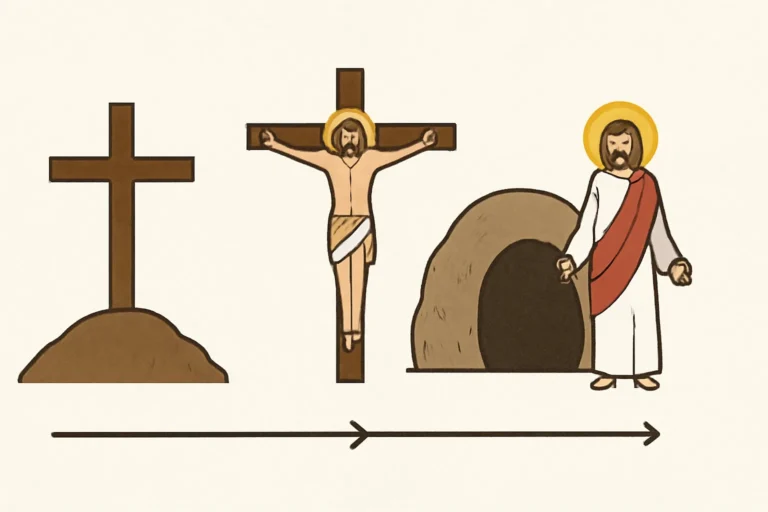
The teachings timeline gains a new dimension after the resurrection. The narrative shifts from public debates to missionary instruction and communal formation. The risen Jesus appears to his followers with clarifications about identity, purpose, and the scope of the mission. This phase is less about discovery through parables and more about commissioning and doctrinal guidance that undergirds the life of the early church.
The Great Commission and Missionary Ethic
The Great Commission—to go into all nations, to make disciples, and to baptize and teach—forms a practical capstone for the timeline of Jesus’ teachings. It reframes the work of listening to and applying Jesus’ words as a shared, ongoing project rather than a private pursuit. The commission emphasizes that the teachings of Jesus timeline are meant to be carried forward by communities who embody the principles of the Kingdom in diverse cultures.
Make disciples by teaching what Jesus commanded and modeling a life of worship and service.
Affirm baptism as entry into a covenant community and ongoing training in righteousness.
Empower believers with the assurance of presence—I am with you always.
New Commandment, Identity, and the Spirit
In the post-resurrection era, there is renewed emphasis on love as the defining mark of discipleship. The New Commandment to love one another as Jesus has loved us becomes a central identifier of the Christian community. This theme dovetails with teachings about the coming of the Spirit, which empowers ethical living, courage in witness, and endurance through trials. The Spirit’s presence reframes how the teachings timeline is lived out in real time, across generations.
Thematic Threads Across the Timeline of Jesus’ Teachings
Although spread across different settings and genres, several recurring themes unify the timeline of Jesus’ teachings:
The Kingdom of God as present reality and future hope, breaking into daily life through mercy, justice, and repentance.
Love as the defining duty toward God and neighbor, including enemies and the marginalized.
Forgiveness as a transformative practice that restores relationships and community cohesion.
Humility and service as the weight-bearing posture of leadership and trust in divine provision.
Ethical integrity as the outward sign of inner renewal—practices align with motives.
Variations and Variants in the Timeline for Semantic Breadth
When discussing the teachings timeline, it is useful to acknowledge various ways to phrase and interpret the arc:
Chronology of Jesus’ messages
Timeline of Jesus’ teachings across Gospel settings
Evolution of Jesus’ pedagogy from parables to sermons
Arc of Jesus’ ethical instruction through public ministry and post-resurrection instruction
History of the Gospel-based teaching about the Kingdom and discipleship
These variations help scholars and students approach the material from different angles—historical, literary, and theological—without losing the core sense of continuity: a movement from concrete, illustrative teaching to universal, ceremonial, and mission-focused exhortation.
How to Read the Teachings Timeline Today
Understanding this teachings timeline can be a practical guide for readers and students. Here are some guiding principles:
Identify the literary form: Parable, sermon, dialogue, or post-resurrection instruction—each form has a different aim and pace.
Note the setting and audience: Galilee, Jerusalem, or the early church context. Geography often shapes the emphasis and urgency of the message.
Track the central themes: The Kingdom remains the throughline, but the ethical implications unfold in layers—from personal conversion to social justice.
Observe the development of authority and relationship: How Jesus interprets the law, how followers learn to imitate, and how the community embodies the teachings.
Consider the transformative end: Commission, renewal, and ongoing mission in which the teachings timeline becomes a living tradition.
Educational Aids: Parables, Sermons, and Timelines in Practice
For educators, students, and curious readers, several practical tools can illuminate the teachings timeline:
Timelines that place key events, discourses, and parables in chronological order, with cross-references to the Gospel sources.
Parable analysis charts that map imagery, audience response, and applicable ethical lessons to contemporary contexts.
Sermon mirrors that compare the Beatitudes, the Great Commandment, and the Golden Rule across different Gospel accounts.
Discussion prompts focused on how the post-resurrection teachings carry forward the mission and how communities today can embody the New Commandment.
Closing Reflections on the Arc from Parables to Sermons
The trajectory from parables to Sermon on the Mount and beyond into Jerusalem and post-resurrection teaching reveals a robust and humane pedagogy. This pedagogy invites listeners to move beyond passive reception into active, communal participation in a story that centers on love, mercy, justice, and reconciliation. The teachings timeline is not merely a historical account but a living framework for understanding how a community interprets truth, translates it into action, and sustains its identity across generations.
To ground the timeline in concrete examples, here is compact guidance on a few parables and their modern implications. Bold terms indicate central concepts for quick reference.
Good Samaritan: neighbor-love that transcends boundaries—consider how this informs contemporary social service and interfaith dialogue.
Prodigal Son: mercy and repentance—how communities welcome back those who stumble and seek restoration.
Mustard Seed: hope for small actions to yield large outcomes—encourage initiative in service and evangelism.
Sower: receptivity of hearts—examine barriers to hearing and acting on moral truth.
Parable of the Wise and Foolish Builders: the importance of building life on enduring foundations—character and trust in God over shifting sands.
In closing, the teachings timeline provides a map for interpreting Jesus’ messages across time and culture. It shows how a single teacher, speaking through parables and sermons, shaped a movement that continues to explore questions about authority, love, justice, and purpose. Whether approached as a historical chronology or a living tradition, the arc from parabolic instruction to sermon-centered ethics offers a durable framework for understanding the enduring impact of Jesus’ teachings on individuals, communities, and societies around the world.