Hidden Years of Jesus: Uncovering the Silent Years Between His Childhood and Public Ministry
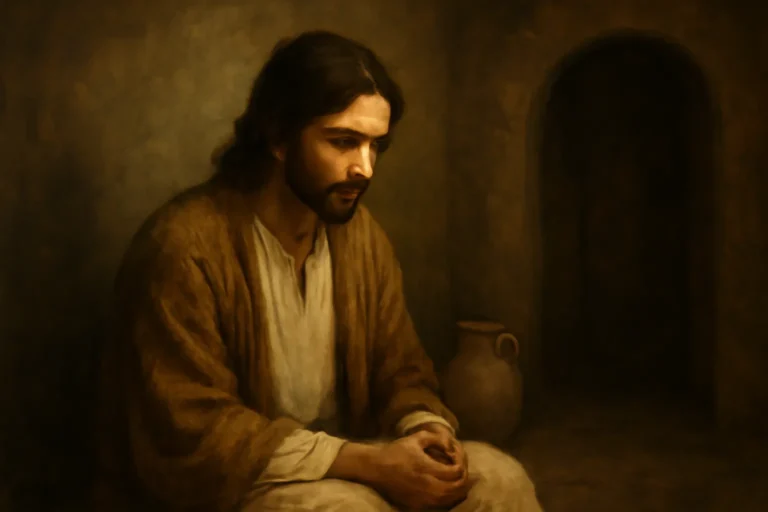
Among the most discussed puzzles in biblical history is the span of years between Jesus’ childhood and the beginning of his public ministry. This interval is often described in modern study as the hidden years or the silent years of Jesus, a period about which the biblical text is notably reticent. Scholars, theologians, and readers alike have wondered what shaped the young man who would later teach with authority, perform miracles, and suffer on the cross. In this long article, we explore the evidence, the gaps, the traditional interpretations, and the wide range of educated guesses that fill the space between childhood and the recognizable onset of Jesus’ ministry. We will use a broad palette of terms—hidden years, years of obscurity, unseen years, and silent years—to indicate how different voices describe this time without overstepping the available data.
Mapping the mystery: what the canonical texts reveal and what they omit
The canonical Gospels provide only limited information about Jesus’ life after his temple episode in Jerusalem during his youth and before the beginning of his public activity. The most concrete reference to this period is found in the Gospel of Luke, which recounts a remarkable moment when Jesus, at about twelve years of age, is found in the temple discussing matters with teachers and astounding them with his understanding (often referred to as the temple episode). This episode is sometimes used to anchor the idea that Jesus was actively engaged with religious study and discernment even before his public mission.
Luke 2:41-52 describes Jesus in Jerusalem at the temple, sitting among teachers, listening, asking questions, and answering with deep insight. The text notes a sense of wise familiarity with sacred matters and a growing sense that Jesus’ path would be distinctive.
The Gospel according to Luke also emphasizes that Jesus “increased in wisdom and in stature, and in favor with God and man,” indicating a theme of growth that continues beyond childhood and into adulthood. While this remark is brief, it points to a shaping process that plausibly carried through the hidden years or silent years.
Beyond this temple scene, the canonical texts offer almost nothing about Jesus’ daily upbringing in Nazareth or the development of his vocational life, such as training in his father’s trade or participation in community life. The other canonical Gospels—Mark, Matthew, and John—start with Jesus’ decades as already active in public ministry, leaving a gap that generous readers fill with speculation, tradition, and historical inference.
In addition to Luke, some scholars look to the Gospel of John and the opening lines of John 1 to frame the beginning of Jesus’ public career as the moment when the “Word became flesh” and began to reveal himself. Yet even John’s account, which highlights the pre-existence of the divine Logos, does not illuminate what Jesus did in the years immediately prior to his baptism. This is why the period is often described as a crucial but enigmatic segment of the life of Jesus of Nazareth.
Gaps in the narrative: why the years are silent
There are several reasons scholars describe the period between childhood and ministry as a time of silence in the scriptures. First, the canonical gospels are not intended as a complete biography in the modern sense; they aim to convey theological truths through selected episodes. Second, the early church’s primary concern was to declare who Jesus is in relation to God and humanity, not to document every phase of his life in exhaustive detail. Third, much of Jesus’ early life occurred within a family and community context that, for a variety of cultural and historical reasons, was not preserved in the surviving manuscripts with the same richness as the temple episode in Luke. Consequently, the years of obscurity have come to represent a space where tradition and speculation mingle with history and conjecture.
For readers who want to parse the mystery, several informational threads help organize thinking about the hidden years while remaining faithful to the evidence available in the New Testament and in extra-biblical sources. These threads include considerations of historical context, likely educational norms, and the social expectations of a Jewish family in Nazareth in the first century CE.
Common theories about the years between childhood and public ministry
Because the biblical record is sparse, theorizing about the years of obscurity has taken many forms. The aim is not to assert unverified claims as gospel truth, but to explore plausible lines of inquiry that fit the historical and cultural setting of first-century Galilee and Judea.
Traditional development: growth in Nazareth and carpentry
One widely held view is that Jesus spent the years after the temple incident in the ordinary, everyday rhythm of family life in Nazareth, working as a tradesman—often described in Greek as a tekton (craftsman or builder). In the cultural setting of Jewish families, it would be natural for the son to learn a trade, study Torah, and participate in synagogue life. The phrase in Mark 6:3, where Jesus is called a “carpenter” or “craftsman,” has often been read as evidence of a practical vocational phase preceding public ministry. The logic is that this period of steady work and apprenticeship would provide moral formation, physical stamina, and social maturity, all of which would be necessary for the leadership that would follow. While this reading is plausible, it remains a hypothesis because the Gospels do not supply a detailed itinerary of Jesus’ training in carpentry or family business during this time.
Temple studies and rabbinic formation
An alternative or complementary view emphasizes education in the law and Jewish tradition. In the first-century setting, many Jewish youths received formal or semi-formal instruction in Scripture, prayer, and rabbinic debate. The temple episode itself demonstrates that Jesus engaged with teachers at a level beyond simple familiarity, suggesting that he was already conversant with scriptural interpretation and a tradition of inquiry. If Jesus continued in a trajectory of rabbinic-like exploration, the years of obscurity could have involved study, memorization of scriptures, and participation in the rhythms of synagogue life—an apprenticeship in spiritual formation that would align with a deliberate, mindful preparation for a public ministry rooted in divine wisdom and Torah understanding.
Journeys and cross-cultural exposure (speculative)
Some modern interpretations venture into the realm of travel and cross-cultural exposure, proposing that Jesus may have encountered different religious and philosophical landscapes as a form of formation. While these proposals often rely on later legends rather than verifiable historical evidence, they speak to a broader scholarly impulse: to consider how a person who would later offer universal messages could have drawn from diverse human experiences. The idea of movement beyond Nazareth—whether to Jerusalem, to a broader region of the Levant, or to other places in the Mediterranean world—appears in later apocryphal or legendary material, though it is not supported by the canonical text. When discussing such ideas, it is important to distinguish between historical probability and imaginative or devotional narratives.
Over the centuries, various apocryphal writings and legends emerged that filled the space of the hidden years with miraculous events or extraordinary training. Texts such as the Infancy Gospel of Thomas and the Protevangelium of James belong to a family of writings that sought to tell stories about Jesus beyond the canonical narratives. While these works can offer insight into early Christian imagination and devotion, they are not regarded as reliable historical sources for events in Jesus’ adolescence or young adulthood. They do, however, illuminate how later communities imagined the years of obscurity and how such imaginings contributed to the reverence and mystery surrounding Jesus. Readers should approach these legends as cultural artifacts rather than as historical testimony about the details of Jesus’ life during the silent years.
How different traditions view these years
Across Christian traditions, the mystery of the hidden years has been acknowledged rather than resolved. The core theological point is that Jesus, while fully divine, also grew in human knowledge, wisdom, and grace. This dual focus underscores the Christian understanding of the incarnation: God becoming fully present in a human life, subject to growth and learning just as other youths are. Different traditions emphasize various aspects of this mystery:
Roman Catholic and Orthodox perspectives tend to emphasize the humanity of Jesus and his gradual formation within a faith community. The silence of the early years invites contemplation of Jesus’ obedience and humility in a family context and in a community of learners. The temple episode is often read as a sign of his early awareness of his vocation, paired with a sense of filial submission to his earthly parents.
Protestant perspectives often highlight the human development of Jesus as evidence that he experienced a real, chronological life on earth. This reading supports the theological claim that Jesus grew up among us, negotiating ordinary life while carrying a unique divine mission.
Eastern Christian traditions frequently emphasize the mystery of incarnation in a way that invites reverence for the hidden years as a phase of ascent toward a public ministry that would reveal the divine Logos in a human life.
Modern biblical scholarship tends to foreground historical-critical methods, noting the absence of explicit evidence about this period while acknowledging plausible developmental lines—education, family life, trade work, religious practice, and community engagement—that align with what is known about first-century Jewish life in Galilee.
Why the hidden years matter for faith and scholarship
Even though the period between childhood and ministry remains largely unrecorded, it carries significant implications for both faith and scholarship. From a theological standpoint, the years of obscurity remind believers that spiritual leadership does not emerge instantly but is formed through ordinary life, obedience, and patient growth. The idea that Jesus “increased in wisdom” during this period provides a template for spiritual formation in the life of believers today, emphasizing disciplines such as study, reflection, prayer, and service within a family and community framework. In terms of historical study, the silence invites careful, respectful inference rather than sensational speculation. It challenges readers to distinguish what can be known historically from what is best understood through theological interpretation and devotional reading.
Another dimension concerns the reception of Jesus’ message. If the future teacher and Savior spent years in fostering relationships, learning, and work, then his later ministry must be understood not as an abrupt departure from life but as the culmination of a long process of formation. This understanding can encourage modern readers to examine their own journeys of learning, work, and service as forms of preparation for greater responsibility and vocation. The hidden years thus become a pedagogical, as well as a devotional, matter for people who are seeking to understand how greatness can emerge from simplicity and how wisdom can grow over time in a human life.
Constructing a probable arc: a careful timeline of possibilities
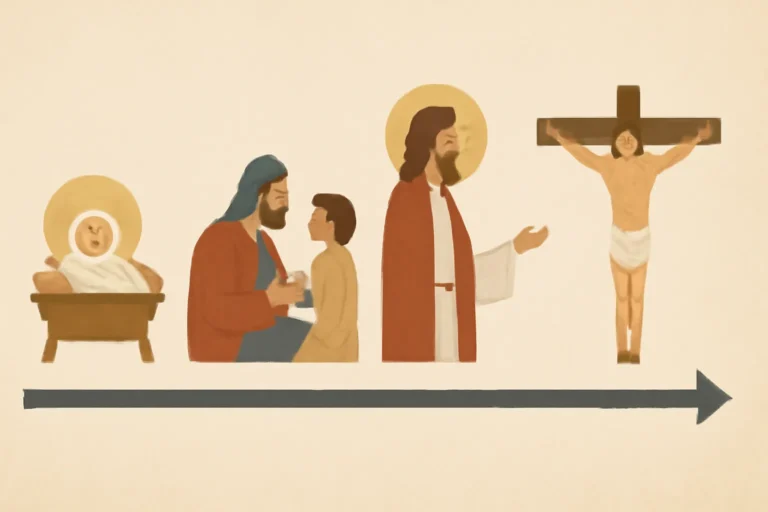
It is important to approach any proposed chronology with humility. The historical record does not provide a complete timetable, so any “timeline” should be presented as a set of plausible possibilities grounded in context rather than as definitive facts. Here is a nuanced outline of what scholars often consider when contemplating the silent years of Jesus:
Age ~12 (the temple episode): Jesus shows surprising engagement and depth in discussing sacred matters, suggesting early literacy and familiarity with Torah study.
Ages 12–18 (late youth): Likely development within the Nazareth household, involvement in family work, continued education in Jewish law and tradition, and participation in synagogue life.
Ages 18–25/30 (early adulthood): Possible extension of vocational training in carpentry or related crafts; gradual community responsibility; potential experiences of travel or broader religious education, though evidence is not explicit in canonical texts.
Ages 25–30 (preliminary spiritual preparation): Theological reflection, closer association with a community of learners, or involvement in regionally observed religious routines that could lay groundwork for the public proclamation of his message.
Scholars stress that this arc remains speculative, and the emphasis is on describing a formation pattern consistent with first-century Jewish life in Galilee rather than asserting a precise itinerary. In any reconstruction, the key elements are growth in wisdom, maturity in moral life, and engagement with a faith community that would eventually be ready to receive and interpret Jesus’ teaching in light of his divine mission.
Resources for further study
For readers who wish to explore the hidden years of Jesus in more depth, several kinds of sources can provide a well-rounded picture. It is helpful to distinguish between canonical materials, apocryphal works, and modern scholarly discussions. The following categories can guide careful exploration:
Canonical sources (New Testament): Primary attention goes to Luke 2 for the temple incident and the brief statements about Jesus’ growth. While the rest of the canonical Gospels do not narrate a continuous childhood or adolescence, they collectively frame a life that moves from humble beginnings to public preaching.
Apocryphal and non-canonical narratives (for historical-cultural context, not historical record): Texts like the Infancy Gospel of Thomas and the Protevangelium of James illuminate how early Christian communities imagined the formative years of Jesus. These works can reveal devotional concerns and imaginative traditions but should be read with critical discernment regarding historical reliability.
Patristic and historical commentaries (early church writers, historians): Writings by church fathers and historians such as Eusebius, Irenaeus, and Tertullian offer perspectives on how the early church understood Jesus’ life, including the space between childhood and ministry.
Historical and literary studies (modern scholarship): Contemporary scholars often pursue historical-contextual explanations—examining first-century Jewish education, family life in Galilee, and the socio-economic environment—to provide plausible scenarios for the hidden years, while clearly noting the limits of what can be asserted with confidence.
This glossary is provided to help readers navigate discussions about the years between childhood and public ministry:
Hidden years: A term used to describe the period of Jesus’ life after childhood and before his public ministry, about which the canonical texts are sparse.
Silent years: Another label for the same interval, emphasizing the lack of explicit narrative details.
Tekton: A Greek word used in Mark 6:3 and Matthew 13:55, typically translated as carpenter or builder; often used to infer Jesus’ vocational training.
Nazareth: The town in Galilee where Jesus grew up; a central setting in biblical accounts of Jesus’ formative years.
Temple episode: Luke 2:41-52, the event in which Jesus engages with teachers in the temple during a family visit to Jerusalem; a key moment in discussions of Jesus’ early understanding of his vocation.
Apocrypha: Writings outside the canonical Bible that offer extra-biblical stories and legends about Jesus’ life; used carefully for historical insight but not as authoritative records.
Incarnation: The theological doctrine that God became flesh in Jesus Christ; the discussion of the hidden years is often connected with reflections on how the divine Word relates to human development.
Engaging the mystery: how readers can study it thoughtfully
Readers who want to engage responsibly with the question of the hidden years can adopt several approaches. A careful reader will emphasize close reading of the canonical texts, while also exploring historical-cultural context and recognizing the difference between probable inferences and confirmed facts. Here are some practical steps for constructive study:
Start with Luke 2 to ground your understanding in the temple scene and the portrait of early growth, then consider how Luke frames Jesus’ development in relation to wisdom, stature, and divine favor.
Compare synoptic perspectives (Matthew and Mark) to identify where they omit details and what their emphasis reveals about their theological aims, particularly around Jesus’ authority and identity.
Explore historical-cultural context—the typical schooling of Jewish boys, the role of carpentry and family trade in Galilee, and the social rhythms of synagogue life—to build plausible background for the years of obscurity.
Read responsibly in relation to apocryphal texts—acknowledge their historical interest and devotional significance while noting their distinction from canonical and historical claims.
Reflect theologically on how the hidden years relate to the doctrine of the Incarnation and to the call of Christian discipleship to growth in wisdom and grace.
A closing reflection on mystery and meaning
The question of the hidden years invites readers to be comfortable with a measure of ambiguity while remaining attentive to the meaningful ways in which Jesus’ early life shaped the arc of his mission. The minimal Biblical scaffolding around this period is not a failure of narrative but a cue to the depth of the mystery surrounding a person who is described as both fully human and fully divine. In this light, the silent years become less a list of missing events and more a reminder of how growth, formation, and preparation can be as vital to a leader as direct action. The space between childhood and publicly proclaimed ministry is, for many scholars and theologians, a space of learning, obedience, and quiet faithfulness that culminates in a public life that is both spectacular and deeply rooted in everyday reality.
Further questions scholars still ask
Even after extensive study, several questions persist as legitimate lines of inquiry. These questions reflect both the limits of the sources and the aspirations of readers to understand the full humanity of Jesus alongside his divine identity. Some of these enduring questions include:
What specific forms did early Jewish education take in Galilee that would shape Jesus’ approach to teaching and Scripture interpretation?
How do we weigh tradition with the historical record when considering the possibility of later legends about the hidden years?
What does the temple episode reveal about Jesus’ self-understanding and his relationship to religious authority?
How might the daily life of a craftsman in Nazareth contribute to the ethical and relational foundations of Jesus’ later ministry?
What lessons can contemporary readers draw from the idea of growth in wisdom during a formative period of life?
The bottom line: a richer understanding of a well-known figure
In sum, the topic of the hidden years or silent years of Jesus invites a thoughtful blend of reverence, historical curiosity, and theological reflection. While the canonical text does not provide a complete narrative for these years, it does offer a window into Jesus’ early formation and a framework for understanding why his life before public ministry matters for faith communities today. The period between childhood and ministry is not merely a gap to be filled with speculation; it is a reminder that a life of faith often unfolds gradually, through ordinary moments of work, study, family life, and community devotion. By attending to the available data, acknowledging the gaps, and examining both classical and modern perspectives, readers can gain a richer appreciation for the arc of Jesus’ life and the mystery that surrounds the years that lie between childhood and public proclamation.