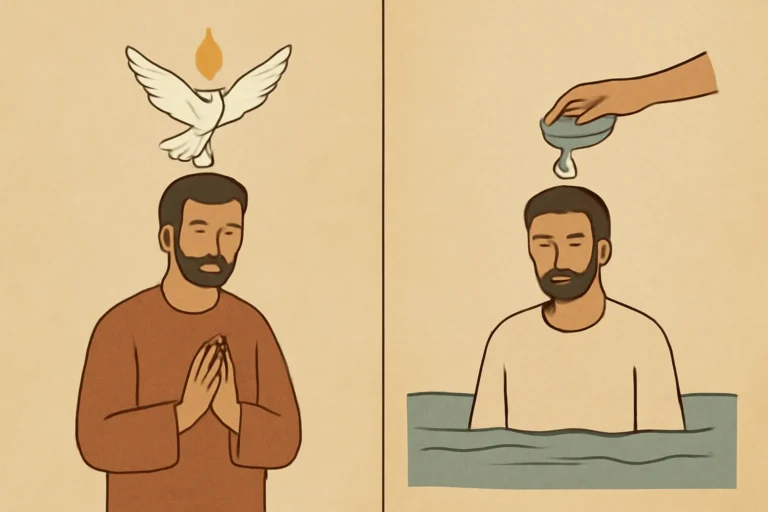
In Pentecostal Christianity, baptism is understood as more than a single ritual act. It sits at the intersection of profession of faith, obedience to Christ, and the ongoing experience of God’s presence in the life of a believer. The
movement emphasizes two distinct, yet related, realities: water baptism as a public declaration of faith and baptism of the Holy Spirit as a transformative encounter with God that empowers the Christian for service, witness, and prayer.
Across Pentecostal churches, these beliefs take shape in slightly different ways, depending on historical lineage, local culture, and
theological emphasis. What unites most Pentecostal communities is a strong conviction that God actively engages the church today, that the
Holy Spirit equips believers for ministry, and that baptism—whether by water or Spirit—plays a key role in the life of a Jesus-shaped
community. In this article, we explore meaning, practice, and scriptural foundations, while noting variations within the broader Pentecostal family.
A core feature to watch for is the distinction often drawn between water baptism (as an outward sign) and the baptism of the Holy Spirit (as an inward, empowering experience). Yet these two realities are deeply interwoven in
Pentecostal soteriology: a faithful response to the gospel leads to water baptism, which itself is understood as a step within a
larger encounter with God that includes reception of the Spirit and, in many contexts, accompanying gifts.
Throughout this article, key terms will be highlighted in bold to help readers identify the central ideas: believer’s baptism, immersion, initial evidence, gifts of the Spirit, and ordinance versus sacrament.
Historical and theological context
Pentecostal baptism beliefs emerged from a historical stream of revivalist and spiritual renewal movements in the late 19th and
early 20th centuries. Rooted in an earnest reading of the New Testament, Pentecostals emphasize a revival of the apostolic
practice described in the Book of Acts, where early Christians confessed faith, were baptized, and received the Holy Spirit with
powerful signs and manifestations.
Over the decades, Pentecostal theology has interacted with a wide range of Christian streams, including evangelical
faith, Holiness holiness movement, and charismatic renewal within traditional mainline churches.
While traces of older traditions remain, Pentecostal assemblies have tended to keep a robust emphasis on lively worship,
the expectation of God’s miraculous work in daily life, and a high regard for the present-day activity of the Spirit.
This historical trajectory helps explain why many Pentecostal communities distinguish clearly between water baptism and baptism of the Holy Spirit, while still teaching that the Spirit’s work in a believer’s life is evidenced in the change
that follows repentance and faith.
Water baptism: Meaning, mode, and practice
Believer’s baptism as a decisive step
In Pentecostal theology, water baptism is typically understood as an act of obedience following
personal faith in Jesus. It represents identification with Christ’s death, burial, and resurrection and a public testimony to the
salvation that God has already accomplished in the believer. While some Christian traditions defer baptism until a child reaches
adulthood, many Pentecostal churches practice baptism after a conscious profession of faith by a believer.
The believer’s baptism is thus more than a ritual; it is a sign that the believer has embraced the gospel and desires
to live in union with Christ within the church. It also serves as a public invitation to others and a proclamation that God’s grace
has touched the candidate.
Mode: immersion versus other methods
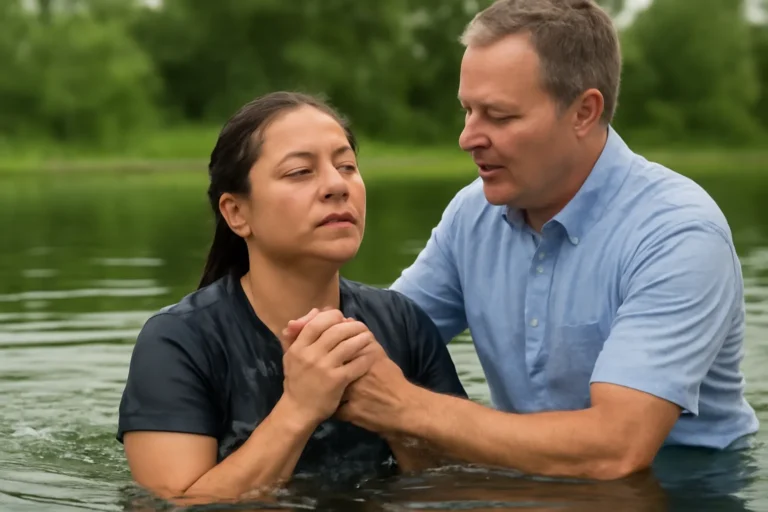
The vast majority of Pentecostal churches emphasize immersion as the preferred mode of baptism, often performed
in a baptismal pool or a movable tank. This practice is rooted in the New Testament imagery of death to the old life and rising to
new life, which many readers interpret as corresponding most closely to full immersion in water.
Some Pentecostal groups allow other modes under certain circumstances, especially when living in regions without a swimming pool or
baptismal font. In these cases, sprinkling or pouring is considered a valid sign of baptism, though
it may be less common and sometimes discouraged in favor of immersion where feasible.
Timing and order in the worship sequence
In many Pentecostal congregations, water baptism occurs after a student or new believer has professed their faith
and undergone a period of formation or catechesis. It can take place on a regular Sunday morning or during a special baptismal
service. In some churches, baptismal services are scheduled in conjunction with testimonies, where candidates publicly share their
conversion experience and then go into the water to be baptized.
In others, especially in mission settings or smaller congregations, baptism may follow a personal invitation to respond to the
gospel at a revival meeting or a home Bible study. Regardless of the method, the emphasis remains on visible identification
with Christ and communal affirmation by the faith community.
Infant baptism and child baptism
Pentecostal churches generally distinguish themselves from traditions that practice infant baptism. The common stance is that believer’s baptism requires a personal decision to follow Christ, which typically is made when the person has the
capacity to respond to the gospel in faith. Consequently, infant baptism is less commonly practiced, and when it occurs, it is
often understood as a placeholder for continued instruction and eventual believer’s baptism once the child can personally profess faith.
For families who have children in the church, pastors often provide catechesis or baptismal preparation to help youth and parents
understand the meaning of the water rite and its relation to the Spirit’s work in the life of the believer.
Public profession and church identity
A defining feature of Pentecostal water baptism is its public character. It is not a private ritual but a public proclamation of faith that welcomes the believer into the visible body of Christ on earth. This public nature
strengthens the communal dimension of baptism, inviting the congregation to pledge support, accountability, and encouragement
as the person begins or continues their walk with Christ.
Baptism of the Holy Spirit: Distinct but connected
Pentecostals emphasize that the baptism of the Holy Spirit is a distinct, empowering encounter with God that often occurs after a
person has come to faith in Jesus. In many Pentecostal traditions, this experience is associated with the reception of spiritual gifts
and a renewed boldness in witness and service.
Two related but distinct experiences
Baptism of the Holy Spirit as a separate experience from salvation and water baptism.
Water baptism as a subsequent public sign of faith and identification with Christ.
While many Pentecostals describe the Spirit’s baptism as a clear, post-conversion event accompanied by dramatic signs, others
stress the Spirit’s work as a growing, ongoing process in the life of a believer. The common ground is the conviction that the Spirit
empowers the church for holy living, bold proclamation, and service to the world.
Evidence and signs often associated with Spirit baptism
Speaking in tongues (glossolalia) is often cited as a primary sign of the Spirit’s filling in classic Pentecostal teaching.
Other manifestations sometimes described include prophecy, interpretation of tongues, and healing.
In some churches, holy boldness in witness and a heightened sensitivity to God’s guidance are considered practical indicators.
It is important to note that there are variations within Pentecostalism. Some churches emphasize tongues as the inaugural
sign, while others teach that the Spirit may manifest through a range of gifts and fruits in accordance with Scripture. The
emphasis on signs does not generally imply that those who do not experience the same signs have failed in faith; rather, it
highlights a dynamic, Spirit-led reality in which God blesses people in diverse ways.
Relation to water baptism and salvation
In most Pentecostal frameworks, salvation is grounded in faith in Jesus Christ, and water baptism is
an outward obedience following that faith. The baptism of the Holy Spirit is viewed as a subsequent experience that
equips the believer for Christian living and mission. The exact ordering can vary: some churches emphasize Spirit baptism as
subsequent to conversion, while others describe a more integrated experience in which the Spirit’s work unfolds within the
life of a believer from conversion onward.
Scriptural foundations for Pentecostal baptism beliefs
Key passages commonly cited
Acts 2:38 — Peter’s exhortation to repent, be baptized, and receive the gift of the Holy Spirit.
Acts 19:5–6 — Baptism in the Name of Jesus and the disciples receiving the Holy Spirit with the laying on of hands.
Acts 8:14–17 — Believers baptized after hearing the gospel and receiving the Spirit through the apostolic laying on of hands.
1 Corinthians 12:13 — One Spirit, one baptism, forming a single body of Christ with diverse gifts.
John 3:5 — Jesus’ teaching about being born of water and Spirit, often cited as a key text for spiritual birth and baptism conceptually.
Acts 2:1–4 — The Day of Pentecost event, often linked to the initial outpouring of the Holy Spirit and manifestations of tongues.
Mark 16:16 — Believing and being baptized, with emphasis on faith and baptism as related steps in salvation.
These verses are interpreted within Pentecostal hermeneutics to support two truths: the necessity of personal faith which leads to
water baptism, and the ongoing activity of the Holy Spirit in the life of the church and the believer, including the gifting
and empowerment that accompany Spirit contact.
Interpretive approaches and debates
Within the Pentecostal family, there are variations in how these passages are understood and applied. Some hold to a more
“continuous” view of the Spirit’s gifts across all believers, while others emphasize a more explicit pattern of Spirit baptism
with tongues as the initial, observable sign. The broader consensus centers on a robust, experiential expectation of God’s active
presence in the life of the church.
Regardless of interpretive nuance, scriptural foundations consistently sustain the core convictions: faith in Christ, obedient
baptism, and the Spirit’s empowering presence that enables believers to live in mission and holiness.
Practices and liturgical dimensions in Pentecostal baptism
The worship setting and ceremony flow
A baptism service in a Pentecostal church often features a distinct sequence designed to honor the significance of the moment:
Proclamation of the gospel and a brief testimony by the person to be baptized.
Congregational affirmations and prayers asking God to bless the candidate.
Public declaration of faith by the candidate, often followed by a short exhortation or commission from a pastor.
Water baptism conducted with immersion in a baptismal pool or tank, often accompanied by the singing of hymns or worship songs.
Post-baptism blessing and, in some churches, an exhortation to pursue the ongoing life of faith with Christian formation and prayer.
The service is typically designed to highlight both the act of obedience (a response to the gospel) and the communal support of the
church. In many settings, the event becomes a shared memory for the congregation, reinforcing a sense of belonging and responsibility to assist the new believer in spiritual growth.
Pastoral supervision and preparation
Most Pentecostal churches require a period of preparation before baptism. This may include a short course, personal interviews,
or a class that explains the meaning of faith, repentance, baptism, and the expectations for following Christ. The preparation is
designed to ensure that the candidate understands what baptism represents and to introduce the believer to the rhythms of church life,
prayer, Scripture study, and fellowship.
In this context, the leader’s role is to provide pastoral guidance, answer questions, and help the candidate articulate a personal
testimony. It is common for mentors or trusted church members to accompany new believers as they begin their journey with Christ.
Record-keeping and public memory
Churches often maintain baptismal records as part of their membership or church life archives. The record may include the candidate’s
name, date of baptism, scriptural basis for the decision, and the location of the service. Publicly, baptism is a shared moment of
praise and witness that reinforces the faith community’s mission and unity.
Trinitarian Pentecostals vs Oneness Pentecostals
Within Pentecostalism, there are notable variations related to the form of baptism and the naming formula used in baptism. Trinitarian Pentecostal churches typically baptize “in the name of the Father, and of the Son, and of the Holy Spirit,” following
the traditional Trinitarian formula recorded in Matthew 28:19. By contrast, Oneness Pentecostals often baptize “in the name of
Jesus” or “in the name of Jesus Christ” based on a particular interpretation of Acts 2:38 and related passages.
These differences reflect deeper divergences about the nature of God and the language of baptism. While the practical outcome—water baptism
as a public confession of faith—remains the same in both streams, the formula and theological framing can differ in meaningful ways.
Denominational families and their emphases
Assemblies of God and Church of God in Christ—strong emphasis on believer’s baptism by immersion and the subsequent
reception of the Holy Spirit with an outward emphasis on spiritual gifts within a scriptural framework.
Pentecostal Holiness movement—historic ties to the Holiness tradition, with baptism seen as part of a sanctifying journey and
empowered living by the Spirit.
Foursquare Church—acknowledges Spirit baptism and the gifts, with a clear accountability to the leadership structure of the
church community.
Oneness Pentecostals—stresses the name formula and the unity of God, with baptism performed according to their distinctive
doctrinal stance.
Charismatic movements within mainline churches—often retain baptism practices that align with their parent tradition, while
encouraging personal experiences with the Spirit and the manifestation of spiritual gifts, even if the institutional setting differs.
Ecumenical and cultural variations
In global contexts, Pentecostal communities adapt baptism practices to fit local cultures, language, and public life. Some churches
emphasize the healing and miraculous dimension, while others foreground social justice and community service as natural extensions of the Spirit’s
work in baptism. Regardless of local differences, the core idea remains: baptism is a declaration of faith and a reception of divine power
for living as a disciple of Jesus.
Theological implications: Grace, faith, and membership
Baptism as an outward sign of inward grace
In Pentecostal theology, baptism is generally viewed as an outward expression of an inward transformation. The
argument often goes: God’s grace creates faith, which leads to repentance and trust in Jesus; baptism then publicly seals that faith
and acknowledges a new identity in Christ. The act does not generate salvation by itself; rather, it proclaims what God has already
accomplished in the heart of the believer.
Relationship to salvation and sanctification
Pentecostal writers frequently affirm that salvation by grace through faith is the essential entry point into the life
of Christ, and that sanctification—the ongoing process of growing in holiness—flows from a Spirit-filled life. Water baptism
is a symbolic enactment of that renewal and a public commitment to follow Jesus. The Spirit’s work, often linked to the baptism of the
Holy Spirit, is viewed as enabling power for living a sanctified life and engaging in mission.
Grace, faith, and obedience in practice
The interplay of grace, faith, and obedience is a central concern in Pentecostal ethics. Believers are taught that grace invites faith, faith yields repentance, water baptism testifies to that faith, and Spirit-led living flows into
daily obedience, community involvement, and mission. In this framework, works are not the basis of salvation but the
natural fruit of a faith deeply formed by God’s grace and empowered by the Spirit.
Is infant baptism valid in Pentecostal communities?
The prevailing Pentecostal position is that baptism should follow a conscious profession of faith. Because infant baptism depends on
the child’s assent, most Pentecostal churches do not practice infant baptism as a doctrinal requirement. Instead, they emphasize
catechesis, instruction, and a later believer’s baptism. Some families may participate in infant dedication or blessing services, but
baptism as a personal faith response is typically reserved for those who can consciously claim Jesus as Savior and Lord.
What about the sequence of Spirit baptism and water baptism?
Different Pentecostal communities describe the sequence in slightly different terms. Some teach a distinct order—conversion,
water baptism, then Spirit baptism—while others describe a more integrated experience where Spirit baptism may accompany or follow
baptism. The common thread is the belief that both water baptism and Spirit baptism are meaningful moments in the Christian life,
each with its own purpose and signs, and both oriented toward a life of faithful discipleship.
Are signs like tongues essential for Spirit baptism?
While many Pentecostals regard glossolalia (speaking in tongues) as a primary and visible sign of Spirit baptism, there is diversity
on this point. Some communities stress signs and gifts as normative, while others recognize that God works through a broader spectrum of
gifts and fruits. The underlying conviction is that the Spirit’s fullness equips believers for prayer, proclamation, and service,
regardless of the precise outward manifestation.
How should churches handle baptism in culturally diverse settings?
Pentecostal churches often adapt their baptism practices to respect cultural norms, safety considerations, and local logistics, while
preserving the theological integrity of baptism as a response to the gospel. This adaptability may include special baptismal settings
for outdoor services, portable baptismal tanks, or translation of testimonies and liturgies into local languages. The aim is to keep
baptism accessible, meaningful, and inclusive, while maintaining the integrity of the message about Jesus Christ.
Preparing for baptism
Seek personal faith in Christ, repentance, and reconciliation with God through Jesus.
Engage in a period of study, prayer, and mentorship to understand the meaning of baptism and the life of faith.
Talk with a pastor or spiritual mentor about your testimony and the steps toward baptism.
Share your testimony publicly so the church can celebrate with you and support your spiritual growth.
Post-baptism life and discipleship
Continue prayer, Scripture study, and participation in the life of the church.
Seek opportunities to serve, witness, and use spiritual gifts in community and mission contexts.
Stay connected with a mentor or small group for accountability and encouragement.
Remain open to the Spirit’s leading in daily life, ministry, and personal sanctification.
Pastoral considerations and church leadership
Pastors and church leaders play a key role in guiding new believers through the baptism process, explaining its meaning, and
ensuring that baptism services honor the gospel. Leaders should provide clear teaching on the relationship between faith, baptism,
and Spirit-filled living, while also creating a welcoming environment for those who are seeking Christ for the first time or who are
exploring questions about the Spirit’s work in their lives.
Doctrinal clarity and pastoral sensitivity
Churches benefit from presenting baptism as both a doctrinal anchor and a pastoral invitation: a clear articulation of what baptism
means, alongside a compassionate invitation to begin or deepen one’s journey with Christ. This balance helps local congregations maintain
doctrinal integrity while fostering inclusive, supportive communities.
Pentecostal baptism beliefs center on the conviction that God remains active in the world today—transforming lives, empowering
believers for mission, and shaping vibrant communities through both water baptism and the baptism of the Holy Spirit. The
practice of baptism, in its various forms, invites individuals into a living relationship with God and into a shared life of faith
with others. Beyond the ritual, Pentecostal theology invites believers to pursue a life grounded in grace, faith, and
obedience, empowered by the Spirit for witness and service.
For readers exploring Pentecostal baptism beliefs, it is helpful to consider not only the technical details of mode and order but
also the broader pastoral aim: to welcome people into God’s family, to nurture spiritual growth, and to equip the church for
mission in a changing world. While there are variations across denominations and cultures, the core message remains consistent:
God’s Spirit continues to work in the church today, and baptism is a meaningful doorway into participatory faith and life in the
biblical Jesus.