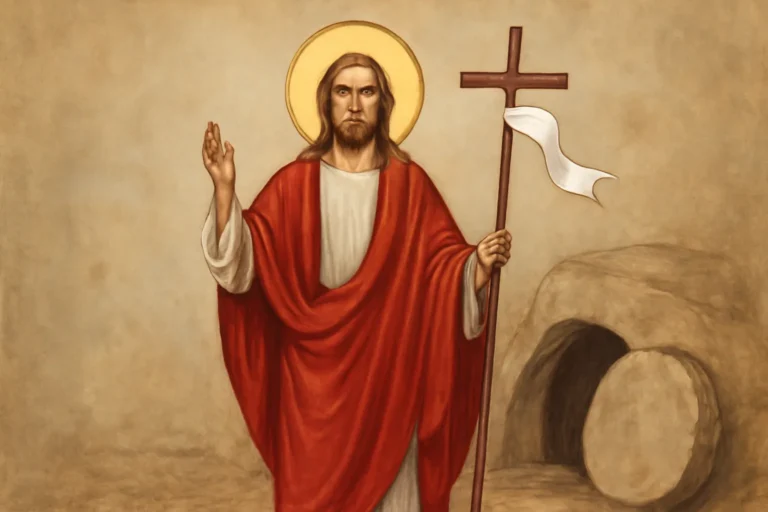
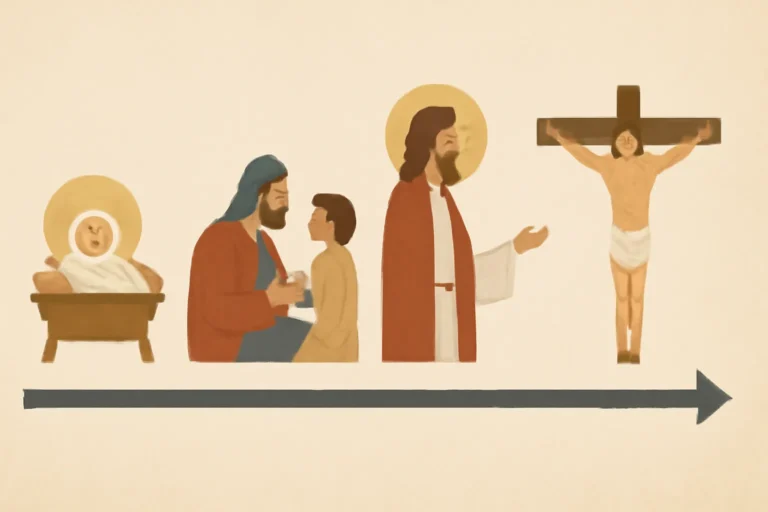
Ascension Day, also called the Feast of the Ascension, marks a pivotal moment in the Christian narrative: the belief that Jesus Christ ascended bodily into heaven following his Resurrection. In most Western Christian calendars, this event occurs forty days after Easter, a tradition rooted in the Gospel accounts. The day is sometimes referred to as Ascension Thursday because it typically lands on a Thursday in the liturgical calendar, though in some communities the celebration shifts to a nearby Sunday to accommodate public worship and travel. Framed in doctrinal terms, the ascent represents not merely a farewell but a transition from Jesus’ earthly ministry to his heavenly reign and ongoing intercession for believers.
The ascension day meaning encompasses both mystery and doctrine: mystery in the sense that the full nature of Christ’s glorified humanity is proclaimed beyond human sight, and doctrine in the sense that it grounds a sequence in the church year that leads to Pentecost—the coming of the Holy Spirit and the commissioning of the church for mission. In many churches, this occasion also culminates a segment of the liturgical season that follows Easter and prepares the faithful to receive the Spirit in a renewed way. The Day of the Ascending Lord thus serves as a hinge between the Resurrection and the sending forth of the church.
Across Christian traditions, the language used to describe the event varies, but the central idea remains consistent: the risen Christ does not vanish from creation but enters into a new mode of presence—glorified, exalted, and reigning—while sending his disciples out to bear witness to him “to the ends of the earth.” In this sense, the meaning of the day extends beyond a historical event and becomes a theological statement about authority, mediation, and mission.
Theological Significance
The ascent, in its theological significance, communicates several core convictions:
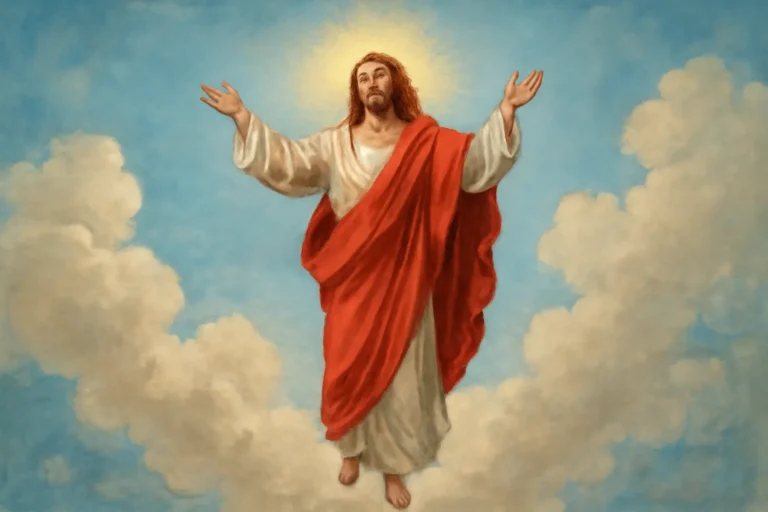
Exaltation and enthronement: Jesus is portrayed as enthroned at the right hand of God, sharing in divine authority and glory. This language of exaltation signals that his earthly work has a divine validation that transcends time and space.
Completion of the Incarnation: The event marks a culmination of God’s plan in which the Word made flesh is finally glorified, while still remaining present with the believers through the Spirit.
Intercession and mediation: The risen Lord is described as interceding for the faithful, offering a bridge between heaven and earth in prayer and advocacy.
Preparation for the Spirit’s outpouring: Though the Holy Spirit is anticipated at Pentecost, Ascension Day sets the stage for this gift by signaling that Christ’s exalted presence makes the Spirit’s indwelling possible for all who believe.
Biblical Foundations
The biblical basis for the Ascension appears most directly in the Gospel of Luke and the Acts of the Apostles. Luke 24:50–53 describes Jesus leading his disciples to the vicinity of Bethany, blessing them, and then ascending into heaven as they watch. The narrative in Acts 1:9–11 emphasizes the sight of the disciples as Jesus is taken up, two figures in white (angels) assuring them that the same Jesus will return. Across tradition, these accounts are read together to present a continuous story: from the Resurrection appearance to the Ascension, and finally to the sending of the Spirit at Pentecost.
The idea of Jesus’ ascent has roots in early Christian preaching and was quickly encoded into the church calendar. Early Christians interpreted the event as a vindication of Jesus’ lordship over creation and as a sign of his ongoing governance of the church from the heavenly realm. Over the centuries, the Feast of the Ascension grew into a fixed celebration within many liturgical traditions, with varied emphases depending on local theology, culture, and calendars.
Origins in the Gospel Narratives
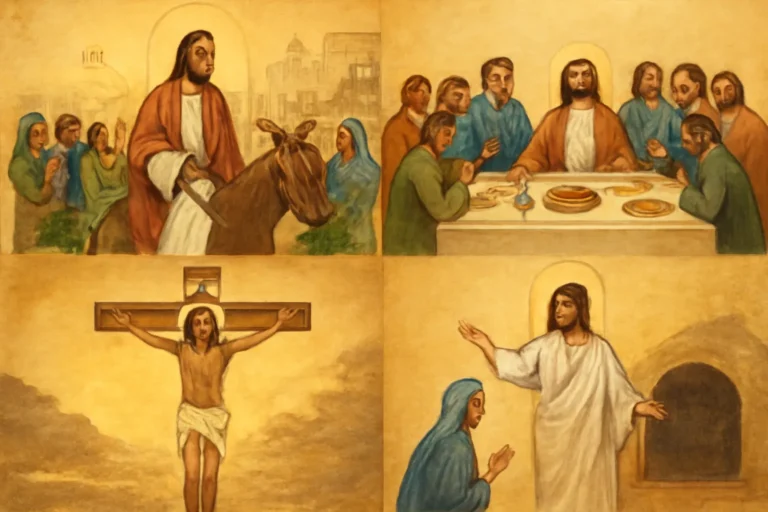
The Gospels present the Ascension as a real, historical moment that followed the Resurrection. While some were troubled or perplexed by the change in Jesus’ physical presence, the witnesses are reassured that his mission endures through the Spirit and the church. The narrative structure—Resurrection, Ascension, and Pentecost—provides a framework for understanding how God’s redemptive work continues in the life of the world.
Early Church Practice
In the earliest centuries, Christian communities began to mark the Ascension as a public season of worship, often with readings that highlighted the risen Christ’s victory and the expectation of the Spirit. The day served not only as piety but as a catechetical moment: believers were reminded of their mission, their dependence on divine grace, and the nature of Christ’s intercession. As cities and regions adopted different calendars, the emphasis on Ascension could merge with other rites of the Easter season, yet the core message endures: the risen Lord is now reigning with God and sending his messengers into the world.
Liturgical Observances and Traditions
Across Christian traditions, Ascension Day observances vary, but common threads tie them together: a solemn service, scriptural readings, and a focus on the mystery of Christ’s exaltation. In many places, the day is a noted highlight of the spring religious calendar, inviting contemplation of glory, purpose, and mission.
Common Elements of the Celebration
Worship services: Special Masses or services feature readings from Acts and Luke, with prayers that emphasize Christ’s enthronement and the promise of the Spirit.
Liturgical colors: The prevailing color is often white or gold, symbols of joy, glory, and victory. In some traditions, other colors may be used for particular seasons or regional customs.
Hymns and music: Songs celebrate the risen and ascended Christ, often with melodies that convey triumph and longing for the Spirit’s presence.
Scripture focus: Passages include the Ascension narrative itself, as well as related portions from Acts that describe the early church’s mission and the promise of divine guidance.
Public devotion: In many communities, processions, outdoor prayers, or veneration of relics (where applicable) form part of the day’s expression.
Regional Variations
In Europe, Latin American, and some African and Asian Christian communities, the day can be a public holiday or a special day of community gathering. In Western Europe, for example, Ascension Thursday has historically been a day when people attended church, spent time with family, and participated in slower, reflective activities that punctuate the workweek. Some Protestant churches place particular emphasis on the mission imparted to the apostles, while Catholic and Orthodox communities may frame the celebration within the broader context of Christ’s triumph and the anticipation of Pentecost.
Connections to Pentecost and the Easter Season
The ascension day meaning is inseparable from the days that follow. With Forty days having passed since Easter, the church moves toward Pentecost, the festival of the Holy Spirit’s descent. The period between Ascension and Pentecost is often called the “Eastertide” or the “Days of the Spirit’s Promise” in various traditions. The ascent thus acts as a bridge: it confirms that Christ’s mission will continue through the Spirit and the church, empowering believers to bear witness in every nation.
Some scholars and faith communities note the theological significance of timing: the forty-day interval recalls biblical patterns of fasting and revelation, while the ten days between Ascension and Pentecost underscore patient anticipation and prayer. In this rhythm, the day’s meaning expands from a single event to a living pattern of testimony, worship, and mission.
Symbols, Iconography, and Spiritual Emblems
Symbolism tied to the Ascension has illuminated Christian art and devotion for centuries. While specific images vary by culture, several common motifs recur in churches and homes:
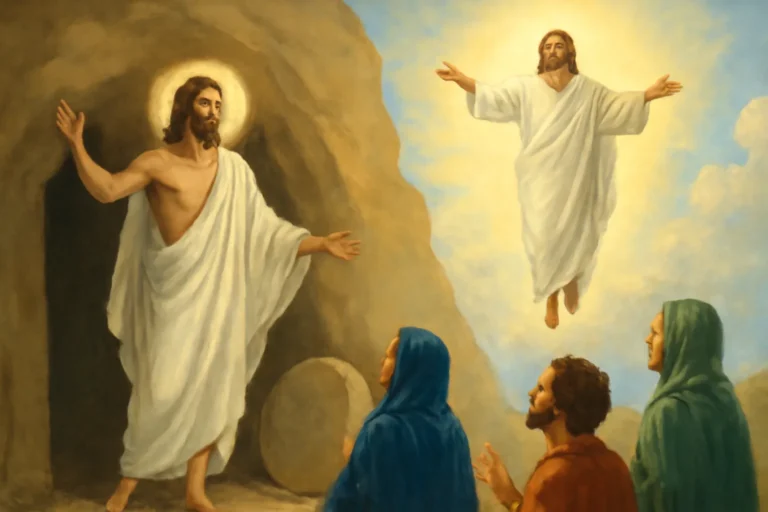
Heavenly enthronement: Artistic depictions often show Jesus rising toward the heavens, sometimes with a gaze toward God the Father, symbolizing divine authority.
The right hand of God: This phrase appears in many creedal statements and devotional images to express Christ’s mediatorial role in heaven.
Angels’ witness: Angels standing by to reassure the disciples emphasize the divine approval of Jesus’ return and the future return itself.
Disciples’ gaze and blessing: The images may portray the disciples watching as Jesus ascends, inviting believers to witness with hope and trust.
Prayers, Readings, and Devotional Practices
For individuals seeking personal reflection on the ascension day meaning, guided prayers and scripture readings can deepen understanding of the event’s relevance for daily life. Some common devotional practices include:
Scripture meditation: Reading Luke 24:50–53 and Acts 1:1–11, followed by reflection on Christ’s exalted rule and the mission entrusted to the church.
Intercession for the church: Praying for unity, growth in faith, and bold witness to the Gospel in one’s own community and beyond.
Petitions for the Spirit’s guidance: Asking for the Holy Spirit to empower discernment, courage, and compassion in daily life.
Gratitude for Christ’s continuing presence: Acknowledging that the risen Lord remains near through the Spirit and through the community of believers.
In Liturgical Settings
In formal worship, the readings are designed to be integrative, linking the Resurrection with the Ascension and the Pentecostal outpouring. Preachers often highlight themes of hope, authority, and mission, encouraging the faithful to participate in the ongoing work of spreading a message of reconciliation, justice, and peace.
Modern Observances and Cultural Reflections
In contemporary life, Ascension Day remains a meaningful moment for churches to re-center on identity and purpose. Beyond religious services, many communities use the day to reflect on responsibility, leadership, and service. In some places, the day becomes an occasion to engage in charitable activities, environmental stewardship, or interfaith dialogue as expressions of living out the Gospel in the public square.
Global Perspectives
While the core doctrine is shared across traditions, the cultural expression of the day varies:
In Europe, Ascension Thursday is sometimes a public holiday, with families gathering for meals and attending worship together.
In the Americas, Catholic and Protestant communities may organize combined services, concerts, or community outreach during the days around Ascension.
In Africa and Asia, churches may stage processions, prayer gatherings, or outdoor preaching, reflecting local styles of worship and community life.
In Orthodox contexts, the date of Ascension can differ due to calendar systems, yet the theological emphasis on Christ’s return and his rule remains a unifying thread.
Practical Ways to Observe: A Guide for Families and Individuals
For those seeking to honor the ascension day meaning in everyday life, here are practical ideas that can fit different schedules and traditions:
Family devotion: Read a short passage about the Ascension, discuss what it means for daily living, and pray for guidance and courage in the week ahead.
Community service: Organize a small service project or outreach activity, embodying the Spirit-led mission that follows the Ascension.
Artistic reflection: Create a simple display or photo project that evokes the imagery of the Ascension and its themes of hope and authority.
Media and study: Listen to a sermon or lecture series on the Ascension, or study a concise article that connects the event to present-day faith practice.
What is the difference between Ascension Day and Ascension Sunday?
The Ascension Day refers to the traditional twenty-eighth day of the Easter season when the event occurred, most commonly observed on a Thursday. Some churches move the celebration to Ascension Sunday (the nearest Sunday) to accommodate larger congregations and practical scheduling, while preserving the core theology of Christ’s ascension.
Is Ascension Day the same for all Christian traditions?
The essential doctrine—that Jesus ascended to heaven in glory after the Resurrection—is shared by most Christian communities. Differences arise in liturgical timing, calendar placement, and the emphasis of certain themes (for example, mission and Spirit empowerment). In Orthodox, Catholic, and many Protestant churches, the day is observed, though the exact date may vary due to calendar differences used by different denominations.
Ascension and Pentecost form a paired sequence in the Christian year. The Ascension marks Jesus’ return to the Father and his enthronement in heaven, while Pentecost marks the Spirit’s empowering presence poured out on believers. The interval between them is a season of preparation, expectation, and prayer, culminating in the rushing wind and tongues of fire that symbolize new life in the church.
In calendars where Sunday worship is central, the meaning remains the same, and the celebration is framed around the resurrected Christ’s ongoing presence and mission. The Sunday observance can incorporate readings that connect the Ascension narrative with the events of Pentecost, ensuring continuity within the liturgical year.
Putting It All Together: The Ascension Day Meaning for Believers Today
The ascension day meaning is not merely about a moment in history; it is about the ongoing truth that Jesus, after his resurrection, remains present and active in the world. It asserts that the life of faith is not a private experience but a public call to witness, service, and renewal. In practical terms, the day invites a reorientation toward:
Hope: The risen Christ rules with glory, a source of confidence in hard times.
Authority: The disciples are commissioned to testify, knowing that Christ has ultimate authority over all creation.
Mission: The church is sent into the world with a message of reconciliation, justice, and peace.
Presence: The Spirit’s coming assures believers that they are not alone in their journey.
For scholars, clergy, and laypeople alike, the feast invites reflection on how to live out the ascended Christ’s lordship in daily decisions, relationships, and works of compassion. It presses the question: What does a life faithful to the Ascended Lord look like in a pluralistic, complex world? The answer comes not only from theological study but from practical acts of mercy, advocacy for the vulnerable, and a prayerful dependence on divine guidance.