Christian Practices and Beliefs: A Practical Guide to Faith
Christianity is a global, historical faith that centers on relationship with God through Jesus Christ, guided by the Holy Spirit, and lived out in community. This practical guide explores core beliefs and everyday practices that help believers grow in faith, hope, and love. It presents a broad panorama of devotion, worship, study, and service, while recognizing that different traditions emphasize distinct expressions of the same essential truths.
At the heart of Christian life are a set of convictions about who God is, who Jesus is, and how humans relate to the Creator. While details vary among traditions, several pillars are widely held across the Christian family. These pillars inform prayer, worship, discipleship, and daily ethics.
Most Christians confess a triune God—one divine essence in three persons: the Father, the Son, and the Holy Spirit. The doctrine of the Trinity affirms that God is not solitary or distant but in relationship, a community of love expressed toward humanity. central to this is the belief in the incarnation: that Jesus Christ—the eternal Word—took on human flesh, lived among people, revealed God’s heart, and accomplished salvation through his life, death, and resurrection. This event is understood as both historical and salvific, affecting all who place trust in him.
Across traditions, the incarnation is held up as a model of humility, obedience, and compassion, inviting believers to imitate Christ in daily life. The Trinity and the incarnation together shape prayers that honor the triune God and celebrate Jesus as Lord and Savior, while acknowledging the Holy Spirit’s ongoing work in guiding, comforting, and empowering believers.
The Authority of Scripture
Most Christians affirm the Bible as a foundational source of God’s revelation. It is regarded as inspired, authoritative, and trustworthy for teaching, rebuking, correcting, and training in righteousness. Yet there is diversity in how Scripture is interpreted and applied. Some traditions emphasize a high degree of continuity with historical creeds and church teaching, while others prioritize personal reading and spiritual discernment within the bounds of communal faith.
Reading and interpreting the Scriptures is therefore a communal practice as well as a private discipline. Believers are encouraged to read with humility, seek the guidance of the Holy Spirit, and measure understanding against the witness of the church through the ages, the teachings of the apostles, and the life of Jesus Christ.
The Nature of Salvation
Central to Christian belief is the concept of salvation as rescue from sin and separation from God, realized through grace mediated by faith in Jesus Christ. While the precise articulation of how salvation is received can differ—ranging from justification by faith alone to faith formed by obedience and works—the shared conviction is that human beings are reconciled to God through Christ’s atoning work and the ongoing transformation of the believer’s heart and life.
Related themes include forgiveness, repentance, and sanctification—the process by which a believer grows in holiness. Many traditions also emphasize the reality of divine mercy and the hope of eternal life, including the resurrection of the dead and the establishment of God’s kingdom in fullness at the end of time.
The Church and the Holy Spirit
The Church is commonly described as the body of Christ on earth, a people called to worship, teach, serve, and bear witness to the gospel. The Holy Spirit is understood to be the comforter, counselor, and energizing presence who convicts of sin, reveals truth, and empowers disciples for mission. Through the Spirit, believers are equipped with gifts and fruit that enable them to embody love, joy, peace, patience, kindness, goodness, faithfulness, gentleness, and self-control.
In practical terms, this means that Christian life is not just a set of ideas but a dynamic, Spirit-led journey. Communities discern God’s will together, encourage accountability, practice mutual care, and pursue justice and mercy in the world as signs of the gospel’s transforming power.
Core Practices for Spiritual Growth
Faith is formed and sustained less by abstract theory and more by daily practices that connect the heart to God, shape character, and shape community. The following are core disciplines and habits that many Christians find helpful as they seek mature discipleship.
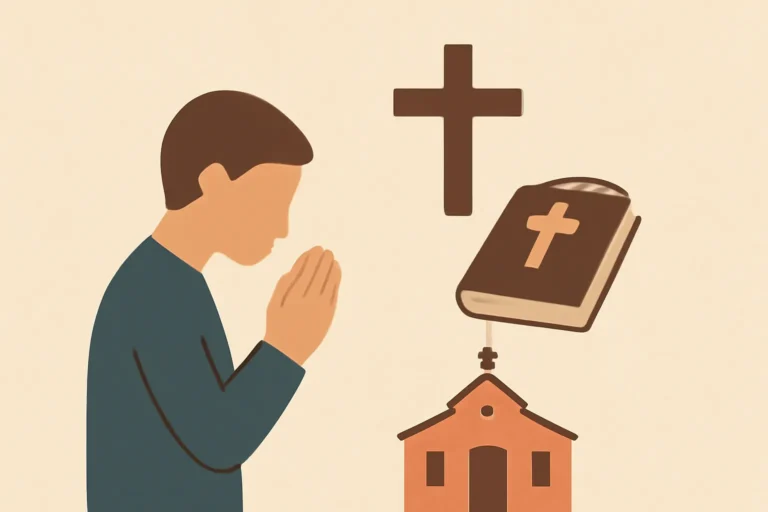
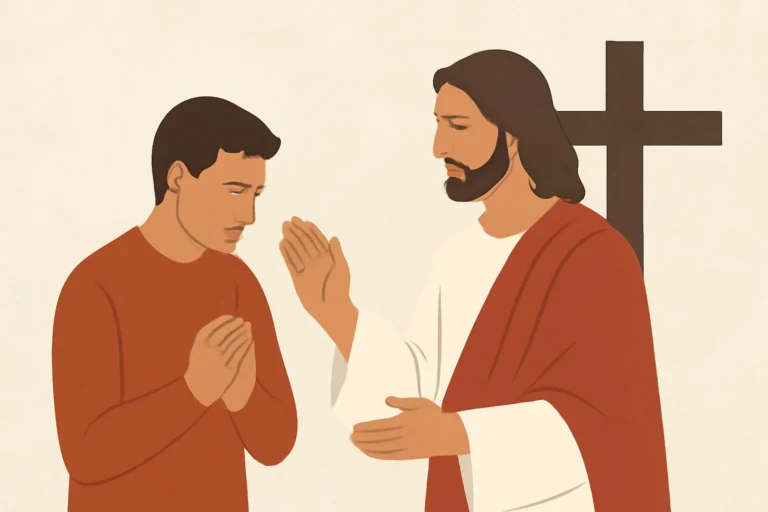
Prayer is a conversation with God that includes adoration, confession, thanksgiving, and supplication. There are many forms of prayer, from structured liturgies to spontaneous, personal expressions. A popular framework is ACTS: Acknowledgment/Adoration, Confession, Thanksgiving, and Supplication.
Prayer can be practiced alone or with others. Some find it helpful to set aside a quiet daily time, use a prayer list, or follow a guided prayer app or book. Others practice contemplative or breath prayers, focusing on simple phrases that center attention on God. The key is consistency and a posture of openness to God’s presence.
Bible Reading and Meditation
Scripture reading is often paired with reflection and application. Many communities encourage a routine of daily Bible reading, meditation, and journaling. Methods vary, including studies that follow a chronological plan, lectionaries that align with the church calendar, or topical reading around a theme. Some readers practice SOAP (Scripture, Observe, Apply, Pray) to draw a concrete link between text and life.
Reading the Bible in community—participating in small groups, Bible studies, or sermon-based discussions—helps illuminate difficult passages and prevents individual misinterpretation. The aim is to hear God’s voice through Scripture, understand the historical and literary contexts, and apply the message to contemporary life with humility and obedience.
Worship and Sacraments
Worship is the pouring out of love, awe, and gratitude to God. It can be expressed through song, prayer, preaching, sacraments, and joyful praise. Worship experiences may be liturgical (structured, with set prayers and readings) or informal (spontaneous, contemporary style). Both aim to exalt God and nourish believers.
The term sacraments (also called ordinances in some traditions) refers to outward signs that symbolize inward grace and convey divine blessing. The most widely observed sacraments are Baptism and the Eucharist (also called the Lord’s Supper or Holy Communion). Other practices vary by tradition and may include confession, anointing with oil, or rites of initiation and healing.
Fasting and Spiritual Discipline
Fasting is a voluntary practice of self-denial that helps cultivate reliance on God, discernment, and sensitivity to the poor. It is often linked with prayer and repentance, especially during seasons like Lent. Spiritual disciplines such as solitude, fasting, worship, service, study, and confession are tools for forming a more resilient faith that endures trials and grows in love for neighbor.
In addition to fasting, many believers practice regular tithing, regular generosity, and stewardship as expressions of gratitude to God and care for the vulnerable. These acts of giving reinforce a life oriented toward God’s kingdom rather than personal accumulation.
Worship Styles and the Church Year
Worship is deeply shaped by history and culture. While the core message remains the same, communities express it through diverse styles that include language, music, art, and ritual. Churches may emphasize a liturgical calendar that guides the rhythm of the year, including seasons such as Advent, Christmas, Lent, Holy Week, Easter, and Pentecost. This cycle invites believers to reorient their lives toward God’s saving work in Christ.
Liturgical Worship
Liturgical worship follows a structured order of service with readings from Scripture, creedal statements, prayers, hymnody, and the celebration of the sacraments. This format fosters continuity with the church’s tradition, helps believers participate in the historical memories of the faith, and provides a catechetical rhythm for newcomers and long-time members alike.
Contemporary and Charismatic Expressions
Other communities emphasize contemporary worship with modern songs, creative media, and participatory dynamics that seek to engage emotions and imagination. A related stream, often labeled charismatic, emphasizes ongoing spiritual gifts—such as prophecy, healing, and speaking in tongues—with an emphasis on personal encounter with God and active mission in the world. Across these modes, the goal remains: to encounter God, be formed into the image of Christ, and extend love to others.
Sacraments and Rituals
The sacraments are visible signs of God’s grace administered in the life of the church. They anchor faith in concrete, communal experiences and tie daily life to the drama of salvation.
Baptism
Baptism is often described as the doorway into the church and a public identification with Christ. In many traditions, baptism symbolizes the believer’s cleansing from sin and an initiation into the new life of the Spirit. Immersion, pouring, or affusion may be used, depending on the denomination. While the method may differ, the underlying meaning is common: God’s faithfulness initiates and sustains a person into a lifelong walk of following Jesus.
The Eucharist or Lord’s Supper commemorates Jesus’ last meal with his disciples and his sacrificial love displayed on the cross. Believers gather to break bread and share wine (or juice) as a symbol of Christ’s body given for others and his blood shed for forgiveness. Some traditions teach a real presence of Christ in the elements, while others view the meal as a symbolic remembrance. Across expressions, participants recall Jesus’ command to love one another and to anticipate the feast of God’s kingdom, when all things will be made new.
Confession and Reconciliation
In many churches, particularly within Catholic and Orthodox settings, confession and the practice of reconciliation hold a sacramental significance. Individuals confess sins privately to God, and in certain traditions, to a priest or ministry in order to receive counsel, absolution, and spiritual healing. Protestant communities typically encourage confession directly to God in prayer and may offer facilitated times for corporate confession and pastoral guidance. The common aim is to restore forgiveness, humility, and community harmony after fault or failure.
Lifestyle and Ethics in the Christian Community
Christian belief is not confined to personal piety; it also shapes public life, family patterns, work, and social responsibility. The gospel invites believers to live with integrity, kindness, and a sense of mission in every sphere of life.
Discipleship and Spiritual Formation
Discipleship refers to the lifelong process of following Jesus, learning from him, and growing in character. This involves intentional formation through study, mentorship, service, and the practice of spiritual disciplines. Discipleship invites believers to grow in virtue and to model the gospel in their relationships, work ethic, and attitudes toward wealth, power, and status.
Justice, Mercy, and Caring for the Needy
Christian ethics emphasize the care of the vulnerable, generosity toward the poor, and advocacy for justice. In practical terms, this can include charitable giving, volunteering, fair wages, ethical business practices, environmental stewardship, and works of mercy that demonstrate God’s love to the world. The church’s mission includes healing, reconciliation, and the pursuit of human flourishing in every corner of creation.
Marriage, Family, and Sexuality
Many Christian communities teach that marriage is a sacred covenant between a man and a woman, rooted in creation and sustained by grace. Families are encouraged to nurture faith in children, foster mutual respect, and guide decisions with love and integrity. Ethical teaching on sexuality emphasizes chastity, fidelity, and the dignity of every person, while recognizing diversity of culture and circumstance and seeking to uphold pastoral care for all people.
Contours Across Denominations
The Christian family is diverse. While core beliefs unite most traditions, the way these beliefs are expressed, celebrated, and lived out can vary. Here is a concise contrast of some broad streams to illustrate the field of practice and belief:
Catholic and Orthodox identities emphasize apostolic succession, sacramental life, the authority of creeds, and liturgical worship. The sacraments are central channels of grace, and the church operates through a structured hierarchy and continuity with the early church.
Protestant traditions often foreground justification by faith and the authority of Scripture. They may stress the priesthood of all believers, the centrality of preaching, and a variety of worship forms—from the liturgical to the revivalist to the contemporary.
Anglican / Episcopal and some Lutheran communities blend liturgical structure with a breadth of contemporary expression, maintaining creedal foundations while inviting diverse musical and artistic forms of worship.
Evangelical and Reformed streams frequently emphasize personal conversion, the sufficiency of Scripture, and mission; their worship tends to be practical, gospel-centered, and mission-minded.
Non-denominational churches often focus on accessibility, practical discipleship, and community life, with varied worship styles and flexible governance.
Across these streams, common ground includes belief in Jesus as Lord and Savior, a living relationship with God, the role of the Holy Spirit, and a call to love God and neighbor. The differences are invitations to learn from one another, practice generosity, and engage in pluralistic dialogue about how best to follow Christ in a changing world.
Common Questions and Clarifications
As believers navigate faith, they often ask practical questions about church life, interpretation of Scripture, and how to apply belief to modern challenges. Here are some clarifying statements that address common points of confusion, while honoring the diversity within the Christian family:
Grace is foundational: salvation begins with God’s unmerited favor, not human effort. Faith is the channel through which God’s grace is received, and good works flow from a grateful heart, not as a means of earning salvation.
Faith and works are related: genuine faith bears fruit in love, mercy, and service. The relationship between belief and behavior is dynamic, not a sterile dichotomy.
Scripture is interpreted within a community: individuals read and reflect, but the church’s confession, creeds, and tradition help guard against misinterpretation. Prayerful study and humility are essential in discernment.
Sacraments are signs of grace: most Christians view baptism and the Eucharist as powerful means of grace that nurture faith and foster unity among believers, though the manner and timing may differ.
Eschatology (the last things) welcomes hope in God’s final restoration of all things. Interpretations about the exact sequence of events vary, but Christians share confidence in God’s sovereignty and the promise of new creation.
For individuals and households seeking to deepen faith in practical ways, here are a few actionable steps and resources that people commonly find helpful. The emphasis is on attainable routines that nurture spiritual growth while balancing life’s responsibilities.
Weekly worship attendance and participation in the life of a local church to learn, pray, and serve together.
Daily prayer and Scripture reading—even short, focused sessions can accumulate spiritual momentum over time.
Faith-based study groups or Bible studies that foster accountability, discussion, and shared wisdom.
Service and ministry involvement—whether helping in food banks, mentoring, or local outreach—demonstrates gospel compassion in tangible ways.
Accountability relationships to encourage spiritual disciplines, confession, and honest growth.
Whether you are exploring faith, returning after a season away, or seeking to deepen your spiritual life, the path is personal yet profoundly communal. The journey involves listening for God’s voice, learning from trusted teachers, and practicing love in concrete ways that bless both neighbors and the world.
Resources for Further Study and Practice
If you want to grow in knowledge and practice, consider these avenues:
Commentaries and study Bibles that explain historical context and key themes
Lectionaries and devotional guides aligned with the church calendar
Online courses, podcasts, and printed curricula focused on theology, ethics, and spiritual formation
Local church libraries and pastoral counseling for personalized guidance
Remember that faith is a journey of ongoing learning and transformation. The goal is not merely to accumulate information but to cultivate a heart that loves God and serves others with humility and courage.
Historical and Theological Landmarks
Christians have, over two millennia, built a rich tapestry of thought, worship, and practice. Understanding a few landmarks helps situate contemporary faith in a longer story:
The early church’s creeds, which affirmed the core mysteries of Christology (Jesus as the incarnate Son of God) and the Trinity, while safeguarding against heresy.
The Protestant Reformation, which emphasized scripture authority and justification by faith, alongside renewed emphasis on personal relationship with Christ and the priesthood of all believers.
The Catholic and Orthodox traditions, which maintain profundity in liturgical worship, the sacraments, and continuity with the ancient church’s sacramental life.
Modern ecumenical dialogues that seek greater unity among Christian communities, while honoring legitimate differences in practice and interpretation.
Each era contributed to how Christians think about prayer, worship, mission, and community life. The result is a broad landscape in which a follower of Christ can engage with both tradition and reform, forming a coherent practice rooted in love and truth.
Practical Summary: A Path for Everyday Faith
In practical terms, a healthy Christian practice tends toward these features:
Relational faith that is lived out in community with God and others.
Humility before God’s truth and willingness to grow in understanding and character.
Steadfast prayer as a posture of dependence and worship.
Scriptural engagement that is both faithful to tradition and responsive to contemporary life.
Service that embodies mercy, justice, and the good news of Christ in tangible acts.
Hope in God’s promises and a patient perseverance through life’s challenges.
With these elements in place, believers can navigate questions, seasons of doubt, and moments of crisis with a grounded sense of belonging and purpose. The presence of grace and truth in balance offers stability while the Spirit stirs growth and mission.
Ultimately, a practical guide to faith is less about rigid rules and more about a living relationship that bears fruit in practical wisdom, compassion, and joyful worship. The Christian journey invites honest prayer, diligent study, generous living, and fearless hope—until the day when God’s mercy makes all things new.