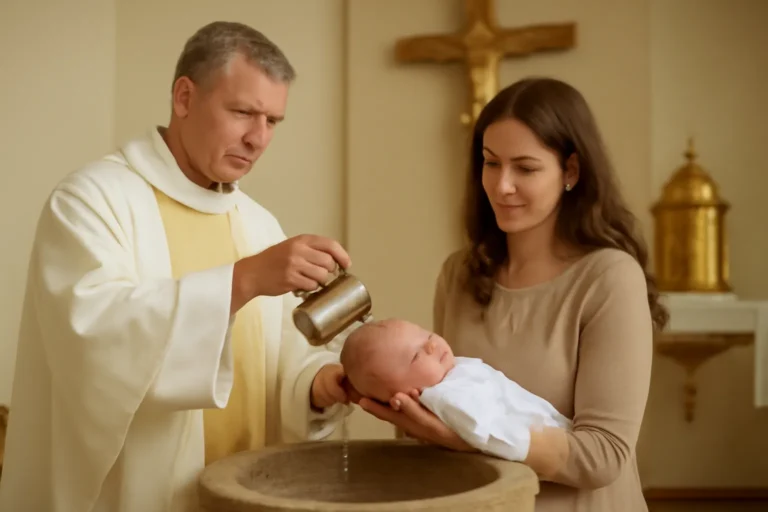
Baptism of the Holy Spirit vs Water Baptism: Key Differences
Baptism of the Holy Spirit vs water baptism are two important yet distinct experiences in Christian teaching. This article provides a thorough overview of the differences, the biblical foundations, historical development, and practical implications for believers. It uses various terms and phrasing to describe the same core ideas in a way that helps readers from different traditions understand how these two forms of baptism relate to each other.
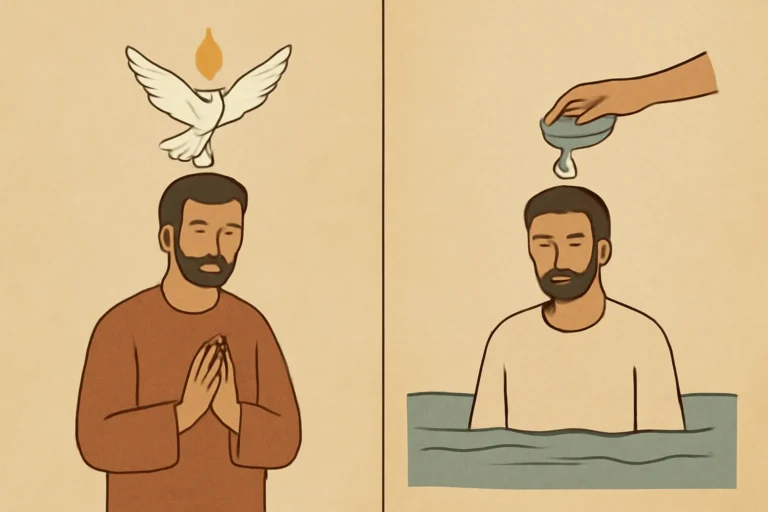
The phrase baptism of the Holy Spirit (also called Spirit baptism or baptism in the Spirit) refers to a divine act in which a believer is uniquely united with Christ’s Spirit, often described as empowerment for service, reception of spiritual gifts, or a special seal of God’s presence. In contrast, water baptism is a public, symbolic act in which a believer identifies with Christ’s death and resurrection and publicly affirms repentance and faith. It serves as a visible sign of inward realities rather than the inward experience itself.
In many Christian traditions, these two experiences are understood as distinct events, though they can occur close in time or in sequence for some believers, and in other traditions they are seen as inseparable parts of the same saving process. The distinction rests on who acts (God versus the believer), what is signified (spiritual reality versus outward symbol), and when it happens (at conversion, at a later point, or in varied orders across different communities).
Two terms are commonly used to describe the relationship: empowerment for ministry and public confession. Empowerment for ministry is a hallmark of the baptism of the Holy Spirit, often accompanied by gifts that enable service in the body of Christ. Public confession, assured by water baptism, emphasizes obedience, cleansing, and alliance with the Christian community.
Key biblical passages and what they suggest
Scripture offers several foundational examples and statements that shape how Christians understand these two baptisms. Different traditions emphasize different passages, but a careful reading highlights distinct themes and some overlap.
Acts 2:1-4 (the Day of Pentecost): The Holy Spirit descends on the believers as a mighty rushing wind, and they begin to speak in other tongues. This is often cited as a primary example of baptism of the Holy Spirit resulting in visible empowerment and proclamation to the crowd.
Acts 2:38 (“Repent and be baptized, every one of you, in the name of Jesus Christ for the forgiveness of your sins; and you will receive the gift of the Holy Spirit”): This passage is frequently used to illustrate a sequence where water baptism is connected to receiving the Spirit, though interpretations vary on whether the Spirit is received at that moment or in a broader sense of belonging to Christ.
Acts 10:44-48 (Cornelius’s household): The Holy Spirit falls on Gentile believers before they are baptized with water, prompting Peter to declare that God has granted even to Gentiles repentance unto life. This is often cited as evidence that Spirit baptism can precede water baptism and is not limited to a particular order.
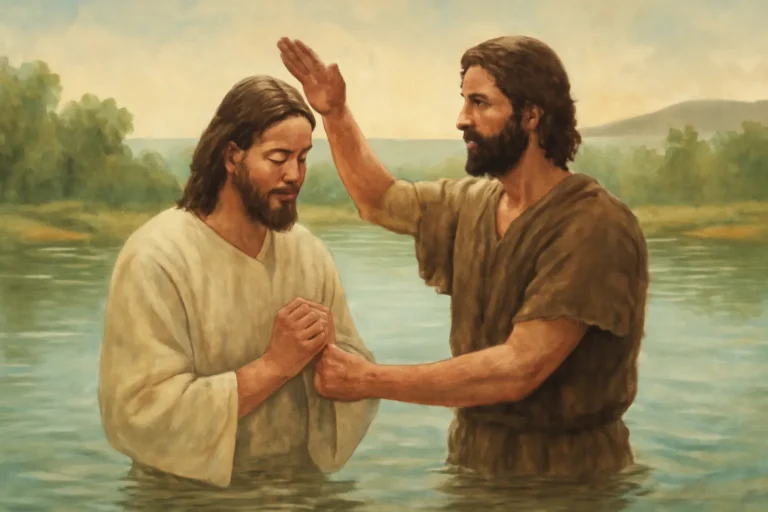
Acts 19:1-7 (disciples of John the Baptist in Ephesus): They had been baptized with John’s baptism, but upon hearing about the baptism with the Holy Spirit, Paul lays hands on them and they receive the Spirit, speaking in tongues and prophesying. This shows a clear distinction between the two baptisms and the possibility of a later Spirit experience.
John 3:5-8 (Jesus teaching about new birth): Jesus speaks of being born of water and Spirit, suggesting an order or dual reality in which cleansing from sin (water) and regeneration or new life (Spirit) are interconnected in the process of entry into the Kingdom.
Romans 6:3-4 and Colossians 2:12 (water baptism as a union with Christ in His death and resurrection): These passages emphasize the symbolic dimension of water baptism—identification with Christ’s death, burial, and resurrection—rather than describing the Spirit’s internal renewal directly.
1 Corinthians 12:13 (one Spirit, one body): This passage highlights the communal aspect of Spirit baptism—that all who are in Christ are baptized into one body by one Spirit, underscoring unity within the church rather than a divisive difference between baptism types.
Across Christian history, theologians have described Spirit baptism and water baptism in varying ways. The most significant differences often align with broader theological traditions and their emphases on grace, faith, church authority, and the interpretation of charismatic experiences.
Early church and patristic background
In the earliest Christian communities, baptism was primarily understood as an initiation rite rooted in repentance, faith, and entry into the church. The book of Acts records both the reception of the Spirit and baptism, and the two were sometimes linked in practice but not always described as a single event. Some early fathers emphasized the Spirit’s work in conversion and incorporation into Christ, while others framed baptism as the visible sign of the new covenant and a transformative encounter with the Spirit present within the Body of Christ.
Reformation and diversified streams
During the Reformation, reformers highlighted faith and the authority of Scripture, often tending to emphasize believers’ baptism by immersion as a public declaration of faith, while still recognizing the Spirit’s work as essential to salvation. Many Protestant traditions maintain that baptism is not a meritorious means of grace but a spiritual ordinance that accounts for a believer’s confession of faith and incorporation into the church. The question of whether Spirit baptism is distinct from water baptism has produced diverse streams within Protestantism, with some asserting a single, Spirit-enabled conversion experienced as a natural integration of water baptism, while others maintain a two-stage understanding where Spirit immersion occurs after or alongside the moment of faith and water baptism.
Pentecostal and Charismatic movements
The 20th century brought a renewed focus on the baptism of the Holy Spirit as a distinct, ongoing experience that empowers believers for witness and service. Pentecostal churches often describe Spirit baptism as a second, post-conversion blessing that may be evidenced by speaking in tongues, prophecy, or other spiritual gifts. Charismatic movements within historic denominations similarly teach that believers can experience a powerful sense of the Spirit’s presence and gifts, sometimes at conversion and sometimes subsequently. In these circles, tongues or other spiritual gifts are highlighted as signs of Spirit baptism, though not all circles equate signs with authenticity of the Spirit’s indwelling.
Catholic and Orthodox perspectives
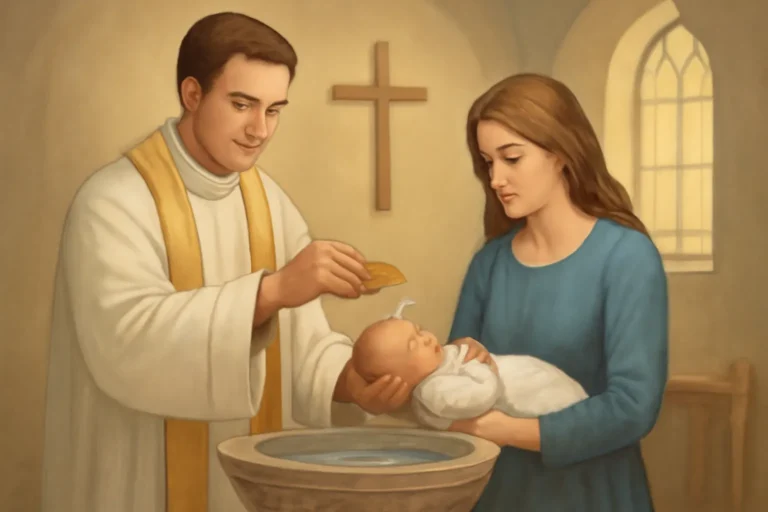
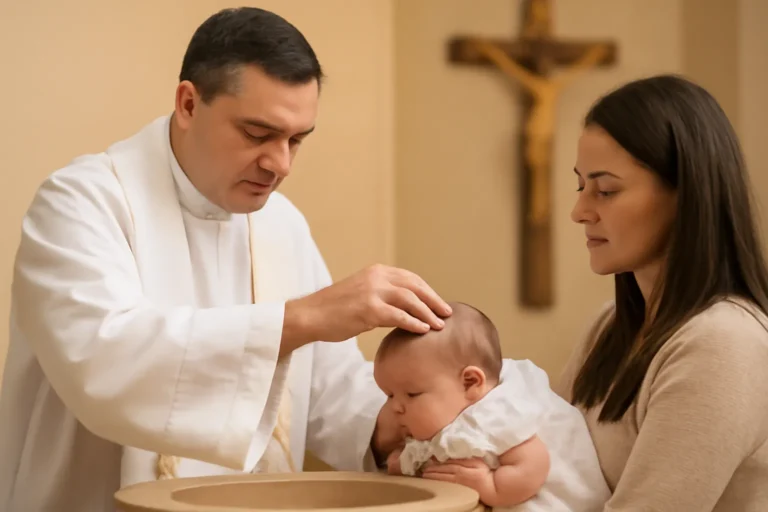
Within Catholic and Orthodox traditions, baptism by water is typically the means by which one becomes a member of the Church, receives remission of sins, and is sealed with the Holy Spirit in a sacramental framework. The Holy Spirit’s presence is assumed as part of the sacramental life, and the grace of baptism is deeply tied to mystery and sacramental economy. Some in these traditions emphasize the anointing with chrism and the ongoing sanctification process that accompanies the Christian life, while recognizing that Spirit empowerment is not a separate extra-sacramental event but a continual work within the sacramental context.
Distinctions and overlaps: what sets them apart
Understanding the differences requires focusing on several key dimensions: agency, significance, timing, and spiritual effects.
Agency: Baptism of the Holy Spirit is described as a divine act carried out by God—the Spirit Himself filling, sealing, and empowering the believer. Water baptism is a commanded response by the believer, a public action performed in obedience to Christ, usually administered by a church.
Significance: The baptism of the Spirit concerns inner transformation, the believer’s participation in the life of the Trinity, and empowerment for ministry. Water baptism centers on outward symbolism—cleansing from sin, dying to the old self, and rising to new life in Christ—along with public identification with Christ and the church.
Timing: In Acts and related passages, Spirit baptism can occur at conversion, or later, or prior to water baptism, depending on the narrative. Water baptism typically occurs after a genuine confession of faith, though the exact sequence varies across traditions.
Spiritual effects: Spirit baptism is often connected with spiritual gifts, boldness in proclamation, or a heightened sense of God’s presence. Water baptism signals forgiveness of sins, inclusion into the community, and identification with Christ’s death and resurrection.
Different Christian communities emphasize certain aspects more than others. Some traditions stress the evidence of Spirit baptism through charismatic gifts; others emphasize the public witness of water baptism and regard Spirit work as continuous and ongoing within the life of faith rather than a discrete event.
Most Christian traditions teach that salvation comes by faith in Christ and the grace of God, not by a separate ritual. Baptism of the Holy Spirit is typically described as a subsequent empowerment or inner experience of the Spirit, while water baptism is an outward sign of belonging to Christ. Some traditions insist that Spirit baptism is inseparable from conversion, whereas others maintain a distinct sequence.
Can a believer be baptized with the Holy Spirit and not speak in tongues?
In many Pentecostal and Charismatic communities, speaking in tongues is seen as a common particular sign accompanying Spirit baptism, but not universally required. Other traditions affirm Spirit’s presence and gifts without making tongues the sole or universal marker of Spirit immersion.
What if water baptism occurs without Spirit baptism?
The Acts narratives show instances where people received the Spirit after water baptism and others where Spirit was poured out before water baptism. The practical takeaway is that both events relate to God’s gracious work in a believer’s life, with Spirit empowerment following or accompanying faith, but not necessarily guaranteed in a fixed order.
Is water baptism a mere symbol, or does it confer grace?
Views range from symbolic-only perspectives to sacramental ones. In many Protestant traditions, water baptism is an ordinance that signifies grace already received by faith; in Catholic and Orthodox practice, it participates in imparting grace through the sacraments. The central idea across traditions is that water baptism points to the reality of cleansing, new life, and incorporation into the church.
What role do expectations about spiritual gifts play in Spirit baptism?
Some traditions view gifts as normative expressions of Spirit baptism, while others regard gifts as possible but not guaranteed. A broad Christian approach emphasizes the Spirit’s presence and fruit (such as love, joy, peace, self-control) as the mark of true Spirit-led life, rather than a fixed list of signs.
Practical implications for believers and churches
Understanding the distinction between baptism of the Holy Spirit and water baptism has practical consequences for how churches teach, disciple, and welcome new believers. Here are several considerations that can inform pastoral practice and personal faith journeys.
: Emphasize that both baptisms are expressions of God’s grace—one through the Spirit’s work in the heart, the other through the community’s confession and baptismal rite. Avoid turning either into a source of merit or status.
: Teach that Spirit empowerment is meant to equip believers for service, mission, and the fruits of the Spirit, while water baptism strengthens identity within the body of Christ. A robust discipleship path will integrate both into spiritual formation.
: Some believers may seek a deeper experience of the Spirit after conversion. Pastors and mentors should provide space for honest exploration, scriptural grounding, and responsible discernment rather than pressuring for a specific sign or moment.
: Inter-church dialogue benefits from recognizing diverse emphases: some communities highlight the transformative power of the Spirit, others stress the solemn commitment of baptism, and many affirm both as essential strands of Christian faith.
: When present, Spirit empowerment often fuels bold witness, compassionate service, and a life oriented toward the common good. Water baptism publicly communicates repentance, faith, and allegiance to Christ, inviting others to consider the gospel.
How to approach these topics pastorally and theologically
If you are a church leader, a student of theology, or a layperson exploring these themes, consider the following guidance to navigate the complexities with clarity and care.
Ground your teaching in Scripture: Build explanations around the core biblical texts, acknowledging both the explicit statements and the narrative contexts of Acts, the Gospels, and the Epistles.
Respect diversity of experience: Recognize that believers have varied experiences of the Spirit and of baptism that can coexist with a shared faith in Christ. Avoid rigidly binding personal experience to universal criteria for all believers.
Acknowledge the historic creeds: While not binding in every detail for all traditions, the creeds provide a shared historical footing for understanding baptism, the Spirit, and the seal of faith.
Provide clear catechesis: Offer formal teaching tracks that differentiate Spirit presence, spiritual gifts, and water baptism—while showing how they relate to conversion, membership, and vocation in the church body.
Encourage responsible discernment: When tensions arise about signs, gifts, or order, promote patient study, repentance, and solidarity with fellow Christians who hold different but biblically grounded views.
Baptism of the Holy Spirit is primarily about God’s action in a believer’s life—indwelling, sealing, empowering, and guiding for service.
Water baptism is primarily about human response—confession of faith, repentance, and public identification with Christ and the church in a symbolic act.
Both experiences are rooted in the person of Christ and the work of the Holy Spirit; they work together within the broader narrative of salvation and discipleship.
There is a spectrum of understanding across traditions: some see Spirit baptism as a one-time event at conversion; others view it as a subsequent experience that can happen after water baptism, and some view it as accessible in a variety of contexts.
Ultimately, the goal in Christian life is fidelity to Christ, the growth in Christ’s likeness, and effective ministry for the sake of the gospel.
Glossary of key terms
To help navigate the vocabulary, here is a concise glossary of commonly used phrases related to baptism and the Holy Spirit.
Spirit baptism or baptism in the Spirit: An act of the Holy Spirit that equips and empowers a believer for service, often associated with the reception of spiritual gifts.
Water baptism: A public rite enacted by immersion or affusion in water, symbolizing cleansing from sin, death to the old self, and new life in Christ.
Empowerment: The sense of increased boldness, gift-enabled ministry, and divine enablement for witness and mission that follows Spirit baptism in many traditions.
Regeneration or new birth: The spiritual birth described by Jesus in John 3:3-8, involving transformation and entrance into the Kingdom of God.
Sanctification: The ongoing process of growth in holiness and conformity to Christ, often seen as a lifelong work of the Spirit in the believer.
Encouraging a robust, balanced approach
In evaluating the differences and connections between baptism of the Holy Spirit and water baptism, a healthy stance is to pursue balanced clarity: acknowledge the distinct aims, while honoring the unity of God’s work in the life of a believer. The two biblically grounded realities do not compete; they complement one another in the larger drama of salvation, the church’s mission, and the believer’s journey of faith.
For individuals seeking guidance, here are practical steps to grow in understanding and practice:
Study the relevant biblical passages with sound commentaries, noting where authors describe inner experiences and where they describe outward acts.
Participate in discipleship programs that explain how faith, baptism, and Spirit-led living interact in daily life.
Seek wise counsel from pastors or mentors who can help you discern what the Scriptures teach about personal experience and community obedience.
Engage in ecumenical dialogue to gain insight into how different denominations understand Spirit work and baptism, while remaining faithful to your own tradition’s teaching.
Pray for a heart open to the Spirit’s work while remaining grounded in the gospel of Jesus Christ and the authority of Scripture.
Closing reflections: harmonizing doctrine and devotion
The distinction between baptism of the Holy Spirit and water baptism is not primarily a debate about which is more important; it is a clarification of what God does in a believer’s life and how that life is displayed to the world. The Spirit’s work within a person’s heart—the moment of new birth, the ongoing filling, and the empowerment for mission—meets the water baptism that signals belonging to Christ’s community and alignment with his death and resurrection. Together, they form a robust picture of what it means to be a follower of Jesus: transformed by grace, witnesses in the world, and built into a living body that serves God’s purposes across generations.
As you continue to explore these ideas, may you find clarity in Scripture, humility in interpretation, and courage to live out the truth of the gospel in word and deed. The encounter with the Spirit and the obedience of baptism are not merely doctrinal categories; they are invitations to a life empowered and shaped by the risen Christ.