Origins of the Second Temple: the Return from Exile and a Royal Decree to Rebuild
The question “When was the Second Temple built?” invites a layered answer. The term does not point to a single construction event, but to a sequence of phases that began with a political and religious return from exile, continued with the laying of a foundation, and culminated in a completed sanctuary that would later be expanded and renovated. The story centers on a key set of events in the late 6th century BCE, followed by a long period of development under successive empires, and ending with a dramatic destruction in the first century CE. The phrase “Second Temple” refers to a rebuilt temple complex in Jerusalem that became the focal point of Jewish worship after the Babylonian exile.
Throughout surveys of this topic, scholars use a combination of biblical accounts, Persian imperial records, and archaeological findings to reconstruct a timeline. Because the Hebrew Bible and related sources present dated covenants, edicts, and rebuilds in ways that reflect religious memory as well as historical events, the dates cited here represent scholarly consensus and traditional reckonings that are widely accepted in mainstream scholarship. When people ask variations of when was the second temple built, they are typically seeking to distinguish between the initial rebuilding that established a functioning sanctuary and the later enhancements that transformed its scale and appearance.
Construction Beginnings: Cyrus’s Decree and the Return to Jerusalem
To understand the timing, it is essential to start with the imperial and prophetic atmosphere that followed the fall of Babylon. The Persian conqueror Cyrus the Great issued a decree around 538 BCE permitting the Judean exiles to return to Jerusalem and rebuild the Temple and the city’s walls. This edict is described in the biblical book of Ezra and echoed in other Persian-era sources. In broad terms, this moment marks the beginning of the Second Temple project in the sense of a renewed religious center rather than a purely mythical rebirth.
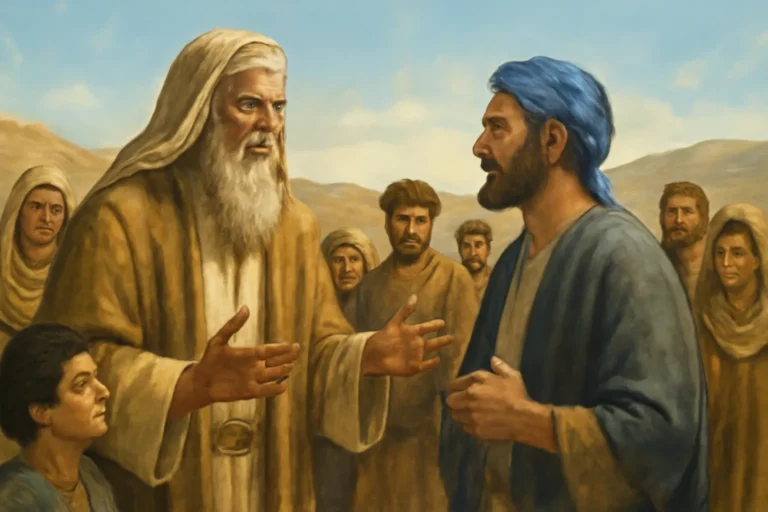
The early phase of the project involved sending leaders to organize the return. A royal commission and religious leadership worked in tandem as the people made their way back to Judah. The initial leaders included Zerubbabel, a governor, and Jeshua (Joshua) son of Jehozadak, a high priest. Their task was not merely to rebuild a structure but to reinvigorate a people’s religious life after generations of exile. The timeline in this phase is often summarized as follows: the people returned in the late 520s to early 530s BCE and began work on the Temple’s foundations.
As a consequence of the return and the decree, the project transformed from a dream of restoration into a concrete construction effort. The early effort faced the practical and political challenges common to large public works in the Persian Empire: shifting budgets, local opposition, and the complexities of coordinating exile communities back to their homeland. Still, the determination to rebuild endured, and the work laid the groundwork—literally and figuratively—for the Second Temple complex.
Timeline of Construction: From the Foundation to Completion
While the broader arc spans decades, the core construction phases are often summarized into two key time periods: laying the foundation and completing the Temple precinct, followed by later renovations under a different political regime. The most commonly cited dates for the primary rebuilding are:
Foundation laid around 536 BCE. This marks the moment when the returned community began the physical work of constructing a new shrine on the Temple Mount. The biblical record emphasizes the restoration of worship and the reestablishment of sacrificial rites as central purposes of the rebuilding.
Construction resumed after a pause, with renewed royal endorsement and support. Work continued into the early 510s BCE as Persian authorities reaffirmed their interest in maintaining stability across the empire and supporting local religious life in governed territories. A major inflection point is often placed around 520 BCE when the project regained momentum.
Completion of the Temple around 515 BCE. This date marks the formal completion of the rebuilt sanctuary as a functioning Temple for sacrifice and worship under Persian auspices. The structure established the minimal, serviceable core of the Second Temple that would serve the Jewish community for the next several centuries, though it would undergo later renovations and enhancements.
It is important to note that dates during this period are derived from biblical chronology, Persian records, and later rabbinic traditions. Some scholars point to slightly different year ranges (for example, 516 BCE instead of 515 BCE for completion) but the overall sequence remains consistent: a decree permitting return in 538 BCE, foundation in the mid-530s BCE, growth and renewal in the 520s BCE, and completion in the early 6th century BCE. The key takeaway is that the Second Temple began as a rebuilding project rooted in exile returnings and divine sanction, culminating in a functioning sanctuary by the mid-6th century BCE.
What changed after completion?
Once completed, the Temple served as the centerpiece of Jewish worship during the ensuing centuries. Sacrificial rites, festivals, and daily rituals took place within a structure that, although modest at first, was a crucial locus for religious life. The completion did not merely signify a finished building; it signified the revival of a religious order, the reconstitution of priestly functions, and a renewed sense of national identity after the long period of exile.
Herod’s Renovation: A Major Transformation of the Temple Complex
Although the Second Temple was completed in the early Persian period, a decisive transformation occurred a few generations later under Herod the Great, who undertook an ambitious renovation and expansion project that redefined the scale, architecture, and prestige of the sanctuary. This era is often referred to as the Herodian Temple period, and it extended well into the first century BCE and beyond.
Herod’s project is best understood as both a religious and political initiative. By amplifying the platform, enlarging the Court of the Gentiles, and refining the sanctuary’s appearance, Herod sought to demonstrate allegiance to Roman authority while simultaneously showcasing the Temple as a monumental center of Jewish worship. The renovations are usually dated to begin around 19 BCE and continued over many years, with additional work and refinements continuing into the early CE era. This expansion did not replace the earlier temple but transformed it into a far grander complex, creating the space that could accommodate large crowds during major festivals like Passover.
Key features of the Herodian renovation
The Temple Mount platform was expanded and fortified, dramatically increasing the area surrounding the Temple itself.
The Temple was supplied with new entrances, courtyards, and retaining walls, creating a more imposing visible presence in Jerusalem.
The architectural design emphasized grandeur and ceremonial precision, reinforcing the Temple’s status as the central religious institution for Jewish life under Roman influence.
Scholars often point to a long construction horizon for the Herodian project, with major phases running through the late 1st century BCE. The result was a temple complex that dominated the skyline of Jerusalem and remained in use for nearly two centuries before the catastrophic events of 70 CE. For many visitors and readers, the Herodian Temple stands as the most well-known and expansive version of the Second Temple era, even though the basic structure conceived in the earlier Persian period remained part of the site’s identity.
Destruction, Aftermath, and the End of the Temple Era
The history of the Second Temple reaches a dramatic turning point in the year 70 CE, during the First Jewish–Roman War. Roman forces under General (later Emperor) Titus besieged Jerusalem, culminating in the destruction of the Temple precinct. The devastation was extensive: the main sanctuary was burned and razed, and within a few decades, the Roman authorities rebuilt parts of the area for other purposes. The destruction marked the end of the Temple as a functioning center of sacrificial worship in the Jewish world.
What remains today is often described as the Western Wall, the surviving retainers of the Second Temple complex that stood as a symbol of continuity for Jewish religious life. The Temple Mount site itself became a different kind of sacred space under various regimes, and the Western Wall has become a place for prayer and reflection for people around the world. The destruction did not erase the religious memory of the Temple; rather, it transformed how Judaism practiced its faith without a central sanctuary for a period, and later, the focus shifted toward local centers of study and prayer, along with synagogues and other ritual spaces.
In the centuries that followed, the destruction altered the political and religious landscape of the region. The Second Temple story continued to live in religious texts, ritual practice, and historical memory. The timeline from the late Persian period through the Herodian renovation and the eventual destruction in 70 CE reveals a dynamic arc—from rebuilding and renewal to catastrophe and ongoing memory.
The Second Temple Period: Length, Significance, and Semantic Variants
Scholars commonly refer to the era from the completion of the Second Temple in the 6th century BCE to the destruction in 70 CE as the Second Temple period. This era spans roughly about 585 years, though exact dates depend on whether one uses a starting point of 516/515 BCE or 520 BCE for the completion of the initial sanctuary. The breadth of this period included multiple phases of religious leadership, political supervision, and communal life that shaped Jewish practice in profound ways.
In everyday discussions and scholarly literature, people frequently ask variations of the same fundamental question: When was the Second Temple actually built? The answer includes multiple milestones, each representing a distinct step in the temple’s life:
Initial rebuilding following Cyrus’s decree in the late 530s–early 520s BCE, including the laying of a foundation and the establishment of sacrificial rites.
Completion of the sanctuary around mid-6th century BCE (commonly cited as 515 BCE), marking the temple’s readiness for regular worship.
Major enlargement and renovation under Herod the Great, beginning around 19 BCE and continuing for decades, which created a monumental temple complex.
Destruction in 70 CE, ending the temple as a functioning center of worship and inaugurating a long period of absence of a standing Temple in Jerusalem.
To address semantic breadth, here are some variations you might encounter in literature or discussions: “When did the Second Temple rise?”, “When was the rebuilt Temple completed?”, “What year did the foundation of the Second Temple get laid?”, and “How long did the Herodian renovations take?” Each phrasing emphasizes a different facet of the same overarching history: a sequence beginning with exile, followed by return, foundation, completion, expansion, and ultimately destruction. Understanding these nuances helps distinguish a completion date from a later renovation, and both from the date of destruction that ended the sanctuary’s status as a standing temple.
Key Facts and Common Questions
When was the Second Temple built? The project began after Cyrus’s decree in the late 6th century BCE, with the foundational phase in the 530s BCE and the sanctuary’s completion around 515 BCE.
Who led the early rebuilding? The return was led by Zerubbabel, the governor, and Jeshua, the high priest, who coordinated religious rites with the returning community.
How long did the initial rebuilding take? The process stretched over several years, with the foundation in the 530s BCE and completion by the early 5th century BCE, depending on the dating scheme used by scholars.
What happened during Herod’s renovation? Beginning around 19 BCE, Herod the Great undertook a large-scale expansion of the Temple complex, turning it into a monumental and architectural showcase while maintaining the temple’s religious significance.
When was the Second Temple destroyed? The temple was destroyed in 70 CE by Roman forces during the First Jewish–Roman War, ending its role as a standing sanctuary.
What remains today? The most visible remnant is the Western Wall, part of the retaining structures associated with the Herodian expansion, which continues to be a focal point of Jewish prayer and memory.
Significance Across Time: Why the Second Temple Matters
The significance of the Second Temple goes beyond architecture. It represents a period in which Jewish religious life adapted to exile, return, and sovereignty under foreign rule, while still preserving ritual continuity. The Temple served as the focal point for national repentance, festival observance, and priestly ritual. Even after its destruction, the memory of the Temple shaped rabbinic thought, liturgy, and Jewish identity for centuries. The idea of a future restoration—whether framed in apocalyptic or messianic terms—also reflects the enduring centrality of the Temple in Jewish imagination.
From a historiographical standpoint, the Second Temple period is a useful lens for understanding how a religious community maintained continuity under changing political powers. The Persian approval to rebuild, the Hellenistic and Roman periods, and the eventual destruction all contributed to a complex narrative about authority, space, ritual, and memory. The Temple’s structural evolution—from a modest sanctuary to a grand Herodian complex—also mirrors broader shifts in art, architecture, and urban planning in antiquity.
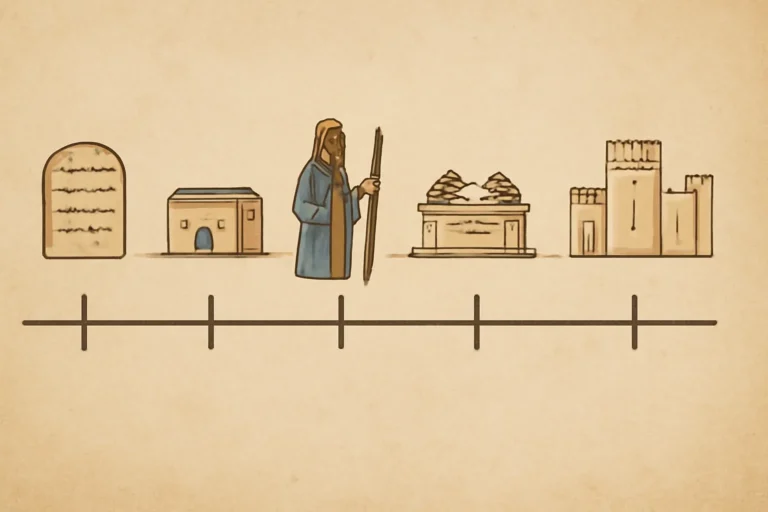
538 BCE – Cyrus the Great issues the decree permitting Jews to return to Jerusalem and rebuild the Temple.
536 BCE – Foundations laid for the rebuilt Temple; early leadership by Zerubbabel and Jeshua sets the phase for worship and renewal.
520 BCE – The rebuilding project regains momentum with renewed Persian support and organizational effort.
515 BCE – The Temple is completed and dedicated as a functioning sanctuary for sacrificial worship.
19 BCE onward – Herod the Great begins a sweeping renovation and expansion of the Temple complex, elevating its scale and splendor.
70 CE – Destruction of the Temple by Roman forces; the sanctuary as a standing structure ends, though its memory persists in religious practice and historical memory.
Beyond these core dates, the Second Temple period continued to feature additions, renovations, and religious leadership that contributed to the long arc of Jewish history in the ancient Near East. The sequence of rebuilding, expansion, and destruction demonstrates how a sacred space can be both a physical site and a symbol that outlives its walls.
Additional Context: How Historians Reconstruct the Dates
Dates associated with the Second Temple must be understood within a broader historiographical framework. Two primary kinds of sources inform the timeline:
Biblical narratives (Ezra, Nehemiah, Haggai, Zechariah, and others) provide details about the return, the laying of foundations, and the dedication ceremonies. These texts offer a religious and social perspective on the rebuilding process.
Persian imperial records and archaeology give us a secular, political context. The Persian administrative system, contact with provincial governors, and inscriptions help situate the rebuilding within the broader empire’s priorities.
When these sources are harmonized, they yield a multi-stage picture of the Second Temple’s early phase, with a completion in the late 6th century BCE, and a later, landmark renovation under Herod that transformed the temple precinct into a grand urban complex. The interpretive differences that arise from variant dating reflect scholarly debates about the precise year counts and the manner in which to align religious calendars with Gregorian-era dating conventions. Nevertheless, the central narrative—rebuilding after exile, completing the sanctuary, expanding it under a renowned king, and ultimately losing the structure to destruction—remains robust and widely accepted.
Closing Reflections: The Second Temple in Memory and History
Understanding when the Second Temple was built involves tracing a timeline that begins with exile and imperial permission, continues through a phased construction and completion, and culminates in a monumental renovation followed by a dramatic end. The temple’s story is not only an architectural chronicle but also a narrative about religious resilience, communal identity, and the ways in which space and ritual shape memory across generations.
Today, visitors to Jerusalem encounter the enduring legacy of the Second Temple in a landscape where the Western Wall stands as a living reminder of a sanctuary once at the heart of Jewish religious life. The dating debates—whether the initial completion happened in 515 BCE or 516 BCE, whether the foundation was laid in 536 BCE, or the precise timetable of Herod’s expansions—do not diminish the core truth: the Second Temple era marks a defining chapter in the history of Judaism, a period during which a people rebuilt, reimagined their worship, and faced the challenges of political power and military conflict with a sense of continuity that continued to shape and inspire future generations.