Second Temple of Jerusalem: A Definitive Guide to History, Architecture, and Significance
Across the long arc of Jerusalem’s history, the Second Temple stands as a defining monument of religious life, political symbolism, and cultural memory. Also known as the Beit HaMikdash Sheni in Hebrew, this sacred precinct did not merely replace its predecessor after the Babylonian exile; it evolved through eras of conquest, reform, and monumental building projects. The result was a complex sacred space that shaped Jewish worship, inspired early Christian narratives, and left a lasting imprint on the architectural imagination of the ancient world.
Origins and Construction: From Exile to a Returned Sanctuary
Return from Exile and Zerubbabel’s Temple
The story of the Second Temple begins with a dramatic return: after the Babylonian exile, a remnant of Israelites returned to Jerusalem under leaders like Zerubbabel and the prophetic guidance of figures such as Haggai and Zechariah. The rebuilding project, completed in the autumn of 516 BCE, established a modest but significant sanctuary that fulfilled a central promise of restoration. This initial phase is often described as the early Second Temple period, in which the rebuilt sanctuary provided a focused center for sacrifice, ritual, and Torah study once again within the boundaries of the restored city.
Early Years and Gradual Development
In the subsequent centuries, the Temple in Jerusalem did not remain static. While the basic layout persisted, the site gradually accrued features and accoutrements that reflected evolving religious practices and political realities. The Second Temple served as the locus of pilgrimage, where communities from far and near gathered for major festivals, and where priests administered ritual offerings and liturgy in accordance with biblical law and evolving rabbinic interpretation.
Herod the Great and the Great Expansion: A Continent-Shaping Renovation
Motives, Vision, and Scale
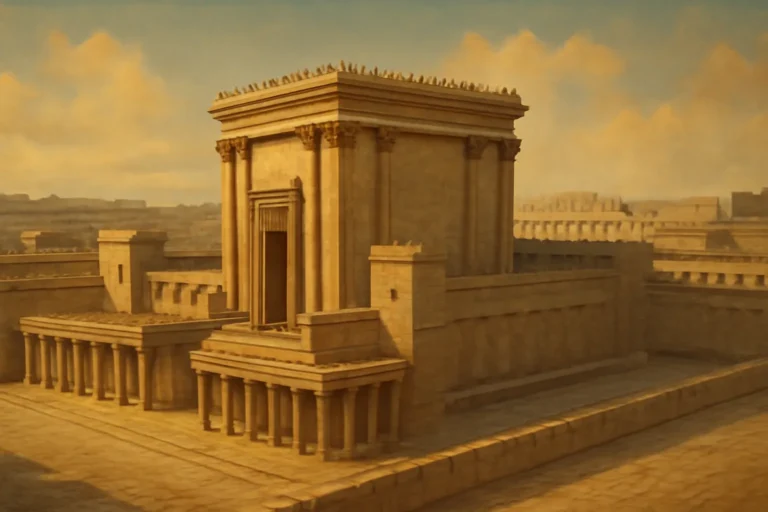
In the late first century BCE, Herod the Great undertook one of the most ambitious architectural expansions in the ancient world. Known as the Herodian Temple but more accurately described as the expansion and modernization of the Beit HaMikdash Sheni, this project aimed to elevate the sacred space in line with imperial prestige and local religious expectations. The result was a vast platform, reinforced by monumental walls, that redefined the Temple complex’s scale and symbolism. The program reflected a desire to demonstrate piety, power, and cultural achievement within a city already entwined with Roman politics and Mediterranean trade routes.
Architectural Mastery and the Temple Mount Platform
The Herodian platform reimagined the Temple Mount as a massive, flat terrace that rose above the surrounding neighborhoods. The platform covered roughly 37 acres (about 15 hectares) and required immense retaining walls, stairways, and approach routes. At its heart stood the Temple complex, whose design integrated ceremonial spaces with grand public access. This renovation extended the sacred precincts outward and upward, allowing for larger crowds during festival times and enabling a more elaborate display of ritual activity.
Layout and Architecture of the Second Temple Complex
The Core Layout: Courts, Access Points, and Sacred Rooms
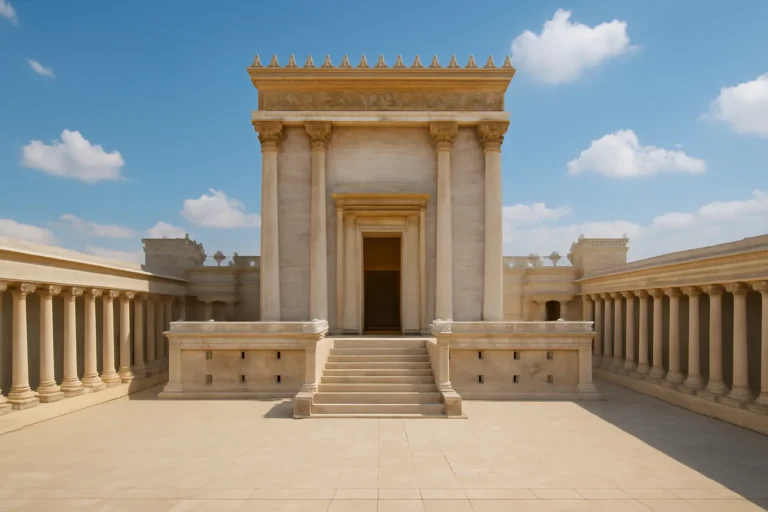
The Second Temple complex was a layered sanctuary composed of a sequence of courts that guided worshipers from the outer world toward the inner sanctums. The hierarchy of spaces can be summarized as follows:
The Court of the Gentiles — the outermost area, accessible to non-Jews and a place for commerce, teaching, and public ritual activity.
The Court of the Women — a next layer where women could participate in certain rites and view sacrificial processes from designated areas.
The Court of Israel — a further inner space reserved for male Israelite worshippers who could approach more closely to the sacred precincts.
The Court of the Priests — the area where the priestly order performed offerings, burning incense, and other liturgical duties.
The Temple Precinct — housing the sanctuary proper, the inner offerings altar, and the central structures of worship.
Inside the sanctified core, the Holy Place (Hekal) housed essential ritual implements, including the menorah (seven-branched lamp), the table of showbread, and the golden altar of incense. Adjacent to this chamber lay the Holy of Holies (Kodesh HaKodashim), the most sacred space where divine presence was believed to reside in a secluded, day-to-day sense. Although debates persist about the exact nature of what the Holy of Holies contained during the late Second Temple period, it is clear that the inner sanctuary remained off-limits to all but the High Priest on the most solemn days of the year, particularly during the Day of Atonement (Yom Kippur).
Decorative Elements, Sacred Vessels, and Ritual Technology
From the time of the Herodian renovation onward, the Temple complex featured a wealth of ritual vessels, architectural ornamentation, and ceremonial features designed to elevate the worship experience. The bronze altar for burnt offerings, the laver for ceremonial washing, and the carefully designed gates and chambers all contributed to a precise, highly choreographed sacrificial system. In the outer gates, donors and patrons could memorialize their contributions through named gates and archways, sometimes associated with donors like Nicanor and other aristocratic patrons who funded specific sections of the precinct.
Religious Practices, Daily Life, and the Temple Calendar
The Sacrificial System and Priestly Order
The essence of worship in the Second Temple system was its sacrificial economy. The Kohanim (priests) and Leviim (Levites) performed offerings on a fixed rhythm that aligned with Torah law and annals of tradition. Daily offerings (tamid), Sabbath rites, and festival sacrifices formed a continuous stream of ritual activity that shaped civic life as well as temple prayer. The priestly classes maintained detailed records, and their responsibilities reflected a social structure designed to sustain both spiritual devotion and communal cohesion.
Three annual pilgrimage festivals anchored life at the Temple: Passover (Pesach), Shavuot, and Sukkot. Pilgrims traveled from across Judea and the Diaspora to bring offerings and to participate in the liturgical processions. The rhythm of the year in the Jerusalem temple precincts revolved around these holy seasons, with large crowds, public readings, and ritual purity requirements guiding social behavior. The public rituals were not merely acts of sacrifice but occasions for communal identity, debate, and reinforcement of shared laws and norms.
Prayer, Incense, and Sacred Space
The Holy Place housed the incense altar and the rites of daily prayer, while the Holy of Holies stood as the ultimate symbol of divine favor and presence. The use of incense, the lighting of the menorah, and the ceremonial display of bread and wine all contributed to a sensory experience that linked heaven and earth in a concrete, spatial way. The architecture itself—curtains, chambers, and gates—was curated to reflect theological ideas about proximity to the divine and the boundaries between the sacred and the profane.
The Destruction, Aftermath, and the End of an Era
The Roman Conquest and the Destruction of 70 CE
In 70 CE, Roman forces under General (later Emperor) Titus captured Jerusalem and destroyed the Temple as part of the suppression of the Jewish revolt. The destruction was devastating for the Jewish world, ending the centuries-long sacrificial cult that had defined the relationship between the people, their land, and the divine. The fall of the Beit HaMikdash Sheni did not erase Jewish religious life, but it did force a profound reorientation toward prayer, study, and the eventual development of rabbinic leadership that could sustain identity without an active temple service.
After 70 CE: Diaspora Memory and the Temple’s Enduring Impact
In the centuries that followed, the Second Temple lived on in memory, liturgy, and literature. Descriptions in the works of Josephus and later rabbinic sources preserved a picture of a monumental sanctuary, even as the actual building lay in ruins. The Western Wall of the Temple Mount, a retaining wall from Herod’s expansion, became a focus of prayer and longing—the living remnant of the sacred space that once drew priests, pilgrims, and scholars to Jerusalem. The memory of the temple continued to shape Jewish prayers, liturgies, and the ethical imagination of generations living in exile and in the land alike.
Significance in Jewish Thought, History, and World Culture
Centrality to Jewish Identity and Worship
To speak of the Second Temple is to speak of a focal point for Jewish worship, law, and communal life. Even after its destruction, the memory of the temple informed prayers such as the daily and seasonal liturgies, the hope expressed in liturgical poems, and the enduring dream of a future temple. The Three Pilgrimage Festivals and the practice of communal prayer in synagogues carry forward the memory of a sacred geography that once existed in the heart of Jerusalem.
The Temple and Early Christian Contexts
For the emerging Christian movement, the story of the Second Temple provided a historical backdrop for evaluating Jesus of Nazareth’s ministry, temple-centered critiques of leadership, and the shifting understanding of sacrificial worship. The narratives surrounding Jesus’ actions in the temple precincts, his discussions about temple purification, and the subsequent development of a new covenant framework reflect how the memory of the temple shaped doctrinal debates in the early church.
Interreligious Resonance and Modern Discourse
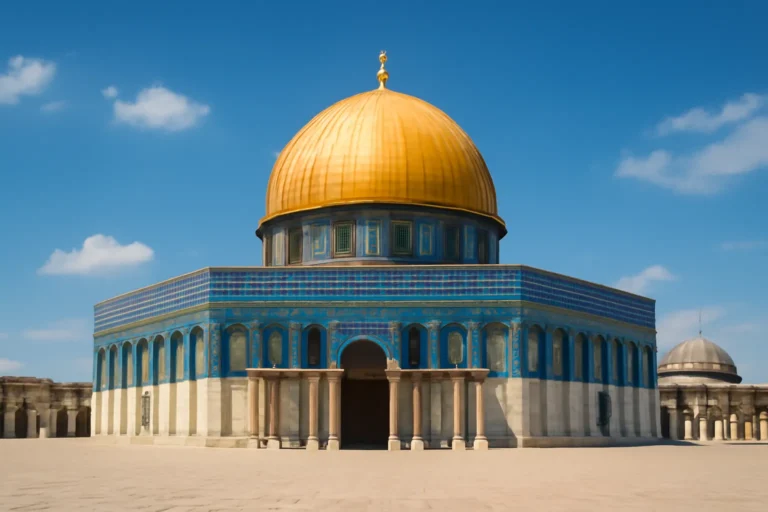
The Temple Mount remains a locus of religious identity, political tension, and international diplomacy. In modern times, the site is a focal point for discussions about religious rights, sacred space, and the prospects for future temple leadership in Jewish, Christian, and Muslim traditions. The ongoing dialogue around access, sovereignty, and reverence makes the Second Temple an enduring cross-cultural symbol—an ancient institution with contemporary resonance.
Archaeology, Sources, and Scholarship
Primary Ancient Sources
Our understanding of the Second Temple draws on a spectrum of ancient literature. Notable sources include:
Josephus, whose Antiquities and The Jewish War provide detailed, albeit sometimes interpretative, accounts of the temple’s architecture, rituals, and the political circumstances surrounding its destruction.
The Mishnah and the tractate Middot, which preserve Rabbinic descriptions of the layout, dimensions, and ritual responsibilities of the temple precincts.
Rabbinic literature, including the Talmud and later commentaries, which reflect post-Temple reconfigurations of practice and authority.
Archaeological Remains and Limitations
Archaeology on the Temple Mount is one of the most sensitive and restricted areas in the world. Nevertheless, researchers study surrounding contexts, ancillary structures, and the surviving monumental walls to reconstruct the scale and grandeur of the Herodian Temple. The remains of the Western Wall offer a tangible reminder of the platform’s vast scale and the historical memory that has sustained Jewish prayer for nearly two millennia.
Key Architectural Details in Scholarly Descriptions
Scholars describe a sequence of features that characterized the Second Temple complex, including:
The outer courts designed to manage large crowds during festival periods.
The Temple precinct itself as a sanctified core surrounded by ceremonial gates and chambers.
Distinct ritual spaces like the Holy Place, Holy of Holies, and the altar for burnt offerings.
Laboratories of ritual practice in many senses: purification baths, vessels, incense, and ceremonial pathways.
Legacy, Memory, and the Future: Why the Second Temple Continues to Matter
Influence on Jewish Practice and Identity
The memory of the Second Temple continues to inform Jewish prayer and religious life. Even in the absence of a standing temple, liturgical frameworks, prayer directions toward the city of Jerusalem, and the longing for an era of renewed temple service shape the spiritual landscape of modern Judaism. The concept of a unified sanctuary, the sacred calendar, and the ethical imperatives associated with sacrifice are reimagined in ways that sustain continuity with the past while enabling adaptation to new historical circumstances.
Historical and Cultural Reach
Beyond Judaism, the story of the Beit HaMikdash Sheni has influenced Christian exegesis, medieval scholarship, and contemporary archaeology. It also informs popular culture—literature, film, and museum exhibitions—where the temple is depicted as a symbol of ancient grandeur and of the fragile human quest to approach the divine in a built environment. The temple’s narrative thus serves as a bridge between antiquity and modern religious imagination.
Contemporary Relevance and Dialogue
Today, debates about the Temple Mount involve political, religious, and ethical considerations that touch on international law, religious freedom, and interfaith relations. The memory of the Second Temple informs these discussions, offering readers a historical lens through which to view current events and to understand how sacred space can shape community identity and public policy across generations.
In-Depth Look: Terms, Concepts, and Variants
To appreciate the breadth of the subject, it helps to recognize multiple terms used to describe the same historical phenomenon:
The Second Temple or Beit HaMikdash Sheni refers to the post-exilic sanctuary built in Jerusalem after the end of the first temple era.
Heroen: Herodian Temple is the common label for the grand renovation led by Herod that expanded and beautified the complex.
The Temple Mount denotes the elevated sacred platform on which the temple stood and which remains a focal point of religious and political life.
In rabbinic literature, the sanctuary is often described in terms of its courts and sanctuary spaces (Holy Place and Holy of Holies).
Key Figures, Infrastructures, and Milestones
Several individuals and structural milestones anchor the history of the Second Temple period. For readers seeking a focused timeline, consider these anchor points:
Zerubbabel leads the return and initiates the first phases of temple reconstruction after exile.
The Early Second Temple era consolidates sacrificial practice and Torah-centered life in a rebuilt sanctuary.
Herod the Great launches a sweeping renovation that creates the massive Temple Mount platform and a reimagined temple complex.
The Roman conquest culminates in 70 CE with the destruction of the temple, altering religious life for centuries.
Each of these milestones reflects a changing relationship between sacred space, political power, and communal identity. The architecture, the ritual calendar, and the legal frameworks surrounding the temple evolved in response to external pressures and internal debates, producing a durable legacy that transcends the historical boundaries of the Second Temple itself.
Final Reflections: Understanding the Second Temple in a Modern World
When we study the Second Temple, we study more than a building or a ritual system. We encounter a symbol of a people’s capacity to imagine a sacred center, to navigate exile and return, and to reinterpret ritual in times of disruption. The temple’s story—its construction, expansion, and destruction—offers a lens through which to view questions of memory, authority, and sacred space that continue to matter in the present day. In that sense, the narrative of the Temple in Jerusalem remains a living dialogue between past and present, a continual invitation to reflect on how communities honor the divine and sustain their shared life in a changing world.