The mezuzah is a small, portable sign of a larger commandment. At first glance it seems to be merely a case fastened to a doorway, but its inner life is a meticulously crafted piece of sacred writing. The heart of the mezuzah is a parchment scroll that carries two Torah passages, written by a trained scribal hand on kosher parchment. The scroll is tucked into a protective case and mounted on the doorpost, serving as both a physical reminder and a spiritual covenant. In everyday practice, the inside of the mezuzah consists of several distinct elements that together constitute the mitzvah and its meaning. Here is a guided tour of what you would find inside, and why each piece matters.
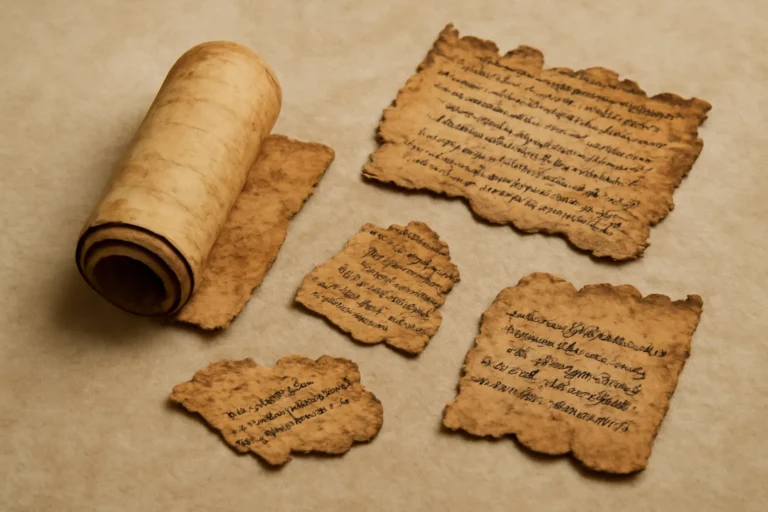
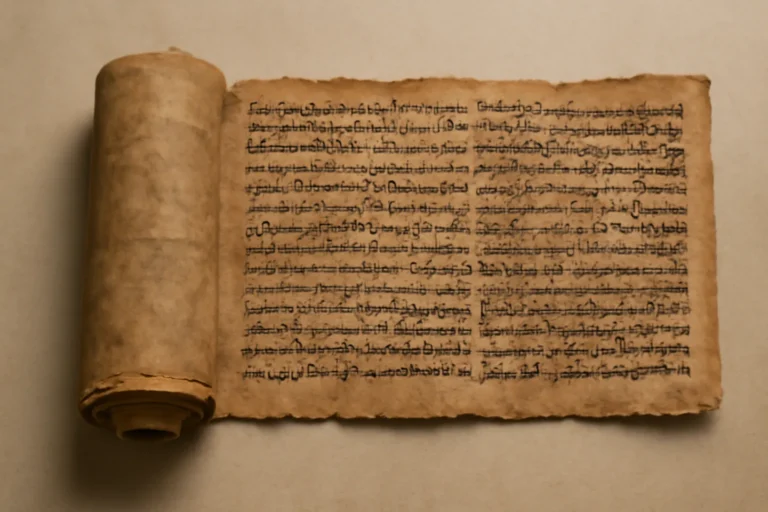
The parchment itself (klaf) — The scroll is written on a single sheet of klaf, a specially prepared parchment made from animal skin. The parchment must be kosher, free of blemishes, and prepared in a way that meets halachic standards. The text is inscribed with black ink in the traditional Hebrew square script by a sofer (a trained scribe). The quality of the klaf and the care of the lettering are essential: a faulty letter or smudged line can render the scroll non-kosher (not fit for use).
Two Torah passages — The content of the mezuzah scroll is not arbitrary. It contains two sections drawn from Deuteronomy (the Torah’s fifth book). The verses are typically presented as a continuous composition with a natural break between the sections, forming what is known as the two parshiyot. The standard pairing is:
Deuteronomy 6:4–9 — This section begins with the Shema, one of the central declarations of faith: “Hear, O Israel: the Lord our God, the Lord is one.” It continues with the command to love God fully and to commit these words to memory, to teach them to children, and to inscribe them on the doorposts of the house and on gates. It includes the instruction to bind these words as a sign on the hand and to place them “between the eyes.”
Deuteronomy 11:13–21 — This passage reinforces the promise of rain and agricultural blessing when Israel follows God’s commandments, and it repeats the call to remember and teach these words, to bind them on the hand, and to write them on the doorposts and gates so that future generations will fear God.
Exact layout and text order — Across communities, the exact order and spacing of the two parshiyot are standardized in liturgical practice, but there are subtle textual and typographic differences among traditions. In most communities, the “Shema” portion (Deut. 6:4–9) appears first, followed by the second passage (Deut. 11:13–21). The two sections are arranged so that the scroll can be folded or rolled, depending on the tradition, and then placed into a case.
Format of the scroll — Depending on tradition and the scribe’s method, the scroll may be rolled or folded. In many Ashkenazi mezuzot, the scroll is written on a long strip of klaf and then rolled with the first passage at the top and the second passage beneath it. In some Sephardic and Mizrahi customs, the parchment may be folded to fit into a rectangular case. The important point is that the two passages remain intact and legible, with the final letters clear and complete.
Ritual and care elements — The scroll is not merely text; it represents a ritual object intended to be revered. The process of writing the scroll—entering the divine name with precise lettering, ensuring no vowels are misplaced where required, and confirming the absence of any stray marks—is all part of making the mezuzah valid for use. If the text contains errors, many authorities require the scroll to be rewritten by a qualified sofer.
Outer case and physical protection — The parchment is housed in a protective case (often made of wood, metal, plastic, or ceramic) that is affixed to the doorpost. The case protects the scroll from moisture, dust, and physical wear. It also provides an opportunity for artistry or symbolic motifs: a mezuzah case may be simple and understated or ornately decorated with decorative inscriptions, iconography, or calligraphy. Some cases bear the Shin emblem on the outside, which is traditionally associated with the divine name El Shaddai and serves as a visible reminder of the commandment’s purpose.
Inscriptions or symbolic marks on the case — Beyond the scroll’s text, many mezuzah cases are inscribed with decorative or symbolic elements. A common feature is the letter Shin on the outside, representing the opening of the divine name Shaddai, and sometimes other symbols like decorative engravings, Hebrew words, or blessings. These marks are not part of the sacred text inside but they reinforce the sense of a sanctified threshold and serve as a visual cue of the mitzvah.
Blessings and ritual blessing text — When a mezuzah is affixed to a doorway, a blessing is recited to sanctify the act. The traditional blessing is: “Blessed are You, Lord our God, King of the Universe, who has sanctified us with His commandments and commanded us to affix a mezuzah.” In Hebrew: Baruch Atah Adonai, Eloheinu Melech ha’olam, asher kid’shanu b’mitzvotav, v’tzivanu l’kboa mezuzah. The blessing is part of the ritual and is not printed on the parchment itself; it is spoken aloud during the installation.
To understand the interior contents, it helps to consider the theological and practical reasons behind choosing the two Torah passages. Both sections together establish a compact creed and a practical program for daily life, written at the threshold of a Jewish home.
The Shema and the unity of God — The first passage, beginning with “Hear, O Israel: the Lord is our God, the Lord is one,” is a cornerstone declaration of Jewish faith. It asserts monotheism, the exclusive worship of the one God, and it anchors the believer’s relationship with God in love and dedication. By placing this blessing at the gate of the home, the text invites the inhabitants to recall their covenant with God at the very moment they enter or depart.
Loving God with heart, soul, and might — The verses emphasize binding the words in one’s heart, teaching them to future generations, and making the commandments a living habit that colors daily routines—sitting at home, walking on the way, lying down, and rising up. The instruction to “bind them as a sign on your hand” and to place them “between your eyes” is a vivid metaphor for how the divine will should govern action and perception. When the parchment is placed on a doorpost, the text becomes a mnemonic anchor for memory, conduct, and faith in the rhythm of ordinary life.
Remembering and teaching the commandments — The second passage, Deuteronomy 11:13–21, reiterates the blessings that come from adhering to God’s commandments and warns of consequences if one turns away. It underscores a family-centered pedagogy: parents are responsible for teaching children, and the home functions as a living classroom where reverence for God is modeled in everyday behavior. The recurring authorization to “bind these words” and write them on the doorposts reinforces the sense that the home itself is a boundary and a memorial—a place where sacred memory is continually renewed.
In sum, the two parshiyot inside the mezuzah offer a concise theological statement (belief in the oneness of God and the primacy of love and obedience) paired with a practical program for daily life (education, memory, ritual practice, and the sanctification of the home). Because these texts are both doctrinal and practical, they are well suited to serve as a doorway reminder of the covenant in a Jewish household.
What variations exist across traditions?
Jewish practice has diverse cultural expressions, and mezuzah writing and use reflect some of that diversity. Here are some aspects where differences may appear, along with how they relate to what is inside the mezuzah.
The scroll versus the case
Scroll content — Across all major traditions, the parchment inside the mezuzah contains the same two passages from Deuteronomy. The text is fixed by halakhic (rabbinic legal) standards, and the scribe must follow strict rules for handwriting, ink, and parchment. The content does not vary by tradition, though there can be minor stylistic differences in spacing or line breaks depending on the scribe and the particular scroll.
Case design — The outer case is not regulated by the same scriptural requirements as the parchment. Cases vary widely by community, era, and taste. Some are simple and utilitarian; others are artistically carved or inlaid with symbols, verses, or blessings. The case acts as a protective container and a visible sign of the mitzvah, rather than a textual component of the content itself.
Ashkenazi and many Mizrahi approaches generally place the two parshiyot in the same order: the Shema passage (Deuteronomy 6:4–9) followed by Deuteronomy 11:13–21. The scroll is written to accommodate this arrangement, and the lines are arranged so that the scroll can be rolled or folded for insertion into the case.
Sephardic and some other traditions sometimes have stylistic differences in the spacing or the arrangement of lines, but the core text remains identical. In all cases, the essential verses are present and the sanctity of the text is preserved.
Additional verses or texts
Generally, a mezuzah contains only the two parshiyot. Some communities do not add any extra biblical material inside the scroll; others might rely on local custom or rabbinic guidance that allows or discourages adding supplementary lines. However, the standard mezuzah scroll is reserved for the two parshiyot only, precisely because they encode the core covenantal message of the commandment.
Within the broader Jewish practice, different scrolls and tefillin (phylacteries) may accompany other mitzvah objects, but the mezuzah scroll itself is distinct in its content and function.
The practical and spiritual life of the mezuzah
Beyond the literal contents, the mezuzah embodies a layered meaning. It is at once a legal obligation, a theological declaration, and a home-centered symbol that marks a space as a dwelling of Jewish life and memory. Here are several facets of that life:
Affixing a mezuzah is not a passive act. It is a moment of intention, traditionally accompanied by the blessing. The act connects the home to the covenant, inviting a sense of protection, blessing, and responsibility for those who live inside and pass through the doorway.
Compliance and care — The mezuzah requires ongoing care. The parchment should be kept in good condition, away from moisture and dampness, and it should be checked regularly (often annually) to ensure the letters remain legible and complete. If letters fade or become damaged, the scroll may be argued to have lost its kashrut, necessitating a replacement by a competent sofer.
Authenticity and trust — A kosher mezuzah depends on the reliability of the handwriting, ink, parchment, and the accuracy of the text. The integrity of the scroll is essential to the statute’s validity, and many households maintain periodic checks through their local rabbi or a certified sofer to ensure that the mezuzah continues to meet halachic standards.
Symbolic resonance — For many families, the mezuzah is a daily reminder that the home is a space of memory, reverence, and ethical living. The text’s call to teach and to remember across generations reinforces a family’s tradition and a sense of continuity with the past.
The mezuzah as a doorway to meaning
In Jewish thought, the doorway is a threshold between private interior life and the public, shared world. The text inside the mezuzah anchors this boundary in law, liturgy, and memory. The object is both tangible and symbolic: a scroll of sacred words cased in a container that is mounted where two spaces meet—the outside world and the rooms inside. Its presence invites passersby to pause and reflect on the presence of God in daily life, even as they go about ordinary activities such as entering a room, greeting a family member, or hosting a guest.
From a literary perspective, the two passages function as a compact creed and a practical handbook. The Shema proclaims a monotheistic faith and calls for wholehearted love of God; the second passage grounds that faith in the life of a family: education, remembrance, and a pattern of daily obedience. The mezuzah, then, can be read as a portable catechism for the home—an object that stores a scriptural digest of belief and practice and presents it at the threshold for constant renewal.
Who writes, checks, and maintains mezuzot?
Several hands contribute to the creation and upkeep of a mezuzah. Understanding these roles helps illuminate why the interior is so carefully prepared.
The sofer — A trained scribe who writes the two parshiyot on kosher klaf using special ink. The sofer must follow halachic rules for letter shapes, spacing, and diacritical marks. Precision is essential; even a single misdrawn letter can invalidate the scroll.
The rabbinic supervisor — In some communities, a rabbi or a foil of a local rabbinic authority may inspect mezuzot for kashrut. They may authorize a particular sofer, provide guidance on writing practice, and certify the scroll’s validity before installation.
The household — The owner or occupant is responsible for the proper installation, upkeep, and maintenance of the mezuzah. This includes placing the case on the doorpost in accordance with tradition and reciting the blessing at installation. It also includes periodic checks to verify the scroll’s legibility and reliability.
In the vast majority of cases, yes—the two parshiyot from Deuteronomy are consistently used, written by a qualified sofer on kosher klaf. The text itself does not vary by family or community, though the physical appearance of the scroll and case may vary widely. What matters most is that the two passages are present, legible, and written with proper intent and accuracy.
Why is a blessing recited when installing a mezuzah?
The blessing is a declaration of gratitude and an articulation of intent: to sanctify the act of fulfilling a commandment and to acknowledge the divine source of the mitzvah. It is not a required component of the content inside the scroll, but it completes the ritual act of affixing the mezuzah to the doorframe and connects the household to Jewish liturgical practice.
A kosher mezuzah scroll must meet several criteria: the parchment must be prepared properly (klaf), the ink must be appropriate and long-lasting, every letter must be correctly formed, and the two passages must be intact and free from error. If any of these conditions are not met, the scroll is considered non-kosher, and it should be rewritten by a qualified sofer.
Halachic guidelines specify which doors in a dwelling should bear mezuzot. The mitzvah generally applies to residences and to doors considered entry points to living spaces. In many households, every doorway to a room used for daily living is affixed with a mezuzah, while certain rooms or areas (like bathrooms) may be excluded, depending on local custom and rabbinic guidance. The exact practice can vary among communities.
Inside the mezuzah lies a compact, disciplined, and deeply meaningful corpus: a testament to faith, family, learning, and daily ritual. The parchment’s words—binding love to action, memory to daily life, and household boundaries to covenant—translate the abstract idea of faith into a tangible, recurring moment at the doorway. The case, with its protective seal and potential symbolic marks like the Shin, makes the doorway a living symbol of Jewish continuity. In modern homes, the mezuzah remains a doorway not just to rooms but to history, tradition, and a continuous invitation to remember the God of Israel in the smallest moments of everyday activity.
Whether you encounter the mezuzah in grand, historic homes or in modest apartments, the inner text and the outward practice together convey a singular message: a home is a place where the sacred and the ordinary intersect, where sacred words are kept, read, and remembered, and where every doorframe becomes a threshold to reverence, learning, and care.