In biblical symbolism, the scroll represents divine revelation, heavenly knowledge, and God's covenant with His people. It signifies both the unfolding of God's plan and the sacred record of His promises.
📖 Key Biblical Occurrences
Reference
Context
Symbolic Meaning
Revelation 5:1
John sees a scroll in God’s right hand sealed with seven seals
Represents God’s divine plan and the unfolding of future revelation and judgment
Isaiah 34:4
Imagery of celestial signs and scrolls unrolling in apocalyptic visions
Signifies divine decree and future events being revealed
📜 Old Testament Usage
In the Old Testament, scrolls were practical tools for recording laws, prophecies, and covenants (e.g., Deuteronomy 31:9-13). Prophets often used scrolls to convey God's messages (Jeremiah 36). The scroll symbolizes divine authority and revelation, establishing covenants such as with Moses at Mount Sinai. The act of unrolling or rolling up scrolls parallels the revealing or concealment of God's divine purposes. Additionally, scrolls contained genealogies and sacred laws, emphasizing continuity and divine truth. Overall, the scroll functions as a symbol of divine communication, authority, and the unfolding divine plan throughout Israel's history.
✝️ New Testament Usage
In the New Testament, the scroll becomes a symbol of divine revelation reaching its culmination in Christ and the eschaton. Revelation 5 depicts the scroll as containing God's sovereign plan, sealed until the appointed time. Christ is described as the Lamb who opens the scroll (Revelation 5:5-7), indicating His role in unveiling God's revelation and divine authority. The motif appears in contexts emphasizing the fulfillment of prophecy, divine judgment, and the irrevocability of God's plan. The scroll thus evolves from a symbol of stored divine revelation to a representation of Christ's authority to unveil God's mysteries, signifying the fullness of God's redemptive purpose in history.
Initially, the scroll represents divine authority, law, and covenant in the Old Testament. As biblical history progresses, it symbolizes divine secrets and prophecy. In the New Testament, particularly in Revelation, the scroll evolves into a symbol of divine unfolding, judgment, and salvation through Christ. Its sealing underscores divine sovereignty, and its eventual unsealing signifies divine revelation through Christ's ministry and the fulfillment of God's promises. Over time, the scroll embodies the transition from written law to divine mystery revealed in Christ, highlighting the progressive nature of God's revelation and the culmination of divine plan in eternity.
🏛️ Ancient Near East Context
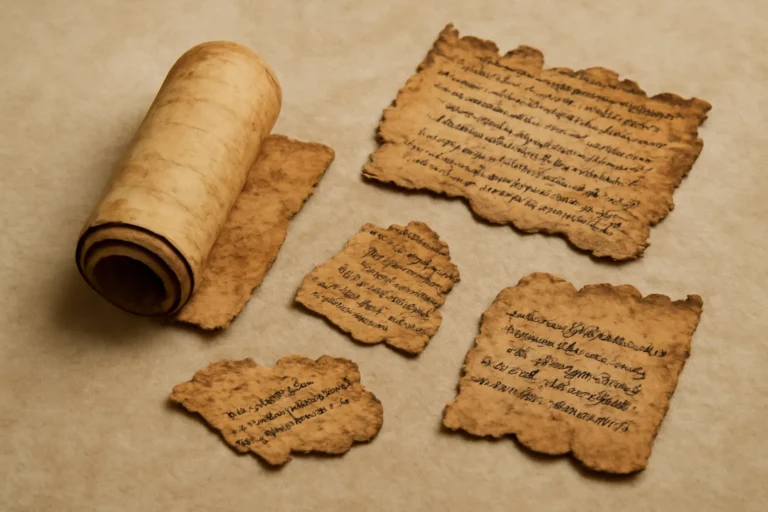
In ancient Near Eastern cultures such as Egypt, Babylon, Greece, and Rome, scrolls were prestigious objects symbolizing knowledge, authority, and divine or royal power. Pharaohs, kings, and priests used scrolls to record decrees and divine laws. They were often inscribed on papyrus or parchment and stored as treasures, emphasizing their sacred and authoritative role. The imagery of unrolling or sealing scrolls underscored divine secrecy and revelation, mirroring biblical motifs. Such scrolls represented access to divine secrets, sacred laws, and royal decrees, making them powerful symbols of authority and divine legitimacy in surrounding cultures.
✡️ Jewish Interpretation
Jewish rabbinic thought views the scroll as a symbol of God's covenant, Torah, and divine wisdom. It signifies the sacredness of God's law inscribed on parchment, which reveals His will to His people. Mystically, scrolls represent divine mysteries that can be unveiled through study and obedience. The unsealing of scrolls echoes the Messianic age when divine secrets will be fully revealed. Torah scrolls embody the divine presence and law, serving as a physical reminder of God's covenant and His ongoing revelation to Israel throughout history.
Early Christian writers interpreted the scroll as a symbol of divine revelation and Christ's authority. The image of Christ as the Lamb opening the scroll (Revelation 5) emphasizes His role in revealing God's divine plan of salvation. Church Fathers saw the scroll as representing the unfolding mystery of Christ's Incarnation, Passion, and the ultimate fulfillment of God's promises. It also symbolizes the Word of God contained in Scripture, which through Christ's ministry and revelation is progressively unveiled. The scroll's sealing and unsealing connect with themes of divine sovereignty, judgment, and salvation within Christian theology.
🔗 Typology: Connections to Christ
The scroll prefigures Christ as the divine revealer and fulfiller of God's promises. It typologically connects to the Gospel—God’s ultimate revelation—and to the Church as the repository and proclaimers of divine truth. The act of Christ opening the scroll signifies the revelation of divine mysteries, prophecy fulfilled in Him, and the establishment of the new covenant. The scroll also prefigures the Book of Life in Revelation, central to the judgment and salvation of believers, emphasizing Christ as the divine authority who reveals God's eternal purposes.
⛪ In Worship & Liturgy
Scroll motifs often appear in Christian liturgical art, such as illuminated manuscripts and cathedral carvings. The image of a scroll is used during readings of Scripture, symbolizing divine Word. In some traditions, scrolls are used in sacred processions or displayed during ordinations and festivals, symbolizing divine revelation. Architecture may include scroll-like motifs in altar designs and church furnishings, emphasizing the continuity of divine law and revelation. These elements serve as visual reminders of God's Word and divine authority in worship spaces.
🌍 Modern Cultural Impact
The scroll has significantly influenced art and literature, symbolizing hidden knowledge, secret truths, and divine revelation. In literature, the image appears in fantasy and detective genres as a vessel of secret information. In popular culture, ancient scrolls often symbolize treasures of knowledge or mystical secrets, as seen in movies like Indiana Jones. The motif continues to evoke mystery, divine authority, and unfolding mysteries, shaping modern graphic design, logos, and literature inspired by biblical themes.
Misconception: The scroll is only a Jewish or biblical artifact; correction: Scrolls are common in many ancient cultures but in the Bible, they carry divine and prophetic significance.
Misconception: The scroll is purely a physical object with no spiritual meaning; correction: In scripture, the scroll symbolizes divine revelation, prophecy, and God’s covenant.
❓ Frequently Asked Questions
What does a scroll symbolize in the Bible?
It primarily symbolizes divine revelation, God’s covenant, and the unfolding of divine mysteries and plans.
Why is the scroll sealed in Revelation?
The sealing signifies divine sovereignty, the mystery of God’s plan that is yet to be unveiled, and the importance of Christ as the only one worthy to open it.
How does Christ relate to the scroll?
Christ is depicted as the Lamb who unseals the scroll, revealing God’s plan of salvation and judgment, emphasizing His role as divine revealer.
Are scrolls still relevant in religious practice today?
Yes, sacred texts like the Torah and illuminated manuscripts serve as tangible symbols of divine truth, authority, and tradition in various faith communities.
✨ Did You Know?
The Dead Sea Scrolls, discovered in 1947, are among the oldest biblical manuscripts, dating back to the 3rd century BCE. Their discovery revolutionized biblical studies and confirmed the antiquity and textual continuity of the biblical canon.