Shema in Hebrew: Meaning, Pronunciation, and Significance
Across Jewish prayer and daily life, the Shema stands as one of the most enduring statements of faith. In Hebrew, it begins with the verb שְׁמַע (Sh’ma) meaning “hear” or “listen,” and it unfolds into a concise declaration that has shaped Jewish theology, practice, and identity for millennia. The full opening line—שְׁמַע יִשְׂרָאֵל יְהוָה אֱלֹהֵינוּ יְהוָה אֶחָד (Sh’ma Yisrael, Adonai Eloheinu, Adonai echad)—is both a liturgical formula and a theological cornerstone. In this article, we explore the Shema in Hebrew: its meaning, pronunciation, and significance, with attention to its textual structure, linguistic nuances, and its place in Jewish life. We will use variations of the phrase “Shema” to illuminate semantic breadth and to show how this confession appears in different contexts and communities.
What is the Shema? Meaning, wording, and core components
The Shema is not merely a single line; it is the opening of a larger scriptural passage that functions as a daily declaration of faith. The most famous line—“Hear, O Israel: the Lord is our God, the Lord is one”—is a direct translation of the first half of Deuteronomy 6:4. In Hebrew, the essential phrase is:
Sh’ma Yisrael Adonai Eloheinu Adonai echad
Key elements of this formula include:
Sh’ma (שְׁמַע): the imperative form of the verb “to hear” or “to listen,” here functioning as a command or invitation to attentive faith.
Yisrael (יִשְׂרָאֵל): “Israel” or “the people of Israel,” referring to the collective community bound to God by covenant.
Adonai Eloheinu (אֲדֹנָי אֱלֹהֵינוּ): “the Lord our God,” combining the divine name with the covenantal attribute “our God.”
Adonai echad (אֲדֹנָי אֶחָד): “the Lord is one,” affirming monotheism and divine unity.
In Jewish tradition, this line is woven into a larger triad of biblical passages that are recited as part of Kriat Shema. The standard three-part structure, recited in morning and evening services by many communities, comprises:
Deuteronomy 6:4-9 – the verse that contains the opening declaration and commands to love God with all one’s heart, soul, and strength, and to keep God’s words close by with daily remembrance and visible signs (binding on the hand and between the eyes, and writing on doorposts and gates).
Deuteronomy 11:13-21 – a continuation that reinforces obedience to God as the path to rain, harvest, and long life, also exhorting parents to teach these words to their children as a continuing tradition.
Numbers 15:37-41 – the passage about tzitzit (fringes on garments), which links physical ritual practice to the mental act of remembering and acknowledging God in daily life.
The Shema, in its fuller form, thus articulates several interwoven ideas: a declaration of God’s exclusive sovereignty, a directive to love God with every facet of a person’s life, and a pedagogy that embeds divine instruction within daily routines. The combination of creed (belief in the unity of God) and practice (daily actions that remind one of that unity) makes the Shema a powerful synthesis of faith and life.
Pronunciation, transliteration, and linguistic nuances
Pronouncing the Shema correctly is a topic of interest for learners of Hebrew and for those who recite it in various communities. The basic sounds of the central line are straightforward in Modern Hebrew, but traditional pronunciations, vowel pointing, and liturgical reading vary among communities—Ashkenazi, Sephardi, Mizrahi, and others. Here is a compact guide to help readers imagine how the words sound in different contexts, alongside notes about the Hebrew vowels and the sacred name tradition.
Phonetic breakdown
Sh’ma — pronounced roughly “sh-mah.” The apostrophe-like mark between the letters indicates a light pause or glottal stop in some readings; in common practice you may hear a smooth, single-syllable “Shma.”
Yisrael — “Yee-srah-el” or “Yis-ro-el,” depending on the tradition. The stress typically falls on the second syllable: yi-SRA-el or yi-SRA-el. Some communities soften the final “l” sound; others maintain a crisp ending.
Adonai Eloheinu — “Ah-doh-NY ee-Loh-HAY-noo,” with “Adonai” often pronounced as a form of honorific that avoids the direct spoken Tetragrammaton in everyday speech. In many communities, readers substitute Hashem or Adonai when reading aloud outside of formal liturgy.
Adonai echad — “Ah-doh-NY eh-CHAD,” with a clear ending on the last syllable; “echad” means “one,” underscoring unity.
Common transliterations you may encounter include Shma, Shema, Sh’ma, and Sh’ma Yisrael. The choice of diacritics and apostrophes signals subtle differences in how vowels are vocalized and where syllables are stressed. For example, Sh’ma Yisrael is a common Ashkenazi rendering that conveys the elision of the second vowel in Sh’ma, whereas some Sephardi and Mizrahi communities favor a fuller vowel in the first syllable. In scholarly or ceremonial text, you may see the word written with niqqum (vowel points) to guide precise vocalization. In many publications, transliterations also reflect whether the reader should treat the line as a phrase to be chanted or spoken in a more conversational manner.
Another important linguistic note concerns how the divine name is treated in pronunciation. In traditional Jewish practice, the divine name represented by the Tetragrammaton (the four-letter name of God) is not spoken aloud in its written form in normal conversation. In liturgical recitation, the name is often vocalized as Adonai (translated “the Lord”) or replaced with Hashem (the Name) in everyday speech. This convention shapes how the Shema is chanted in synagogue and prayed in private settings, reminding worshippers of reverence and the sanctity of the name itself.
Variations by community also color the exact cadence and phrasing. Ashkenazi readers may emphasize the opening word with a slightly different breath pattern than Sephardi or Mizrahi readers. In multilingual Jewish communities, the Hebrew is usually preserved in formal recitation, while translations accompany the listener’s understanding. The Shema thus becomes a hinge between a precise liturgical tradition and personal expression of faith in one God.
The Shema’s significance in worship, education, and daily life
The Shema’s significance has many facets. As a declaration of faith, it functions as a theological summary; as a liturgical practice, it anchors the order of prayer; as a pedagogy, it transmits covenantal memory from one generation to the next. Below are some of the principal dimensions of meaning and practice surrounding the Shema.
The core creed in a polycentric faith
Monotheistic assertion: The phrase “the Lord is one” asserts an absolute unity of God, a rejection of idolatry, and a commitment to worship the one God in whom all life finds its source. This is arguably the central doctrinal claim of the Shema.
Covenantal identification: By naming Israel as the community addressed, the Shema situates faith within a specific, chosen relationship—God’s covenant with the people of Israel. It is both universal in its claim about God and particular in its address to a particular people.
Love as duty: The lines that follow (in Deuteronomy 6:5) command loving God with all one’s heart, soul, and strength—a love that becomes a daily orientation for thought, choice, and action.
Liturgical function and ritual structure
Daily recitation: The Shema is recited as part of the morning (Shacharit) and evening (Ma’ariv) services in many communities, serving as a daily reaffirmation of faith and covenant commitment.
Kriat Shema (the reading of the Shema): This formal act of declaration, often preceded by blessings in some traditions, is a ritual moment that marks the transition from ordinary to sacred time in the day.
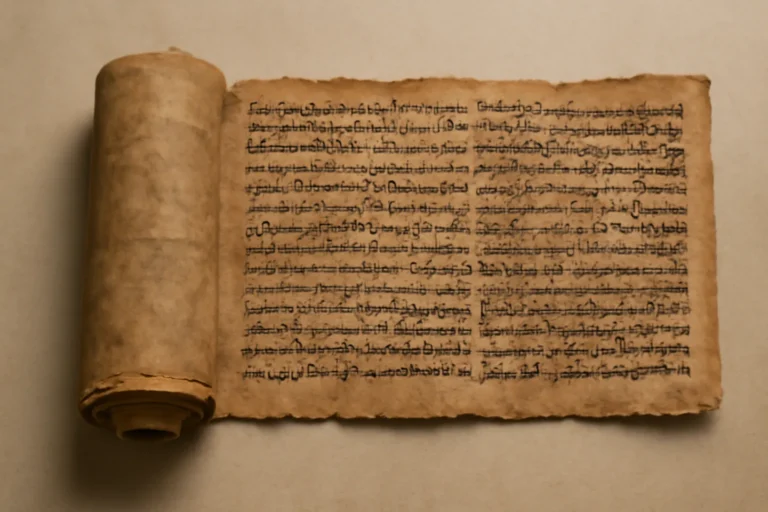
Connection to ritual objects: The Shema is linked to two ancient commandments—the wearing of tefillin (phylacteries) and the affixing of a mezuzah on doorposts. The tefillin and mezuzah contain parchment scrolls with the verses of the Shema and related passages, turning memory into physical reminder and everyday practice into a form of worship.
Educational role: The Shema is traditionally one of the first prayers taught to children, introducing them to the concept of monotheism and the covenantal relationship with God. It is also used in life-cycle events and in times of personal or communal crisis as a source of comfort and fidelity.
Philosophical and ethical implications
Unity and sovereignty: The God who is one is the God who governs all creation, history, and moral order. The Shema, therefore, binds belief to responsibility: the unity of God implies a unified moral vision that should shape conduct, justice, and compassion.
Memory and pedagogy: The command to teach these words to children and to remember them “in your heart” makes memory a spiritual discipline, ensuring that remembrance informs both identity and action.
Public and private faith: While the Shema is recited in communal worship, its essence also speaks to private life—the inner posture of faith when one faces daily decisions, challenges, and temptations.
The Shema in daily life and in sacred space
The Shema functions in both communal worship and private devotion. Its placement in daily liturgy lends a rhythm to the day, while its intimate content invites personal reflection. The following aspects illustrate how the Shema travels from printed text to lived experience.
Morning and evening rhythm: In many Jewish communities, the Shema anchors the morning and evening prayers, providing a regular moment to pause, listen, and recommit to God’s unity.
Connection to tefillin and mezuzah: The verses of the Shema are inscribed on parchment and placed in the tefillin (two black leather boxes worn by some worshippers during weekday morning prayers) and on parchment inside the mezuzah (a small scroll affixed to doorposts). This ritual dimension ties cognitive belief to tangible objects and spatial placement in the home and body.
Bedtime and private recitation: Many families and individuals say the Shema at bedtime, turning the moment of sleep into a mindful acknowledgment of God’s sovereignty and a hope for protection and peace.
Education, memory, and culture
Formation of identity: For generations, the Shema has helped define Jewish identity by naming the God of Israel and calling for loyalty to that God even in the face of displacement, persecution, or assimilation pressures.
Language, translation, and interpretation: The Shema’s core message has been translated into many languages in diaspora communities, yet its Hebrew text remains a living link to ancient Israel and an entry point for study in modern times. Readers encounter both linguistic beauty and doctrinal depth as they explore the phrasing and its implications.
Historical and cultural context
The Shema emerges from a long historical arc that intertwines biblical composition, Second Temple Judaism, rabbinic interpretation, and later medieval and modern Jewish thought. Its enduring prominence can be traced to several factors:
Textual primacy: The Shema is embedded in crucial biblical passages (Deuteronomy and Numbers) that recount covenant obligations and ritual commands. This placement catapulted the Shema into the center of Jewish liturgical life.
Monotheistic assertion in a polytheistic world: In the ancient Near East, the Shema functioned as a public and private statement of loyalty to the God of Israel in a milieu where multiple deities were commonly worshipped. The claim of God’s unity was radical and formative for Jewish self-understanding.
Ritual embodiment: The association with tefillin, mezuzah, and tzitzit helped turn belief into daily practice. The Shema’s words became visible in the home and on the body, reinforcing covenantal commitment in concrete ways.
Continued relevance: In modern times, the Shema remains a focal point for interfaith dialogue, liturgical innovation, and spiritual reflection within Jewish communities around the world.
Translations and cross-cultural reception
Because the Shema is a foundational creed, it has been translated into many languages for educational, liturgical, and personal use. While translations capture the sense of the original Hebrew, many nuances rely on the reader’s familiarity with Hebrew grammar, punctuation, and religious context.
English renderings: The standard English rendering is the classic “Hear, O Israel: the Lord our God, the Lord is one.” Some editions add notes about the fuller biblical sections (Deuteronomy 6:4-9, 11:13-21, and Numbers 15:37-41) to indicate the broader scope of the Shema’s recitation.
Variations in title and reference: In English and other languages, you may see the practice described as Kriat Shema or simply “the Shema.” Some commentaries distinguish between the central line (the punto of faith) and the surrounding verses that reinforce obligation, education, and ritual wearing of tzitzit.
Jewish-Christian and ecumenical engagement: The Shema’s emphasis on the unity of God has resonance in discussions about monotheism and religious identity across traditions. While the interpretive frameworks differ, the Shema’s core claim remains a point of reference for interfaith study and dialogue.
Common questions and clarifications
As people study the Shema, several questions often arise. Here are concise clarifications that help illuminate the practice without oversimplifying the text’s depth.
Why is the phrase “the Lord is one” so central?
The declaration “Adonai echad” asserts the unity and indivisibility of God, rejecting any division of divine authority or idol worship. This is not merely a doctrinal claim but a call to live with fidelity to a singular, sovereign God who governs all aspects of existence.
Why two names for God—“Adonai” and “Eloheinu”—in the same line?
“Adonai” is the spoken vocalization used in prayer to avoid pronouncing the Tetragrammaton, the divine name represented by the letters YHWH. “Eloheinu” means “our God” and specifies the relationship between God and the people of Israel. Together, they acknowledge God’s sovereignty and the intimate covenant relationship with the community.
What is the significance of tzitzit and the doorpost verses in the Shema?
The third section (Numbers 15:37-41) connects ritual fringes (tzitzit) to memory of God’s commandments, reminding individuals to observe the covenant in daily life. The assignment to write these words on doorposts and gates (Deuteronomy 6:9 and 11:20) creates a constant, visible reminder of God’s unity and the covenant wherever one goes, turning space into a teaching environment.
Practical guide for readers and learners
If you are approaching the Shema for the first time or deepening a long-standing practice, these practical notes may help you engage with the text more meaningfully.
Start with the central line: Memorize or internalize Sh’ma Yisrael Adonai Eloheinu Adonai echad as a core declaration. Let its rhythm guide your breathing and your focus during recitation.
Learn the surrounding passages: Begin to explore Deuteronomy 6:4-9 and 11:13-21, plus Numbers 15:37-41, to understand the broader instructions that accompany the Shema in the biblical text.
Practice pronunciation: If you are learning Hebrew, practice with a teacher or reliable audio resources to tune your vocalization, especially the vowel points and the rhythm of the phrases.
Connect belief with action: Reflect on how the line “the Lord is one” informs your daily decisions, relationships, and ethical conduct. Consider how loving God “with all your heart, soul, and strength” might shape you in concrete ways.
Engage with liturgical contexts: If you attend services, observe how the Shema fits within the flow of the morning and evening prayers. Note when and how it is recited, what blessings precede or follow it, and how the community expresses reverence for the divine name.
Variations and extended reflections on the Shema
In addition to the canonical Hebrew text, there are varied ways people refer to the Shema, each with its own nuance and emphasis. These variations help convey depth and breadth for multilingual, multicultural, and multidenominational audiences who engage with Jewish liturgy and biblical language.
“Sh’ma” as a focal term: Some commentaries and study guides emphasize the imperative “Sh’ma” as the invitation to listen not just with ears but with a willingness to adopt God’s perspective and respond with faithfulness.
“Shma Yisrael” in liturgical chant: In a chant or musical rendition, the opening syllable can be elongated, and the phrase can be set to a melodic line that captures the feeling of awe and devotion that accompanies the declaration.
“Shma Yisrael” in translation: In English and other languages, translators debate how to render Yisrael (Israel)—whether to render it as “Israel,” “the people of Israel,” or a more interpretive phrase that preserves the covenantal sense.
Respect for the divine name: Across languages and communities, the practice of refraining from pronouncing the divine name in casual speech while maintaining reverent usage in liturgical settings is a common thread that informs translations and transliterations alike.
Concluding reflections: the Shema as a living tradition
The Shema is more than a line in a prayer book; it is a living, breathing statement that has sustained Jewish faith and practice across generations and geographies. Its power lies in the combination of creed and command, unity and discipline, memory and action. It invites listeners to hear not only with the ears but with the heart—an invitation to shape life in the light of the belief in one God who is sovereign over all creation.
For scholars, students, and practitioners alike, the Shema offers a rich field of study: a compact theological assertion, a ritual framework linked to sacred objects and spaces, and a didactic tool used to transmit faith from one generation to the next. By examining its Hebrew words, the phonetic realities of pronunciation, and its interpretive traditions, we gain a fuller sense of how Jewish communities have understood and practiced their relationship with God through time.
In sum, the Shema in Hebrew—embodied in its opening line and expanded through the biblical passages that follow—serves as an enduring reminder: to hear is to respond; to hear is to love; to hear is to recognize God’s oneness and to live in accord with that unity. Whether recited in the hush of a private room, sung in a bustling synagogue, or whispered quietly while facing a doorway adorned with a mezuzah, the Shema remains a powerful, shaping force in Jewish faith and life.