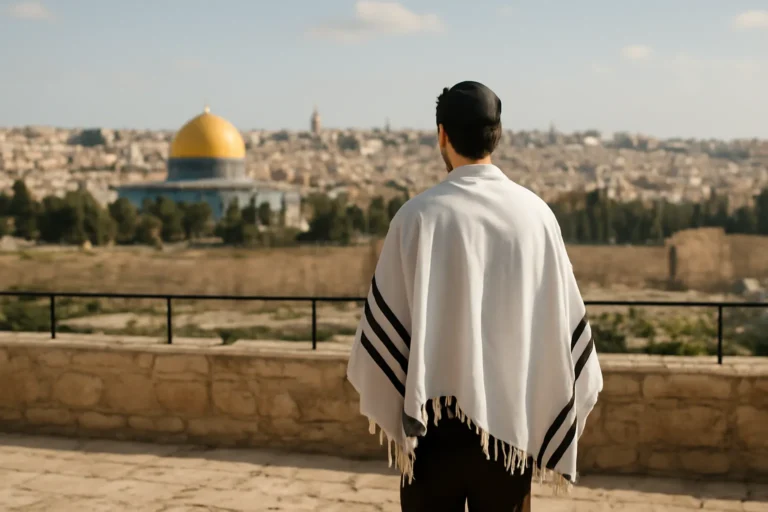
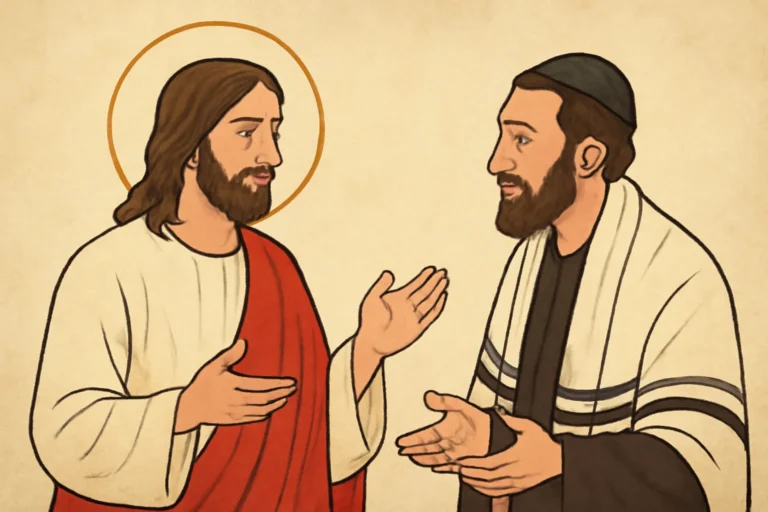
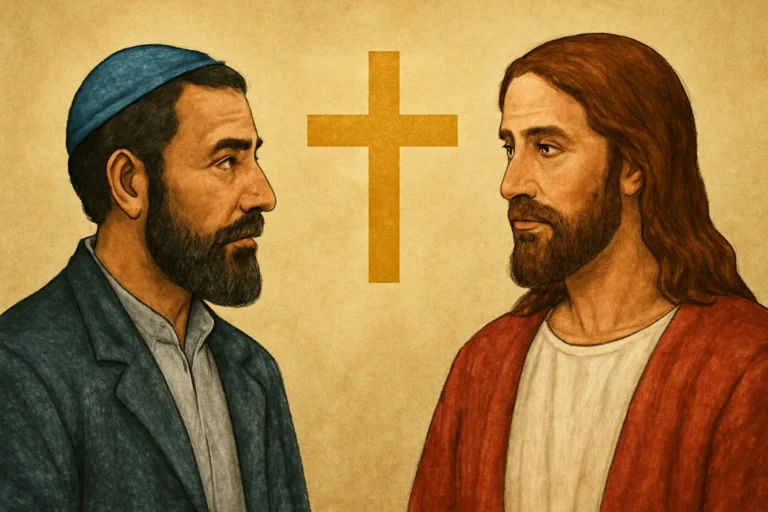
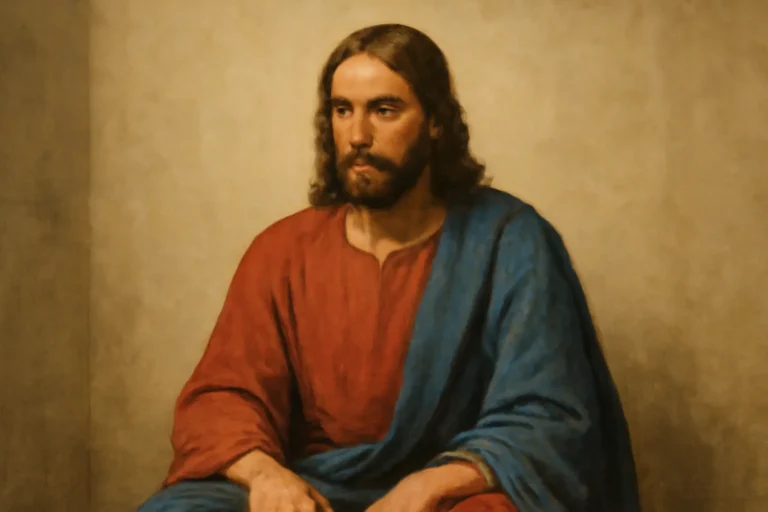
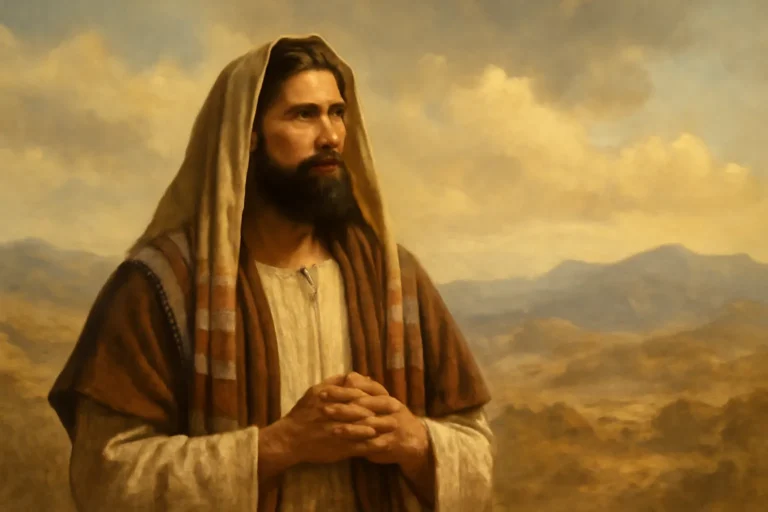
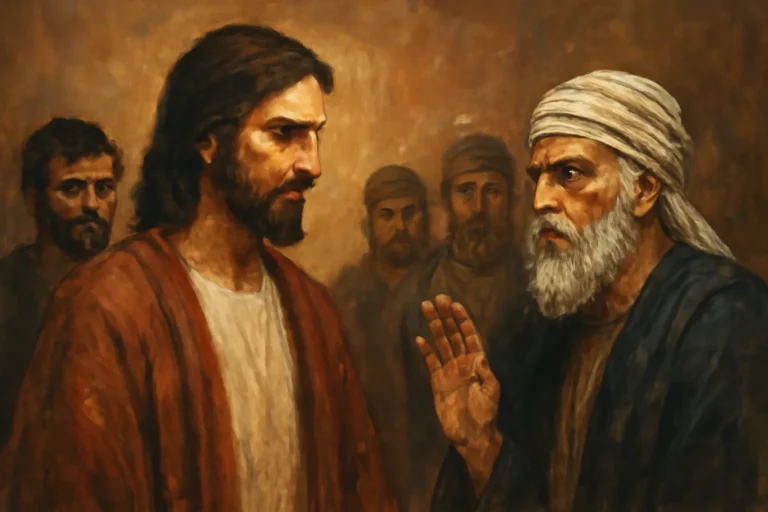
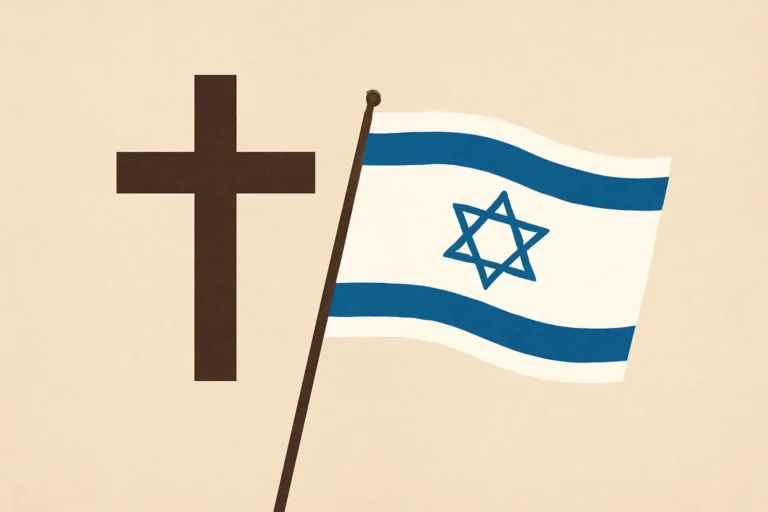
In the modern state of Israel, Messianic Judaism presents a distinctive and often controversial strand of religious life. It sits at the intersection of Jewish identity, Christian faith, and a complex political landscape shaped by Zionism, history, and questions about the nature of faith in a Jewish state. While global Messianic movements emerged from 20th‑century evangelism, Messianic Jewish communities in Israel took shape in a way that fused elements of Jewish liturgy, Torah study, and belief in Jesus as the Messiah with a strong emphasis on Jewish belonging. This article surveys the history and the beliefs of the movement in Israel, maps its contemporary footprint, and examines the debates it sustains within Israeli society and beyond.
The topic of Messianic Judaism in Israel is not a single, monolithic phenomenon. Instead, it consists of a variety of congregations, organizations, and independent groups that share a basic proposition—recognizing Yeshua (Jesus) as the Messiah while maintaining substantial continuity with Jewish culture and ritual practice. Because of its unique blend of faiths, the movement has generated both interest and opposition at different times in Israeli public life. The following sections sketch how these communities arose, how they practice faith in a land with a long history of religious authority, and how they navigate questions of legitimacy, conversion, and belonging.
Origins and early roots of the movement in the Jewish homeland
The presence of Messianic Judaism in Israel traces to two broad currents that converged in the late 20th century. One current came from the international Messianic movement in North America and Europe, which sought to present Jesus as the fulfillment of Jewish messianic expectation and to reach Jewish people with the gospel. The other current was the ongoing return of Jews to the land of Israel, a process that deepened encounters with diverse religious currents and created a landscape in which new forms of Jewish religious expression could emerge.
In the 1960s and 1970s, small gatherings began to meet that included Jewish believers in Yeshua who wished to retain a Jewish identity and to observe traditional Jewish rhythms. These early gatherings often took place in urban centers such as Jerusalem, Tel Aviv, and Haifa, and they experimented with combining Hebraic worship and scriptural study with the evangelical emphasis on personal faith in Christ. While these early steps were modest in scale, they planted seeds for what would later become more organized congregations. For many participants, the goal was not simply to translate a form of Christianity into a Jewish language, but to articulate a form of faith that could be lived as a Jewish person in Israel and as a citizen within Israeli society.
Key milestones in the early phase
Localized congregations forming in major cities, with Hebrew-language services and Bible study groups.
Cross‑boundary contact with diaspora Messianic communities that provided teaching materials, songs, and governance models.
Interest in maintaining Torah observance and Jewish life‑cycle practices alongside the belief in Jesus as Messiah.
Growth in the modern era: 20th and 21st centuries
As the Messianic movement in Israel expanded, it moved from scattered gatherings toward more organized networks. The 1980s and 1990s saw the emergence of more stable congregations and a higher level of coordination with international partners. This period also coincided with broader changes in Israeli society: continued migration from the diaspora, new Christian institutions operating in the Holy Land, and an ongoing public conversation about religious pluralism in a country whose founding as a Jewish state rests on a particular historical narrative.
Today, Israeli Messianic communities exist across several metropolitan areas and lightly into smaller towns. These communities tend to emphasize outreach to Jewish-Israeli peers, but they also attract immigrants, including those who arrive under the Law of Return or as students and professionals seeking a Hebrew-speaking religious life. The movement in Israel has sought to balance two impulses: an insistence on the Jewish character of the people of Israel and a commitment to a missionary dimension that invites others to accept Yeshua as the Messiah.
Within this evolving landscape, some congregations have adopted a more traditional liturgical flavor, while others have embraced contemporary worship with guitar-driven songs in Hebrew and English. The result is a mosaic of worship styles that reflect the diversity of Israel’s Jewish, Arab, and international populations, yet all ground their faith in the conviction that Jesus is the Messiah for the Jewish people and for the world.
Beliefs and theological distinctives
The theological profile of Messianic Judaism in Israel overlaps with international Messianic thought, but it also bears local adaptations shaped by Israeli culture, history, and religious institutions. Central beliefs center on the conviction that Yeshua of Nazareth is the fulfilled Messianic hope foretold in the Hebrew Scriptures, and that faith in him leads to salvation. Yet within the Messianic Jewish movement, there is considerable variation in how this faith is expressed and integrated with Jewish life.
Jesus as Messiah and Lord, understood as the fulfillment of biblical prophecy and the revelation of God in a Jewish context.
A high view of Scripture, including both the Old and New Testaments, interpreted through a Messianic lens.
Affirmation of Israel’s special place in God’s plan, and a commitment to the Jewish people’s historic homeland.
A willingness to maintain Jewish identity through language (Hebrew), customs, calendar observances, and food laws in varying degrees.
Range of theological expression
Some communities emphasize a traditional, monotheistic framework in which the Holy Spirit (Ruach HaKodesh) is experienced in personal and communal life in ways that align with evangelical practice.
Others emphasize a more explicitly Trinitarian theology, while still teaching a monotheistic oneness characteristic of Judaism.
There is ongoing debate about Halacha (Jewish law) and the degree to which Messianic Jews in Israel should or should not adopt customary Jewish law as a framework for daily living.
Worship, practice, and community life in Israeli Messianic congregations
Worship in Messianic congregations in Israel often blends Jewish liturgical sensibilities with evangelical praise. Services may be conducted in Hebrew, with occasional songs in English or other languages, and they frequently incorporate elements of Shabbat (Sabbath) observance, Bible readings, and communal prayer. Music plays a central role in many services, with contemporary worship blended with traditional psalmody and occasionally Hebrew liturgical phrases.
Typical service elements
Readings from the Hebrew Bible and the New Testament, presented as a unified testimony to God’s redemptive plan.
Teaching from a rabbinic and prophetic perspective that emphasizes Messianic fulfillment in Yeshua.
Observance of calendar seasons, such as Passover (Pesach) and Weeks (Shavuot), sometimes reinterpreted through a Messianic lens.
In Israel, Messianic Jewish communities also focus on community life and education. Bible study groups, youth programs, and outreach efforts are common, with some congregations running Hebrew-language schools and programs for families. The aim is to foster a sense of belonging within a framework that is distinctly Jewish while openly sharing the belief in Jesus as Messiah.
Demographics and geography of Messianic Judaism in Israel
Estimating the size of the movement in Israel is challenging because of the fluid nature of affiliation, the movement’s cross‑border links, and how participants identify themselves. Scholarly and journalistic sources provide a range of estimates, but the consensus is that Messianic Judaism in Israel comprises thousands of believers, distributed across several urban centers and some regional towns. Key centers historically include the greater Tel Aviv area, Jerusalem, and Haifa, with other communities emerging in places such as Beersheba, Modiin, and Nazareth Illit. The distribution often reflects the broader Israeli pattern of religiously motivated groups clustering where housing, work, and education resources are strongest.
Two broad patterns describe the demographics. On one hand, a portion of the membership originates from diaspora backgrounds, bringing English-language education, networks, and Christian evangelical cultures into Israeli life. On the other hand, a significant share includes Israeli-born Jews and Arab-Israeli Christians who convert to a Messianic understanding of faith or who grow up within a Messianic congregation. In both cases, a common thread is a strong emphasis on identity as both Jewish and Messianic, which can shape how individuals relate to broader Israeli society and to mainstream Jewish institutions.
Legal status, recognition, and public life
The legal and public position of Messianic Judaism in Israel is intricate. The Israeli government recognizes diverse faith communities, and immigration policy under the Law of Return interacts with questions about Jewish status. For the Messianic Jewish movement, the central procedural and political question concerns how conversions are viewed and whether they are recognized for religious or civil purposes. In practice, most Israeli Rabbinate authorities do not recognize Messianic conversions as valid for purposes of Jewish status under traditional halachic standards. This has implications for personal status matters such as marriage, divorce, and burial, and it also feeds ongoing debates about whether Messianic Judaism should be treated as a form of Judaism or as a Christian movement operating in Israel.
From a state‑level perspective, Israel does not grant official denominational recognition to Messianic congregations as a distinct Jewish denomination. They are typically categorized as evangelical Christian groups by many government bodies and many in the Jewish community, even as they maintain a Hebrew‑language, Jewish‑flavored identity. This status affects access to certain civil rights, educational opportunities, and the ability to sponsor religious facilities. Nevertheless, Messianic believers in Israel exercise religious freedom alongside other faith communities, and they participate in public demonstrations of faith, interfaith dialogues, and cultural events.
Beyond official status, there are practical considerations in public life. For instance, on campuses and in schools, advocates of Messianic Judaism in Israel may encounter resistance to proselytizing. Critics often argue that outreach to Jews by groups identifying as Messianic is a form of religious pressure, especially given the historical sensitivities around conversion in a country where Jewish identity is closely tied to national history. Proponents counter that they seek to share a belief and a personal testimony, not to pressure or coerce. The dynamic continues to shape conversations about religious pluralism, freedom of conscience, and the place of minority faith communities in Israeli society.
Relations with other Jewish communities and with Christian groups
The interactions between Messianic Jewish communities and mainstream Jewish institutions are often complex and sometimes contentious. The majority of Orthodox and Conservative/Masorti rabbis do not recognize Messianic Judaism as a form of Judaism in the halachic sense, and many rabbinic authorities regard belief in Jesus as incompatible with the core tenets of Judaism. This has led to tensions around eligibility for Jewish ritual status, participation in Jewish religious life, and recognition of converts by the state.
At the same time, the Israeli public square has seen dialogue and cooperation with Christian groups, interfaith initiatives, and cultural exchanges. In some cases, Messianic Jewish communities in Israel have found friendly interlocutors among non-Jewish Christian communities, biblically literate scholars, and certain advocates for religious freedom. The interplay between identity, mission, and shared values shapes ongoing conversations about how best to live out faith in a modern, pluralistic society.
Across denominational lines, the Messianic movement in Israel interacts with global networks of believers. International partners provide resources for worship, education, and charitable work, enabling Israeli congregations to participate in programs that reinforce community life and mutual support. These bonds span language and cultural differences and help sustain a transnational sense of belonging for Messianic Jews in Israel.
Challenges, controversies, and ongoing debates
The history of Messianic Judaism in Israel is marked by persistent challenges and ongoing debates. Some of the major issues include:
Disputes over Jewish status and conversion recognition, which affect civil and religious life for individuals within the movement.
Debates about evangelism within Judaism and the ethical implications of outreach to Jewish people in a land with a strong emphasis on Jewish continuity.
Questions about privacy and religious freedom for people who practice Messianic faith in public and private spaces.
Disagreements about how closely to align with mainstream Jewish rituals while maintaining explicit belief in Jesus as Messiah.
In political and cultural discourse, some actors frame Messianic Judaism in Israel as a challenge to traditional Jewish identity, while others view it as a legitimate expression of religious conviction and minority faith life within the Jewish state. The diversity of opinion among scholars, religious leaders, and civil society groups ensures that the conversation will continue to evolve as demographics shift, as new generations come of age, and as global religious networks adapt to changing conditions in Israel and around the world.
Wider implications for identity and belonging
For many adherents, the experience of being part of Israeli Messianic communities is about more than theological agreement. It encompasses questions of identity, belonging, and how to live as a committed Jew who also accepts the teachings of Jesus as Messiah. In this sense, the movement in Israel contributes to broader conversations about what it means to be Jewish in a modern state that is deeply invested in Jewish history, in Jewish law, and in the memory of collective exile and return. The ongoing dialogue about identity also intersects with concerns about diaspora connections, as many members maintain ties to congregations abroad while building a life in the Israeli landscape.
There is also a practical dimension to these questions. Some families navigate differences in practice—such as how to observe the Sabbath, how to approach kashrut (dietary laws), and how to celebrate Jewish holidays—within the context of a faith that centers on the belief in Yeshua. Others emphasize education and literacy in both Jewish and Christian texts to foster understanding and mutual respect across communities. The result is a multi‑voiced, dynamic landscape in which Messianic believers in Israel articulate a distinct, if contested, form of religious life.
Outlook: the future of the Messianic movement in Israel
Looking ahead, the trajectory of Messianic Judaism in Israel will likely be shaped by several interacting factors. Demographic shifts, changes in Israeli law, and evolving attitudes toward religious pluralism will influence how these communities grow and interact with others. Technological advances, globalization, and renewed interest in biblical literacy may broaden outreach and education efforts, while public debates about religious identity, missionary activity, and civil rights will continue to frame public perception. The Messianic movement in Israel may also deepen its internal dialogues about tradition, law, and mission, as leaders and members seek to balance a Jewish sense of purpose with the evangelical conviction that faith in Jesus as Messiah offers salvation to all who believe.
In sum, the story of Messianic Judaism in Israel is a nuanced account of a faith community seeking to live out a dual identity in a country defined by its Jewish past and its democratic present. It is a story of historical roots that reach back to global movements, and of contemporary expression in Hebrew, in community life, and in public debate. For scholars, clergy, and laypeople alike, it offers a living case study in how faith traditions adapt to new settings, how identity is negotiated in a modern nation, and how a belief system rooted in ancient texts cannot be separated from the social and political realities of its time.
Glossary of key terms used in this article
Messianic Judaism – a faith orientation that identifies as Jewish but believes Jesus is the Messiah and includes elements of evangelical Christian faith alongside Jewish practice.
Yeshua – the Hebrew name for Jesus, used by followers within Messianic Judaism and related movements.
Torah – the first five books of the Hebrew Bible; central to Jewish law and practice, interpreted in varying ways within Messianic communities.
Halacha – Jewish law; debates about its application vary among Messianic Jews and mainstream Jewish authorities.
Law of Return – Israeli policy governing eligibility for immigration and citizenship; its interaction with Jewish status is part of the broader debate about Messianic Judaism.
Hebraic worship – worship practices and liturgy conducted in Hebrew and shaped by Jewish musical and prayer traditions.