Who Are the Israelites in the Bible? A Comprehensive Guide to Their Origins, Identity, and Significance
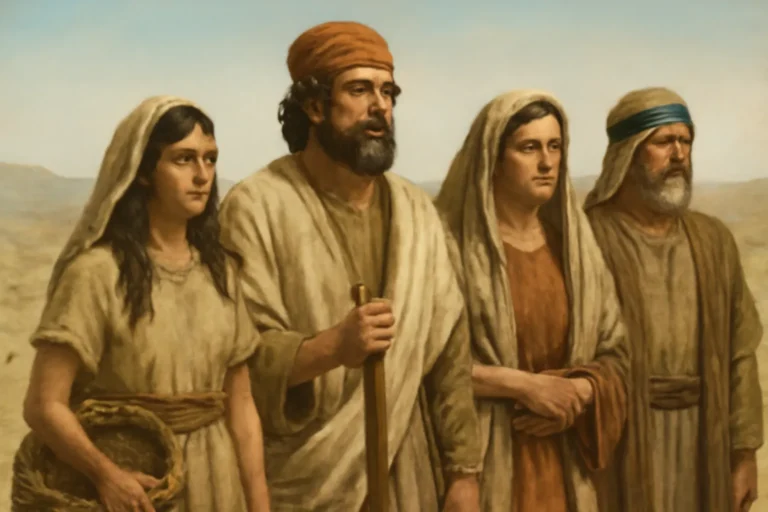
Across the pages of the Bible, the people known today as the Israelites stand at the center of a long, unfolding narrative about faith, land, identity, and covenant. To answer the question, who are the Israelites in the Bible, we must follow a thread that twists through patriarchal promises, national formation, prophetic challenge, and spiritual interpretation. In broad terms, the Israelites are the descendants of the patriarchs who are bound to a solemn covenant with the God of Israel, a people chosen to bear a distinctive story, law, and worship that would shape both ancient and later religious life.
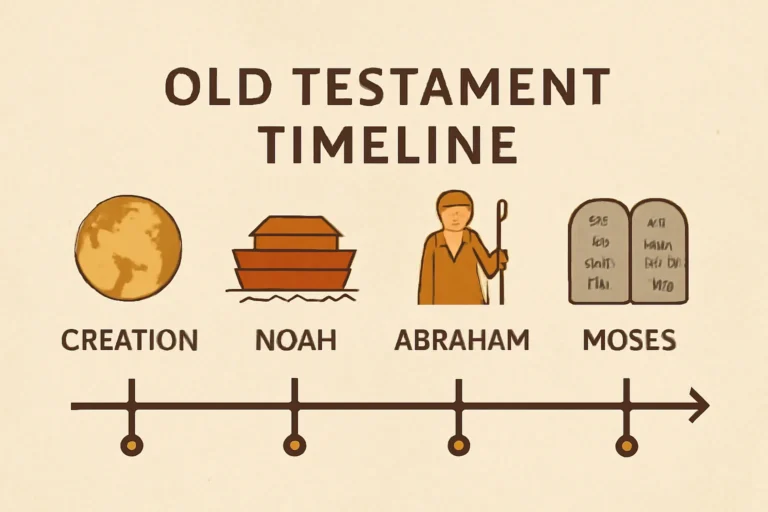
The story begins with the patriarchs—men who, in biblical narrative, receive direct calls and promises from God. The figure most often associated with the origin of the Israelite people is Abraham, whom the text presents as a father of a multitude and the beneficiary of a divine covenant. This covenant is re-voiced and expanded to Isaac, and then to Jacob, often named Israel after a nocturnal encounter with a divine being. The phrase “the God of Abraham, the God of Isaac, and the God of Jacob” anchors the sense that the people are tied to a single God who makes and sustains promises across generations.
From this genealogical and theological foundation, the early biblical writers describe a people linked by faith and by a specific land promise. The term Israel itself emerges as a designation for the descendants of Jacob and their households. When we ask who are the Israelites in the Bible, we are tracing a lineage that begins with ancestors who migrate, multiply, and eventually form a recognizable group with an evolving shared memory of divine guidance, law, and destiny.
Who Are the Israelites? Identity, Names, and Variations
In biblical Hebrew, the people are often referred to as Yisrael (Israel), and collectively as the Israelites. Other terms appear throughout the text, such as Hebrews (from the root related to crossing over or passage) and Children of Israel, which emphasizes lineage and familial ties. The identity is not a single static label but a multifaceted one that shifts with historical context, religious life, and political circumstance.
From Abraham to Moses: A Lineage and Covenant
To understand who are the Israelites in the Bible, one must also track the transformation from a patriarchal family to a people bound to a shared law and a common destination. The narrative centers on the Mosaic Covenant, given at Mount Sinai, where God entrusts a people with the Torah (the Law) and outlines expectations for worship, holiness, justice, and communal life. The identity of the Israelites, therefore, is not just ethnic but covenantal: a people set apart to live in relationship with God.
The Tribal System and Social Identity
The Twelve Tribes and the Social Map
Colonial-era and later biblical writers speak of the twelve tribes of Israel, traditionally descended from the sons and grandsons of Jacob: Reuben, Simeon, Levi, Judah, Dan, Naphtali, Gad, Asher, Issachar, Zebulun, Joseph (whose lineage becomes Ephraim and Manasseh as two tribal foci), and Benjamin. The narratives portray the tribes as familial clans that later consolidate into a nation with a common identity, institutions, and land allocations. The tribe of Levi serves priestly functions, while the others participate in governance, territory, and military organization. The presence of the two half-tribes of Joseph (Ephraim and Manasseh) reflects a nuanced understanding of kinship and national continuity.
These tribal formations are critical to grasp when considering questions like how did the Israelite identity arise among diverse groups? The biblical account emphasizes both unity in covenantal loyalty and diversity within a shared heritage. The result is a people who see themselves as one family under a single God, with distinct roles, territories, and responsibilities that enable them to function as a cohesive societal whole.
Covenant, Law, and Worship
Covenantal Life and the Role of the Law
Central to the Israelites’ self-understanding is the concept of a covenant—a binding agreement with God that defines who they are and how they are to live. The Mosaic Covenant on Sinai is especially pivotal, setting forth moral, ceremonial, and civil laws that guide daily life, worship, and communal justice. The law is not merely a legal code; it is a framework for identity, reminding the people of their unique relationship with the divine and their obligations toward one another.
In this light, the question who are the Israelites in the Bible expands beyond kinship to covenantal responsibility. The obedience demanded by the law is framed as love for God and neighbor, with blessings associated with fidelity and curses linked to disobedience. The law shapes
Worship practices such as sacrifices, festivals, and the Tabernacle (and later the Temple) system
Holiness codes that govern everyday conduct, dietary practices, and social justice
Ethical obligations toward the vulnerable, including the poor, widows, orphans, and strangers
The Tabernacle, Temple, and Sacred Space
Early on, the Israelites build the Tabernacle, a portable sanctuary that signifies God’s dwelling among the people. After the settlement and the rise of a centralized monarchy, the Temple in Jerusalem becomes the focal point of national worship. Sacred space and ritual become markers of identity, binding the community not only to its God but to a shared narrative of deliverance, faith, and hope for divine intervention in times of threat or exile.
Historical Arcs: Exodus, Conquest, Monarchy, and Exile
Exodus and Wilderness Wanderings
One of the most defining episodes for anyone asking what is the biblical Israelite identity is the Exodus: a dramatic departure from oppression in Egypt, a series of miraculous acts, and a journey toward a land promised to the ancestors. The Exodus narrative functions as the foundational memory of salvation, liberation, and the power of God to redeem a people from bondage.
Conquest and Settlement in Canaan
Following the wilderness journey, the Israelites enter Canaan, where they slowly establish tribal territories and a loose confederation that eventually consolidates into a monarchy. The narrative emphasizes a steady emergence of political structure, military leadership, and a unifying rite that reinforces collective identity around a shared land and law.
The United Monarchy, Divided Kingdom, and the Exile
Under leaders such as Saul, David, and Solomon, the kingdom reaches a height of political and cultural achievement. Yet, with time, division occurs, culminating in the exile of the northern kingdom and the later Babylonian captivity of the southern kingdom. These events cast a long shadow over the people, prompting reflections on fidelity, repentance, and the persistence of divine promise even in exile. In the biblical mind, the Israelites in exile remain a people defined by their covenantal memory and longing for restoration.
Prophets, Promises, and the Identity of the People
Prophetic Voices and the Call to Holiness
The prophetic books reframe the question who are the Israelites in the Bible by insisting that national identity must translate into ethical conduct, justice, and fidelity to the God who delivered them. The prophets challenge the people to live justly, care for the oppressed, and remain faithful to the covenant, even in difficult circumstances. These messages contribute to a richer sense of Israel’s identity as a people who bear responsibilities beyond mere ethnicity or political power.
After exile, biblical writers speak of a remnant—a faithful subset of the people who are tasked with rebuilding, renewing worship, and transmitting the covenantal story to future generations. This motif shapes both later Jewish self-understanding and Christian interpreters’ reading of biblical promises about restoration and blessing for all nations.
Terminology and Theological Implications
To address variations on who are the Israelites in the Bible, it helps to distinguish several related terms and their theological implications. The term Israelites often denotes people bound by covenant identity and physical descent. Hebrews emphasizes language or origin in the broader ancient Near Eastern world. Jews arises more prominently in later biblical and post-biblical literature as a descriptor for members of the Jewish people associated with the land, the temple, and a particular religious and cultural heritage. The evolution of language mirrors shifts in geography, worship, and political reality, yet the core sense of belonging to the God of Israel remains central across these terms.
Geography, Land, and the People’s Sense of Home
The land of Canaan or the Promised Land is not merely a backdrop but an active element in Israelite identity. Land promises are repeatedly tied to obedience and fidelity to the covenant. The movement from a nomadic or semi-nomadic existence in the patriarchal era to a settled, agrarian, and eventually urban society reflects a deepening sense of place and purpose. The geography of the land—mountainous highlands, valleys, rivers, and borders—becomes a lived dimension of religious and political life. This sense of place fuels the deep longing for restoration when exile interrupts the people’s normal rhythms.
The People in Later Scripture and Theological Reflection
Israelites in the Prophetic and Wisdom Traditions
As the biblical canon progresses, the identity of the Israelites continues to be elaborated through prophetic voices and wisdom literature. The prophets interpret national events in light of covenant faithfulness and divine justice. The wisdom books, too, contribute to a view of the Israelite identity as grounded in the fear of the Lord, wise living, and the practical application of law to daily life. The combined influence of these strands helps readers today understand who the Israelites are as a people of memory, ethic, and hope.
Messianic Expectations and the Enduring Promise
For many readers, part of the question who are the Israelites in the Bible is tied to messianic expectation and the sense that the divine promises extend into a future with renewed blessing for the people. While interpretations differ across traditions, the biblical witness often treats Israel as a people through whom blessing to all nations will come, highlighting a universal dimension to what begins as a particular people’s story.
Significance for Modern Readers: Identity, Faith, and Dialogue
Understanding who the Israelites are in the biblical text has implications for how modern readers approach faith, history, and intercultural dialogue. The biblical account invites readers to consider questions of identity, belonging, and responsibility—both within a faith community and in relation to others. For Jewish readers, the narrative affirms a continuing people, a land, and a covenantal relationship with God. For many Christian readers, the story of the Israelites provides foundational layers that inform beliefs about God’s plan, the law, sin and redemption, and the shaping of messianic expectation. In academic study, the Israelites serve as a case study in how ancient communities defined themselves through law, worship, kinship, and shared memory, and how those elements interact with historical forces such as conquest, empire, exile, and return.
Covenant as the organizing principle of identity: a relationship with God that defines belonging and obligation.
Israelites as a people with a lineage (the patriarchs) and a shared narrative of deliverance and responsibility.
The Twelve Tribes as both genealogical and political units, with Levi and Judah playing central roles in religious and national life.
The Law (Torah) as a guide to life, worship, and social justice, shaping daily conduct and community welfare.
The shift from a tribal-confederate model to a monarchy, followed by exile, restoration, and an ongoing interpretive tradition.
Glance at the Narrative Arc: A Brief Summary
Patriarchal era: God’s call to a family, promises of land, and a people who will be blessed to bless all nations.
Bond at Sinai: The giving of the Torah and the establishment of a covenantal life.
Wilderness to land: The journey toward a homeland and the formation of a national identity around worship and law.
Monarchy: A united and then divided kingdom with enduring tension between faithfulness to God and political ambitions.
Exile and return: A defining crisis that tests fidelity and inspires prophetic hope for renewal.
How to Read the Question: Interpretive Angles on Israelite Identity
Importantly, different faith communities read the identity of the Israelites with distinct emphases. Some traditions highlight the covenantal call and the moral law as timeless standards. Others emphasize the historical and ethnic dimensions while situating them within a broader divine plan for humanity. Still others focus on the liturgical and cultic life—the rhythms of the calendar, the sacred seasons, and the temple worship—as the living expression of being part of a people chosen by God. The dynamic between particularity and universality is a hallmark of biblical interpretation about the Israelites and their enduring significance.
Variations of the Question Across Traditions
In Jewish Thought
For Jewish readers, the Israelites are the continuing people of the covenant. Their identity is tied to historical continuity, religious practice, and communal life that preserves memory through generations. The biblical story becomes a living tradition that informs prayer, ritual, and ethical conduct in a modern context.
In Christian Theological Reflection
Many Christian interpretations view the Israelites as part of a larger salvific narrative in which the promises to Israel are seen as fulfilled in Christ or reinterpreted in light of the New Covenant. The emphasis may be on continuity—God’s faithfulness across generations—or on a reformulated understanding of how blessings to the nations come through the Abrahamic promise, fulfilled in the person and work of Jesus as understood within different Christian traditions.
In Academic and Historical Study
Scholars examine the Israelites as an ancient people with a developing identity that emerges from historical processes, inscriptions, archaeological finds, and comparative studies with neighboring cultures. This perspective stresses how the term Israel evolves from a tribal or clan designation to a political-national label and how external pressures—from regional powers to diaspora communities—shape the self-understanding of the people.
Final Reflections: The Enduring Question
In considering who are the Israelites in the Bible, readers encounter a layered portrait: a people bound by promise, law, and worship; a community marked by both unity and diversity; a historical actor shaped by and shaping the currents of ancient Near Eastern history. The biblical account invites modern readers to reflect on how identity is formed, how faith is practiced, and how a people’s story can illuminate questions about belonging, responsibility, and hope. Whether viewed through the lens of faith, history, or literature, the identity of the Israelites remains central to understanding the Bible as a coherent, multi-voiced document about a God who is faithful to a covenantal people and who invites the world into a broader story of blessing and reconciliation.