Meaning of Discipleship in the Bible: A Comprehensive Guide
Discipleship in biblical terms is a rich, layered concept that extends beyond mere intellectual assent. It denotes a living relationship, a way of life, and a mission that gathers a person into a community, forms character, and aligns one’s heart with God’s purposes. In Scripture, discipleship encompasses being a learner under a master, a follower who imitates the master’s life, and a partner who participates in the master’s mission. This guide explores the many facets of discipleship in the Bible, showing how the idea unfolds across genres, eras, and communities, and how it remains relevant for readers today.
Meaning and Scope of Discipleship
To understand discipleship, it helps to begin with the sense in which the term is used in Scripture. Three broad threads emerge, each feeding the others:
Following as an intentional commitment: A disciple is someone who chooses to walk in the way of another, aligning decisions, priorities, and patterns of life with the teacher’s example.
Learning as a comprehensive process: Discipleship includes listening, questioning, practicing, and growing in understanding—what one learns shapes how one lives.
Participation in mission: Discipleship is not only inward transformation but outward sending and service—joining the teacher in the work God is doing in the world.
Throughout the biblical narrative, discipleship takes multiple forms. It begins in anticipation and covenantal training in the Old Testament, advances through the life, death, and resurrection of Jesus, and expands into the communities and churches that carry forward the message. The core aim remains consistent: to produce obedience and trust that translate into tangible acts of love, justice, and proclamation. In this sense, discipleship is a holistic process—a core identity, a way of thinking, a pattern of behavior, and a shared mission.
In practical terms, the Bible presents discipleship as:
Relational formation: growing in closeness to God and in healthy relationships with others.
Character formation: becoming more like Christ in humility, courage, patience, and integrity.
Knowledge and doctrine: understanding God’s ways, promises, and commands.
Missional living: participating with God in the work of reconciliation and healing in the world.
As readers consider these facets, it becomes clear that discipleship is not a static label but a dynamic journey that reshapes motives, habits, and communities.
Different biblical emphases that shape the understanding of Discipleship
Following as trust and surrender: Turning away from competing loyalties to pursue Christ.
Learning as apprenticeship: Being formed by the Master’s methods, not just the Master’s teachings.
Witness and mission as vocation: Sharing the good news and inviting others into the same path.
Transformation as a lifelong process: Growth toward a more faithful and courageous life.
Words and Concepts Used for Discipleship in the Bible
Across both Testaments, several Greek and Hebrew terms illuminate the breadth of discipleship. Even when translated in various ways, these terms point to a shared reality: aligning with, learning from, and partnering with God and God’s people.
Key concepts to notice include:
Disciple (often the noun “disciple” or the participial form): a pupil or learner who follows a teacher and imitates the teacher’s life.
Apostle (one who is sent): while not identical to a disciple, an apostle is a commissioned representative who participates in the teacher’s mission and helps extend it to others.
Student/learner: emphasises the ongoing process of learning and growth under guidance.
Apprentice or trainee: highlights hands-on formation, practice, and skill-building in real-life contexts.
Follower or companion: underscores companionship and shared movement toward a common purpose.
In the Gospels, Jesus invites people to become his disciples by saying, “Follow me.” The imperative is simple, yet it carries a comprehensive demand: trust, obedience, and participation in a new agenda. In the Acts of the Apostles and the Epistles, discipleship expands into church life, teaching communities, and mission—demonstrating that a disciple is someone who is being formed into the image of Christ and who participates in God’s redemptive plans.
Disciple often centers on learning and aligning with a master’s way.
Apostle emphasizes sending and stewarding a message into new cultural contexts.
Believer or follower of the Way highlights allegiance and identity within a community.
Discipleship as Following Jesus
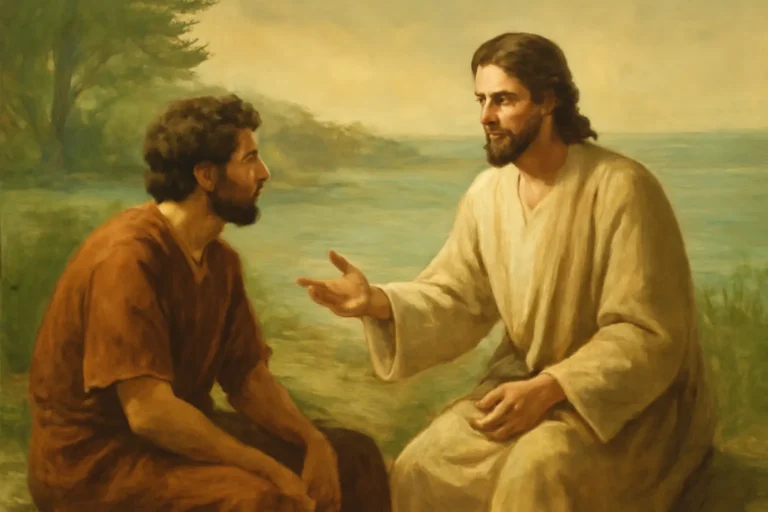
One of the most central and recognizable strands of discipleship is the call to follow Jesus. This phrase appears repeatedly in the Gospel accounts, signaling a life oriented around Jesus’ person, teaching, and mission. The invitation is not merely intellectual assent; it is an embrace of his path, his priorities, and his authority.
Imitation of Jesus’ character and actions as the standard for life.
Submission to Jesus’ authority in decisions, values, and relationships.
Trust in his leadership, even when circumstances are unclear or costly.
Examples from Scripture illustrate the breadth of this calling:
Jesus calls Peter and Andrew with the words, “Follow me, and I will make you fishers of men” (Matthew 4:19). This call combines an invitation to companionship with a transformative vocation.
The narrative of Zacchaeus shows how a personal encounter with Jesus redefines a person’s priorities and lifestyle (Luke 19:1-10). The decisive factor is following Jesus into a new life of restitution and generosity.
In John 8:31–32, Jesus says, “If you hold to my teaching, you are really my disciples,” linking learning with freedom and identity.
For readers today, following Jesus remains both a personal decision and a communal practice. It involves regular worship, prayer, study of Scripture, and participation in communities that reflect his life and message.
Discipleship as Learning and Teaching
Another essential dimension is the learning-to-teaching dynamic. A disciple is shaped by what they learn and then passes that learning on to others. This pedagogical cycle—learning, embodying, and teaching—drives the growth of the early church and continues to shape Christian formation today.
Key aspects of this dimension include:
Instructionive moments: Jesus’ sermons and parables teach disciples how to think and act in the kingdom of God.
Application of doctrine: The teachings of Jesus are applied to daily life, work, family, and relationships.
Hands-on practice in mission: Discipleship is validated by doing—serving, healing, preaching, and blessing others.
Notable biblical expressions of this learning-into-teaching pattern:
The Great Commission to “make disciples of all nations” (Matthew 28:19–20) calls followers to teach obedience “to all that I have commanded you.” This frames discipleship as a scalable, repeatable process: training others who train others (multiplication).
In Luke-Acts, mentoring relationships (e.g., Paul and Timothy) illustrate how mentors guide the next generation toward greater faithfulness and maturity.
For contemporary readers, this means that healthy disciple-making involves intentional mentoring, accessible teaching, and deliberate opportunities for people to practice what they are learning—often in small groups, in families, and in missional communities.
Discipleship and Community
Discipleship is never purely individual. The New Testament presents discipleship as a communal enterprise that takes shape within the body of Christ. A disciple is formed not in isolation but within the rhythms of worship, prayer, mutual accountability, and shared mission.
Aspects of community-centered discipleship include:
Accountability in growing in holiness and truth.
Mutual edification through encouragement, correction, and celebration.
Hospitality and inclusion of diverse voices into the life of a learning community.
Shared mission that moves beyond personal benefit to the common good and the expansion of God’s kingdom.
Scriptural illustrations of this dynamic abound. The early church pooled resources, cared for the vulnerable, and trained new believers within a community that lived out the teachings of Jesus. The concept of discipleship as a communal journey helps explain why Paul commissions Timothy and others to “flee youthful passions and pursue righteousness, faith, love, and peace, along with those who call on the Lord from a pure heart” (2 Timothy 2:22, paraphrased for emphasis). The church’s mission, then, is carried in community—a fellowship where participants are both learners and stewards of grace.
A central thrust of biblical discipleship is mission: the idea that followers are sent to participate in God’s plan to reconcile and renew the world. In Greek, the term apostle reflects that sending—disciples become sent ones who bear a message, demonstrate the kingdom, and invite others into the same path.
Elements of mission-oriented discipleship include:
Proclamation of good news: testifying to what God has done in Christ and inviting responses of faith and repentance.
Demonstration of the kingdom: signs, healing, justice, mercy—acts that reveal God’s reign in practical ways.
Multiplication of disciples: training new followers who will train others, expanding influence across cultures and generations.
Scriptural examples emphasize the missional dimension of discipleship:
The commissioning of the twelve to preach, heal, and cast out demons, marking a shift from private training to public ministry (Mark 3:13–19).
The Great Commission’s imperative to baptize and teach in all nations, signaling a global, ongoing, and generational dimension to discipleship.
For contemporary readers, the mission-minded facet of discipleship invites us to consider how our lives participate in God’s larger purposes. This can involve cross-cultural service, local community outreach, advocacy for justice, and mentoring younger believers who are rising in leadership and faith.
Costs and Demands of Discipleship
Discipleship is not a sanitized or trivial pathway. The biblical portrayal often highlights cost and sacrifice as integral to the journey. The call to follow Jesus frequently implies realignment of priorities, potential personal cost, and endurance through hardship.
Key facets of cost include:
Renunciation of competing loves or securities, sometimes including wealth, status, or comfort.
Cross-bearing as a symbol of ongoing sacrifice and faithful witness in the face of opposition.
Perseverance through trials, temptation, and discouragement, sustained by hope in God’s promises.
Jesus’ words in multiple contexts echo the seriousness of discipleship: “If anyone would come after me, let him deny himself and take up his cross daily and follow me” (Luke 9:23). The call to discipleship, then, is not about a one-time decision but a lifelong commitment that shapes choices, relationships, and the use of resources. This perspective helps readers avoid two common distortions: treating discipleship as mere spiritual knowledge without cost, or viewing it as a private moral upgrade disconnected from mission.
Practical reminders of the cost
Discipleship often requires prioritizing God’s will over personal convenience.
It invites risk-taking for the sake of justice, mercy, and truth-telling in a broken world.
It calls for humility, repentance, and ongoing dependence on the Spirit for strength.
Discipleship Across the Bible: Old Covenant Foundations and New Covenant Realities
While “disciple” as a formal title is most explicit in the New Testament, the Bible presents a continuous thread of formation and apprenticeship that begins in the Old Covenant and finds its fullest expression in Jesus and the church. The underlying dynamic is a life oriented toward God, learned through covenant relationships, and practiced in communal living.
Old Testament patterns offer several anticipations of discipleship:
Mentorship under leaders like Moses, who trained Joshua as his successor, illustrating how formation prepares the next generation for leadership and mission.
Callings to covenant obedience that require learners to adopt new ways of worship, justice, and neighbor-love—the habits of a people devoted to God.
Prophetic schools of instruction, where hearers learn to discern God’s will in a changing cultural landscape.
In the New Testament, the revelation of discipleship as following Jesus, learning his way, and participating in his mission is clarified and expanded. The church inherits a robust invitation: to become disciples who become teachers, mentors, and leaders who cultivate faith across generations. This continuity shows that discipleship is both a continuity with Israel’s faith and a new creation reality in Christ.
Practical Implications for Believers Today
What does biblical discipleship look like in a modern context? The core principles translate across time and culture, but they need to be embodied in fresh forms that fit local communities and contemporary challenges.
Intentional relational rhythms: create space for mentoring, accountability, and shared spiritual practices within local churches or small groups.
Integrated learning: combine study of Scripture with practical application—service, mission, and acts of mercy.
Culture of reproduction: cultivate leaders who can train others, fostering a sustainable cycle of disciple-making.
Holistic formation: address spiritual growth, emotional health, and ethical courage to equip believers for complex life contexts.
Some practical steps might include:
Establish a regular time for Bible study, discussion, and prayer with mentors and peers.
Practice servant leadership by serving others in the church and in the wider community, thereby modeling the way of Jesus.
Foster a culture of discipleship that welcomes questions, invites critique, and celebrates growth in grace and truth.
Ultimately, biblical discipleship seeks to form people who embody the love of Christ—who think biblically, act justly, and embody hope in a world that desperately needs witness, mercy, and truth. It enfolds personal devotion with communal responsibility and personal transformation with public mission.
Common Misconceptions about Discipleship
Several cultural ideas about discipleship can obscure its biblical breadth. Clarifying these misconceptions helps readers engage more deeply with the biblical vision.
Discipleship is not merely acquiring information; it is a life transformation that flows into action.
Discipleship is not only for clergy or formal church leaders; it is for all believers who follow Jesus and invest in others.
Discipleship is not primarily a private boost in piety; it is a communal and missional calling that seeks the flourishing of others and the world.
Discipleship is not a one-time event; it is a process that unfolds over a lifetime and across generations.
Reading Scripture with these clarifications helps avoid reducing discipleship to a checklist or a single program. Instead, readers can see it as a robust, flexible, and transformative way of life that remains faithful to the gospel’s core claims and its audacious call to participate in God’s mission.
Across biblical literature, discipleship emerges as a relational, formative, and missional reality. It comprises the invitation to follow Jesus, the process of learning his ways, the life of community that sustains growth, and the mandate to engage in mission that extends God’s kingdom to the ends of the earth. The cost of discipleship is real, but the payoff is enduring: a life aligned with God’s purposes, empowered by his Spirit, and lived out in love for neighbor and witness to the world.
For readers today, the biblical vision invites practical steps: cultivate mentors, invest in relationships that foster faith, participate in communal learning and service, and engage with neighbors in ways that demonstrate the mercy and justice of God. In doing so, believers participate in a lineage of discipleship that spans centuries—an ongoing, expanding, and hopeful project that centers on Jesus, the teacher, and his gospel that invites all to come and learn the way of life in the kingdom of God.