Who Was the First Apostle of Jesus? A Quick Guide invites us into a layered question that has stirred discussion for centuries. In Christian tradition and biblical scholarship alike, the term first apostle can carry several meanings. Some readers ask who was the first person to follow Jesus after his call. Others want to know which disciple or which member of the Twelve Apostles stood at the top of the group or exercised leadership first. Still others focus on which figure is named first in the Gospel narratives or in Acts, a sign of primacy or precedence within early Christian communities. This article explores these angles, citing biblical passages, historical context, and traditional interpretations to offer a coherent picture while highlighting the diversity of viewpoints that have shaped this question over the centuries.
First called or first to respond: Among the earliest followers, who was the first person Jesus called, or who first responded to that call and left his former life behind?
First named or listed: In the Gospel lists of the Twelve, who appears first, and does that order reflect any intentional primacy?
Leadership among the Twelve: Who acted as a leader or primary figure among Jesus’ closest circle, especially after the Resurrection and during the early church?
Theological primacy: In Catholic, Orthodox, and some Protestant traditions, who is recognized as primus inter pares—the first among equals—within the apostolic college?
The gospel narratives: who is named first and who responds first?
To approach the question, it helps to compare the main Gospel accounts of Jesus’ calling of his earliest followers. The Synoptic Gospels (Matthew, Mark, and Luke) provide parallel accounts of who was called when and how the response unfolded. A few points are widely acknowledged by scholars:
Peter and Andrew: the first called in several accounts
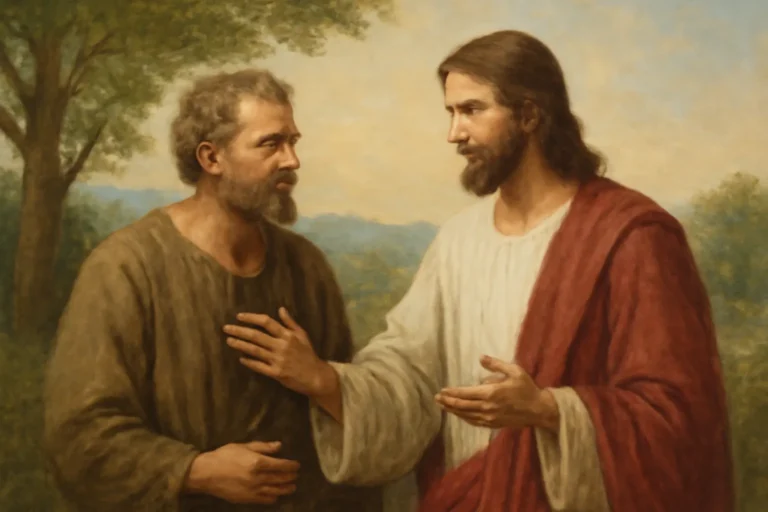
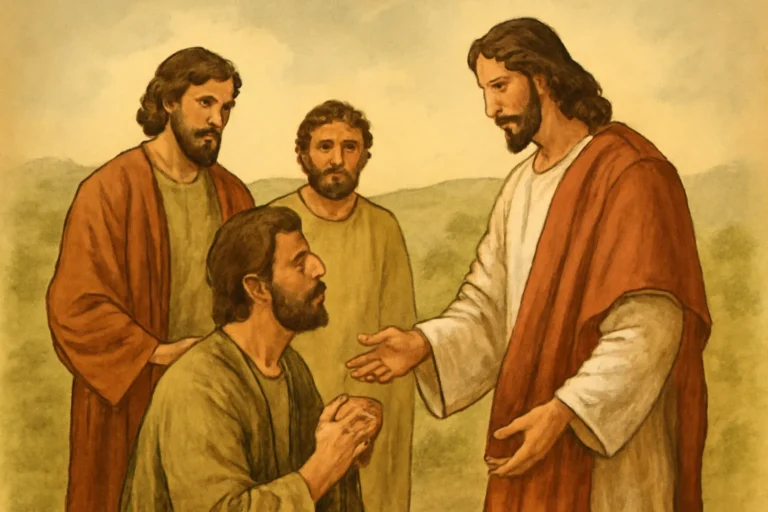
In several scenes, Jesus calls two fishermen, Simon (whom Jesus renames Peter) and his brother Andrew, and they immediately leave their nets to follow him. The wording in Mark 1:16-18 suggests a rapid response to the invitation: “Come, follow me, and I will send you out to fish for people.” They drop their nets and become part of Jesus’ growing circle. A parallel moment in Luke 5:1-11 shows a dramatic catch of fish and a calling that leads Peter to leave everything behind, with James and John similarly called soon after. In many readings, these scenes position Peter as an immediate participant in the mission, and they also foreground Andrew as a key initiator—often described as the one who first introduces his brother to Jesus.
In Mark 1:19-20 and Matthew 4:21-22, Jesus calls James and his brother John, who are mending nets with their father Zebedee. They respond at once and leave their father to follow Jesus, becoming among the first handful of followers who join Jesus’ core group. These scenes emphasize a sense of immediacy and dedication, but they do not explicitly declare any single person as the “first” in a universal sense. They do, however, contribute to the view that the early call to discipleship began with multiple people, with Peter and Andrew often foregrounded in the earliest stage of the ministry.
John and the question of primacy among the Twelve
Among the Twelve, the naming order varies slightly between the Gospel lists and Acts. In most list-like passages, Peter is listed first, followed by other disciples such as James and John, Andrew, and so on. The Gospel writers often present Peter as the central figure in the narrative, especially in the chapters that cover Jesus’ passion and the early church’s growth. Yet it is important to notice that none of the canonical accounts loudly declare a single, unambiguous “first apostle.” Rather, they indicate a complex structure in which leadership, proximity to Jesus, and governance of the early church coalesced around a set of key figures, with Peter occupying a position of prominence that many readers interpret as primacy.
The Twelve: order of naming and implications for primacy
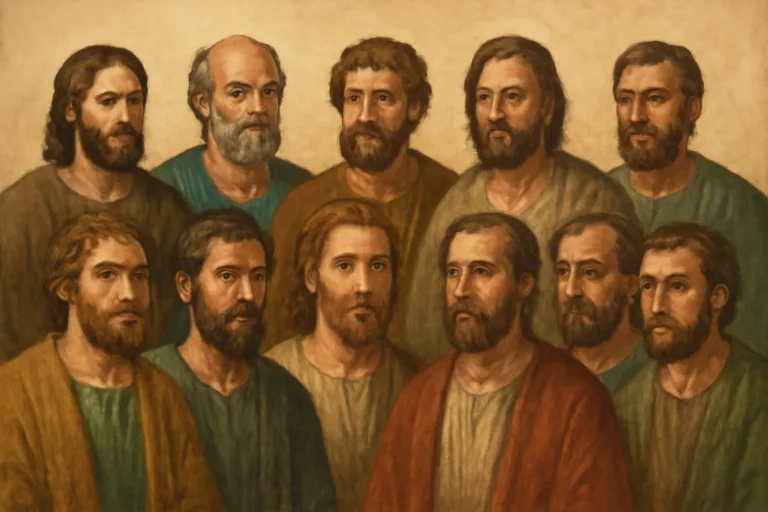
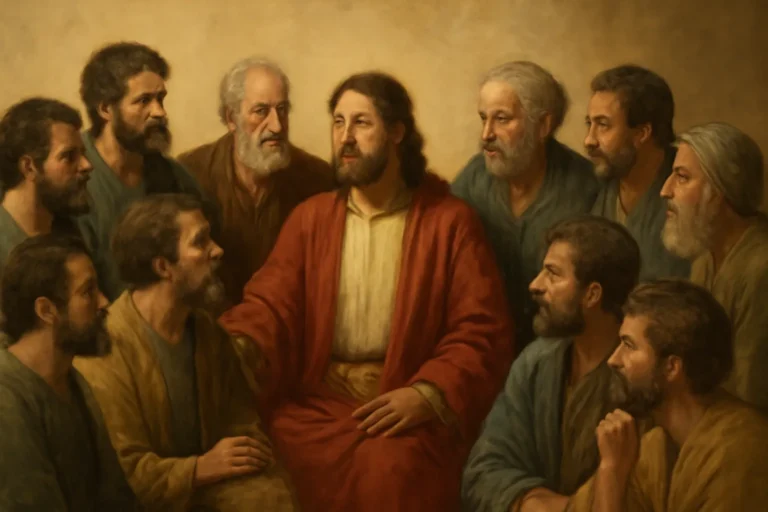
The Twelve Apostles, as named in the Gospels and Acts, form the core group that Jesus commissions to participate in his mission. The exact order used to list them differs between Matthean, Markan, and Lukan traditions, but a common pattern repeats: Peter appears first, followed by a few others, including Andrew, James, and John. Here is a representative list of the apostles as they are often presented in biblical lists:
Peter (Simon)
Andrew
James (son of Zebedee)
John (son of Zebedee)
Philip
Bartholomew
Matthew
Thomas
James (son of Alphaeus)
Simon the Zealot
Judas, son of James
Judas Iscariot
There are textual variations among the Gospel lists, and some scholars point out that the order can reflect literary design or community memory rather than a strict ranking. Nevertheless, the recurrence of Peter at the head of these lists has reinforced the traditional view of Peter as the leading apostle in early Christian memory and later ecclesial practice.
Did Peter truly outrank the others?
The question “Who is the leader of the Twelve?” has a layered answer. The biblical text repeatedly depicts Peter as a leading figure in pivotal moments. For example, in Matthew 16:18-19, Jesus says to Peter, “You are Peter, and on this rock I will build my church, and the gates of Hades will not overcome it.” This verse has been historically interpreted in various ways, with some traditions reading it as a formal conferment of a leadership role (the papal office, in Catholic theology). Other traditions view it as a symbolic declaration of reliability in faith and a posture of shepherding the community. In the Acts of the Apostles, Peter emerges as the primary human interlocutor in the early church’s expansion, delivering the first major sermon at Pentecost and guiding the still-forming Christian movement in Jerusalem.
The role and reputation of Andrew, James, John, and the others
While Peter is often foregrounded, the other members of the original circle contribute essential dimensions to the early church’s identity. Here are brief sketches of how a few of the other early apostles are viewed in tradition and scripture:
Andrew: Often described as the “first called” after Jesus calls Peter and Andrew in the earliest scenes. Andrew is also noted for bringing others to Jesus, including his brother Peter and, in some traditions, bringing Greeks to Jesus later in the Gospel narrative. The New Testament presents him as a proactive evangelist who helps expand the reach of Jesus’ message.
John and James (the sons of Zebedee): As leaders among the inner circle, John and James witness key events such as the Transfiguration and the Garden of Gethsemane. John, in particular, is identified with the “beloved disciple” in the Gospel of John and with a distinctive theological voice in the Johannine writings.
Philip and Bartholomew: Often presented as practical, mission-minded figures who contribute to the spread of the early church in various regions. Tradition associates these apostles with different regions and missions, though exact historical details vary.
Thomas: Frequently remembered for his doubt and subsequent profession of faith, but also recognized as a pioneering missionary in certain traditions, sometimes connected to churches in India in local legends.
Matthew (the tax collector): The Gospel attributed to Matthew situates him as a writer who documents the life of Jesus, foregrounding the link between Jesus’ teaching and Jewish law, and highlighting the role of a formerly marginalized figure in the apostolic group.
Across Christian history, the idea of a single leader among the apostles has been interpreted differently depending on tradition and theological emphasis:
Catholic tradition: Holds that Jesus endowed Peter with a special, ongoing leadership role within the church. This view underpins the concept of apostolic succession and the papacy. Scriptures such as Matthew 16:18-19 and the early Acts narrative are used to argue that Peter’s authority is foundational for the post-Resurrection community.
Orthodox tradition: Emphasizes the unity of the apostolic college and the shared leadership among the bishops, with Peter recognized as a prominent figure but not the sole head of the church. The emphasis is on continuity, conciliar decision-making, and the apostolic witness.
Many Protestant perspectives: Tend to view Peter as a significant leader among the apostles but reject the notion of an undisputed, centralized office of universal jurisdiction. The focus often centers on the message of the Gospel and the witness of the entire apostolic group rather than on a single “first among equals.”
Was Andrew the first apostle?
One frequent question is whether Andrew should be considered the first apostle because he is described in John 1:40-42 as the one who first accompanied Jesus and then brought Peter to him. The verse in John records that Andrew “found his brother Simon and told him, ‘We have found the Messiah’” and brought him to Jesus. This has led some readers to suggest that Andrew was the first follower, or at least the first to actively introduce Jesus to someone who would become a central leader. However, the canonical text does not label Andrew as the first apostle in a formal sense. Instead, it presents a dynamic where multiple early followers enter into Jesus’ mission in quick succession, with Peter emerging as a focal point in the narrative architecture of the Gospels.
Beyond the Gospel accounts, the early church’s memory of the apostles was shaped by preaching, missionary travels, and written texts. The book of Acts traces the growing church under the leadership of Peter in Jerusalem and later under Paul’s ministry to the Gentiles. The questions about who stood at the head of the apostolic circle reflect broader concerns about governance, authority, and the transmission of teaching. In Catholic and some Orthodox circles, the apostolic succession from Peter to his successors is viewed as a concrete mechanism for preserving the integrity of the apostolic teaching. In many Protestant traditions, the emphasis is on the sufficiency of the apostolic witness as a whole, rather than on a single person’s primacy.
Theological and historical significance of primacy
Understanding who is described as the first apostle has implications for both theology and church history. Here are a few key considerations:
Authority and succession: The question of primacy helps explain why certain church offices claim authority through apostolic succession and how this authority is perceived in various Christian communities.
Leadership dynamics: The early church grappled with leadership roles in a way that balanced charismatic calling with communal discernment. The figure of Peter often becomes a focal point for discussions about governance, decision-making, and the interpretation of Jesus’ teaching.
Interpretive nuance: Different Christian traditions read the same biblical scenes with varying expectations about organizational structure. Acknowledging these differences helps readers understand why debates about “the first apostle” persist even today.
Who was the first person Jesus called to be his follower? The New Testament presents several early calls, notably including Peter and Andrew, who respond to Jesus’ invitation in Mark 1:16-18 and Luke 5:4-11. Andrew is also shown introducing his brother Peter to Jesus, which has fueled discussions about who was first in the circle of disciples.
Was Peter the first apostle? In terms of canonical lists and leadership in the early church narratives, Peter is often treated as the leading apostle. This is reflected in the way the name Peter appears first in many lists and in stories where he takes a prominent role. Variations in tradition exist, but Peter’s prominence is a recurring theme.
Why is Andrew sometimes thought of as the first follower? Because of John 1:40-42, where Andrew is described as the first to introduce someone to Jesus (his brother Peter), many readers see him as the initial connector who brings others into Jesus’ circle, though this does not necessarily designate him as the single first apostle in a formal sense.
Do all traditions agree on primacy? No. Catholic, Orthodox, and Protestant traditions each have nuanced views on primacy, leadership, and apostolic authority. The differences reflect deeper theological and ecclesiological commitments about how the apostolic witness is transmitted and exercised.
The term “first apostle” is multi-layered and can refer to who was first to follow Jesus, who is named first among the Twelve, or who is regarded as the senior leader of the apostolic band.
Peter’s prominence is a consistent thread in the Gospel narratives and early church history, contributing to the traditional view of him as the leading apostle in many Christian communities.
Andrew’s role as a facilitator is highlighted by the Gospel of John as someone who introduces others to Jesus, including Peter, which adds a layer of strategic importance to Andrew’s place in the apostolic story.
The Twelve Apostles comprise a diverse group with various callings and journeys. Their collective witness forms the backbone of early Christian teaching and mission, beyond any single person’s leadership.
Interpretive caution is essential when discussing primacy. Different biblical authors and traditions emphasize different aspects of leadership, authority, and apostolic continuity.
Further exploration for curious readers
If you want to explore this topic more deeply, consider the following avenues:
Compare the four Gospel accounts of the call of the disciples to see how each author frames the emergence of the inner circle.
Examine Acts 1-2 to understand how Peter’s leadership develops in the post-Resurrection church and how the community discerns leadership and mission.
Study historical summaries of apostolic succession in Catholic and Orthodox teachings to grasp how primacy is interpreted in ecclesiology.
Read about the Johannine perspective on leadership and the “beloved disciple” to see how John’s Gospel adds a different voice to the apostolic witness.
In summary, while there is no single, unequivocal answer to “who was the first apostle of Jesus,” the available evidence points to a combination of factors. Peter’s prominence in both the Gospel narratives and early church history, the significant but sometimes understated role of Andrew, and the collective leadership of the Twelve Apostles together all illuminate how primacy functioned in the earliest Christian communities. The question itself opens a window into how the first followers of Jesus understood their mission, how later Christians remembered them, and how theologians have interpreted authority and leadership across generations. This nuanced approach helps readers appreciate the richness of the apostolic story without forcing a single, oversimplified verdict.