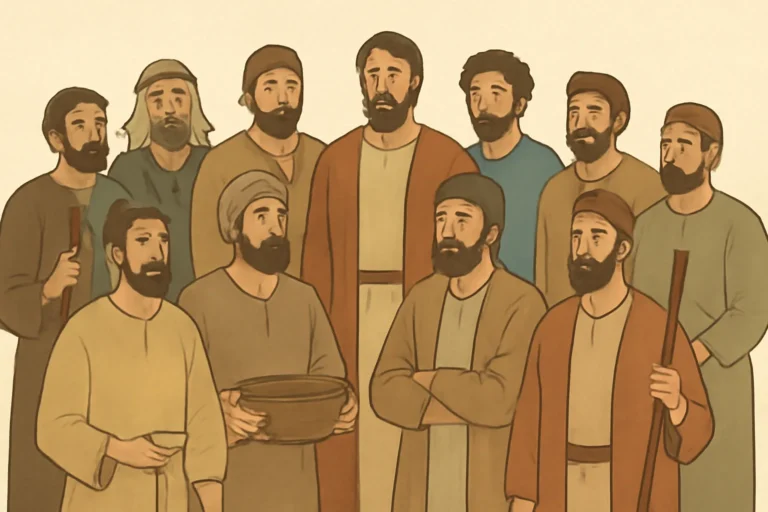
What Is a Disciple in the Bible? Definition, Roles, and How to Be a Follower of Christ
What is a disciple in the Bible? This question invites us to explore a core idea that runs from the Gospels through the letters of the New Testament. A disciple is more than a person who believes a set of facts about Jesus; a disciple is someone who enters into a relationship, pattern, and mission modeled after Christ. The biblical sense blends apprenticeship, allegiance, and life transformation. In Scripture, the word commonly translated as “disciple” carries shades of learner, follower, adherent, and apprentice—an active commitment to knowing Jesus and living out his teachings in every area of life. In many passages, being a disciple means choosing daily obedience, cultivating faith, and participating in the community of believers who seek to reflect the character and purposes of God.
The Greek term most often rendered disciple in the New Testament is mathētēs, literally “one who learns.” The related verb manthanein means “to learn” or “to learn by instruction.” In ancient Jewish and Greco-Roman contexts, a disciple could be a student under a rabbi, an apprentice under a master craftsman, or an adherent who follows a teacher’s way of life. In the Gospels, a disciple is not merely someone who affirms a doctrine about Jesus; it is someone who follows Jesus, embraces his authority, imitates his example, and participates in his mission. A follower of Christ is, therefore, a kind of living apprenticeship in the way of Jesus.
Several key facets shape the biblical concept of a disciple:
Relational allegiance: A disciple is bound to Jesus as Lord and Teacher, surrendering leadership to him in every area of life.
Knowledge and obedience: Learning Jesus’s words and applying them—living out what is learned rather than merely knowing it.
Transformation: The life of the disciple is marked by ongoing growth, repentance, and alignment with God’s will.
Communal life: Disciples belong to a community of learners who encourage, correct, and spur one another toward love and good deeds.
Mission: A disciple participates in Jesus’s mission, sharing the gospel and making more followers who imitate him.
In practice, the term disciple can be used in different contexts: (1) the twelve known as apostles were special messengers with a specific commission; (2) other disciples or students who followed Jesus beyond the Twelve; and (3) later usages that describe believers who adhere to Jesus’s teaching and live by the Spirit. The overarching thread is not merely intellectual assent but a life oriented around Jesus’s person and purposes.
Historical background: how the term was used in the Gospels
In the Gospel narratives, Jesus frequently calls people to become his disciples. He invites fishermen, tax collectors, and others to leave their former occupations, to follow him, and to learn from him. This invitation is not simply about a belief system but about a way of life. The first calls, such as “Follow me, and I will make you fishers of men” (a concise summary of what a disciple does under Jesus’s authority), highlight the active nature of discipleship: a response that leads to mission.
As the story unfolds, disciples are not only students but companions in ministry. They listen to Jesus’s parables, observe his actions, and yet are often slow to grasp the full scope of his mission. This tension—between desire to follow and struggle to understand—becomes a recurring theme in the Gospel records. The disciples press on, often with questions, and Jesus歯gives clarifications, reorienting priorities toward God’s kingdom.
The concept also appears in the broader New Testament literature. The Great Commission in Matthew 28 invites all believers to become disciple-makers, not just to be learners in isolation but to extend the movement by teaching others to obey Jesus’s commands. This passage demonstrates a central shift: discipleship moves from a primarily personal pursuit to a shared, intergenerational mission that expands God’s family through new learners who become new disciples.
Roles and responsibilities of a biblical disciple
Roles as learners and followers
At the heart of biblical discipleship is the posture of learning. A disciple sits at the feet of the master, absorbing his teaching, shaping behavior, and reflecting his character. This involves:
Listening to Jesus’s words, both in Scripture and in life, with a teachable spirit.
Obeying his commands, even when they are costly or counter-cultural.
Replicating his example in daily choices, attitudes, and relationships.
Growing in love for God and neighbor; love becomes the measuring standard of discipleship.
Roles as witnesses and servants
Discipleship is not insular; it engages the world. Biblical disciples are called to be witnesses to the good news and to serve others in humility. This includes:
Witnessing to the truth of Jesus’s life, death, and resurrection, sharing the hope of the gospel.
Serving others with mercy, justice, and practical care, modeling the love of Christ in action.
Encouraging one another in community, correcting when necessary, and strengthening faith through encouragement.
Roles in mission and multiplication
A defining feature of the Christian disciple is involvement in mission. The aim is to baptize, teach, and multiply disciples who will likewise become disciple-makers. This entails:
Evangelism—sharing the message of Jesus with those who have not yet believed.
Discipling new believers—mentoring and guiding new followers toward maturity in Christ.
Church planting and leadership development—training others to lead and steward the church in various contexts.
What distinguishes a disciple from an apostle
In the New Testament, the term disciple covers a broad spectrum, from the general follower of Jesus to the specific group of twelve known as apostles. The word apostle means “one who is sent” and has the sense of commissioned ambassador. The twelve apostles were chosen by Jesus with a unique mandate and authority to preach the gospel, heal, and lay foundations for the church (as described in their distinctive role in the Book of Acts and the Epistles). A key distinction is:
Apostles: A smaller, authoritative subset entrusted with unique tasks and authoritative teaching for the church at that time.
Disciples: A broader term that includes all who follow and learn from Jesus, participate in his mission, and seek to imitate him, including those who were not part of the original twelve.
Despite the differences, both concepts share the same ultimate aim: to know, love, and obey Christ, and to extend his reign by forming people into disciples who reflect his heart and purposes. In many Pauline texts, for example, the church is described as a community of believers who are being conformed into the image of Christ, a process that faithful discipleship intensifies and propagates.
How to become a follower of Christ: a practical pathway
Becoming a disciple of Jesus involves a decisive turning toward him, followed by ongoing life changes that align with his teachings. The pathway below is practical and biblically grounded, offering steps that many Christians find helpful as they seek to grow as disciples.
Repent and believe the gospel. A turning away from self-rule toward God’s rule is foundational to discipleship. This is not a one-time moment only but a constant posture of dependence on Christ.
Trust in Jesus as Lord and Savior. The core of discipleship rests on personal trust in Jesus’s life, death, and resurrection for the forgiveness of sins and the gift of eternal life.
Follow Jesus daily. Discipleship is not merely intellectual assent; it is a daily choosing to obey Jesus’s instructions, to prioritize God’s Kingdom, and to live in line with his example.
Receive baptism and join a faith family. Baptism publicly marks entry into the community of disciples, and belonging to a local church provides accountability, support, and shared mission.
Engage in spiritual disciplines. Regular reading of Scripture, prayer, worship, fellowship, confession, and service cultivate spiritual growth and deepen dependence on the Spirit.
Learn from mentors and peers. Discipleship flourishes in community where seasoned believers teach newer ones, and where accountability and encouragement are practiced.
Practice obedience in all life areas. True discipleship touches decisions about work, money, relationships, and ethics, driven by Jesus’s commands and the example of love.
Participate in mission. The experience of making new disciples—sharing the gospel, modeling a Christ-centered life, and mentoring others—is central to the disciple’s calling.
Persevere through trials. A durable faith endures through persecution, doubt, and hardship, relying on the Holy Spirit for strength and wisdom.
In short, to become a follower of Christ is to be welcomed into a lifelong process of learning, transformation, and mission. A biblical disciple does not merely attend church or hold to a creed; they live under Christ’s authority and invite others into the same path of growth and service.
Discipleship in the New Testament church
The early church modeled discipleship as a communal enterprise. The apostles taught, trained, and empowered believers to live out the gospel in diverse contexts—from Jewish synagogues to Greco-Roman households. Key features include:
Community-based formation: Believers learned together, shared resources, and supported one another in spiritual growth.
Teaching and correction: Scripture was read, preached, and applied, with a willingness to correct paths that deviated from Jesus’s teachings.
Missions and outreach: The church’s life extended beyond its walls as disciples engaged their neighbors, cities, and the world with the message of Jesus.
Leadership development: Mature disciples mentored others, multiplying leaders who could shepherd different communities.
In this light, discipleship is not an elective feature of Christian life but a central aim of God’s plan for the church. The apostolic witness emphasized that mature disciples would be those who obey Jesus’s commands and make more followers who do the same, thereby expanding God’s kingdom influence through generations.
Understanding the language helps clarify what it means to be a disciple. Some important terms and their nuances include:
Mathētēs (disciple): A learner who intentionally follows a teacher and adopts the teacher’s way of life.
Matheteuō (to disciple, to instruct): The πρακτική action of mentoring another toward maturity in the faith.
Apostolos (apostle): One who is sent with authority; the twelve are the original apostles, though the term can sometimes refer to others with a similar commissioning.
Martys (martyr) and other related terms appear in contexts where faithful disciples endure trials for the sake of Christ, illustrating perseverance as a dimension of discipleship.
In addition to these terms, the Bible often uses phrases such as “learn Christ”, “walk in the Spirit”, and “obey his commands” to describe what it means to be a disciple in practical terms. The repeated emphasis on obedience, love, and mission helps readers discern how a 21st-century follower of Christ can live out the biblical model of discipleship.
Common misunderstandings about being a disciple
Several ideas about discipleship can be misleading if taken at face value. Here are some clarifications to help readers align their understanding with biblical teaching:
Discipleship is not only for church leaders: While pastors and teachers mentor others, the Bible depicts discipleship as a shared responsibility among all followers of Jesus.
Discipleship is not identical to salvation: Becoming a disciple follows faith in Christ, but ongoing discipleship involves growth, obedience, and mission, not simply a one-time event.
Discipleship is not merely doctrinal knowledge: Knowing truth is essential, but discipleship requires applying truth in daily life, relationships, work, and community life.
Discipleship is not legalistic: The goal is a heart-aligned life led by the Spirit, not a rigid set of rules disconnected from grace and love.
Today’s Christians can cultivate a vibrant discipleship that mirrors biblical patterns. Consider these practical avenues:
Regular scripture engagement: Reading, meditating, and reflecting on God’s Word to understand Jesus’s ways and commands.
Prayer and dependence on the Spirit: Cultivating ongoing communication with God and seeking empowerment from the Holy Spirit.
Community life: Participating in a local church or intentional community where accountability, mentorship, and shared mission occur.
Accountability partnerships: Pairing with another believer for mutual encouragement, honest feedback, and spiritual discipline.
Serving and generosity: Demonstrating Christ’s love through practical acts of service and generous living.
Missional living: Looking for opportunities to share the gospel, invite others into Christian community, and model a life shaped by Jesus’s teachings.
Leadership development: Investing in others, training new believers, and equipping them to disciple others, creating a culture of multiplication.
These practices help a believer grow as a disciple who embodies Jesus’s message in everyday life. By combining learning with lived obedience and communal mission, a person can experience a robust and enduring form of discipleship.
Frequently asked questions about biblical discipleship
To round out the discussion, here are concise answers to common questions people ask when exploring what it means to be a disciple in the Bible:
Is a disciple the same as a Christian?
In many biblical uses, a disciple is a Christian, but the term emphasizes the student-teacher relationship and the ongoing process of learning and obedience under Jesus’s lordship.
Did Jesus call everyone to be seine disciples?
Jesus’s invitation extended to many who would respond with faith and follow him. While the Twelve had a special role, the New Testament envisions all believers as disciples—with a shared call to learn, obey, and participate in God’s mission.
What is the goal of discipleship?
The aim is to become more like Jesus, to live under God’s rule, and to multiply followers who reflect Christ in every sphere of life.
How important is baptism in discipleship?
Baptism is a significant and symbolic step that publicly identifies a person with Christ and his church, marking entry into the community of disciples.
Bottom line: becoming a biblical disciple
Ultimately, discipleship is about a life long pattern of listening to Jesus, obeying his words, and joining him in his mission. It is a process that begins with a decision to trust Christ and continues with daily decisions to live as his apprentice. The biblical picture of a disciple is a person who loves God wholeheartedly, loves others selflessly, and participates in the Spirit-enabled mission of advancing God’s kingdom. Whether you are just exploring what it means to be a follower of Christ or you are a seasoned believer seeking to deepen your walk, the biblical call remains the same: learn him, live him, and lead others to him.
As you consider what it means to be a disciple in the Bible, reflect on the enduring invitation: Follow me. This invitation is not a temporary sprint but a lifelong journey of transformation, service, and joy as you walk beside Jesus and help others take the same path.