Jewish Messiah Prophecy: Origins, Interpretations, and Modern Relevance
The Jewish concept of a future, divinely guided leader has shaped prayer, law, and culture for two millennia. Known in Hebrew as Mashiach (often rendered as Messiah in English), this figure is envisioned not merely as a political conqueror but as a catalyst for a transformed world. The topic touches biblical prophecy, rabbinic interpretation, mystical speculation, and contemporary debates about national renewal and ethical leadership. This article surveys Jewish messianic prophecy from its biblical origins through later rabbinic and mystical elaborations, and examines how these ideas continue to resonate in modern Jewish life and thought.
The seedbed of messianic expectation lies in the Hebrew Bible, where the term mashiach means “anointed.” Traditionally applied to kings, priests, and sometimes prophets, the notion gradually grows into a more specific hope for a future anointed king who will restore national sovereignty, justice, and peace. In this sense, the earliest outlines are political and theological, not merely spiritual or speculative.
The Davidic Covenant and the promise of a king
A central source for the messianic dream is the enduring promise to the House of David. The biblical narrative frames an heir of David as a sign of covenantal fidelity between God and Israel. This lineage-based hope becomes a standard model for a future Davidic Messiah who will reign with righteousness and bring about sustained peace. The language of the prophets often links leadership in Zion to the restoration of a united and righteous kingdom.
Prophetic visions and the ideal of restoration
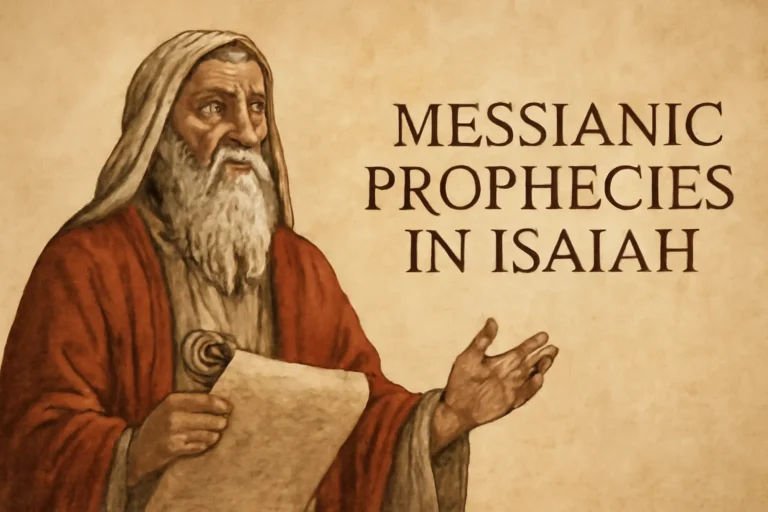
In the prophetic books, particularly those later witnesses to the exilic and post-exilic periods, the Messiah is not defined solely by temperament or charisma but by outcomes: the regathering of the exiles, a rebuilt Temple, and universal recognition of the God of Israel. Key prophetic voices articulate a future era in which Jerusalem becomes the center of a just, holy world order. This eschatological horizon is not only about sovereignty; it is a transformation of nature and society, often described in vivid, poetic imagery.
Ingathering of the exiles (giyur or geulah): the return of Jewish communities to the land of Israel and the reunification of scattered tribes.
Temple rebuilding and renewed religious life centered in Jerusalem.
Peace and justice as the defining marks of the era, with righteousness guiding all nations.
The idea that knowledge of God will fill the earth, making nations walk in divine ways.
Rabbinic and Theological Foundations
As the Jewish people faced centuries of dispersion and changing political fortunes, sages and jurists began to articulate more structured expectations about the Messiah, weaving together scriptural verses, legal reasoning, and ethical aspirations. Rabbinic literature expands the framework beyond the bare figure of a king, introducing roles, timelines, and even the possibility of multiple messianic phases.
Two messiahs: Mashiach ben David and Mashiach ben Yosef
One influential strand of rabbinic and later medieval thought distinguishes between two progenitors of redemption:
Mashiach ben David (Messiah son of David): traditionally understood as the primary future king who will rebuild the throne of David, reestablish sovereignty in the land of Israel, and lead the people in a new era of justice and peace.
Mashiach ben Yosef (Messiah son of Joseph): often envisioned as a forerunner who prepares the way via suffering, conflict, or social reform, sometimes associated with gathering and purifying the people in advance of the ultimate redemption by Davidic lineage.
This two-figures conception emerges more clearly in later rabbinic and medieval sources rather than in the earliest biblical texts. It offers a practical theology: one figure to carry the immediate burdens and the other to inaugurate the conditions that culminate in a universal era of peace.
Geulah, Tikkun, and eschatological time
The rabbinic articulation often links geulah (redemption) with a sequence of events: repentance, ingathering, rebuilding, and the cessation of national exile. The concept of tikkun olam (repairing the world) enters later Jewish thought as a moral and cosmic project aligned with the messianic horizon. The messianic time is sometimes described as an era rather than a single moment—an extended renewal of Jewish life in the Land of Israel, accompanied by a universal recognition of the God of Israel and the enactment of divine justice.
Messianism in Rabbinic, Kabbalistic, and Hasidic Thought
Judaism’s diverse streams have produced a spectrum of interpretations regarding the Messiah. Rabbinic, Kabbalistic, and Hasidic traditions add layers of spiritual symbolism, cosmology, and practical guidance for living in the proximity of the messianic hope.
Rabbinic perspectives and ethical expectations
In classical rabbinic sources, the arrival of the Messiah is tied to signs—ethical renewal, the rebuilding of the Temple, and the ingathering of the dispersed. The Talmud and Midrash explore questions of timing, the responsibilities of Jewish leadership, and the moral obligations of the Jewish people in the run-up to redemption. While the exact calendar is not fixed, the sages insist on readiness—spiritual integrity, justice, and adherence to God’s commandments—as prerequisites for the messianic age.
Kabbalistic and Hasidic visions: cosmic repair
Kabbalistic literature reframes redemption as a cosmic process involving the repair of divine emanations and the restoration of spiritual balance in creation. The messianic figure is often imagined as a central agent within a broader process of gilgul neshamot (reincarnation of souls) and the reordering of divine structures. Hasidic masters emphasize the experiential, transformative potential of the era: the Messiah’s arrival will coincide with heightened spiritual awareness, joy, and the uplifting of human conduct to mirror divine will.
Historical Messianic Movements and Figures
Throughout history, Jewish communities have sometimes experienced episodes of intensified messianic expectation, some of which produced dramatic, lasting consequences. The interplay between genuine longing, charismatic leadership, and sociopolitical context has shaped these episodes and the community’s response to them.
In the 17th century, Shabbetai Zevi captured the imagination of Jews across the Ottoman world. His proclamation as the Messiah was quickly intertwined with the prophetic writings of Nathan of Gaza, who framed Shabbetai as the long-awaited redeemer. When Zevi converted to Islam under pressure from Ottoman authorities in 1666, the movement collapsed, leaving a lasting lesson about the fragility of messianic claims and the dangers of charismatic authority. The episode deeply influenced Jewish thought, prompting a sober reassessment of messianic timing, verification, and the dangers of misguided zeal.
Jacob Frank and later messianic currents
In the 18th century, the controversial figure Jacob Frank drew followers with a radical, antinomian interpretation of redemption. Though ultimately rejected by mainstream Judaism, Frank’s movement illustrates how messianic longing can intersect with social upheaval, religious reform, and the revolt against perceived spiritual stagnation. Historians view these episodes as cautionary tales about the temptations of utopian claims and how communities test their frameworks for recognizing genuine renewal.
Other historical notes
Beyond the sensational movements, there have been numerous smaller claims and hopeful expectations. Some figures have been revered in particular communities for representing an interim stage of redemption, while others served as moral exemplars who reoriented communal life toward justice and hope. These episodes collectively show that messianic longing is a persistent thread in Jewish history, even when specific claims are contested or debunked.
Modern Relevance: Movements, Debates, and Everyday Faith
In the modern era, the question of the Messiah intersects with statehood, diaspora life, and evolving religious practice. Jewish thinkers, communities, and institutions approach messianic prophecy from multiple angles, balancing traditional expectations with contemporary realities.
The emergence of the modern State of Israel introduced a powerful new context for messianic language. For many, the return to the land and the reestablishment of political sovereignty appear as partial fulfillments of biblical geulah, while others caution that political independence is not itself the messianic era, which would require broader ethical and spiritual transformation. In some circles, Zionism is understood as a secular channel toward the eventual messianic fulfillment, whereas in religious communities it is interpreted as an opportunity to repair the world (tikkun olam) and prepare the conditions for redemption, not to replace it.
Diversity of approach across Jewish denominations
Different streams within Judaism frame the messianic question in distinct terms:
Orthodox Judaism generally maintains a traditional expectation of a future, human Messiah from the House of David, with emphasis on the rebuilding of the Temple and the ingathering as definite, albeit eventual, goals.
Conservative Judaism tends to preserve core messianic concepts while reading them through historical-critical lenses, acknowledging interpretive diversity while affirming ongoing hope for redemption.
Reform and Reconstructionist approaches often reinterpret messianic language as metaphorical, focusing on ethical renewal, social justice, and human responsibility in shaping a redeemed world here and now, while still recognizing the rhetorical power of the messianic phrase as inspiration for moral action.
Across these strands, a common thread is that the idea of the Messiah can function as a moral compass. The promise of a future era of peace, justice, and divine presence invites communities to embody those values today. In that sense, messianic prophecy serves less as a crystal ball and more as a framework for building a more humane society, a lens through which Jewish communities measure their commitments to kindness, equality, and care for the vulnerable.
Theological and Philosophical Reflections
There is a robust set of questions surrounding the messianic hope within Jewish thought. How should one interpret texts that discuss a future leader or an era of universal peace? What is the proper relationship between human action and divine intervention? And what does it mean to be faithful to a tradition while acknowledging historical change and pluralism?
Divine sovereignty and human agency
Judaism generally maintains that God remains ultimately in control of history, while humans participate in the unfolding of redemption through ethical action, observance, and communal responsibility. The messianic dream thus sits at the intersection of hope and effort: believers trust in a divine plan, yet actively pursue justice and righteousness in everyday life. This tension—between waiting and work—appears repeatedly in sermons, scholarship, and liturgy.
Time, fulfillment, and the limits of human knowledge
Many Jewish thinkers stress that the timetable for messianic fulfillment is concealed. Prophetic visions are often opaque and metaphorical, allowing multiple readings across generations. This humility about timing encourages perseverance and resilience, especially in moments of exile, war, or social upheaval. The idea that “redemption may come in stages” helps communities navigate disappointment while maintaining a credible hope for the future.
Key Concepts and Terms for Reference
To help readers navigate the vocabulary, here is a concise glossary of central terms often associated with Jewish messianic prophecy.
Mashiach (Messiah): the anointed one, traditionally a future king who will lead Israel to redemption.
Mashiach ben David: Messiah, the Davidic king who will restore sovereignty and justice.
Mashiach ben Yosef: the forerunner or precursor figure associated with struggle or purification.
Geulah (redemption) and Ge’ulah: the process or event of salvation and return from exile.
Ingathering of the exiles: the prophetic gathering of Jewish communities from the diaspora back to the Land of Israel.
Tikkun olam (repairing the world): a moral and ethical framework that resonates with messianic aspirations in modern thought.
Olam HaBa (the world to come): a broad eschatological concept about the ultimate spiritual order beyond this world.
Temple in Jerusalem: the central spiritual and ritual project associated with the messianic age for many traditions.
Contemporary Discourse: Ethos, Eschatology, and Everyday Life
Today’s discussions about messianic prophecy in Judaism often emphasize both continuity with tradition and adaptability to modern realities. A number of themes recur across scholarly articles, liturgical poetry, and sermons:
The ethical dimensions of redemption: justice, mercy, and compassion become portable expectations in all times, not merely markers for a future king.
Ecumenical and interfaith resonance: the messianic hope engages with universal questions about peace, human dignity, and moral progress, inviting reflection across religious lines.
Historical memory and caution: awareness of past messianic movements reminds communities to value critical discernment, communal accountability, and responsible leadership.
National and spiritual renewal: for many Jews, Israel’s statehood and cultural resurgence are meaningful moments in the broader messianic narrative, while others insist that redemption remains a primarily spiritual enterprise.
How the Messiah Theme Shapes Jewish Practice
Although not all Jews understand the Messiah in the same way, the theme influences liturgy, study, ethics, and community life. Several practical expressions of this influence include:
Prayer and liturgy: certain prayers, blessings, and psalms invoke hope for redemption and the restoration of the Temple, situating the believer within a historic arc of salvation.
Study and interpretation: biblical exegesis, rabbinic debates, and mystical commentaries are often motivated by the desire to understand what must occur for the messianic era to arrive and what responsibilities it imposes on the present.
Social justice and ethics: the messianic hope is frequently linked with a commitment to peace, fairness, and the protection of the vulnerable, aligning with biblical calls for righteous governance.
Tempus and place: the longing for a rebuilt Temple—while interpreted variably—remains a symbol for a transformed relationship with holiness, sacrifice, and divine presence.
Common Misunderstandings Clarified
In cross-cultural discussion, several misconceptions often arise. Addressing these helps readers understand why Jewish messianic prophecy differs from other eschatologies.
Misconception: Judaism teaches a single, definitive date for the Messiah. Reality: most Jewish sources emphasize signs, ethical readiness, and divine timing rather than a fixed timetable.
Misconception: The Messiah is a purely political figure with no spiritual dimension. Reality: while political restoration is a theme, rabbinic and mystical writings stress spiritual transformation as essential to redemption.
Misconception: Messianic belief is a relic of ancient times. Reality: the language remains alive in modern discourse, shaping perspectives on nationhood, exile, and moral responsibility.
A Reflective Conclusion: The Enduring Question
Rather than presenting a single, irrefutable blueprint for messianic fulfillment, Jewish tradition offers a spectrum of visions, each tied to its historical moment and spiritual aims. The enduring appeal of Mashiach lies in its capacity to name longing—for justice, peace, and a world aligned with divine justice—while also challenging communities to translate that longing into concrete action here and now. This dual impulse—hope for a future messianic era and responsibility for present-day repair—remains one of the most distinctive and resilient features of Jewish thought. By exploring the origins, diverse interpretations, historical episodes, and modern implications of the Messiah, readers gain a richer sense of how messianic prophecy continues to animate Jewish faith, law, poetry, and daily life across the centuries.