Messianic Prophecies in Isaiah: A Guide to the Messiah
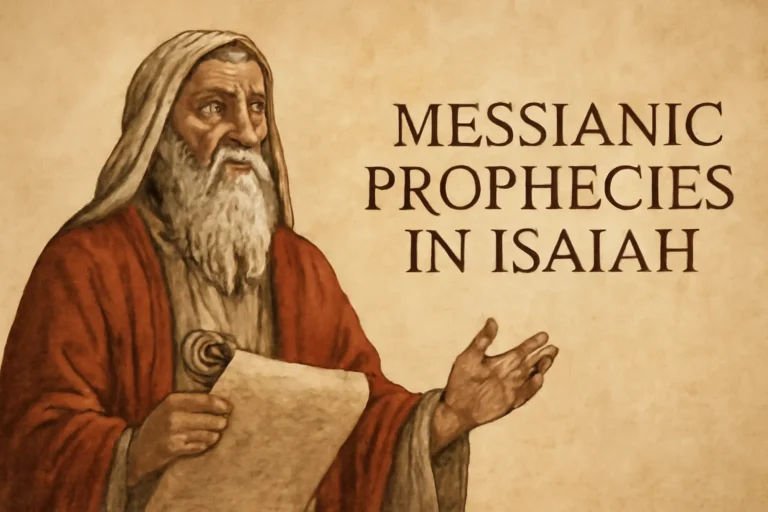
Within the prophetic corpus of Isaiah, readers encounter a rich tapestry of expectations about the coming Messiah. This guide offers an extensive look at the major strands of messianic prophecy in Isaiah, how these strands relate to each other, and how they have been interpreted across traditions. The material below emphasizes the diversity of images—royal, servant, and universalist motifs—while noting the historical context in which Isaiah spoke and the ways later readers have understood these prophecies in light of faith, politics, and religious experience.
Isaiah presents a school of prophetic hope that does not confine the Messiah to a single portrait. The concept of the anointed one (the literal meaning of Mashiach in Hebrew) appears in several distinct forms across the book. Some passages emphasize an earthly king from the house of David who will restore Zion, judge the nations, and bring peace. Other passages foreground a suffering servant whose mission involves bearing pain on behalf of others and whose appearance has profound theological significance. Still other passages center on a spirit-filled messenger who proclaims good news, lifts the humble, and illuminates the nations. Taken together, these strands suggest that Isaiah is not presenting a single, monolithic expectation but a dynamic constellation of eschatological hope that shaped Jewish and Christian imagination for centuries.
Key Prophecies in Isaiah: A Map of the Messianic Terrain
Isaiah contains several passages commonly cited in discussions of the Messiah. The following list highlights major references, noting the literary context and the interpretive aperture each passage opens for readers.
Immanuel prophecy (Isaiah 7:14): “Behold, the virgin shall conceive and bear a son, and shall call his name Immanuel.” This line sits within a narrative where a political crisis threatens the Davidic kingdom, and the sign is meant to indicate God’s presence with his people in a moment of peril. The Immanuel motif has long been read in two main ways: as a sign to Ahaz in the immediate historical setting, and as a broader messianic sign in later religious readings.
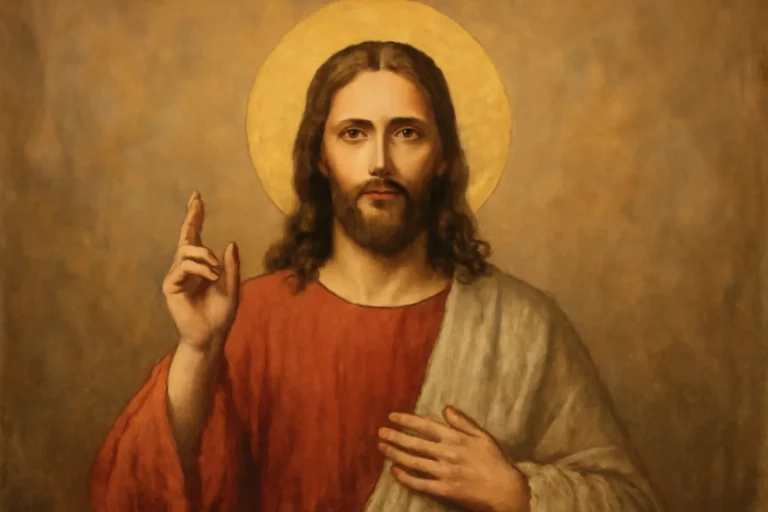
A future king from the line of David (Isaiah 9:6–7): “For to us a child is born, to us a son is given; and the government shall be upon his shoulder.” The text names a divinely given ruler endowed with counsel, peace, and justice, and it presents a vision of an era when righteousness and peace prevail.
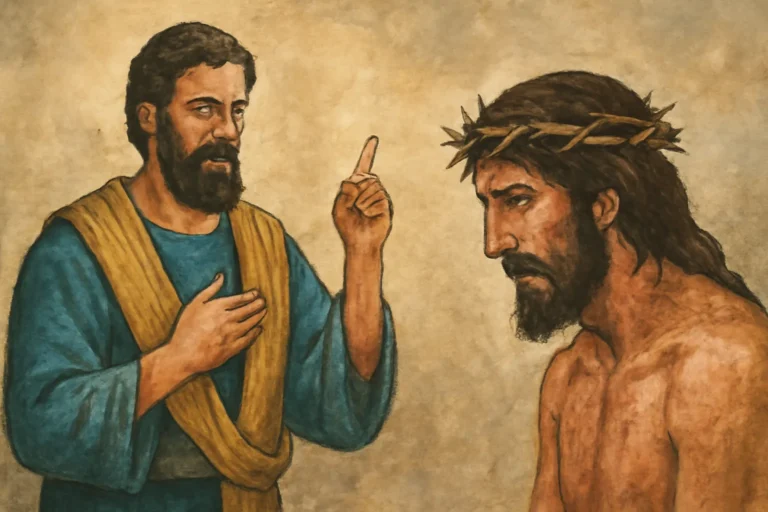
The Servant of the Lord (Isaiah 42:1–4; 49:1–6; 50:4–9; later culminated in 52:13–53:12): A sequence of servant songs presents the Suffering Servant whose mission involves revealing God to the nations, bringing justice, and bearing the suffering that earns the world’s healing. The most famous articulation, Isaiah 53, portrays a figure who is rejected, wounded, and pierced, yet through his affliction justice and salvation are accomplished for many.
Light to the nations and the universal mission (e.g., Isaiah 42:6; 49:6; 60:3): The servant’s vocation expands beyond Israel to the Gentiles, highlighting a broad ethical and spiritual program in which all nations are drawn toward the God of Israel.
Messianic expectations in the Servant Songs and the royal imagery in parallel strands: Some readers see a convergence between the royal ideal and the servant motif, interpreting the Messiah as both a king and a suffering figure who fulfills God’s purposes in history through paradoxical means.
The Virgin Birth and the Davidic King: Royal Hope in Isaiah 7 and 9
Immanuel as a Sign and a Theological Arrangement
Isaiah 7:14’s sign of a virgin birth has elicited extensive discussion within and beyond faith communities. In the immediate historical context, the sign is given to King Ahaz during a time of political crisis. The claim is that a child will be born who embodies the presence of God with his people. The name Immanuel, meaning “God with us,” serves both as a direct message of divine presence and as a symbol of future hope. Readers across traditions have debated whether this passage primarily points to a historical event in Isaiah’s day or whether it prefigures a messianic fulfillment in a later era. In Christian interpretive history, Matthew 1:23 cites this verse as a prophecy fulfilled in Jesus, interpreting Immanuel in a Christological sense. Jewish readings, conversely, often view Immanuel as a historical sign or an emblematic figure rather than a direct prediction of a single Messiah’s birth.
The prophecy of a coming Davidic king in Isaiah 9:6–7 presents a ruler whose reign brings transformative attributes: governance, justice, peace, and an enduring dynasty. The language speaks of a “child” who embodies divine attributes and bears the throne of David. In messianic discussions, this passage is often cited as a framework for a tangible, political-ethical restoration of Israel. Yet the surrounding verses emphasize that the ruler’s authority is grounded in divine governance and the establishment of a just order. The tension between political power and moral righteousness becomes a central theme in how readers imagine the Messiah’s work: not merely as conquest but as the institution of a reign characterized by justice, peace, and righteousness that endures “from this time forth and forevermore.”
The Suffering Servant: A Deep Dive into Isaiah 52:13–53:12
The Suffering Servant passages articulate a figure who bears affliction on behalf of others, experiences humiliation, and yet accomplishes a purpose of redemption. Central motifs include the servant’s humiliation, scorn, being wounded for our transgressions, and a climactic moment in which the servant’s suffering leads to healing for many. In Isaiah 53, the narrative voice presents a movement from invisibility and rejection to a decisive act of vicarious atonement. Christian readers have often connected this servant with Jesus, interpreting his crucifixion as the fulfillment of the prophetic portrait. Jewish commentators typically understand the servant in a more collective sense, as representing Israel or a faithful remnant who suffer in the exile and in the face of oppression, yet who bear the cost for the sake of a greater purpose in God’s plan.
In Christian tradition, the Suffering Servant’s language resonates with later New Testament writings about atonement, substitution, and redemptive suffering. The language of the servant bearing sins and suffering despite innocence appears to foreshadow Christological interpretations in the Gospel accounts and Pauline letters. The Jewish interpretive path often emphasizes solidarity with the oppressed, focusing on how congregations endure suffering and trust in God’s eventual vindication. Across both lines of interpretation, the Isaiah 52–53 cluster challenges readers to ask: what counts as leadership, and what counts as power when healing and justice are pursued through suffering?
The Spirit, the Mission, and the Universal Reach
Empowerment and the prophetic commission
Isaiah repeatedly ties the messianic program to the Spirit of the Lord. In Isaiah 11:1–5, a shoot from the stump of Jesse is described as being filled with wisdom, understanding, counsel, and the Spirit of the Lord, enabling him to judge with righteousness and equity. This Spirit-empowered ruler is not simply a political figure; he embodies divine wisdom and moral authority. The connection between anointing, empowerment, and prophetic mission is a core thread in Isaiah’s messianic vision, underscoring that leadership is inseparable from ethical discernment and social responsibility.
The servant passages foreground a different form of empowerment: a servant who endures, remains faithful, and executes God’s plan in the midst of suffering. The bridge between these two portraits—the kingly ideal and the suffering servant—points to a coherent anthropology of leadership in Isaiah: true authority is exercised through humility, self-giving love, and fidelity to God’s justice. The strands converge in a broad ethical horizon: leadership that uplifts the poor, protects the vulnerable, and proclaims a message of freedom to captives and a restoration of sight to the blind.
The Gentile Mission and the Light of the Nations
Prophetic passages that widen the circle
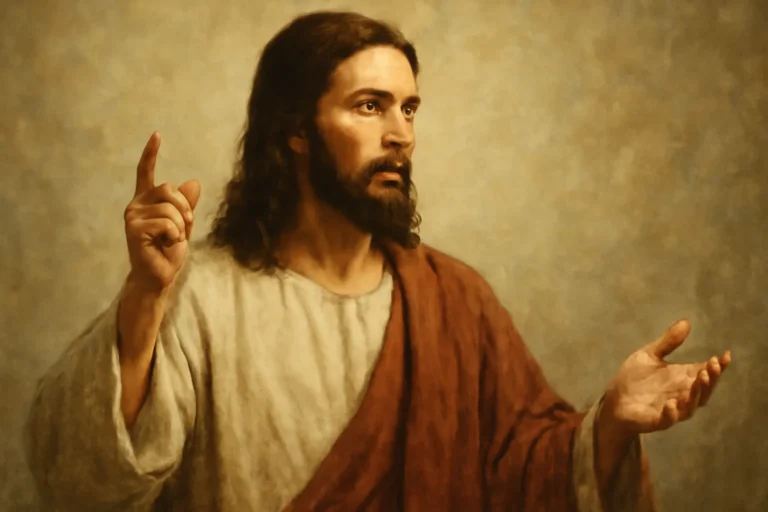
Isaiah’s message includes explicit calls for the nations to participate in God’s liberation. In Isaiah 42:6, the servant is described as a covenant for the people and a light to the nations. Isaiah 49:6 expands the mission: the servant is to be a light for the Gentiles so that God’s salvation may reach to the ends of the earth. These passages anticipate a universal horizon in which Israel’s redemption is tied to the transformation of the whole world. In interpretive terms, this broadened scope has been a touchstone for debates about the Messiah’s scope: is the Messiah primarily a national savior for Israel, or a universal figure whose reign blesses all peoples?
Temple and eschatology in a global frame
Some readings emphasize eschatological reform—an age in which divine justice, peace, and knowledge of God fill the earth (as echoed in Isaiah 11:9 and 60:3). The universalist texture is often linked to the ethical program of Isaiah: the nations will stream toward Zion, seeking the God of Israel because of the moral authority and beauty of the prophetic message. In this frame, the Messiah’s role includes breaking down barriers between Israel and the nations, leading to a future in which justice (not merely power) is the characteristic of leadership.
Interweaving Prophetic Threads: Convergences and Divergences
How the Messianic images relate to one another
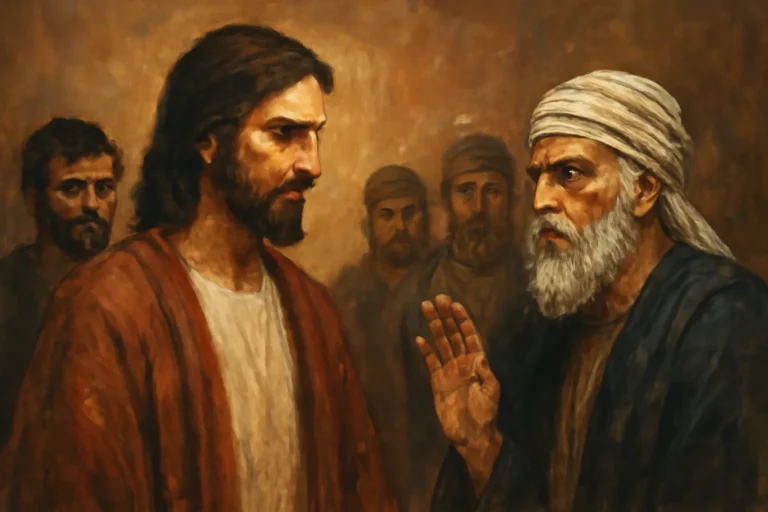
One of Isaiah’s remarkable features is its ability to juxtapose rival portraits without forcing them into a single pattern. The royal visions and the suffering servant motifs are not simply interchangeable; they illuminate different dimensions of God’s plan. For some readers, the ultimate Messiah is both a righteous king who governs with justice and a suffering servant who bears the world’s pain in order to heal it. For others, the servant serves as a corrective to overemphasizing political power, reminding readers that true deliverance also requires moral transformation and personal accountability. The way Isaiah compiled these strands invites readers to hold tension and to allow broad interpretive horizons rather than a single, deterministic forecast.
Historical Context and Interpretive Traditions
Historical setting of Isaiah and its messianic language
Isaiah’s prophecies come from a period marked by political upheaval, exile pressures, and the need to reimagine identity in the face of dominant empires. The Messiah in Isaiah literature reflects anxieties about sovereignty, the threat of foreign powers, and the hope for divine intervention that could restore national dignity. The prophetic voices knew how political realities shape religious hope, and they crafted images that could speak to people who faced immediate danger as well as those who looked forward to a future with radically transformed social and spiritual order.
Historical debates: Messiah in Judaism and in Christianity
Across traditions, the messianic themes in Isaiah have been read in contrasting ways. Jewish interpretations typically read the royal and prophetic layers as fulfilled in historical figures or as symbols of the ideal future that remains to be realized. Christian readings have often identified the Immanuel sign, the Virgin birth, the Suffering Servant, and the royal prophecies as pointing toward Jesus of Nazareth, with the Gospel writers and the apostolic authors drawing explicit lines between Isaiah’s text and the life and mission of Jesus. These readings are not merely about proof-texts; they express different theological horizons—God’s presence with his people, the nature of true kingship, and the means by which salvation enters history.
In modern sermons, devotional writings, and academic discussions, the Isaiah prophecies are often revisited to explore questions such as: What does it mean for God to be present with us in the face of danger? How should leadership be exercised in a world marked by injustice? What does divine justice require of communities when they encounter suffering? The Messiah images in Isaiah invite believers to imagine leadership as service, justice as mercy, and salvation as both personal renewal and social transformation. The texts invite a communal ethic: to work for a world where the vulnerable are protected, truth is spoken with integrity, and peace becomes a lived reality rather than a distant dream.
Interfaith and scholarly perspectives
Scholars across disciplines—biblical studies, theology, ethics, and history—continue to explore Isaiah’s messianic material with broad questions: How did ancient readers understand prophecies that seemed to point toward extraordinary figures? In what ways do later texts reinterpret or reframe earlier passages? How can readers today discern between historical memory, theological aspiration, and literary artistry in prophetic poetry? Engaging with these questions fosters a nuanced appreciation for Isaiah’s messianic prophecies as a dynamic, multi-voiced tradition rather than a single dogmatic statement.
Primary Passages in Isaiah: A Quick Reference
For readers who want a compact map, here is a quick reference to core passages that scholars and theologians often discuss in relation to messianic expectations. The following items are arranged by thematic emphasis rather than sequential order in the book.
Immanuel (Isaiah 7:14) – a sign of God’s presence with his people, with long-standing interpretations about virgin birth and divine accompaniment.
Royal hope (Isaiah 9:6–7) – the child-king who will rule with justice and establish an eternal reign.
The Servant Songs (especially Isaiah 42:1–4, 49:1–6, 50:4–9, 52:13–53:12) – a sequence highlighting suffering, fidelity, and the transformative power of innocent pain.
Light to the nations (Isaiah 42:6; 49:6; 60:3) – the universal vocation of the servant and the Messiah to bring knowledge of God to all peoples.
Spirit-empowered leadership (Isaiah 11:1–5) – the Spirit as an essential part of the messianic office, guiding justice and mercy.
Reading Isaiah’s messianic prophecies in a modern context invites humility and curiosity. The book’s richness lies in its ability to hold multiple visions together: the royal king who governs with justice, the Suffering Servant who bears our sorrows, and the Spirit-filled messenger who proclaims good news to the poor. The universal dimensions—calling the nations to worship the God of Israel—underscore a scope that many readers find profoundly hopeful: that God’s plans extend beyond one people to bless the entire world. Whether one approaches these texts from a Jewish or Christian perspective, from a historical-critical angle, or from a devotional lens, Isaiah’s messianic prophecies offer a robust toolkit for thinking about leadership, justice, suffering, and the meaning of faithfulness in the face of adversity.
In sum, the Messianic Prophecies in Isaiah provide a nuanced, multi-layered portrait of the Messiah that resists simple summarization. They invite readers to engage with questions of power, sacrifice, healing, and the ultimate renewal of all things. The tapestry woven by Isaiah’s words continues to inspire, challenge, and deepen faith for communities that seek a hopeful future rooted in God’s justice and mercy.