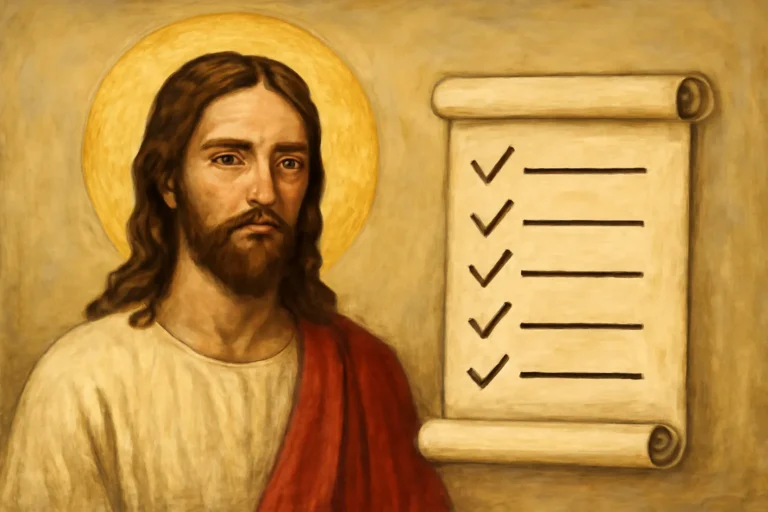
Is Jesus the Messiah? Biblical Evidence and Prophecy
The question “Is Jesus the Messiah?” has sparked rich dialogue across centuries and cultures. For some, the answer hinges on how one reads ancient prophecies, how the word Mashiach (Hebrew for “anointed one”) was understood in historical contexts, and how the life of Jesus of Nazareth is interpreted within the New Testament. For others, the same inquiry leads to different conclusions, shaped by alternative readings of scripture, tradition, and faith. This article surveys the biblical evidence and the prophecies commonly cited in discussions about whether Jesus is the Messiah, the Christ, or the Anointed One, with attention to both Jewish and Christian perspectives, and to the broader theological significance.
The central question and what “Messiah” means
In the Bible, the term Messiah comes from the Hebrew word mashiach, meaning “anointed one.” In the ancient world, to be anointed was to set someone apart for a sacred role, often as a king, priest, or prophet. By the era in which the Hebrew scriptures took shape, the concept had evolved into a living hope: a future figure who would deliver and restore Israel, bring justice, and establish God’s kingdom. In the Greek tradition of the earliest Christian writings, Messiah is rendered Christ (from christos), and Jesus is portrayed as the fulfillment of these ancient expectations. When people ask, “Is Jesus the Messiah?” they are often asking whether the life, death, and reported resurrection of Jesus align with the promises and patterns that many readers find in the scriptures of Israel.
Messianic expectations in the Hebrew scriptures
To assess whether Jesus as Messiah fits biblical expectations, it helps to survey the key strands of messianic hope found in the Hebrew Bible. These strands include a coming king descended from David, a suffering servant who bears the people’s iniquities, a righteous judge who establishes peace, and a figure who will bring about a new covenant in the land. Interpreters have braided these strands into a multifaceted portrait of the messianic figure, and different communities have emphasized different elements.
Key prophecies and themes
Birth and lineage: The expectation of a ruler from the line of David is a common thread. The prophecy in 2 Samuel 7:12-16 speaks of a future descendant of David who will establish an enduring throne. In the Hebrew Bible, the Davidic promise becomes a touchstone for messianic hope. Some later prophecies suggest a birth in Bethlehem and a special divine endorsement of the king’s rule.
Divine king and reign of peace: Passages such as Isaiah 9:6-7 and Isaiah 11:1-5 envision a ruler who brings justice, righteousness, and peace, with the Spirit of the Lord resting upon him. The imagery of a just king who will “rule with equity” and “judge the poor with righteousness” grounds many expectations of a political and moral redeemer.
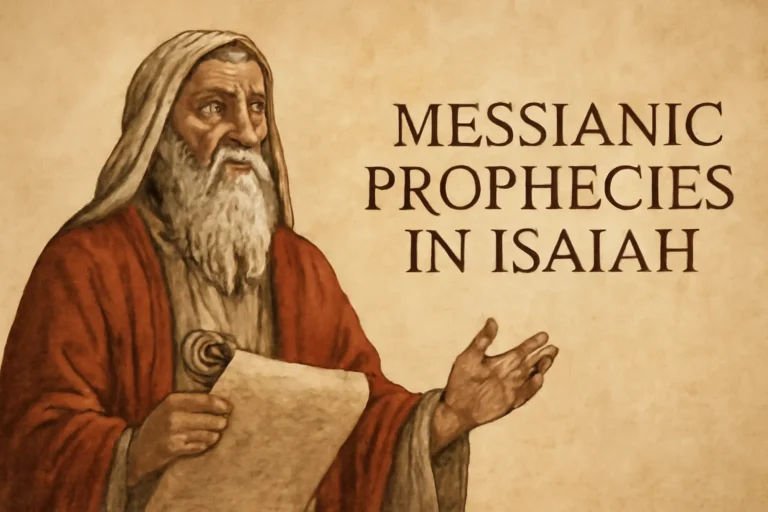
The suffering servant: The most debated strand appears in Isaiah 53, where a figure bears the sufferings of others and is pierced for transgression. Christians interpreting this passage often view it as prophetic foreshadowing of Jesus’ atonement, while Jewish traditions frequently understand it as representing Israel or a righteous remnant bearing trial in exile. The imagery of bearing pain and bearing sins makes this a central convergence point in discussions about the Messiah’s mission.
At-one-ment and sacrifice: The Red Sea-to-Exodus imagery evolves into themes of sacrifice and intercession. Psalms like Psalm 22 and Psalm 69 speak of suffering, cries for aid, and eventual vindication, which some readers interpret as typological foreshadowing of the Messiah’s crucifixion and resurrection in later Christian reading.
Divine presence and the new covenant: Some prophecies point toward a future time when God’s presence dwells with his people in a new way, and when a renewed covenant is established. Texts like Jeremiah 31:31-34 and Jeremiah 33:14-16 are read by Christians as anticipations fulfilled in Jesus’ ministry and the establishment of the church as the community of the Spirit.
Timing and fulfillment: Daniel’s visions, especially the ideas around a set period of prophetic weeks in Daniel 9:24-27, have led readers to wonder about the timing of the Messiah’s coming and the events surrounding his appearance. Debates over the exact timing—whether Jesus’ first appearance marks fulfillment or whether there is a future full realization—are a long-running feature of the discussion.
The New Testament presents a multifaceted case that Jesus is the Messiah, portrayed through narrative, teaching, and interpretation of scripture. The authors repeatedly link Jesus’ life and mission to the expectations described in the Hebrew scriptures, arguing that the Messiah would be a figure who fulfills specific prophecies and inaugurates God’s kingdom in a decisive way. For readers within the Christian tradition, the evidence coalesces in Jesus’ birth, life, death, and resurrection, which are understood as the climactic fulfillment of messianic prophecies.
Gospel portraits and messianic claims
Christ as title and claim: The New Testament consistently identifies Jesus as the Christ, the anointed one. In the Gospels, individuals and communities proclaim him as the long-awaited Messiah in various ways—often in connection with his authority, his teachings, and his acts of healing and exorcism.
Genealogical and regional expectations: Descriptions of Jesus’ birth in Bethlehem and descent from David and Abraham in accounts such as Matthew 1–2 and Luke 1–3 are read as aligning Jesus with the messianic lineage that the Hebrew scriptures emphasize. The insistence on Davidic descent is a key link for many readers who expect the Messiah to be a Davidic king.
Messianic titles in the Gospels: In addition to “Christ,” Jesus is identified as Lord, King, and Son of David in passages that interpret his acts as inaugurating God’s kingdom. The triumphal entry narrative, for instance, uses royal language and messianic recognition while reframing political power in terms of servanthood and eternal kingship.
Resurrection as vindication: For Christian readers, the resurrection is a decisive sign that Jesus fulfilled his messianic role in a uniquely salvific way. The empty tomb and post-resurrection appearances are read as God’s seal of approval on Jesus’ identity and mission.
Fulfillment patterns in Jesus’ ministry
Birth fulfillment: The expectation that the Messiah would be born of a virgin is cited in Matthew 1:22-23 (quoting Isaiah 7:14). Christians interpret this as a deliberate fulfillment event surrounding Jesus’ birth, though Jewish readings often understand the prophecy differently or in a broader historical context.
Prophetic preaching and miracles: Jesus’ teachings, parables, healings, and exorcisms are seen as embodying the authority and message that a Messiah would bring. In particular, the authority to forgive sins (a prerogative associated with divine justice) and to heal various ills is treated as a sign of the Messiah’s presence among the people.
Suffering and self-giving: The Gospels emphasize a suffering path for Jesus—an emphasis that resonates with the Isaiah 53 imagery of a suffering servant. Christians argue that the Messiah would not merely conquer nations but also bear the consequences of human sin and reconcile humanity to God through a costly act of love.
Tribulation, death, and crucifixion: The crucifixion, though scandalous to some readers, is often understood as the moment in which God’s love and justice meet the world’s brokenness. The cross is presented as the instrument through which sin is dealt with, enabling a new relationship between God and humanity.
Key passages and their interpretive paths
Across the biblical canon, several passages are frequently cited in discussions about whether Jesus is the Messiah, and readers differ in how they interpret them. It is essential to note that the same verse can be read in more than one way, depending on theological presuppositions, historical context, and literary study.
Isaiah 53 and the suffering servant
In Christian readings, Isaiah 53 is often hailed as a striking blueprint of the Messiah’s suffering and atonement—the figure who bears the sins of many and is pierced for transgression. Jewish interpretations typically view this chapter as representing Israel as a suffering nation or as a righteous servant figure who undergoes rejection and hardship. The Christian interpretation emphasizes substitutionary atonement and vicarious suffering, while the Jewish perspective emphasizes collective suffering or the fate of a faithful remnant within a larger history of exile.
Isaiah 7:14 and the virgin birth motif
Christian readings frequently cite Isaiah 7:14 as a prophecy that finds its fulfillment in Jesus’ virgin birth (quoted in Matthew 1:22-23). Jewish readers, however, do not always see this verse as pointing to a unique birth event tied to a future Messianic figure; instead, they may interpret it within a historical context relevant to the time of Ahaz and the political pressures facing Judah. This divergence illustrates how the same text can yield different conclusions about whether it points to Jesus as the Messiah.
Psalm 22 includes phrases that Christians read as foreshadowing Jesus’ crucifixion, such as being surrounded by enemies and a sense of abandonment by God. The New Testament cites this psalm in connection with Jesus’ suffering on the cross, arguing that the psalm’s language anticipates a Messiah who suffers in solidarity with human beings. Jewish readings typically affirm the psalm as a prayer of a righteous sufferer or as a king’s psalm that has broader historical resonance, without necessarily identifying the psalmist’s voice with a future individual beyond its original context.
Daniel 9 and the timing question
Daniel’s prophetic timetable—often framed as the “seventy weeks” prophecy—poses interpretive challenges. Some Christian readers interpret the “anointed one” who is cut off as referring to Jesus’ life and crucifixion, with the timing of his appearance tied to a precise calculation. Jewish interpreters tend to view the passage in light of the broader history of the Jewish people and the temple’s fate, sometimes relating it to events in the First and Second Temples. The debate about the specific timing of the Messiah’s coming remains a classic divergence between traditions.
Different traditions, shared questions
Two broad traditions shape how people answer the question about whether Jesus is the Messiah. On one side, Christian communities tend to read the Hebrew scriptures as foretelling Jesus’ life and mission in a way that culminates in his death and resurrection. On the other side, Jewish tradition maintains that the Messiah has not yet come and emphasizes a future figure who will fulfill the prophecies differently, often focusing on global peace, temple restoration, and universal recognition of God.
Jewish perspective: The Messiah is expected to be a human leader who restores Israel, rebuilds the Temple, gathers all Jews back to the land, and ushers in an era of universal peace. In this reading, specific passages are interpreted as describing events that have not yet occurred. The question is often framed around whether Jesus fulfilled these concrete expectations in a way that aligns with first-century messianic hopes.
Christian perspective: Jesus is described as the fulfillment of messianic prophecies, anticipated to bring not only spiritual renewal but also a reordering of cosmic and moral dimensions of life. The resurrection is presented as a decisive vindication of Jesus’ claims and as the pledge of a future consummation of God’s kingdom. For many Christians, this perspective emphasizes the person of Jesus as both divine and human, the Son of God who enters history to redeem humanity.
What the discourse looks like in practical faith and scholarship
When scholars and theologians discuss Is Jesus the Messiah?, they often distinguish between literary-historical analysis, theological interpretation, and faith commitments. The question is not purely an academic puzzle; it has pragmatic consequences for beliefs about salvation, the nature of God, and the shape of Christian worship and identity. Some readers treat the messianic question as a matter of historical accuracy—Did Jesus fulfil certain prophecies in a traditionally understood way? Others emphasize the theological meaning of Jesus’ mission—Does the life, death, and resurrection of Jesus reveal what God intends for humanity, regardless of whether every prophecy is matched line-for-line?
The role of faith, witness, and interpretation
In conversations about Jesus as the Messiah, personal faith often plays a central role. The biblical witness—texts across both testaments—poses questions about how God speaks through history, how human beings respond to divine initiative, and how communities discern prophetic fulfillment. The interpretive work involves looking at textual nuance, considering historical-cultural contexts, and listening to the voices of communities who have experienced the implications of these claims in their worship, ethics, and daily life.
Implications for theology and practice
Whether one affirms or contests the proposition that Jesus is the Messiah has wide-ranging implications. For Christians, the identification of Jesus with the Messiah shapes doctrines of the Incarnation, atonement, and eschatology. It informs the way communities understand sacraments, church life, and mission to the world. For Jews, the messianic expectation remains a living horizon—one that envisions the establishment of an era of universal peace, a rebuilt temple, and a direct encounter with God in a renewed national and spiritual life. The dialogue between these perspectives, including respectful engagement with biblical books that are interpreted differently, can deepen mutual understanding and illuminate how sacred texts have shaped communities across time.
Readers often raise thoughtful questions as they explore the topic. Here are a few representative queries and concise responses that help frame the discussion while respecting diverse viewpoints:
How do Christians use Isaiah 53 in relation to Jesus? Christians typically read Isaiah 53 as a prophecy of the suffering servant who bears sins and achieves redemption for many, with Jesus’ crucifixion seen as the fulfillment. Jewish readers often interpret it as referencing Israel’s own suffering or as a collective figure representing the faithful remnant, rather than a single future individual.
Does the New Testament claim that Jesus fulfills all messianic prophecies? The New Testament argues that Jesus fulfills a broad set of messianic patterns—birth, lineage, suffering, and resurrection—while acknowledging that some prophecies await future realization. Jewish tradition tends to challenge or reinterpret the same prophecies within different hermeneutical frameworks.
What about prophecies that seem to describe a kingly, universal ruler? Many passages highlight an ideal ruler who brings justice and peace. Christians tend to see Jesus as inaugurating a spiritual kingdom that ultimately will be realized in its fullness at the end of time, while Jewish readings often insist on a future, literal fulfillment in the awaited messianic era.
Is belief in Jesus as the Messiah necessary for salvation? Different faith communities answer this differently. The Christian tradition typically teaches that faith in Jesus as Messiah and Son of God is central to salvation, while other traditions place emphasis on covenantal fidelity to God and righteous living in alignment with divine will, with varying expectations about the messianic era.
A closing reflection on the significance of the debate
Whether one approaches this topic as a scholar, a person of faith, or a curious reader, the conversation about Is Jesus the Messiah? invites deeper engagement with biblical literature, the history of interpretation, and the lived experience of faith communities. The debate has shaped art, music, theology, and ethics for two millennia, prompting readers to reflect on questions about identity, salvation, and promise. In that sense, the inquiry itself—trying to chart the biblical evidence and prophetic expectations—becomes a journey through the ways people have understood the presence and purpose of God in history.
Notes on interpretation and study
For readers seeking to explore this topic further, a few practical considerations can guide study. First, examine the context of each prophecy: historical setting, literary genre, and the original audience. Second, recognize the distinction between typology (reading events as foreshadowing later fulfillment) and fulfillment (claiming direct and immediate realization in a person or event). Third, be aware of interpretive frameworks—whether Jewish or Christian—that influence how texts are read. Finally, consider the broader question of how faith communities integrate interpretation with devotion, worship, and daily living. The question “is jesus the messiah” thus becomes not only a historical assessment but also a living invitation to encounter God’s story as read, interpreted, and experienced by communities across time.
As readers navigate the question “is Jesus the Messiah?”, they engage a conversation that bridges history, theology, and spiritual experience. Whether one emphasizes the biblical witness, the historical context, or the lived faith communities that continue to worship and interpret these themes, the discussion remains a vibrant and ongoing part of how humanity seeks to understand God’s promises to the world.