Core Beliefs of Christianity: A Comprehensive Guide
Christianity is a global faith rooted in the conviction that there is one God who has revealed himself to humanity in history, in Scripture, and most profoundly in the life of Jesus Christ. At its core, Christianity seeks to understand who God is, who Jesus is, how humans relate to God, and how God plans to renew the world. This article presents a thorough map of the core beliefs of Christianity, exploring the central tenets that most traditions hold in common, while also acknowledging the notable differences that shape Catholic, Orthodox, and Protestant expressions of the faith. The goal is to provide a comprehensive reference that helps readers grasp the essential ideas that have guided believers for two millennia and continue to shape Christian worship, ethics, and mission today.
One of the most distinctive and foundational beliefs across Christian traditions is the nature of God as a triune being: three persons in one essence. The Father, the Son, and the Holy Spirit are not three separate gods, but one God who exists eternally in relationship within the Godhead. This doctrine has profound implications for how Christians understand creation, prayer, revelation, and salvation.
The Father is the source of all that exists, the architect of salvation, and the one to whom believers often turn in worship and prayer.
The Son—Jesus Christ—becomes fully human while remaining fully divine, uniquely mediating between God and humanity.
The Holy Spirit dwells within believers, guiding, teaching, empowering, and transforming lives to reflect God’s character.
In this framework, the Trinity is not a puzzle to be solved but a mystery to be reverenced, a lens through which Christians understand God’s initiative in the world and the relational nature of God’s love. The concept of the Trinity also informs how Christians view creation, the ongoing work of the church, and the ethical demands of discipleship. Within this divine reality, believers find the source of communion with God, the empowerment to live rightly, and the hope of everlasting life in fellowship with the Triune God.
The Person of Jesus Christ
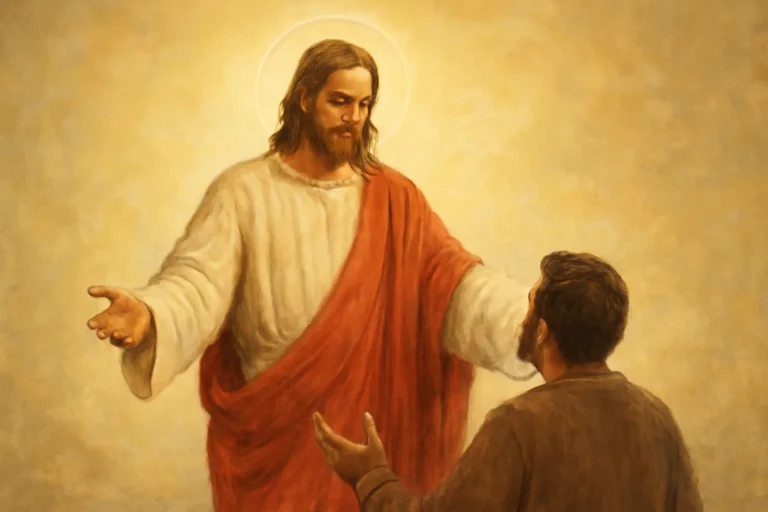
Central to Christian faith is the person of Jesus Christ, whom Christians confess as The Son of God and the long-awaited Messiah. Jesus is understood as both fully divine and fully human, a reality known as the incarnation. In him, the eternal Word becomes flesh and enters into the human story in order to redeem it.
The Incarnation and Ministry
By taking on human nature, Jesus shares in the human condition—temptations, suffering, joy, and the daily rhythms of life—while remaining without sin. His life reveals God’s character in a tangible way. His teachings illuminate the path to love, justice, mercy, and humility. The miracles he performs testify to the presence of the Kingdom of God breaking into history, demonstrating his authority over nature, illness, evil, and death.
Crucifixion, Resurrection, and Ascension
The crucifixion of Jesus is understood as the climactic act of self-giving love, where he bears the penalties of sin for humanity’s sake. Christians believe that through his death, the righteous justice of God and the immeasurable scope of God’s mercy meet. The resurrection of Jesus—conquering death and affirming his divine authority—serves as the cornerstone of Christian hope. The ascension to heaven marks Jesus’ exaltation and ongoing intercession for believers. Collectively, these events constitute the gospel, the good news that God has acted decisively to redeem creation and invite humanity into renewed relationship with him.
The Holy Spirit and the Life of Believers
The Holy Spirit is not a distant force but a personal presence who animates Christian life. The Spirit’s work can be described in several interrelated dimensions:
Indwelling: The Spirit resides within believers, enabling a transformed life and a growing conformity to Christ.
Conviction and Guidance: The Spirit teaches, consoles, and directs believers in truth, urging them toward repentance when needed and into wiser obedience.
Empowerment for Witness: The Spirit equips Christians for mission, giving spiritual gifts that serve the church and the world.
Sanctification: The Spirit fosters holiness, producing in believers the fruits of love, joy, peace, patience, kindness, goodness, faithfulness, gentleness, and self-control.
Across Christian traditions, there is a shared conviction that the Spirit’s activity is essential for faith to be vibrant—without the Spirit’s work, religious belief can become merely external. The Spirit’s work also emphasizes the ongoing renewal of creation, the healing of relationships, and the generation of ethical courage in a broken world.
Scripture and Revelation: Authority in God’s Word
Christians affirm that God has disclosed himself and his will through revelation, and the primary means of access to this revelation is Scripture. The Bible, in its various formations, is regarded as divinely inspired, trustworthy for teaching and guidance, and authoritative in matters of faith and practice.
The Authority of Scripture
Most Christian traditions hold that the biblical canon comprises the books recognized as inspired across the Old and New Testaments. The belief in the Bible’s truthfulness undergirds doctrines, ethics, worship, and church governance. Christians approach Scripture with reverence, seeking to discern its enduring relevance for contemporary life rather than treating it as a mere historic artifact.
The Role of Tradition and Community
While Scripture is central, many traditions also emphasize the role of tradition and the living interpretation of the church. In Catholic and Orthodox churches, Tradition—the living transmission of beliefs from the apostles through the church into present practice—complements Scripture. Protestant traditions typically emphasize the principle of sola Scriptura, the idea that Scripture alone is the ultimate authority for faith and practice, though many also acknowledge the value of historical creeds, confessions, and the teachings of the church. Across the spectrum, the community of faith plays a crucial role in reading, interpreting, and applying God’s Word to life.
Creation, Fall, and Redemption
Christianity presents a broad narrative arc that begins with God’s creative sovereignty, explains the rebellion of humanity through sin, and culminates in God’s plan to restore and renew all things. This framework provides anchors for understanding human purpose, moral responsibility, and the hope of transformation.
Creation: God intentionally spoke the world into being, and humans bear God’s image, called to stewardship, relationship, and worship.
Fall: Human beings freely chose disobedience, entering into a broken state that affected every dimension of life—spiritual, relational, physical, and social.
Redemption: God’s response to the Fall centers on grace enacted through Jesus Christ, drawing humanity back into right relationship with the Creator and with one another.
The narrative invites believers into a story of restoration where God’s purposes for creation—justice, mercy, reconciliation, and peace—are pursued in the power of the Spirit and in solidarity with the vulnerable and the marginalized. This broad arc informs Christian ethics, worship, and mission, reminding Christians that their present tasks are part of a larger divine renovation project.
The Gospel and Justification by Faith
The gospel is the message that God is reconciling the world to himself through Jesus Christ. A central element of this message is the doctrine of justification by faith, which claims that people are declared righteous before God not by their own works but by faith in Christ’s atoning work. This emphasis on grace does not negate personal responsibility; rather, it centers trust in God’s mercy and invites a life of faith that bears fruit in obedience.
Grace, Faith, and Justification
Two closely connected ideas shape this area of belief. First, grace is the unearned favor of God offered to sinners. Second, faith is the trust that receives God’s gift, a response that acknowledges Christ as Lord and Savior. The process of justification—being declared righteous in God’s sight—happens when a person believes the gospel, and it is understood as an act of God’s initiative rather than a human achievement. The result is a reconciled relationship with God, with a transformed life that gradually reflects the character of Jesus.
Salvation: Grace, Faith, and Sanctification
Salvation in Christian tradition is often described as a multi-layered journey that begins with God’s initiative and continues through the believer’s life. Three elements recur across many Christian teachings: grace, faith, and sanctification.
Grace is God’s generosity toward sinners, received through faith and expressed in the gift of new life.
Faith is trust in Christ and in God’s promises, accompanied by a turning away from self-reliance toward reliance on God.
Sanctification is the ongoing process of being made holy, empowered by the Spirit, and characterized by love, obedience, and moral growth.
While the specifics of how salvation unfolds can vary among traditions—such as beliefs about the role of baptism, the timing of assurance, or the relationship between faith and works—the core conviction remains: salvation is grounded in Christ, received through faith, and evidenced in a life transformed by the Spirit.
The Atonement and Resurrection
A central focus of Christian belief is the atonement—the reconciliation of humanity to God through the death of Jesus—and the accompanying resurrection, which validates the divine victory over sin and death. Christians understand Jesus’ suffering and death as a substitutionary act of love, bearing the penalty that justice requires so that believers can be forgiven and renewed. The resurrection is not only a historical event but a guarantee of new life and the future hope of universal renewal.
Atonement: Jesus’ death satisfies divine justice and makes possible restored relationship with God.
Resurrection: Jesus rises from the dead, conquering death and inaugurating the new creation.
Redemption extends beyond individual souls to the entire cosmos, affirming God’s intention to heal and restore all things.
In many Christian traditions, the Lord’s Supper or Eucharist is understood as a memorial of the atonement and a continuing participation in the life of Christ. Baptism is often seen as a sign of inclusion into the body of Christ and participation in the benefits of his death and resurrection. Taken together, these practices anchor the believer’s identity in Christ and sustain the communal memory of God’s saving work.
The Church and the Sacraments
Christians describe the church as the people of God gathered to worship, learn, serve, and bear witness to the gospel. The church is a community of worship, a school of discipleship, and a willful agent of mission in the world. Within this community, certain practices—often called sacraments or ordinances—serve as visible signs of invisible realities and means of grace.
Baptism
Baptism is widely regarded as a public declaration of faith and a symbol of dying to the old life and rising to new life in Christ. The manner and timing of baptism differ among traditions: infant baptisms are common in Catholic, Orthodox, and some Protestant churches, while believers’ baptism (adult baptism after profession of faith) is emphasized in many Protestant groups. Across the spectrum, baptism is a sign that one belongs to Christ and to the church, marking a public commitment to live under his Lordship.
The Lord’s Supper / Communion
The Lord’s Supper is a ritual remembrance of Jesus’ love and sacrifice, often described as a communal meal that unites the church with Christ and with one another. Some traditions teach the real presence of Christ in the elements in some way, while others view it primarily as a symbolic act of remembrance. Regardless of interpretation, the practice emphasizes gratitude for redemption and dependence on Christ’s life, death, and resurrection.
Beyond baptism and the Lord’s Supper, various Christian communities recognize other rites—such as confirmation, ordination, or anointing for healing—as part of the broader life of faith. While the emphasis and exact practices vary, the underlying idea is that spiritual vitality is nurtured within a life of worship, service, and community accountability.
Prayer, Worship, and Growth in Holiness
Prayer and worship are foundational disciplines for Christians, shaping their relationship with God and forming the habits by which faith becomes visible in daily life. Prayer often includes praise, confession, intercession for others, and listening for God’s guidance. Worship gathers the community in familiar rhythms of liturgy, song, scripture, and reflection. Through these practices, believers are formed into the character of Christ and equipped for service in the world.
Holiness, or sanctification, is not merely a personal ambition but a divine work entrusted to the Spirit within a community. Christians seek to align their desires, decisions, and actions with biblical ethics, enabling them to love God and neighbor more fully. This ethical transformation touches every area of life—family, work, technology, justice, and culture—reflecting the biblical call to be salt and light in a broken world.
Central to Christian life are clear moral convictions about how humans ought to relate to God, to one another, and to the created world. The greatest commandments—to love God with all one’s heart, soul, mind, and strength, and to love one’s neighbor as oneself—provide the compass for ethical living. The ethical tradition of Christianity is not abstract theory; it translates into concrete actions such as mercy to the poor, justice for the oppressed, honesty in speech, fidelity in relationships, and stewardship of the earth’s resources.
Respect for human life and dignity, including care for the vulnerable and marginalized.
Commitment to truthfulness, integrity, and peaceable conflict resolution.
Love expressed through service, generosity, and acts of compassion.
Sexual ethics rooted in the dignity of persons, committed relationships, and responsibility.
Because Christian ethics depend on a living relationship with God, they are not static rules alone but guided by the Spirit, shaped by the teachings of Jesus, and tested in community discernment. Different traditions emphasize various emphases—social justice, personal piety, evangelistic boldness, or contemplative spirituality—yet all share a desire to live in ways that honor God and serve humanity.
End Times and Restoration: Eschatology
Christian eschatology concerns the ultimate future of the world and the people of God. While there is diversity in detail, common threads run through most Christian understandings: God’s victory over evil, the return of Christ, the resurrection of the dead, final judgment, and the promise of a new creation in which injustice, pain, and death are no more.
Second Coming: Jesus will return in glory to judge the living and the dead and to establish God’s reign in fullness.
Resurrection of the dead: The dead will be raised, and all people will stand before God in judgment.
Heaven and Hell: The eternal destinies reflect the faithfulness of individuals to God, with some traditions teaching a continued, personal fellowship with God in heaven and others emphasizing the ultimate inclusion in the new creation.
New Creation: God will renew all creation, eradicating sin, suffering, and decay, so that heaven and earth are united in perfect harmony.
These beliefs do not just describe the future; they shape present hope, courage, and moral decision-making. Christians are encouraged to live with the expectation of God’s future, engaging in acts of mercy, justice, and evangelism as signs that the coming kingdom is already breaking into history.
The Mission of the Church: Witness and Service
A defining aspect of Christian faith is its call to mission. Christians are commissioned to share the good news of Jesus Christ with others and to demonstrate God’s love through acts of service. The Great Commission—to go and make disciples of all nations, baptizing them and teaching them to observe all that Jesus commanded—has inspired missionary movements, churches, schools, hospitals, and humanitarian initiatives across cultures and centuries.
Proclaiming the gospel with clarity and humility, inviting people to respond with faith and repentance.
Discipling new believers through teaching, baptism, and mature, communal life.
Serving the world as ambassadors of God’s grace, not only by preaching but by practical care for the poor, the sick, the imprisoned, and the marginalized.
The mission is pursued within the context of the church’s worshipful identity, its governance, and its shared responsibilities. Different Christian communities express mission through varied emphases—evangelistic outreach, social action, or cultural engagement—yet all share the underlying conviction that the risen Christ sends his followers into the world to bear witness to God’s reign of peace, justice, and healing.
Unity and Diversity Among Traditions
Christianity is deeply diverse, with different streams shaping distinct theological emphases, liturgical practices, and ecclesial structures. Broadly, Christians commonly distinguish among Catholic, Orthodox, and Protestant families, each with particular contours of belief and practice. While they may disagree on certain doctrinal details or church governance, they share a common faith in the triune God, the centrality of Jesus Christ, the authority of Scripture (to varying degrees and in various forms), and the mission of God in the world.
Catholic tradition emphasizes the authority of the Church’s magisterium, the role of Tradition, and the sacramental life as a means of grace.
Orthodox churches stress a sacramental and liturgical continuity rooted in the early church, with a strong sense of continuity with the patristic tradition and a conciliar approach to decision-making.
Protestant traditions highlight the primacy of Scripture, the priesthood of all believers, and the variety of church forms, from liturgical to charismatic expressions of faith.
Within these broad categories, countless denominations and movements emphasize different facets of the faith. Some focus on personal conversion and evangelism, others on social justice and communal justice, while still others prioritize radical worship, contemplative practice, or biblical scholarship. What unites them is the conviction that Jesus Christ is the center of life and that God’s grace is the doorway to a transformed existence in the present age and the age to come.
Common Symbols, Practices, and Spiritual Tools
Across diverse Christian communities, certain spiritual practices and symbols help believers live out their faith with intentionality. These are not mere rituals but meaningful channels for encountering God and growing in love.
Prayer: A primary means of dialog with God, including praise, confession, gratitude, and intercession for others.
Scripture study: Regular reading, meditation, and application of biblical text to life and decision-making.
Worship: Communal gatherings that unite singing, preaching, Scripture reading, and prayer to honor God.
Fellowship: Shared life within a community that nurtures accountability, encouragement, and mutual service.
Service and justice: Concrete acts of mercy, advocacy for the vulnerable, and efforts to heal divisions and injustices in society.
In addition, many Christians engage in rituals such as baptism and Holy Communion as outward signs of inward grace. Through these practices, believers enact the gospel, remind themselves of God’s promises, and sustain a hopeful identity in a world marked by change and challenge.
Distinct Emphases Across Traditions: Variations in Core Beliefs
Although the vast majority of Christian communities share the essential framework described above, there are notable distinctions in how specific doctrines are understood or prioritized. These differences arise from historical developments, cultural contexts, and interpretive traditions. Some of the most visible variations include:
Nature of the Church: Some traditions emphasize the church as a visible, hierarchical institution with sacramental life (as in the Catholic and Orthodox churches). Others emphasize the church as a gathered community of believers (as in many Protestant setups) and stress the priesthood of all believers.
Sacraments: The number and meaning of sacraments vary. For example, Catholics typically recognize seven sacraments; many Protestants emphasize two primary sacraments (baptism and the Lord’s Supper) as instituted by Christ, with other rites treated as ordinances or practices of the church.
Authority: The balance between Scripture, Tradition, and the teaching authority of the church differs. This affects how doctrine develops, how worship is conducted, and how believers discern truth in uncertain times.
Justification and Sanctification: The relationship between faith and works, and the precise way God’s grace is applied to a believer, can vary. Some traditions stress assurance and perseverance, while others emphasize sanctification as a lifelong cooperative process with divine enablement.
Ecclesiology and Worship: Liturgy, music, and congregational life reflect different theological priorities—some traditions cultivate high liturgy and sacramental unity; others pursue contemporary worship, charismatic gifts, or evangelistic zeal.
These variations are not contradictions but expressions of a shared gospel that remains the anchor for diverse communities. Readers new to Christianity can encounter a rich tapestry of practice, while seasoned believers can appreciate how different paths illuminate distinct aspects of the same faith.
Beyond doctrine, core Christian beliefs are intended to transform daily life. The conviction of a Creator who loves the world leads to stewardship of the environment, care for the poor, and responsible decision-making. The life, death, and resurrection of Jesus call believers to imitate Christ’s humility and to pursue justice and mercy. The Spirit’s indwelling empowers moral courage, resilience in suffering, and hopeful endurance in the face of injustice or persecution. The church’s mission to proclaim the gospel and serve others shows up in education, healthcare, disaster relief, and countless acts of community-building around the globe.
In practical terms, Christians are encouraged to cultivate disciplines that nurture relationship with God and neighbor. These include regular prayer, honest writing or journaling about spiritual growth, participation in worship with a community, reading Scripture responsibly, and seeking opportunities to serve. The aim is not perfection in a vacuum but a faithful, growing orientation toward God in which love and truth shape decisions about family, work, politics, and culture.
For readers seeking a structured way to study the core beliefs described above, the following approach can be helpful. It is not a rigid catechism but a practical method to grow in understanding and application.
Study God’s nature: Read passages about the Trinity and reflect on how God’s threefold work informs creation, revelation, and redemption. Note how God’s unity and diversity coexist in the biblical witness.
Explore the person and work of Jesus: Examine the incarnation, atonement, resurrection, and ascension. Consider what it means that Jesus is both fully God and fully human and how his work meets human longing for forgiveness and meaning.
Engage the Spirit’s presence: Learn how Scripture describes the Spirit’s role in guidance, gifting, and transformation. Reflect on personal experiences of spiritual fruit and discernment within community life.
Read Scripture in community: Compare how different traditions approach Scripture and Tradition, noting areas of agreement and respectful disagreement. Practice methods of interpretation that honor context, genre, and witness.
Delve into salvation history: Consider the creation, fall, and redemptive arc and how it shapes a Christian hope that God will renew all things.
Reflect on the gospel: Contemplate how grace and faith interact in justification, and how a life of love testifies to genuine trust in Christ.
Engage with the sacraments: If you are part of a church tradition that practices baptism or communion, reflect on what these rites signify about belonging to Christ and the community of believers.
Consider eschatology: Explore what Christians believe about the end of the age and the new creation, and how that belief shapes present ethics and hope.
By engaging with these themes in a balanced way—through study, worship, dialogue, and service—readers can develop a coherent and lived understanding of the core beliefs that have sustained Christians across cultures and eras.
The theological vocabulary of Christianity includes many terms that are historically dense. To support accessibility, it can be helpful to define key terms in plain language when first encountered. For example, salvation can be described as being rescued from the consequences of sin and restored to a right relationship with God; grace is God’s generosity toward the undeserving; sanctification is the ongoing process of becoming more like Christ in character and conduct. By building a shared glossary, communities can discuss deeply held beliefs in ways that invite learning rather than division.
Ultimately, the core beliefs of Christianity articulate a hope that God has acted in history to redeem the world, that Jesus embodies God’s mercy, that the Spirit sustains faith, and that the church exists to witness to this news and to embody love in the world. The pursuit of these beliefs is not merely an intellectual exercise but a lived reality that shapes worship, community life, ethics, and service to the world.
Readers who engage with the core beliefs of Christianity may discover a durable framework for thinking about existence, meaning, and purpose. The good news at the heart of Christianity is not limited to ancient texts or distant history but continues to speak into contemporary life—offering hope to the weary, justice for the vulnerable, reconciliation for ruptured relationships, and a vision of a renewed creation. Whether one approaches the faith as a lifelong tradition, a new exploration, or a scholarly pursuit, the core beliefs discussed here offer a map that can guide honest questions, confident faith, and humble action in a complex world.
As a living tradition, Christianity invites ongoing dialogue among diverse communities. Engaging respectfully with differences—whether in worship style, doctrinal emphasis, or cultural expression—can enrich understanding and renew commitment to love of God and neighbor. In this sense, the core beliefs of Christianity function not only as propositions to be agreed upon but as a shared vocation to participate in God’s work of healing and renewing all things through Jesus Christ, in the power of the Holy Spirit, for the glory of God the Father.