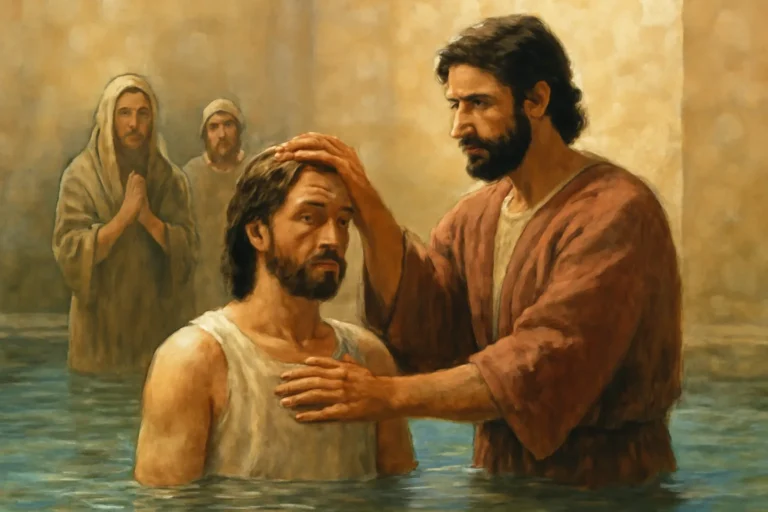
Water baptism symbolizes spiritual purification, the believer’s death to sin, and their rebirth into new life in Christ. It signifies entrance into the covenant community and spiritual transformation.
📖 Key Biblical Occurrences
Reference
Context
Symbolic Meaning
Matthew 3:11
John the Baptist’s call to repentance and imminent baptism of water for forgiveness
Represents purification from sin and readiness for the coming of Jesus
Romans 6:3-4
Paul explaining baptism as identification with Christ’s death and resurrection
Dying to the old self and rising anew in spiritual life
📜 Old Testament Usage
In the Old Testament, water symbolizes cleansing, purification, and God's judgment. Ritual washings, such as those by priests before entering sacred space (Leviticus 16:4), foreshadow spiritual purification. The Great Flood (Genesis 6-9) exemplifies divine judgment and renewal through water, hinting at new beginnings. Ritual washings by Israelites (e.g., mikveh) embody purification for worship and repentance. These acts prefigure the New Testament concept of spiritual cleansing. The crossing of the Red Sea (Exodus 14) demonstrates divine salvation through water, symbolizing liberation from bondage and entry into new life. Overall, water in the Old Testament signifies both divine judgment and purification, setting the stage for baptism as spiritual rebirth in Christ.
✝️ New Testament Usage
In the New Testament, water baptism becomes central as a sacrament of initiation into the Christian faith. John the Baptist’s baptism underscores repentance and anticipating Jesus’ ministry. Jesus’ own baptism (Matthew 3:13-17) marks the divine endorsement of the ritual. Paul describes baptism as participation in Christ’s death and resurrection (Romans 6), emphasizing spiritual rebirth. The Great Commission (Matthew 28:19) commands baptizing believers, establishing it as a fundamental practice. Water symbolizes cleansing from sin, the death of the old self, and new life in Christ. The baptism of the Holy Spirit (Acts 1:5; 2:4) further enriches its symbolism, representing divine empowerment. Over time, baptism evolves into a profound act of faith, incorporating both inward spiritual renewal and outward community inclusion.
From Genesis to Revelation, water's symbolism evolves from divine judgment and chaos to purification and renewal. In Genesis, water signifies destruction (Flood) and potential salvation. The crossing of the Red Sea illustrates divine salvation through water. In Jewish tradition, ritual washings develop as symbolic acts of spiritual cleansing. With John the Baptist and Jesus, water's significance shifts to repentance and initiation into new life. Early Christian interpretation sees water baptism as prefiguring Christ’s death and resurrection. In Revelation, water represents eternal life and divine healing (Revelation 22:1-2). The ongoing evolution highlights water as a prophetic symbol of death to the old self and rebirth into God's new creation, culminating in eternal renewal.
🏛️ Ancient Near East Context
In Ancient Near Eastern cultures, water symbolized chaos and divine power, often associated with gods like Enki or Tiamat. Ritual washings and aquatic motifs represented purification and renewal practices. In Greece and Rome, water was linked to purification rites and initiation ceremonies, reflecting the importance of cleansing before entering sacred or civic spaces. Such cultures viewed water as a boundary between chaos and order, reinforcing its role as a symbol of transformation and divine authority—concepts seamlessly integrated into biblical symbolism of baptism.
✡️ Jewish Interpretation
Jewish tradition interprets water as a symbol of spiritual purification, repentance, and divine cleansing. Ritual baths (mikveh) serve as a means of spiritual renewal, especially before religious festivals or sacred duties. Rabbinic teachings see immersion as a purification ritual for the soul, foreshadowing messianic restoration. Mystical interpretations (Kabbalah) link water with the divine emanations and spiritual cleansing necessary for closeness to God. The flood narrative and the crossing of the Red Sea reinforce water’s role in divine judgment and salvation—paralleling Christian baptism as a passage from sin to new life.
Church Fathers like Augustine and Aquinas viewed water baptism as essential for salvation, symbolizing cleansing from original sin and spiritual rebirth. It signifies a believer's union with Christ’s death and resurrection, effectively initiating them into the Church. Christian liturgy emphasizes its role in grace and redemption, often drawing on its biblical roots. Key doctrines link baptism to regeneration, renewal, and incorporation into Christ’s body. The symbolism deepens with the belief that baptism not only purifies but also confers the Holy Spirit, transforming the believer from death to life and preparing them for eternal communion with God.
🔗 Typology: Connections to Christ
Water baptism prefigures Christ’s death and resurrection, serving as a typological foreshadowing of salvation. It connects to the death of the old Adam and rebirth in Christ, illustrating the unity of the believer with Jesus’ redemptive work. The flood points to cleansing through divine judgment, while crossing the Red Sea anticipates liberation and new identity. As a type of initiation, water baptism symbolizes entrance into the spiritual family of God and the ongoing reality of renewal in the Church, linking the Old and New Covenants.
⛪ In Worship & Liturgy
Water plays a vital role in Christian worship through baptismal rites, often performed in fonts, lakes, or rivers, symbolizing purification and new life. Churches incorporate water in architectural features such as baptismal fonts, basins, or pools, emphasizing its sacred significance. Liturgically, water is blessed and used during Easter Vigil, renewal services, and other sacraments. In many traditions, the baptismal act is accompanied by specific prayers, anointings, and the sign of the cross, highlighting its importance as a sacramental act of initiation. The symbolism of water also influences hymnography, prayers, and visual art within worship spaces.
🌍 Modern Cultural Impact
Water baptism has deeply influenced Western art, inspiring countless paintings, sculptures, and literature depicting the biblical scene and themes of purification. In popular culture, baptism is often portrayed in films and novels as pivotal moments of transformation and new beginnings. The ritual's symbolism extends beyondChristianity into secular contexts, representing renewal, forgiveness, or fresh starts in personal narratives. Its universal themes of cleansing and rebirth resonate broadly, shaping cultural understandings of moral and spiritual renewal.
Misconception: Water baptism automatically guarantees salvation. Correction: Many Christian traditions teach that baptism is an outward symbol of inward faith, not a guarantee of salvation, which depends on personal faith in Christ.
Misconception: Baptism is merely a symbolic act with no spiritual effect. Correction: Christian doctrine holds that baptism is a sacrament that imparts grace and unites the believer with Christ spiritually.
❓ Frequently Asked Questions
Is baptism necessary for salvation?
Most Christian traditions view baptism as an essential sacrament that symbolizes salvation and new birth, though some believe faith alone is sufficient. It is generally seen as a vital step in the believer’s spiritual journey.
Can baptism be performed at any age?
Yes, many Christian churches baptize infants, believing in original sin and the importance of early initiation. Others practice believer’s baptism, performed upon personal confession of faith, often in adolescence or adulthood.
What does immersion vs. pouring signify?
Immersion symbolizes dying and rising with Christ, emphasizing complete renewal. Pouring or sprinkling represents cleansing and purification, and is suitable when immersion isn’t possible.
Does baptism need to be performed by a priest or pastor?
Most Christian denominations require baptism to be performed by an ordained minister or authorized person, emphasizing its communal and sacramental nature.
✨ Did You Know?
Archaeological findings of early baptisteries date back to the 3rd century AD, highlighting the importance of baptism in early Christian communities. Additionally, inscriptions and ancient art reveal that baptism was often accompanied by elaborate rituals, demonstrating its central role in shaping early church identity.