Meaning, History, and Biblical Significance of Sukkot (Sukkot, Sukkos, Succoth, Succoth)
Sukkot is one of the most distinctive and oldest annual observances in the biblical calendar. Its name, as it appears in the Hebrew text, comes from the root s-k-k, which conveys the idea of tents, huts, or temporary shelters. The festival is known in English as the Feast of Tabernacles or the Feast of Booths, reflecting two central aspects: memory and harvest. In English, you may also encounter transliterations such as Sukkah, Sukkot, Sukkos, or Succoth, all pointing to the same biblical phenomenon. This article surveys the meaning, history, and biblical significance of Sukkot, drawing on its biblical roots, its development through Jewish tradition, and its continuing resonance in religious life today.
Origins and the Biblical Meaning of the Term
The word sukkah (singular) designates a booth or hut with a roof made of natural materials. The plural form sukkot or sukkoth denotes multiple such booths. In the Bible, these temporary dwellings are not just symbolic; they are a literal summons to live in shelters for a period of seven days or more. The idea is twofold: to remember the Israelites’ journey in the wilderness and to celebrate a season of harvest and ingathering.
The biblical phrasing emphasizes that the people should dwell in sukkot during the festival. In Leviticus 23, the command to observe the festival of Sukkot culminates in a directive to dwell in booths for seven days, “that your generations may know that I made the children of Israel to dwell in booths [sukkot] when I brought them out of the land of Egypt” (Leviticus 23:42–43, KJV). This linking of memory with a physical act—living in temporary huts—gives the festival its distinctive character. In Deuteronomy 16:13–15, the same festival is described in terms of the agricultural calendar: a seven-day festival in accordance with the harvest, with the added command to rejoice before the Lord during the ingathering. The dual emphasis—remembrance of the wilderness and celebration of the harvest—runs through the biblical portrayal of Sukkot.
Names and Variations in the Biblical Text
Sukkot, the plural form, highlighting the plurality of booths or shelters over the festival period.
Sukkah, the singular shelter itself, the dwelling people are to inhabit.
English translations occasionally render the festival as Feast of Tabernacles or Booths, which reflect the two primary associations—tabernacles (temporary dwelling) and booths (the makeshift shelters).
The term Chag HaAsif (Festival of the Harvest) also enters the conversation in Jewish tradition, underscoring the agricultural dimension of Sukkot as a time of thanksgiving for the year’s produce. Taken together, these linguistic and thematic strands show that Sukkot is not a monolithic idea but a layered festival with memory, ritual practice, and agricultural cycles all interwoven.
The Biblical Origins: Wilderness Memory, Divine Protection, and Temple Life
In the biblical narrative, Sukkot has roots in the wilderness and in the life of the people of Israel as they moved toward the Promised Land. The command to dwell in sukkot during the festival is often read as a ritual reenactment of God’s providence: during the wilderness wandering, God sheltered the people with a guiding cloud by day and a pillar of fire by night. The practice of living in booths is thus a pedagogical reminder of reliance on divine protection and provision.
As the people settled into their land, Sukkot acquired an agricultural dimension—the autumn harvest festival. The biblical texts that prescribe and regulate Sukkot connect memory with harvest, making the festival a time of joy, gratitude, and communal celebration. The distinctive seasonal timing of Sukkot—occurring in the fall, after the grain and fruit harvests—frames the festival as both a spiritual and a social feast. The festival’s liturgy explicitly calls for rejoicing before the Lord and sharing intensified hospitality with family, friends, and strangers alike.
Prophetic and Eschatological Resonances
The biblical books of prophecy, especially Zechariah, place Sukkot in a broader eschatological horizon. In Zechariah 14, a dramatic vision depicts nations worshipping in Jerusalem during the festival, with annual pilgrimage for the feast as a sign of universal recognition of God’s sovereignty. Although this prophetic voice speaks to a future era, it roots Sukkot in a universal scale that surpasses pastoral memory or local harvest ritual. The festival thus carries both immediate historical significance and enduring messianic or eschatological expectancy for some readers and communities.
Ritual Observances in Scripture and Rabbinic Expansion
The biblical sections that regulate Sukkot outline several core practices, most clearly in Leviticus 23 and Deuteronomy 16. The primary scriptural injunction is to dwell in sukkot for seven days, beginning on the fifteenth day of the seventh month (Tishrei). The opening and closing days are marked as holy convocations, or special assembly days, which intensify communal worship and celebration. In addition to dwelling in the booths, the festival commands offerings in stages and the recitation of celebratory liturgy.
The Sukkot Observances in Scripture
Dwelling in booths for seven days: a tactile remembrance of the wilderness journey and a sign of dependence on providence.
Holy convocations on the first and last days: public assembly, worship, and festive rites.
Harvest celebration: the festival aligns with the ingathering of crops, underscoring gratitude for God’s bounty.
The biblical instruction to take the fruits of trees, palm fronds, branches of leafy trees, and willows of the brook—a description that later interpreters connected to the Four Species used in synagogue ritual.
In later Jewish tradition, the ritual sphere extended beyond the clearly biblical injunctions to include elaborate liturgies and processions, particularly during the intermediate days of the festival. The practice of the water-drawing ceremony (niyyeh ma’ayan) and the jubilant processions around the Temple with the Four Species (see below) emerged as central features in rabbinic Judaism and became a powerful expression of the festival’s symbolism. The biblical text laid the groundwork, but centuries of interpretation and practice enlarged the festival’s ritual architecture.
The Four Species: Biblical Seeds and Rabbinic Development
Leviticus 23:40 instructs the Israelites to take sacramental produce: “On the first day you shall take the fruit of beautiful trees, branches of palm trees, and boughs of thick trees and willows of the brook, and you shall rejoice before the Lord your God for seven days.” This verse provides a biblical basis for the later Rabbinic custom of the Four Species—the etrog (citron), lulav (palm branch), hadass (myrtle branches), and aravah (willow branches)—which are waved in ritual unity during Sukkot. In the later rabbinic tradition, these four items are used together in special prayers and processions, with much emphasis on joy, unity, and the healing of the community after a difficult year. Although the Bible mentions certain botanical elements, the precise combination of the Four Species is primarily a post-biblical development, rooted in Leviticus’ command but elaborated in the Mishnah and Talmud. This illustrates a pattern in biblical interpretation: a textual seed grows into a rich liturgical tree over time.
The Sukkah: Architecture, Symbolism, and Sacred Space
The sukkah itself is an architectural and symbolic focal point of Sukkot. A sukkah is a temporary dwelling that must have a roof (schach) made of natural materials such as branches, leaves, or reeds. The roof must be sufficiently opaque to provide shade during the day but permeable enough to allow stars to be seen at night. The walls of the sukkah can be made of various materials, but the structure must provide enclosed space in which one can sit and eat. The act of living in a sukkah for seven days, sometimes longer in diaspora communities, makes the festival tactile: a person literally sits in a shelter that is both fragile and protective, mirroring the Israelites’ reliance on God during the wilderness journey and in the harvest season.
Historically, the biblical instruction reframes the ordinary home as a temporary sanctuary during the festival. This shifting of daily life into a sukkah invites a distinctive mode of piety: hospitality, reflection, and communal joy framed by a shelter that is always open to the elements and to guests. The symbolism extends beyond shelter to include the very idea of God’s presence as a shelter—an ever-present divine protection that accompanies the community through the wandering and into the harvest and beyond.
Sukkot in the Biblical Narrative: Historical and Prophetic Dimensions
The biblical portrayal of Sukkot emphasizes two interlocking concerns: historical memory and the social order of festival life. In the wilderness, the sukkot symbolize God’s faithfulness as a sheltering presence during times of vulnerability. In the land, the festival becomes an annual public celebration of harvest, generosity, and gratitude. The festival thus assumes an ethical dimension: the community is called to welcome guests, to share resources, and to rejoice together in a spirit of unity and peace. The prophetic voices add a forward-looking layer: the last days will witness all nations streaming to Jerusalem to observe the festival, a sign of universal recognition and worship of the God of Israel. This eschatological dimension places Sukkot within the broader biblical horizon as a festival with both historical memory and cosmic significance.
In the prophetic literature, Sukkot becomes a symbol of national humility and future restoration. The book of Zechariah places the festival in an era of universal worship and peace, asserting that nations will come to Jerusalem each year to observe the feast of booths. The Sukkot festival, thereby, becomes a liturgical and geopolitical image: a sign of solidarity and recognition of God’s sovereignty that has both immediate and future implications for the people of Israel and for the world at large.
In the New Testament
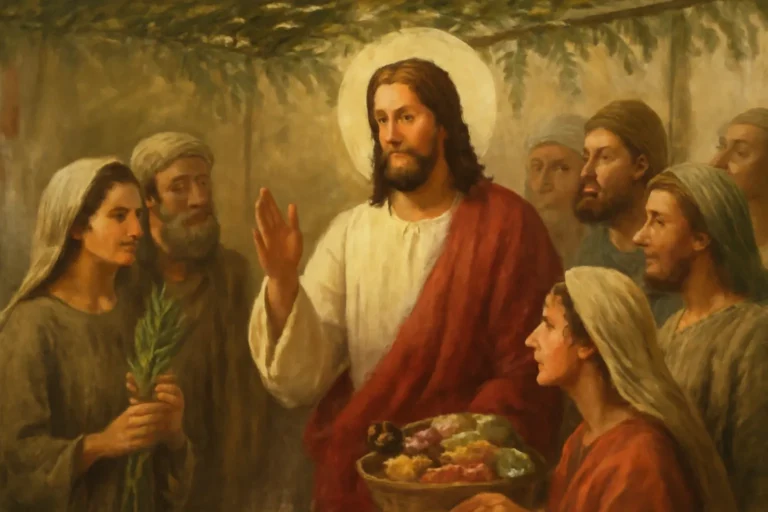
In the Christian New Testament, the festival of Tabernacles (Sukkot) is referenced in John 7, where Jesus attends the festival in Jerusalem and engages in teaching at the temple. The Gospel narrative connects the festival’s water-drawing rites and its atmosphere of expectation to Jesus’s own mission and teachings about living water and spiritual renewal. The reference to Tabernacles in John situates Jesus within the Jewish festival calendar and highlights how the biblical memory of Sukkot intersects with early Christian proclamation. Although the New Testament does not develop Sukkot to the same extent as rabbinic literature, its presence demonstrates the festival’s significance in Second Temple Judaism and its enduring presence in Christian interpretation of Jesus’s life and ministry.
Sukkot, Harvest, and Social Ethics
Beyond its memory of the wilderness and its ritual architecture, Sukkot embodies a social ethic centered on generosity, hospitality, and communal rejoicing. The festival’s agricultural timing—the ingathering of the harvest—invites gratitude for God’s provision and a communal celebration that includes the poor, the visitor, and the neighbor. The open space of the sukkah, the shared meals, and the festive atmosphere create an occasion for hospitality that reinforces social bonds and mutual responsibility. In this sense, Sukkot functions as a live anthropology of faith: it shapes a community’s values through concrete actions—dwelling in temporary shelters, sharing food, and welcoming strangers under a roof that is always open to the elements and to fellowship.
Hospitality and guest-keeping are central to the festival’s ethos; the sukkah becomes a theater of social hospitality, where the community practices an ethic of inclusion and generosity.
Joy and gladness are commanded in the biblical texts; the call to “rejoice before the Lord your God” anchors the festival in communal celebration as a moral good.
Ingathering ties worship to the harvest, reminding the community to acknowledge that daily bread is a gift and a responsibility shared with the vulnerable and the stranger.
Practical Observance Today: How Sukkot Is Lived in Israel and the Diaspora
Modern observance of Sukkot preserves the biblical core while integrating centuries of tradition, mysticism, and communal practice. The festival continues to be a cornerstone of Jewish life, with variations that reflect local customs, climate, and communal priorities. The following overview offers a practical sense of how Sukkot manifests in contemporary communities.
Building and Dwelling in a Sukkah
Construct a sturdy framework to support a roof made of schach (natural, plant-based covering such as branches, palm fronds, or reed mats).
Provide walls or partial walls to create an enclosed space large enough to sit and eat, thus fulfilling the requirement of a shelter in which one can dwell.
Ensure the roof is permeable to light and air and allows the stars to be visible on clear nights.
Dedicate meals and some time for sitting and socializing in the sukkah, ideally for the seven days of the festival (and beyond in various communities).
In many Jewish communities, the sukkah is a focal point of family life during Sukkot. Some families extend the practice to hosting guests, neighbors, and travelers, turning the sukkah into a space of hospitality and communal memory. The practice of hosting guests is often associated with the biblical command to rejoice before the Lord and to share the festival’s abundance with others.
The Four Species (Arba Minim) and Processions
As noted, the biblical text alludes to the fruits and branches that would later be organized into the Four Species used during Sukkot in Rabbinic Judaism. In the diaspora and in many Israeli communities today, participants wave the etrog (citron), lulav (palm frond), hadass (myrtle), and aravah (willow) together during special prayers and processions. The practice embodies unity, gratitude, and the sense that the festival speaks to the whole community, across social divisions. The Four Species rituals often culminate in joyful parades around synagogues or public spaces, with prayers that emphasize petition and thanksgiving.
It is important to note that the biblical injunction mentions the produce and branches that later traditions linked to the Four Species. The citron (etrog) is not named in Leviticus 23, but it is connected to the “fruit of trees” phrase and to the broader harvest imagery. The Four Species, therefore, exemplify how biblical text inspires later liturgical creativity and material culture, enriching the festival with both symbolic significance and communal practice.
Special Readings, Prayers, and Holidays Within the Festival
On the intermediate days of the festival, many communities engage in additional prayers and Torah readings, reflecting the sense of ongoing celebration and spiritual reflection.
On the seventh day, called Hoshanah Rabbah in many traditions, special processions with the Four Species carry symbolic weight for deliverance and judgment in the cycle of days.
In some traditions, ushpizin—the welcoming of biblical patriarchs like Abraham, Isaac, and Jacob into the sukkah—becomes a centerpiece of daily devotion, especially during the days of dwelling.
Sukkot in History and Jewish Thought
The festival has shaped Jewish thought and practice across multiple eras. In ancient Israel, Sukkot functioned within temple-centered worship and priestly offerings, while in the post-exilic period it increasingly acquired a popular, family-centered character as the festival of the harvest and of national gratitude. In the rabbinic era, Sukkot became a stage on which the community displayed hospitality, intellectual debate, and ritual beauty through the Four Species, the sukkah, and elaborate liturgy. Across centuries, scholars and laypeople alike have found in Sukkot a theology of dependence, a theology of divine provision, and a theology of joy—especially in the midst of life’s uncertainties. For many readers, Sukkot remains a living bridge between memory and hope: a ritual that binds generations to a shared past while pointing toward a future in which God’s provision and presence are celebrated in a global, inclusive festival of peace.
Three core meanings surface most consistently across biblical and post-biblical reflection:
Memory of Deliverance: The sheltering presence of God in the wilderness becomes tangible in the sukkah, reminding worshippers that God’s guidance and protection are a daily reality, even in vulnerability.
Thanksgiving for the Harvest: The festival aligns with the agricultural cycle, turning gratitude for bread and fruit into a communal celebration of God’s generosity and the social ethic of sharing abundance.
Hope for Universal Worship: Prophetic texts enlarge the festival’s horizon, envisioning a future when all nations join in the festival’s worship, a sign of universal recognition of God’s sovereignty.
To help readers distinguish between biblical injunctions and later developments, here are brief clarifications:
Is Sukkot only a historical festival? No. While Sukkot has ancient roots, it remains a living festival with ongoing religious significance in Jewish life and thought, and it is referenced in Christian scripture as well, highlighting its broader historical footprint.
Are the Four Species strictly described in the Bible? The biblical text mentions the fruits and branches that correspond to the Four Species, but the precise combination described in Rabbinic tradition (etrog, lulav, hadass, aravah) is a later development that emerged from rabbinic interpretation of Leviticus 23:40.
Is the practice of dwelling in a sukkah mandatory in all communities? Observance varies by tradition and jurisdiction. For many communities, dwelling in a sukkah for seven days is a central practice, but there are exceptions based on circumstances and interpretation. The core idea—memory, joy, and gratitude—continues to animate the festival for most readers and practitioners.
Conclusion: A Living Festival with Deep Historical Currents
While a formal conclusion is not required for this article, it is fitting to note that Sukkot stands as a bridge between epochs. Its biblical seeds—memory of divine shelter, gratitude for harvest, and social hospitality—have grown into a rich, multi-faceted practice that continues to shape religious life, art, liturgy, and family traditions. The festival’s enduring appeal lies in its ability to turn a simple shelter into a stage for worship, learning, and shared humanity. Whether one reads Sukkot as a memorial of the wilderness, as an agricultural festival of thanksgiving, or as a prophetic glimpse of universal reverence, the festival remains a vivid reminder of life’s fragility and its abundance, of dependence and community, of memory and hope. In this sense, the biblical Sukkot is not merely a historical vignette; it is a living invitation to dwell in trust, rejoice in providence, and welcome others into a shared shelter under the gracious canopy of God’s care.