What Replacement Theology Means: Definition, Meaning, and Language
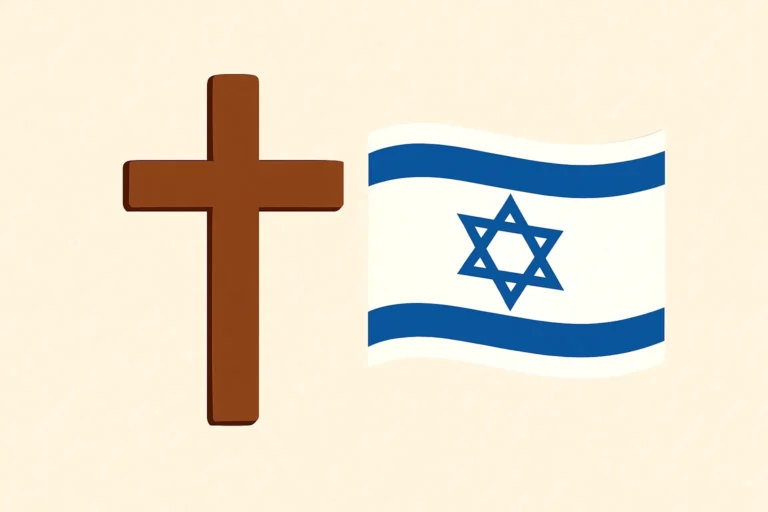
Replacement theology, often called supersessionism in scholarly discussion, is a framework within Christian theology that asserts the Church has succeeded or replaced Israel in God’s salvific plan and in the interpretation of biblical promises. In its core form, this view holds that many or all of the covenantal promises originally made to the people of Israel—promises about land, nationhood, and divine blessing—are now fulfilled in the Church, rather than in a continued, distinct Israel. The language around this concept varies; some speak of fulfillment in Christ or the Church as the people of God, while others insist on a more direct transfer of God’s promises from Israel to the Christian community. Across this spectrum, the central claim is that the New Covenant community has taken up the role once ascribed to Israel as God’s chosen people.
In discussions of theology, it is important to note the distinction between a robust claim that God’s redemptive purposes are fulfilled in a broader sense through Jesus and the Church, and a claim that ethnic or national Israel has no continuing place in God’s plan. The term replacement theology definition is frequently used to describe a position that explicitly demotes national Israel in favor of the Church as the sole or primary recipient of divine promises. Critics of this view often argue that the phrase supersessionism captures the dynamic more precisely: the Church is seen as replacing Israel in the covenants of God.
This article surveys the meaning, origins, and implications of replacement theology. It will explain not only the basic definition but also the historical development, key arguments, practical consequences for Jewish-Christian relations, and contemporary reassessments that seek to rethink or even critique the classic form of this theology.
Variants and Synonyms: How scholars talk about the idea
The landscape of terminology around this topic is nuanced. Different communities and scholars use terms that shade the same underlying idea in distinct ways. Here are common variants and how they relate to the central concept:
Supersessionism — a widely used scholarly term emphasizing that the Church has supplanted Israel in God’s purposes. It can range from mild to strong forms, depending on how one envisions continuity or discontinuity with Israel.
Replacement theology — a general, often polemical label signaling that certain promises to Israel are now allocated to the Church. This term is common in polemics as well as in academic discussion.
Fulfillment theology (in some contexts) — a phrase used by proponents who argue that the Church fulfills rather than merely replaces Israel, emphasizing continuity with the Old Testament through Christ. In practice, some use this term as a synonym for the classic view, while others distinguish it from outright replacement.
New Israel theology — a descriptive phrase that is sometimes used to describe replacement positions that portray the Church as the spiritual continuation or extension of Israel, rather than a break from Israel’s identity. Depending on how it’s used, it may still imply replacement or may aim for continuity with biblical imagery of Israel in a Christian framework.
Covenant theology and two-covenant models — while not always identical to replacement theology, these discussions engage with how the biblical covenants with Israel relate to the Church. Some covenant theology perspectives affirm a continued, albeit transformed, place for Israel within God’s single, overarching covenant, complicating a simple replacement narrative.
The diagnostic test for understanding a given author’s stance is to ask: Does the person claim that Israel’s national or ethnic promises are transferred to the Church in an exclusive way? If so, many scholars would categorize that as a form of supersessionist or replacement-friendly theology. If instead the emphasis is on Christ-centered interpretation of old prophecies while maintaining some continuity with Israel, the label may shift toward fulfillment-oriented or continuity-based readings.
The roots of replacement theology definition trace back to early Christian introspection about how Jesus relates to Israel. Several strands of thought emerged as Christians wrestled with Scripture, the mission to the Gentiles, and the interpretation of Jesus’ life and death in relation to Jewish expectation.
In the first centuries, some church fathers interpreted Jesus as the fulfillment of Israel’s prophetic path. For example, some writers argued that the Church, through Christ, inherits the promised blessings in a spiritualized sense. This period saw a growing sense that the “people of God” was defined more by faith in Christ than by genealogical descent. The dynamic of continuity with Israel’s story, while receiving a broader, global mission, laid the groundwork for later formulations that could verge toward replacement language in certain interpretations.
Patristic and medieval articulations
As theological reflection matured, some patristic writers affirmed that the Church participates in the promises given to Israel, while others suggested a more explicit handover of those promises to a Christian people that includes Gentile believers. In the medieval period, debates about the nature of the covenants and the status of Israel continued, often framed within ecclesial and political concerns of the time. The idea that the Church is the “new Israel” appears in various forms across subsequent centuries, sometimes reinforcing a sense that Israel’s distinctive civil or national status had shifted to the Christian community.
Reformation-era debates and later traditions
The Reformation intensified concerns about the relationship between the old and new covenants. Reformers like Martin Luther and John Calvin wrestled with how to interpret biblical promises in light of the gospel. While some Reformation-era writers stressed the primacy of faith in Christ for salvation, others voiced concerns that Jewish expectations and national identity had been reinterpreted in ways that could feed hostility if not carefully qualified. In the post-Reformation centuries, especially in later centuries, the idea that the Church stands as the successor to Israel gained traction in various theological and devotional circles, often tied to political and social climates that affected Jewish-Christian relations.
Modern scholarship and revision
In modern times, many theologians have revisited these themes with an eye toward historical accuracy and ethical responsibility. Some acknowledge the historical influence of replacement language in shaping anti-Jewish attitudes, while others work to distinguish a robust Pauline-Centered Christocentric reading from a reading that erases Israel’s ongoing role in God’s plan. This critical reassessment has led to renewed interest in covenant theology, a renewed emphasis on the indivisibility of the people of God, and a push toward interpretive frameworks that honor the continuing significance of Jewish identity in biblical prophecy.
Core claims and theological logic
At the heart of replacement theology is a set of assertions about how God’s promises relate to the people of God across the Testaments. While historical formulations vary, several common claims recur in discussions of replacement theology definition and its corollaries.
Continuity in principle, discontinuity in form: God’s overarching plan remains intact, but the visible sign of belonging to that plan shifts from ethnic Israel to the Christian community defined by faith in Jesus.
The Church inherits the promises: Old Testament promises regarding blessing, land, nationhood, and divine favor are reinterpreted as fulfilled in the Church rather than in a distinct Jewish nation.
Covenantal transfer: A key move in some versions is the assertion that the New Covenant replaces or supersedes the Old Covenant with Israel, effectively moving the locus of salvation history from Israel to the Church.
Weaponized continuity or ambiguity: Some writers stress spiritual continuity with Israel while downplaying national or ethnic continuity, using a combination of typology, allegory, and scriptural reinterpretation.
Critics of this logic argue that it can blur or erase the ongoing identity of Israel in God’s plan, and they point to biblical passages that speak of an enduring role for Israel and the ethical obligation of Christians toward the Jewish people. Proponents of replacement-friendly readings maintain that the Church embodies the fullness of God’s people in Christ, but many now stress more carefully the need to distinguish a biblical, theological reality from a political or ethnic program.
Implications for Israel and the Church
The implications of adopting a replacement theology framework extend beyond abstract doctrinal debates. They shape how communities interpret scripture, conduct mission and evangelism, and relate to Jewish neighbors. Here are some of the practical and doctrinal consequences often discussed in relation to replacement theology definition.
Theological implications: If Israel is perceived as having lost or relinquished its covenantal status, the interpretive center of biblical prophecy shifts decisively toward Gentile believers and the Church. This can influence how Christians understand biblical covenants, eschatology, and the nature of God’s faithfulness to Israel.
Exegesis and hermeneutics: Readers may read Old Testament prophecies through a Christ-centered lens that emphasizes fulfillment in the Church, sometimes at the expense of a more literal or ongoing reading of Jewish national promises.
Ecclesial identity: Churches may articulate themselves as the spiritual continuation or replacement of Israel, which shapes liturgy, sacraments, and membership theology.
Jewish-Christian relations: Historical experiences of anti-Jewish sentiment in Christian contexts have sometimes been linked, explicitly or implicitly, to replacement readings. Contemporary theologians stress dialogue, mutual understanding, and the distinction between repudiating anti-Jewish prejudice and reexamining ancient interpretive traditions.
It is important to recognize that there is significant variation within the broader category. Some communities articulate a more nuanced form of supersessionism that seeks to preserve a role for Israel in salvation history without denying the central role of Christ and the Church. Others actively reject replacement language as theologically harmful, choosing instead to emphasize covenant continuity, the ongoing significance of ethnic Israel, and a two-covenant or multi-covenant framework.
Ethical and social dimensions
The social and ethical dimensions of replacement theology cannot be ignored. Historical expressions of supersessionist thinking have, at times, correlated with prejudice, discrimination, and violence against Jewish communities. In modern ecumenical discourse, many theologians insist on separating legitimate theological reflection from harmful stereotypes or exclusions. They argue that a responsible reading of Scripture should cultivate humility, mutual respect, and a robust critique of any doctrine that inflames hostility toward a people.
Some of the ethical questions raised include:
How should Christians relate to the Jewish people today in light of biblical covenants?
What responsibilities do churches bear toward Israel’s self-understanding and national rights?
Can a form of “replacement” reading be reconciled with the command to love one’s neighbor, including Jewish neighbors, and with commitments to justice for all?
Contemporary theologians often advocate for approaches that honor the continuity of God’s purposes with Israel while affirming the universal reach of the gospel. They emphasize the unity of the people of God across time and cultures, rather than a simple transfer of promises from one group to another.
Critiques and alternatives: Toward a more nuanced view
Critics of traditional replacement theology point to a number of concerns, ranging from biblical interpretation to the consequences for interfaith dialogue. Below are some of the most influential concerns and the alternative trajectories that scholars and churches propose.
Jewish perspectives and historical memory
Many Jewish scholars and religious leaders challenge the premise that the Church has outright replaced Israel. They argue that such readings can delegitimize Jewish historical claims and experiences, especially in relation to land, identity, and the sense of covenant. Critics emphasize that biblical texts frequently present a complex relationship between the people of Israel and the God of Israel, with God’s promises persisting beyond human institutions. Judaism, in its own right, maintains a covenantal relationship with God that is not reducible to a Christian interpretive framework.
Alternative theological frameworks
The contemporary theological landscape includes several alternatives to traditional replacement positions:
Covenant theology with ongoing Jewish continuity: This approach affirms that God maintains a special, ongoing covenant with the people of Israel while also including Gentile believers in a shared faith in Christ. It seeks common ground between the two covenants rather than a unilateral transfer of promises.
Two-covenant or multi-covenant models: These frameworks propose that God has distinct, parallel covenants with Israel and with the Church. They aim to preserve the legitimacy of Israel’s national covenant while recognizing the gospel’s mission to the Gentiles.
New perspective on biblical prophecy: Some scholars reexamine prophetic texts that have often been read in supersessionist ways and propose readings that emphasize Israel’s enduring corporate identity alongside the Church’s universal mission.
Ecumenical dialogue and practical implications
In ecumenical practice, many churches engage in dialogue with Jewish communities and with Christian groups that hold distinct views about the Church’s relationship to Israel. The aim is to promote mutual understanding, address historical wounds, and articulate a共同 language about God’s faithfulness to all the peoples of the world. These conversations often lead to revised liturgies, revised preaching, and pastoral strategies that emphasize reconciliation and respect.
Modern reassessment and ecumenical dialogue
In recent decades, there has been a broad shift in many Christian traditions toward nuanced, historically informed, and ethically responsible positions about the relationship between the Church and Israel. This reassessment frequently involves distinguishing between the Church as the spiritual people of God in Christ and the ongoing, distinct identity of national Israel. The shift is often described as moving away from hard-edged replacement language toward a more invitational and dialogical approach that honors the biblical narrative in its complexity.
Key features of contemporary reassessment include:
Acknowledgment of historical harm tied to supersessionist rhetoric, with commitments to repentance where relevant and to improving Jewish-Christian relations.
Emphasis on biblical hermeneutics: Careful exegesis of prophetic texts that originate in or refer to Israel, with attention to context, genre, and historical situation.
Inclusive ecclesiology: An insistence that the Church’s identity is rooted in Christ and in its mission to the world, while honoring the unique role and ongoing relevance of Israel in God’s plan.
Practical commitments: Public witness, interfaith dialogue, and collaborative social action that model respect for Jewish identity and the dignity of all peoples.
Some communities still use the term replacement theology in a descriptive sense to describe a historic pattern of thought, while others reject the label altogether and prefer to describe their approach as a form of covenant-affirming or fulfillment-centered reading that seeks to maintain continuity with Israel. The diversity of position reflects a broader trend in contemporary theology toward integrative frameworks that honor both scriptural breadth and ethical accountability.
Key figures, movements, and how the conversation has evolved
The discussion around replacement theology has involved a wide range of voices across centuries. While no single figure can be said to define the entire tradition, certain proponents and critics have shaped how the topic is understood in various Christian communities.
Patristic writers who framed the Church as the continuation or expansion of Israel’s story, often blending spiritual interpretation with ecclesial identity.
Medieval and Reformation-era theologians who wrestled with the covenants, the law, and the gospel, sometimes articulating replacement-like conclusions in their polemics or devotional literature.
21st-century theologians and ecumenists who foreground Jewish-Christian dialogue, covenantal continuity, and ethical reflection in response to the legacies of supersessionism.
Contemporary discussions often foreground the distinction between heritage and possession: how God’s promises relate to a living people in history and how those promises relate to a faith community gathered in Christ. The ongoing conversation reflects a broader search for theological accuracy, historical memory, and ecclesial harmony.
Closing reflections: Toward clarity and charity in the discourse
Understanding the replacement theology definition invites careful examination of biblical interpretation, historical context, and ethical responsibility. While the Church is called to bear witness to Christ and to fulfill the Great Commission, many now insist that such witness be carried out with humility toward God’s ongoing dealings with Israel and with respect for Jewish identities and narratives. In that spirit, contemporary theological work often seeks a balanced view that recognizes:
The enduring significance of Israel in biblical prophecy and history
The universal availability of the gospel to all nations without erasing the claims and dignity of the Jewish people
The need to repudiate any form of ideology that fosters hostility or dehumanization of Jews
In sum, the exploration of replacement theology—its meaning, origins, and implications—is not merely an academic exercise. It is part of a living conversation about how communities understand God’s actions in history, how they interpret Scripture, and how they relate to neighbors who hold different religious identities. Whether one adopts a modern, covenantal approach that preserves Israel’s place within God’s plan or chooses a more nuanced interpretation that emphasizes continuity in Christ while honoring Israel’s distinct status, the ultimate aim remains the same: to confess the faith faithfully, to seek truth with care, and to pursue justice in love.
For readers seeking to dive deeper into this topic, consider studying:
Key biblical passages related to covenants, promises to Israel, and New Testament reinterpretations
Historical case studies of how replacement language affected Jewish-Christian relations in different eras
Contemporary theological dialogues that promote inclusive, covenant-aware ecclesiology
The conversation continues to evolve as scholars and faith communities strive to articulate a robust, accurate, and compassionate understanding of how God’s purposes unfold across the testaments. Whether you come from a perspective that emphasizes replacement, fulfillment, or continuity, the ongoing aim is to honor the integrity of Scripture while fostering respectful, constructive engagement with neighbors of different faith traditions.