The long arc of Christian history begins in a complex religious landscape that
included Second Temple Judaism, Greco-Roman philosophy, and diverse messianic expectations.
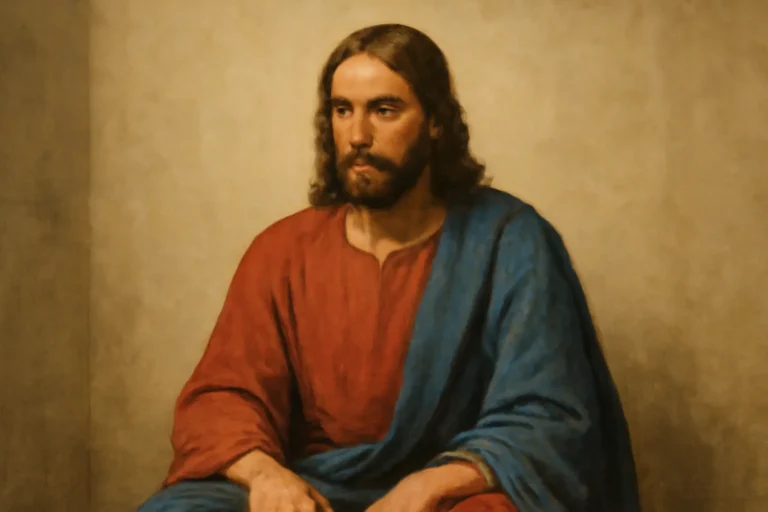
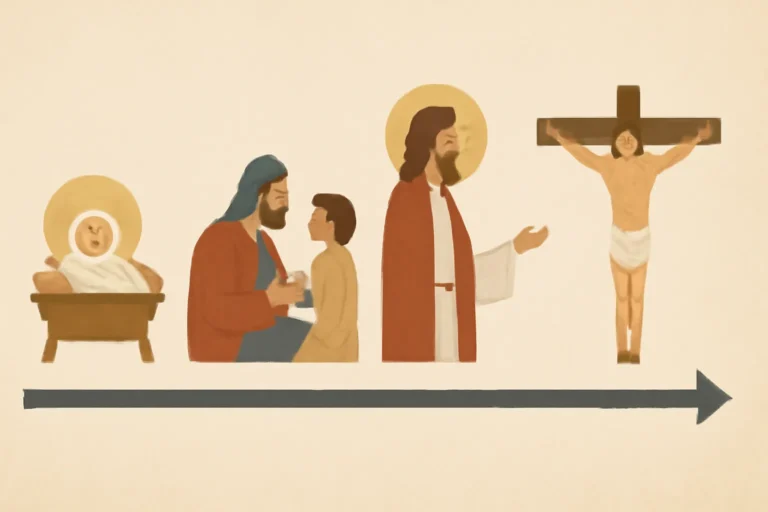
The tale often told in a history of Christianity timeline begins with a Jewish preacher
named Jesus of Nazareth who attracted a following in the provinces of Galilee and Judea.
Early Christians understood Jesus as the Messiah who fulfilled prophetic hopes,
while also presenting him as the unique Son of God whose life, death, and reported
resurrection opened a new covenant with humanity. In the decades after the crucifixion, the
earliest communities formed around centers like Jerusalem, Antioch, and Alexandria, where
Jewish and Gentile believers learned to articulate their faith in fresh ways.
The Apostolic Age—roughly from the 30s to the 100s CE—saw the apostles and their
immediate successors spreading a message that emphasized baptism, the breaking of bread, and
shared property among faithful followers. The writings that would later become the New Testament
began to take shape in this period, though their formal canon would not be settled for several
centuries. The early church also faced internal debates about how to interpret Jewish law, how
to understand the relationship between Jews and Gentiles, and how to preserve a common
confession across diverse linguistic and cultural communities.
Founding Moments: The Early Church
The emergence of the Christian movement as a distinct faith community is closely tied to its
missionary impulse and its ability to organize worship, teaching, and leadership. A defining
feature of the timeline of early Christianity is the maintenance of apostolic
authority while embracing the vast cultural expanse of the Greco-Roman world. The book of
Acts presents a narrative of rapid growth, welcomed both by converts within Jewish settings and
by Gentile seekers who encountered the message through preaching, miracles, and communal life.
First Century Milestones
Pentecost and the outpouring of the Holy Spirit as described in the book of Acts, often cited as a
turning point for the spread of the church beyond a strictly Jewish milieu.
The Apostolic journeys of Paul and other missionaries, which established Christian
communities across Asia Minor, Greece, and Rome.
Letters to early Christian communities begin to circulate, shaping what would become the New Testament.
Gospel traditions take shape in communities that sought to preserve the memory of Jesus while
addressing local concerns, leading to a growing sense of a shared faith rather than regional
variation alone.
The Jerusalem council debate, summarized in Acts 15, addresses how Gentile converts relate to
Mosaic law, signaling a move toward a universal church that is not merely a sect within Judaism.
Patristic Era and the Consolidation of Doctrine
The Patristic period (roughly the second to the fifth centuries) is marked by
theological reflection, philosophical engagement, and institutional development. Church fathers
sought to articulate a coherent and compelling faith in the face of internal disagreement and
external pressure from imperial authorities. This era gave birth to key doctrinal formulations,
creedal statements, and organizational structures that would influence Christian practice for
centuries.
Second–Fifth Centuries
The Nicene Creed (325) emerged from the Council of Nicaea as a statement of orthodox belief
against Arianism, affirming the full divinity of the Son and the unity of the Godhead.
The era of the Cappadocian Fathers—Basil the Great, Gregory of Nyssa, and Gregory of Nazianzus—provided a
robust theological framework for the Trinity and the divinity of Christ against various heretical
interpretations.
The rise of monasticism reshaped Christian spirituality and social life, with figures like St. Anthony and other desert fathers offering models of ascetic discipline and contemplative practice.
Scholastic inquiries began to systematize doctrine, integrating Greek philosophy with
Christian teaching and preparing the ground for future theological debates.
Persecution and imperial recognition alternated, as Christians navigated occasional periods of
difficulty while seeking to maintain a coherent identity across diverse provinces.
The turn from persecuted fellowship to the imperial church is one of the most consequential chapters in a
broad history of Christianity timeline. The conversion of the emperors and the
establishment of Christian privilege altered not only theology but also politics, culture, and
daily life across the Mediterranean basin and beyond.
From Persecution to Imperium
The Edict of Milan (313) granted tolerance to Christians, ending a long period of sporadic
persecution and recognizing their legal rights within the empire.
The Council of Nicaea (325) helped set a unified standard for belief, addressing
Christological controversies and providing a shared point of reference for churches in Asia, Africa,
and Europe.
The constantinian shift in resources, patronage, and urban church buildings deeply affected
how communities worshiped, organized themselves, and expressed their faith in public life.
Over the following decades, the church gained a formal presence in the political life of the
empire, while theological debates about the nature of Christ, the person of the Virgin Mary, and the
role of sacraments intensified.
The emergence of a more formal hierarchical structure—with bishops, presbyters, and
deacons—began to shape governance across diverse Christian communities.
Middle Ages: Structure, Schisms, and Reformulations
The medieval period introduced enduring institutions, spiritual practices, and a series of
transformative conflicts that would reshape Christianity for centuries. This era features a deepening
of doctrinal consensus in some moments alongside fracture and reformulation in others. The history of Christianity timeline from the medieval vantage point reveals both
continuity in liturgy and dramatic shifts in church-state relations.
Great Schism and Western Christendom
The Great Schism of 1054 formally divided the Christian world into the Western
Roman Catholic Church and the Eastern Orthodox Church, a split rooted in disputes over papal authority,
filioque, rite, language, and cultural practice.
In Western Christendom, the Papal authority came to be defined as a central element of
church polity, influencing spiritual life, diplomacy, and education.
The Investiture Controversy and related conflicts highlighted tensions between secular rulers and church hierarchies over the appointment of bishops and the governance of church lands.
Monastic orders, the rise of medieval universities, and the flourishing of scholastic thought shaped intellectual life and pastoral ministry.
The Crusades, though primarily framed as religious and political campaigns, also catalyzed contact with diverse cultures and posed profound questions about violence, faith, and mission.
Renaissance and Reformation
The Renaissance era fostered a renewed interest in classical learning, humanism, and critical inquiry.
This cultural moment intersected with religious reform movements that challenged abuses,
questioned clerical authority, and opened space for new expressions of Christian faith. The result was a
seismic shift in the timeline of Christian history that would alter the religious map of
Europe and lead to global consequences.
Pre-Reformation Movements
The Waldensians and other reform-minded movements emphasized lay access to Scripture, poverty in
practice, and critique of ecclesiastical corruption, setting a pattern for later reform efforts.
John Wycliffe and the early Lollard movement promoted vernacular Bible translation
and challenged church authority in England, foreshadowing later debates about conscience, faith, and
church governance.
Jan Hus in Bohemia carried forward reform ideas, confronting corruption and advocating for
reform within the church before his execution, which became a powerful symbol for later reformers.
The invention of the printing press accelerated the circulation of Scripture and reformist writings,
contributing to the spread of new theological ideas across Europe and beyond.
The Protestant Reformation
Martin Luther initiated the Reformation by posting the 95 Theses (1517), challenging
indulgences and calling for a return to Scripture as the ultimate authority in matters of faith and
practice.
The movement spread quickly through printed literature and local reformers, giving rise to diverse
expressions such as Lutherans, Reformed churches, Anglicans, and Anabaptists, each with distinctive
convictions about baptism, the Lord’s Supper, and church governance.
The Catholic Reformation or Counter-Reformation responded with internal renewal,
the Council of Trent, clearer discipline for the clergy, and reforms in sacraments, education, and liturgy.
The emergence of the modern missionary impulse, the translation of the Bible into local languages, and the
establishment of new denominations laid the groundwork for a more pluralistic Christian landscape.
Post-Reformation and Global Expansion
While the Reformation began in Europe, its ripple effects quickly extended beyond familiar borders.
Missionary activity, colonial encounters, and the spread of printing, education, and modern states all
contributed to a global Christianity. The timeline of Christianity in the modern world
is deeply intertwined with social change, networks of faith, and rising indigenous leadership in
many regions.
The emergence of Anabaptists emphasized believer’s baptism and church purity, influencing
later groups such as Mennonites and Amish, and feeding into broader debates about church-state relations.
The growth of Baptist and Congregational movements highlighted the value of local
church autonomy and voluntary association.
The Anglican tradition developed a distinct balance between continuity with medieval catholicity and
reformist energy, producing a broad spiritual spectrum within one national church system.
Presbyterian and Methodist streams shaped governance structures and social ethics, fueling
networks of education, social reform, and global mission.
Modern Era: Enlightenment, Secularization, and Global Missions
The modern period witnessed accelerated change in theology, culture, politics, and science. The
interplay between faith and reason, tradition and reform, created a dynamic history of Christianity timeline
that is still being written. The century-long conversation about liberty, human dignity, and the
interpretation of sacred texts took on new urgency as scholars, pastors, and laypeople wrestled with
contemporary questions.
18th–19th Centuries
Philosophical currents such as Enlightenment posed questions about authority, reason, and the
sources of truth, prompting critical study of the Bible, history, and church tradition.
Religious revival movements and Catholic social teaching contributed to debates about poverty,
education, labor, and human dignity in rapidly industrializing societies.
Global missions expanded as churches sent mission teams to Asia, Africa, the Americas, and the Pacific,
often blending gospel proclamation with education, healthcare, and social renewal.
Scholarly work in biblical studies, archaeology, and historical criticism deepened understanding of the
historical Jesus, early Christian communities, and the textual transmission of sacred writings.
Twentieth Century: Ecumenism, Reforms, and Worldwide Christianity
The 20th century brought profound changes in how Christians understood unity, diversity, and public life.
The crisis and opportunity of two world wars, along with rapid socio-political transformation, prompted
new ecumenical efforts and renewed emphases on human rights, social justice, and dialogue across faiths.
Ecumenism and Renewal
The ecumenical movement sought greater cooperation among Christian churches across lines of tradition, geography, and language.
The Second Vatican Council (1962–1965) opened the Catholic Church to reform, including liturgical renewal,
a new approach to Scripture, and dialogue with other Christian communities and other religions.
The rise of the Pentecostal and Charismatic Renewal amplified expressions of faith through lively
worship, experiential prayer, and the belief in ongoing spiritual gifts, contributing to rapid growth in many regions of the world.
liberation theology, biblical social ethics, and debates about economic justice stimulated reinterpretations of
mission, service, and church leadership in the global context.
Contemporary Christianity: The 21st Century and Beyond
The current era presents a dynamic blend of continuity and change as churches adapt to digital culture,
demographic shifts, and new forms of spiritual seeking. The modern history of Christianity timeline
emphasizes not only doctrinal articulation but also practical mission, wearing the colors of
social engagement, interfaith dialogue, and innovative ministry models.
Present Trends and Global Patterns
The growth of Christianity in the Global South and among urban sleepers has redefined the demographics of the church
worldwide, with vibrant expressions in Africa, Latin America, and parts of Asia.
Digital theology, online worship, and global networks enable believers to access lectures, sermons, and
communities in real time, reshaping how faith is learned and practiced across cultural boundaries.
Ecumenical and interfaith initiatives emphasize common values such as mercy, human dignity, and social
justice, while preserving distinctive doctrinal and liturgical identities.
Issues such as religious freedom, environmental stewardship, and human rights feature prominently in many
Christian communities, illustrating how a modern timeline of Christian history engages with
contemporary moral questions.
Key Themes Across the History of Christianity Timeline
Across the vast span of the history of Christianity timeline, several enduring themes
recur in varying forms. These themes help readers understand not only what happened, but why it
mattered for different communities at different times.
Authority and the source of truth — Scripture, tradition, and the teaching authority of the
church have been interpreted and reinterpreted across centuries, leading to diverse confessional
identities and ecumenical talk about unity in essentials.
Worship and practice — from liturgical rites and sacramental life to contemporary praise,
music, and online services, the way believers meet God has continually evolved.
Mission and witness — the impulse to proclaim the gospel, translate the Bible, educate,
and serve the vulnerable has driven expansion, reform, and renewal in many contexts.
Conflict and reconciliation — theological disputes, political power struggles, and wars have
repeatedly shaped the course of Christian history, often followed by periods of reconciliation and
reform.
Culture and power — the relationship between church and state, education, media, and the arts
has influenced how Christians understand faith and how Christian ideas influence broader society.
For readers exploring a long-form unity timeline of Christian history, a concise
glossary can illuminate central terms often encountered across the timeline of Christian history.
The following quick-reference notes provide a high-level map of recurring concepts:
Apostolic Fathers — early Christian writers who shaped Church doctrine and practice in the
first two centuries after the apostles.
Creeds — concise statements of faith that codified essential beliefs shared by churches across
different traditions, such as the Nicene Creed and the Apostles’ Creed.
Canon — the authoritative collection of books recognized as sacred scripture within the
Christian community.
Schism — a formal division between branches of the church, such as the Great Schism of 1054.
Reformation — a major reform movement in the 16th century that reshaped Western Christianity
and led to the emergence of Protestant traditions.
Engaging with Multiple Perspectives
Readers exploring a comprehensive account of Christian history or a full history of Christianity timeline should encounter a variety of historical voices.
Some narratives emphasize theological debates and doctrinal development, while others foreground
social history, missionary activity, or the lived experience of believers across different cultures.
This article aims to balance these angles, offering both a chronological spine and thematic depth.
A Note on Methodology and Sources
Any robust chronology of Christian history depends on careful interpretation of primary
sources—ancient manuscripts, creedal statements, and historical accounts—alongside the insights of
modern scholarship. Readers are encouraged to consult a range of sources, including ancient
manuscripts, patristic writings, medieval chronicles, and contemporary critical studies, to gain a
well-rounded understanding of how the Christian faith has grown and changed through time.
Constructing a Personal Timeline for Study
Building a personal study timeline can help readers engage with the vast expanse covered by the history of Christianity in a structured way. Consider the following approach:
Draft a chronological outline with major milestones such as the apostolic era, key
ecumenical councils, the Schism, the Reformation, and global mission
movements.
Annotate each milestone with a short description, primary sources to consult, and a list of
representative thinkers or communities associated with the event.
Include cross-references to related themes such as liturgy, governance, social ethics, and interfaith
dialogue to contextualize doctrinal developments within broader historical currents.
Incorporate a global perspective by marking how Christianity expanded beyond Europe, including Africa,
Asia, the Americas, and Oceania, and how different traditions understood mission and witness.
This long-form article demonstrates how a detailed timeline of Christian history can be
both informative and engaging. By tracing moments of unity and moments of division, it reveals a
living tradition that has continually reinterpreted its message in response to changing social, political,
and cultural realities.
For readers who want a compact reference, a concise Christian history timeline might
highlight the following anchor points: the birth and ministry of Jesus, the apostolic witness and the
formation of early Christian communities, the ecumenical councils that defined doctrine, the medieval
synthesis of faith and reason, the seismic shifts of the Reformation, and the expansive growth and
diversification of global Christianity in the modern era. Each of these moments contributed to a
larger picture of how belief, practice, and community have shaped the faith across centuries.
In closing, the history of Christianity timeline is not a single story but a tapestry
of intertwined narratives. It invites readers to consider how faith traditions adapt, endure, and
transform, while preserving core convictions about the nature of God, the meaning of grace, and the
call to love and justice. By exploring the chronology of Christian history, one gains not only a
record of events but also insight into how communities have sought to live out their faith in every era.