How to Pray and What to Say: A Practical Prayer Guide
Prayer is a practice that people approach in many different ways. For some, it is a formal ritual with set words; for others, a spontaneous conversation in quiet moments; for still others, a time of reflection, listening, and inner listening. This guide offers practical approaches, flexible language, and concrete tips to help you cultivate a meaningful prayer life. Whether you are just starting out, returning after a pause, or seeking to enrich a long-standing routine, you can adapt these ideas to fit your beliefs, culture, and daily schedule. The goal is not to impose a single method but to provide options that help you encounter the sacred, whatever you understand that to be, with sincerity and intentionality.
Foundations of Prayer
Beyond the words you utter, prayer rests on a few core foundations that can help you stay grounded and consistent. These foundations apply across many traditions and offer universal benefits:
Intention matters. Before you begin, name what you seek. A clear intention helps your prayer stay focused—whether you want encouragement, guidance, courage, forgiveness, or gratitude.
Presence is essential. Create space where you can be fully awake to the moment. This often means reducing distractions, slowing your breathing, and observing what you feel as you begin.
Humility and reverence. Approach prayer with a sense that you are not the center of everything. This posture invites openness and teachability.
Honesty. Speak truthfully about your joys and fears, your questions and limitations. Authentic language resonates more deeply than polished phrases.
Listening as a form of prayer. Some of the most powerful moments come in quiet where you simply listen—whether to a sense of guidance, a feeling of peace, or the promptings of conscience.
Consistency over intensity. Small, regular practices often yield more growth than sporadic, intense sessions. A short daily rhythm can build trust and familiarity.
These foundations are not rigid rules but guiding principles. You can emphasize different elements at different times, depending on your mood, needs, and context. The key is to cultivate a habit that feels true to you and respectful of the moment in which you pray.
Different Approaches to Praying
People pray in many ways, and each method can illuminate different aspects of the spiritual life. Below are several common approaches you might explore, described with practical notes on how to implement them and when they can be especially helpful.
Centering or Silent Prayer. A quiet period where you rest in God, the sacred, or your own deepest values. You focus on the presence rather than words. Try setting a timer for 5–20 minutes and simply breathe, observe, and stay with whatever arises without judgment.
Scripture-Based or Sacred Text Prayer. Reading a passage and letting its meaning shape your response. This can involve echoing phrases, meditating on verses, or praying through a passage line by line.
Liturgical or Structured Prayer. Following a known order of prayers, liturgies, or responsive readings. This approach provides rhythm, community connection, and a sense of tradition.
Petition and Intercession. Bringing requests before the divine or the universe, for yourself and others. This can be specific (health, daily needs) or broad (wisdom, peace).
Adoration and Praise. Expressing awe, love, and reverence for the sacred or for the goodness you see in life. Praising can lift the heart and re-center your priorities.
Confession and Repentance. Acknowledging where you have fallen short, seeking forgiveness, and resolving to grow. This practice can be shared (in community) or private.
Gratitude and Thanksgiving. Focusing on gratitude for gifts big and small, which often shifts perspective and cultivates joy.
Prayer Journaling. Writing prayers as a way to articulate thoughts, record insights, and track your growth over time. Journaling can pair well with other methods.
Interfaith and Interfaith-Inspired Practices. Drawing on the wisdom of multiple traditions—breath prayers, blessings, repeated phrases, or contemplative movement—can broaden your vocabulary and deepen your sense of connection.
While these approaches differ in emphasis, many people find value in combining them. For example, you might start with a few minutes of centering prayer, read a short passage, offer praise, and then write a brief gratitude prayer in your journal. The best approach is the one you can maintain with sincerity and regularity.
In practice, you may also encounter a spectrum of styles within a single tradition. Some years you might prefer formal liturgy; other times you may be drawn to spontaneous, one-line prayers spoken aloud or whispered in your own heart. The key is to honor your rhythm and to stay open to growth as your life changes.
Practical Steps to Begin Prayer
If you are unsure how to start or want a simple, repeatable routine, consider the following practical steps. They are designed to be modular: you can do all of them in sequence or pick a subset that fits your schedule and temperament.
Choose a setting. Find a place where you are unlikely to be interrupted. This could be a corner of a room, a seat in a quiet garden, or a chapel. The important thing is consistency and calm background that helps you relax and focus.
Decide on a duration. Start with a small, sustainable window—5, 7, or 10 minutes—and adjust as you grow more comfortable. A routine that fits inside 10 minutes is often easier to sustain than a longer, irregular practice.
Choose a posture. Your body can support your intention: sitting upright with an open chest, kneeling if that feels humble and grounding, or even lying down if that helps you rest and listen. The posture should communicate intention while allowing you to breathe freely.
Center with breath or a short invocation. Begin with a few slow breaths, counting to four as you inhale and four as you exhale, or recite a brief opening line such as I open my heart to you, ______. The goal is to move from busyness into presence.
Speak from the heart. Use language that feels authentic. You can mix short phrases, longer sentences, or bullet-like statements. You may start with praise, move to confession, request guidance, and end with gratitude.
Pause for listening. After you finish speaking, sit in silence for a time. Listen for a felt sense, a thought, a word, or simply a quiet assurance that you are not alone.
Close with gratitude or blessing. End your practice with a closing phrase such as “Thank you for your presence,” or “May peace guide my steps today.” A brief moment of thanks helps seal the intention of your prayer.
These steps are intentionally broad. Your own ritual might be shorter, longer, or more formal. The most important thing is that each element serves you in a meaningful way and sustains your practice over time.
What to Say: Templates for Different Moments
Words matter, but the intent behind them matters even more. Below are practical templates you can use as starting points. Feel free to adapt the language to fit your tradition, culture, and language level. You can also mix these approaches within a single session to create a personalized prayer that resonates with you.
Adoration and Praise
Use expressions that honor the sacred, the beauty you see in life, or your highest values. Even short phrases can carry powerful meaning when spoken with sincerity.
“You are holy and worthy of all praise.” or “Great is your love and power.”
“I marvel at your wisdom and your mercy.”
“I praise you for the gift of life and for the beauty around me.”
Confession and Repentance
Honest confession can be a doorway to freedom. Acknowledge what you regret and express a desire to grow.
“I acknowledge where I have fallen short and I am truly sorry.”
“Please help me turn away from what harms me and others.”
“Grant me the strength to do what is right, even when it is hard.”
Gratitude often shifts perspective and invites generosity of spirit. Name specific gifts, moments, and people you value.
“Thank you for the gift of daily provision, for friends, and for moments of grace.”
“I am grateful for the lessons learned through challenge and for the resilience you help me find.”
“Thank you for the people who support me and for the opportunities to grow.”
Petitions and Supplications
When asking for help, specificity can ground your prayers. You can also leave space for mystery and trust in setbacks and outcomes.
“Please grant me clarity in this decision and courage to act with integrity.”
“Strength for the days ahead and patience for the process.”
“Bless those who are suffering today and provide for their needs.”
Intercession for Others
Prayers on behalf of others cultivate compassion and connect you to a wider community of care.
“Be with my family, friends, and colleagues who face trials.”
“Sustain caregivers, heal the sick, and comfort the grieving.”
“Guide leaders toward justice, mercy, and wisdom.”
Guidance and Wisdom Requests
Seeking discernment can be particularly meaningful during transitions or uncertainties.
“Show me the next right step and help me see beyond my own perspective.”
“Grant me patience to wait for alignment and the courage to act when the time comes.”
“Give me perspective to distinguish fear from truth and to act with integrity.”
Silence, Listening, and Stillness
Listening is an essential companion to speaking. Use these phrases to invite stillness and openness.
“I listen for your guidance beyond my own thoughts.”
“Quiet my mind and open my heart to what you would teach me today.”
“Help me hear the small voice that brings peace in the middle of noise.”
Prayers for Difficult Times
When life is heavy, prayers can be a lifeline. Short, honest words can carry deep meaning.
“In this pain I ask for steadiness and the courage to endure.”
“May there be relief, even if not immediately, and may love and care surround us.”
“Grant me hope that does not ignore the struggle, and the grace to keep moving forward.”
Practical Tips to Deepen Your Practice
Building a robust practice takes patience, creativity, and ongoing adjustments. Here are strategies that many practitioners find helpful across different traditions and life stages.
Set an intention for each session. Before you begin, name what you want to carry into your day or what you need most in this moment.
Vary your language. Use a mix of personal phrases, traditional blessings, and spontaneous expressions to keep the practice fresh and resonant.
Incorporate rhythm and breath. Pair breathing patterns with your prayers. For example, inhale to welcome a request or attribute, exhale to release concern or fear.
Keep a simple prayer journal. Record insights, phrases you found meaningful, and the ways prayer influences your choices. Review entries to notice patterns of growth.
Use sensory cues wisely. Light a candle, listen to soft music, or sit in a natural setting. Sensory cues can signal your mind that it is time to slow down and attend.
Practice in community when possible. Group prayer builds support and shared intention. You can attend services, participate in small groups, or pray with a friend.
Respect diversity of language and tradition. You can borrow phrases from different traditions with sensitivity, recognizing that different people approach the sacred in distinct ways.
Be patient with fluctuations. Some days feel deeply meaningful; other days feel routine. Both states are part of a living practice. Show gentleness to yourself during dry stretches.
Another practical approach is to combine short, repeatable rituals with longer, more reflective sessions. For example, you could begin with a 2-minute morning breath prayer, then go to a longer 10–15 minute time of inquiry and listening after work. The structure that works best for you will evolve over time.
Interfaith and Inclusive Perspectives on Prayer
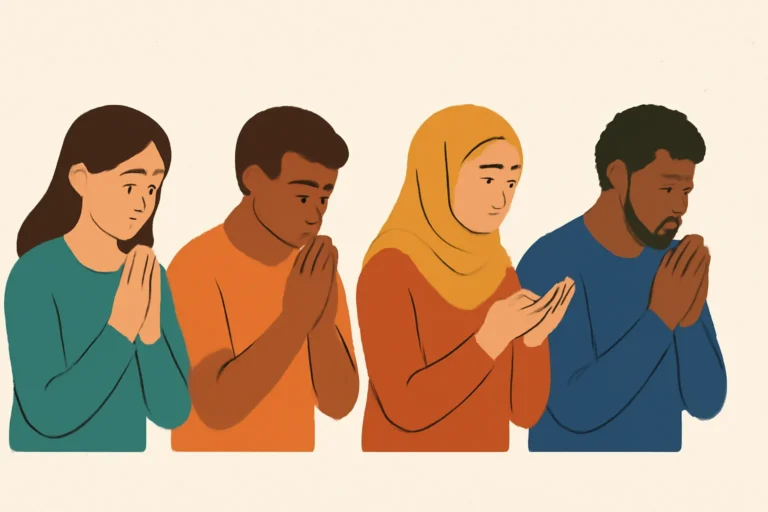
Many traditions emphasize inner transformation, ethical living, and compassionate action as outcomes of prayer. The following perspectives can broaden your approach and invite inclusive language into your practice.
Breath-centered prayer is common across traditions. Simple phrases whispered or thought with each exhale can anchor your attention and cultivate calm.
Blessings and benedictions—short sentences that set a hopeful intention for yourself, others, and the world—are easy to adapt in everyday life.
Scriptural or sacred-text engagement can provide shared vocabulary across faith communities, making prayer a bridge between traditions.
Action as prayer—many people view acts of kindness, justice, and service as expressions of prayer in motion. This approach honors the idea that practice extends beyond words.
As you explore, you may find yourself drawn to combining elements from multiple approaches. That hybridity can be a strength, allowing you to speak to the divine and to your own life in a language that feels true and alive.
Below are concise answers to questions people often ask when they are forming or renewing a prayer practice. If you have a question not covered here, you can adapt the guidance to your context or ask for a tailored suggestion.
Is there a right way to pray?
There is no single right way. The best method is the one that helps you connect, reflect, and act with integrity. Experiment with different forms, listen for your inner guidance, and choose what sustains you over time.
How long should I pray?
Short, regular sessions often beat long, irregular ones. Start with 5–10 minutes and adjust as your schedule and attention allow. The quality of focus matters more than the duration.
What if I don’t feel close to the divine?
That experience is common. Prayer is not only about feelings; it is also about alignment of will, honesty, and attentive presence. Continue with small, faithful habits, and allow the relationship to mature in its own pace.
Can I pray for others even when I am struggling myself?
Yes. Intercessory prayer often helps the worshiper process concern and cultivate compassion. You can begin with what you can manage and gradually deepen your requests as you grow stronger in your own life.
Should I memorize prayers?
Memorized prayers provide a reliable framework and a sense of continuity. It is equally valuable to improvise prayers that express your current heart and situation. You can mix both approaches.
Closing Reflections on a Practical Prayer Life
Praying is a practice that invites you into ongoing relationship with something larger than yourself, whether you call it God, the universe, the sacred, or simply the mystery you sense in life. The practical guidance above is designed to help you begin, sustain, and enrich this practice in a way that feels authentic and life-giving. By combining intentionality with flexibility, you can cultivate a prayer life that supports your wellbeing, your relationships, and your sense of purpose.
To summarize, here are a few memorable takeaways you can carry into your daily routine:
Begin with clarity and calm. A brief opening that centers attention can transform the rest of your time.
Use varied language. A mix of personal words and traditional phrases can enrich your expression and keep you engaged.
Listen as a core act. Silence and listening often reveal what words cannot capture.
End with gratitude or blessing. A closing line helps carry your intention into the day and strengthens the memory of your practice.
Adapt and persist. Your practice will evolve. Be flexible, patient, and committed to showing up—even when some days feel less dramatic than others.
If you have a preferred tradition or a specific aim—daily gratitude, healing, guidance, or reconciliation—consider creating a personal ritual that brings together the elements you value most. The ultimate mark of a successful practice is not the severity of the words you say but the sincerity and consistency with which you show up for yourself, for others, and for the possibilities you hold in your heart.