Why the Bible Is Reliable: Evidence, Manuscripts, and Prophecy
Across centuries of study, debate, and worship, many readers ask what gives the Bible its credibility as a source for faith, history, and doctrine. Reliability is not a single criterion but a convergence of factors. In this article, we explore three central pillars that scholars and readers often point to when evaluating the trustworthiness of biblical texts: evidence, manuscripts, and prophecy. Each of these dimensions helps illuminate how the Bible has come to us, how its contents have been preserved, and how certain passages have been understood to anticipate or explain later events. The goal is not to close the conversation with a single verdict but to present a careful, evidence-based portrait of why many people find the Bible credible for informing belief and practice.
Evidence and the Case for Reliability
When people consider whether the Bible is reliable, they often begin with the breadth of its historical and contextual claims. The biblical narrative engages with real places, peoples, political events, and cultural practices that are attested beyond the biblical pages. A number of key areas appear repeatedly in scholarly discussions about evidence for reliability:
Historical coherence across a wide range of authors and genres within the Old and New Testaments. While each book has its own voice and perspective, they often present a broadly consistent portrayal of major events, kings, covenants, and the movement of nations in the ancient Near East and the Mediterranean world.
Archaeological and historical corroboration for certain events, places, and cultural practices described in the text. While archaeology does not prove theological claims, it can reinforce the plausibility of historical settings, such as the existence of ancient cities, diplomatic interactions, and everyday life described in the biblical record.
Internal coherence of teachings across generations of writers who address ethical norms, social justice, worship, and human nature. For many readers, the Bible’s ethical and theological themes resist being dismissed as mere literary fabrication, even when specific details differ among books.
Prophetic claims and their perceived fulfillments—a subcategory discussed in more depth below. For some readers, the way certain prophecies align with later historical events reinforces the sense that the text is authentic, even if interpretive nuance remains a matter of debate.
Impact and transmission—the Bible’s long-standing influence on culture, liturgy, education, and personal formation is often cited as evidence that its message resonates with large communities across time.
It is important to acknowledge that evaluating reliability also involves addressing challenges and plural interpretations. The field of biblical studies emphasizes careful analysis, context, and transparent methodology. Critics may argue about methodological assumptions or offer alternative readings; supporters respond by highlighting multiple lines of evidence that mutually reinforce one another, rather than relying on a single source or moment of confirmation.
Manuscripts: The Transmission of the Text
One of the strongest bases for the Bible’s reliability is the extraordinary volume and diversity of manuscript evidence. The way a text has been transmitted through generations—manual copying, translation, and preservation—can reveal how faithfully later copies reflect earlier originals. In biblical studies, the topic of manuscripts and textual transmission is central, because it underpins the confidence readers place in what the ancient authors wrote and how close modern copies are to the original autographs.
Manuscript quantity, variety, and time gaps
In terms of manuscript availability, the New Testament offers an unusually rich corpus compared with other ancient literature. Estimates commonly cited by scholars include:
There are thousands of manuscript copies in Greek, including about 5,800+ known Greek manuscripts of portions or the entire New Testament.
In addition, there are well over 10,000 Latin manuscripts and many thousands more in other languages such as Syriac, Coptic, Armenian, Ethiopian, and Georgian.
Together, the total manuscript base is often described as numbering in the tens of thousands, providing a vastly larger sample than nearly any other ancient document.
The time gap between the original writings and the earliest copies is relatively short—especially for the New Testament. Some fragments date to the 2nd century or earlier, and full books are known from the 2nd to 4th centuries, long before the latest ancient manuscripts were produced.
This abundance of manuscripts enables rigorous comparison and cross-checking through a field known as textual criticism. Textual critics study dozens or hundreds of variants to determine which readings most likely reflect the original text. In practice, the vast majority of textual variants are minor spelling or grammatical differences that do not alter core meanings or doctrinal statements. The more substantial variants tend to involve difficult or debated readings, which scholars weigh against whole manuscript families, internal logic, and early quotations from church fathers.
Old Testament manuscripts and the Dead Sea Scrolls
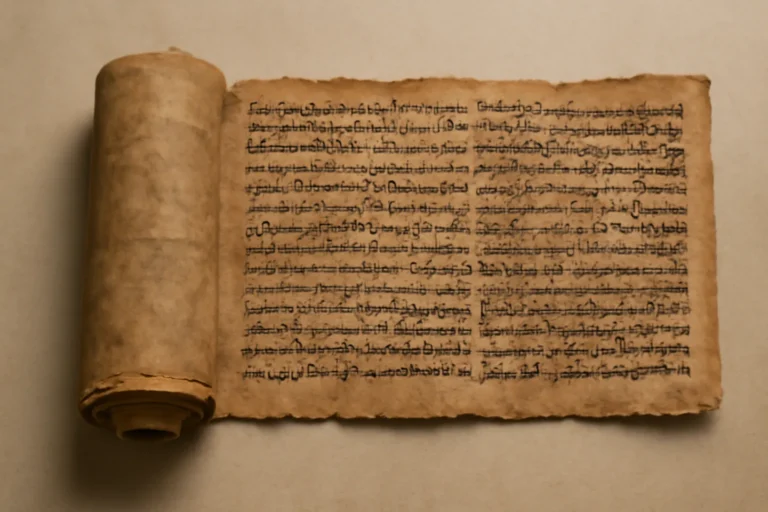
For the Old Testament, the textual history includes the transmission of the Hebrew Bible through the Masoretic Text, the Septuagint (Greek translation), and various other versions. The discovery of the Dead Sea Scrolls in the mid-20th century dramatically widened awareness of how ancient copies were transmitted. The Scrolls, dating from roughly the 3rd century BCE to the 1st century CE, include copies of many biblical books, including substantial portions of Isaiah, Psalms, and the Pentateuch. The impact on reliability studies is twofold:
The Dead Sea Scrolls show that the established Hebrew text used by later generations was already in circulation in an earlier period, providing a check on later manuscript copies.
Where the Scrolls align with the later Masoretic and Septuagint texts, they support the view that the transmission of the biblical text over centuries preserved a high degree of accuracy in many places.
Taken together, manuscript evidence for the Old and New Testaments demonstrates a robust basis for assessing the text that has reached modern readers. While there are variations among manuscripts—some dramatic, some minor—the converging lines of manuscript tradition are often cited as a primary reason many scholars trust the Bible’s textual integrity.
Early translations, quotations, and patristic testimony
Beyond the direct manuscript copies, a broad network of early translations and quotations by church fathers preserves an immense amount of scriptural material. Key features include:
Early translations in languages such as Latin (the Vulgate), Syriac (Peshitta), Coptic, Georgian, Armenian, and others helped spread and preserve text across different Christian communities. These versions are valuable for cross-checking how passages were understood in diverse linguistic contexts.
Patristic citations—the writings of early Christian teachers (for example, Irenaeus, Origen, Jerome, Augustine) quote biblical verses extensively. These quotations provide indirect evidence for the wording of scripture in certain periods, aiding textual critics in reconstructing original readings.
Because many early church communities used different manuscript families, scholars can compare how certain passages circulated and how minor variances arose in transmission. This process often helps isolate which readings are more likely to reflect earlier originals.
Altogether, the manuscript record—Greek, Latin, other languages, fragments, full codices, and early quotations—forms a securely anchored base for evaluating the biblical text. It undergirds not simply a claim of antiquity but a demonstrable pattern of preservation across generations and geographies.
Prophecy and Fulfillment: A Lens on Reliability
Another dimension frequently cited in discussions of biblical reliability is the presence of prophecies and their perceived fulfillments. “Prophecy” here refers to foretelling events or shepherding concepts that, in retrospect, appear to align with later outcomes. In evaluating reliability through prophecy, readers often distinguish between:
Old Testament prophecies interpreted in light of New Testament events (for example, messianic prophecies about the coming of a suffering servant who bears the sins of many).
Prophecy in the New Testament about events in the early church or near-term future (such as visions and predictions attributed to Jesus and the apostles).
Here are some commonly discussed strands of prophetic material and how they are treated in reliability discussions:
Christians often point to a cluster of passages they interpret as pointing toward the life, suffering, and role of the Messiah. Examples include:
Isaiah 53, which describes a suffering figure who bears the iniquities of others and is portrayed as a sacrifice—an interpretation widely embraced in Christian readings of Jesus’ crucifixion.
Isaiah 7:14 (the virgin birth) and Isaiah 9:6–7 (a divine-child figure forming a major portion of messianic expectation in Christian interpretation).
Micah 5:2 (a ruler from Bethlehem) and other passages that situate the Messiah within historical time and place.
Psalm 22 (descriptions of suffering that readers compare with Jesus’ crucifixion scenes).
Interpretive frameworks matter here. While many Christians view these passages as intentionally predictive and fulfilled in Jesus, scholars from different traditions may offer alternative readings or emphasize typological or symbolic fulfillment rather than a literal, single-event fulfillment. The reliability claim, in this sense, depends on how one weighs interpretation against the historical claim and text’s own internal structure.
New Testament prophecies and events
In the New Testament, some passages present Jesus’ life and mission as fulfillment of earlier expectations, while others describe events in the early church that are seen as divinely guided. For readers evaluating reliability, a few questions are common:
Do the prophetic statements have a clear reference that aligns with established historical events?
Are the prophecies situated in a plausible literary and historical context within the text?
How do different manuscript readings affect the sense of prophecy and its fulfillment?
Scholars generally acknowledge that prophetic literature can be complex and multi-layered. Some prophecies may be understood in multiple senses, including immediate historical application, later fulfillment, or spiritual symbolism. Because the Bible spans many centuries, discerning precise, single fulfillment for certain statements can be challenging. Nevertheless, many readers find reliability in the way prophetic texts articulate themes—such as justice, exile and return, mercy, and the hope for a future restoration—that continue to resonate in historical memory and in faith communities today.
Historical and Archaeological Corroboration
Beyond manuscript depth and prophetic patterns, a broader historical and archaeological context often informs discussions of reliability. This dimension looks for external attestations and physical corroboration of events, places, and practices described in biblical texts. While archaeology cannot prove spiritual claims, it can corroborate details about geography, culture, and ancient practices that the Bible depicts.
Non-biblical sources and cross-cultural attestation
Several ancient historians and writers mention events or figures that intersect with biblical accounts. For example, historians such as Tacitus, Josephus, and Pliny the Younger reference events, rulers, and locales that align with biblical chronology and geography in various periods of the first century CE. These external references provide a form of corroboration for certain events described in the Bible, especially those associated with major political and social upheavals in the Roman-era context.
Archaeology, geography, and cultural practices
Archaeological finds and place-name studies can illuminate the world in which biblical authors lived. Examples include:
Confirmations of city locations and ancient infrastructure described in biblical narratives.
Evidence of royal lineages, administrative practices, and covenant language common to biblical literature.
Artifacts and inscriptions that reflect language, customs, and religious practices similar to those depicted in biblical texts.
Scholars emphasize that archaeology is not a “proof” of biblical truth in a theological sense but a valuable discipline for understanding context, geography, and material culture. When artifacts converge with textual descriptions, readers gain a more nuanced sense of authenticity about the historical environment of the biblical material.
Canon Formation and Transmission: How the Bible Reached Its Form
Reliability is not only about what was written but also about how the biblical books were collected, preserved, and recognized as authoritative. The formation of the biblical canon involved careful consideration by early Christian communities about which writings were genuinely apostolic, aligned with orthodox teaching, and widely used in worship and instruction. Several features contribute to the perceived reliability of the canon process:
Criteria for canonicity
Scholars describe several intersecting criteria that early communities used to evaluate candidate writings, including:
Apostolic authorship or attribution — whether a book or letter could reasonably be associated with an apostle or a close companion of an apostle.
Orthodoxy — whether the teaching in a work aligned with the core tenets of what the communities already affirmed as true about God, creation, humanity, sin, and salvation.
Widespread usage — whether a text was familiar and read in a broad geographic range across different Christian communities.
Consistency with other accepted writings — whether the text fit well with the established canon’s overall message and scope.
These criteria suggest a deliberate, communal process rather than a single decision. The result is a canon that reflects continuity and convergence across diverse communities, languages, and time periods, which many readers view as a mark of lasting reliability.
Despite variations in copyists’ work, the canonical collection maintains a remarkable degree of internal consistency. The Gospels, for example, present parallel narratives with overlapping material yet distinct perspectives, reflecting different eyewitness experiences and literary aims. The presence of four Gospels, plus epistles, poetry, wisdom literature, and prophetic books in the biblical corpus, demonstrates a complex but coherent library that has withstood centuries of transmission. For many readers, this breadth and coherence contribute to a credible and reliable portrayal of religious truth claims and historical memory.
Common Objections and How Reliability Is Addressed
No discussion of biblical reliability is complete without engaging key objections. Here are some common concerns and how the evidence discussed above informs a response:
Apparent contradictions
Readers sometimes encounter passages that seem to conflict on details such as chronology, numbers, or sequencing. Textual critics and biblical scholars approach these concerns by examining context, translation choices, genre distinctions (historical narrative, poetry, parable), and the possibility of multiple valid interpretations. In many cases, apparent contradictions dissolve when the literary conventions and aims of each book are properly understood. The existence of multiple voices within Scripture can itself be a feature, not a flaw, if read with awareness of genre and purpose.
Translation and interpretation challenges
Different Bible translations reflect varied manuscript bases and translation philosophies (word-for-word vs. thought-for-thought, for example). Readers should recognize that some variance arises from necessary choices in rendering ancient languages into modern ones. Yet essential doctrines and central narratives typically survive across translations because they are supported by a broad and deep manuscript tradition that textual critics can consult and compare. This makes the core message accessible to diverse audiences while still allowing for careful scholarly refinement.
Practical Implications: Why Reliability Matters for Faith and Life
Beyond the academic dimensions, the question of reliability has practical significance for personal faith, communal worship, and ethical decision-making. When people encounter the Bible as a reliable document, several implications often emerge:
Confidence for belief that the Scripture’s claims about God, humanity, and salvation are rooted in a historically durable tradition rather than mere fantasy or wishful thinking.
Guidance for life in moral and spiritual matters, built on texts that have been transmitted with care and subjected to critical scrutiny over long periods.
Engagement with culture through a text that has shaped law, art, education, and social ideals for millennia, inviting readers to wrestle with enduring questions in conversation with history.
For readers who want to explore further, practical steps include studying specific manuscript traditions, examining cases of textual variation, and reading alongside credible academic resources that discuss the evidence in clear, accessible language. A careful approach does not diminish faith; rather, it can deepen it by grounding beliefs in a transparent, historically informed understanding of how the Bible arrived in the hands of contemporary readers.
Why These Lines of Inquiry Matter: A Synthesis
In sum, several intertwined strands contribute to the overall assessment of why the Bible is reliable in the eyes of many readers and scholars:
Evidence-based history that engages with corroborating data from archaeology, ancient near-eastern history, and external records, alongside biblical texts.
Extensive manuscript transmission that provides a robust basis for reconstructing the original wording and for assessing the reliability of readings across time and language.
Prophecy and fulfillment, interpreted within robust hermeneutical frameworks, that offers a lens through which some readers view the Bible as a divinely directed literary corpus.
These three pillars—evidence, manuscripts, and prophecy—do not guarantee universal agreement about every detail. Instead, they form a composite picture that many consider compelling: a text with a remarkable record of preservation, credible historical anchors, and a pattern of prophetic language that has held interpretive weight across generations. Readers may weigh these factors differently, yet the convergence of multiple lines of inquiry contributes to a disciplined, thoughtful approach to evaluating the Bible’s reliability.
Further Considerations: An Expanded View of Reliability
To round out the discussion, it is helpful to acknowledge several nuanced considerations that frequently surface in scholarly and lay discussions alike:
Diversity of genres within the Bible (law, history, poetry, wisdom, prophecy, gospel, and letters) means that interpretation requires careful attention to literary form and purpose. This diversity, when understood properly, becomes a strength rather than a weakness in evaluating reliability.
Communal memory and reception—the Bible’s authority has often grown through communal reading, liturgical use, and shared exegesis in faith communities, which can reinforce perceived reliability through repeated engagement and memorial practice.
Ongoing scholarship—new manuscript discoveries, digital tools for textual analysis, and interdisciplinary research (linguistics, archaeology, anthropology) continually add shades of understanding to the question of reliability.
In this light, the question “why is the Bible reliable?” becomes less a verdict and more a careful, ongoing conversation among historians, theologians, translators, and readers who seek to understand how a document of such length and complexity continues to speak with relevance today.
Variations on the Theme: Different Angles on Reliability
Because readers come to the Bible from diverse backgrounds and aims, it helps to consider various phrasing that capture the same underlying question from different angles. Here are some ways to phrase the central inquiry, each highlighting a facet of reliability:
Why can we trust the Bible as a historical source?
What makes the biblical text credible across millennia of transmission?
In what ways do prophecies in the Bible demonstrate foresight or intentional design?
How do manuscript discoveries strengthen confidence in the biblical record?
What does external corroboration say about biblical events and settings?
Across these formulations, the core claim remains consistent: when examined through evidence, manuscript history, and prophetic interpretation, a compelling case emerges for the reliability of the Bible as a source worthy of study, reflection, and trust for many readers.
Conclusion Without Using the Word
In closing, the question of biblical reliability invites a multifaceted examination. The convergence of extensive manuscript evidence, historical corroboration, and the prophetic dimension offers a robust framework for evaluating the Bible’s trustworthiness. While interpretations vary and debates continue, the overall trajectory of the field suggests that the biblical corpus has been preserved with remarkable fidelity, translated with care across cultures, and engaged with in ways that continue to shape faith and life for countless communities around the world. For readers who approach the Bible with curiosity, humility, and a commitment to careful study, the journey toward understanding its reliability can be a meaningful and ongoing pursuit.