A Brief Overview of the Old Testament: Key Themes, Structure, and Timeline
This article offers a broad, accessible guide to the Old Testament,
also known in Jewish tradition as the Hebrew Bible. It presents a concise
survey of its structure, the major themes, and
the timeline of events and literary developments that shape
these books. While many readers encounter the Old Testament as a single, unified
narrative, it is in fact a diverse collection produced over many centuries, by
different communities, and in various literary forms. A brief overview of the Old Testament
can help readers recognize how the material fits together, what it asks of its
readers, and how it has interacted with later religious traditions.
For purposes of clarity, this overview uses language common in scholarly and lay
discussions alike: the Pentateuch refers to the first five books,
often called the Law or the Torah; the Historical
Books recount the national story of Israel; the Writings
(often labeled as Wisdom and Poetry) collect poems, proverbs, and
reflections on life; and the Prophetic Books contain oracles that
address accountability, hope, and judgment. In Christian traditions, these groupings
are commonly presented as Law, History, Poetry/Wisdom, and Prophets, whereas in the
Hebrew Bible the order and some inclusions differ. The result is a rich tapestry of
voices that speaks to questions of identity, faith, community, and the divine
relationship across time.
Canonical Structure
The Pentateuch (Law)
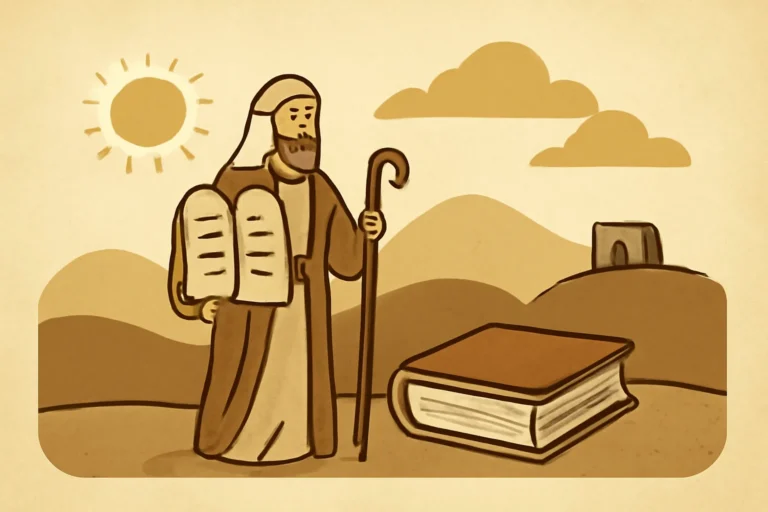
The five books of Moses lay the groundwork for the entire corpus.
They introduce creation narratives, the patriarchs
and matriarchs, and the founding covenantal relationship between God and the
people of Israel. The books include Genesis, which contains the
stories of Adam and Eve, Noah, Abraham, Isaac, and Jacob; Exodus,
chronicling the oppression in Egypt, the liberating Exodus, the
giving of the Law at Sinai, and the establishment of covenant
identity; Leviticus, Numbers, and Deuteronomy,
which present laws, regulations, census data, and sermons that guide community
living and worship. A recurrent thread in these books is the idea of a covenant{” “}
—an ongoing, binding relationship between the divine and the people.
Central themes in the Pentateuch include creation and fall, the call
to bless all nations through Abrahamic promises, and the unfolding of the covenant as a framework for living in right relationship with God.
The narrative also introduces the notion that obedience to the divine law
is tied to communal flourishing, while disobedience leads to consequences that require
repentance and turning back to God.
Historical Books
The Historical Books cover a broad sweep from the entry into the land of
Canaan to the post-exilic years. They narrate the conquests, the era of the
judges, the rise and fall of the united monarchy under figures such as Saul, David, and Solomon, and the subsequent division of the
kingdom into the northern Israelite and southern Judahite realms. These books also
recount the rise and fall of temples, centers of worship, and the various rulers who
shaped national policy, religious reform, and social life.
Joshua through the conquest and division of the land
Judges, a period of tribal leadership, cycles of apostasy, and deliverance
Ruth, a story of loyalty and inclusion set during the time of the judges
1–2 Samuel, the establishment of the monarchy and the rise of David
1–2 Kings and 1–2 Chronicles, chronicles of kings, temple worship, and exile
Ezra and Nehemiah, the return from exile and the rebuilding of the temple and city walls
Esther, a narrative set within the Persian period, illustrating providence and courage
These books together emphasize how history is interpreted theologically:
events are read as manifestations of stewardship, faithfulness or unfaithfulness, and the outcomes of kings and nations are often seen in light
of their adherence to or deviation from the covenant.
Wisdom and Poetry (Writings)
The Wisdom and Poetry sector collects literature that explores human
experience, meaning, and devotion in diverse voices. This section includes poetry, songs,
proverbs, and reflections on life’s ambiguities. The tone can be liturgical, philosophical,
or reflective, inviting readers to ponder questions about justice, suffering, joy, and hope.
Psalms, a collection of prayers and songs used in communal worship
Proverbs, concise maxims about practical wisdom and ethical living
Job, a meditation on suffering and divine sovereignty
Ecclesiastes, a meditation on meaning and the limits of human effort
Song of Songs, a lyrical celebration of love and human relationships
Latter-day writings such as Daniel (in some traditions part of the prophetic corpus)
The wisdom literature often engages with universal questions—how to live wisely, how to respond to
injustice, and how to trust in a justice that may not always be immediately visible. Poetry and
prose alike use imagery drawn from nature, history, and everyday life to illuminate the human
condition and the divine presence within it.
Prophetic Books
The Prophetic Books are a distinct and influential block that address social
ethics, national accountability, and hope for the future. The prophets call their audiences
to fidelity to the covenant, to justice for the vulnerable, and to worship
that aligns with ethical and communal flourishing. They also cast a long shadow of expectation
for future redemption and restoration.
Major Prophets such as Isaiah, Jeremiah, Ezekiel, and in some traditions Daniel
Minor Prophets (the Twelve) including Hosea, Amos, Micah, Malachi, and others
The messages often emphasize themes such as justice and mercy, the danger of
social inequality, the need for repentance, and a promise of future restoration. Prophetic
books blend warning with consolation, sometimes presenting a present crisis as a precursor to a
broader divine plan that extends beyond political events to the shape of human existence and
the ultimate reconciliation with God.
Variants Across Traditions
Different religious traditions arrange and sometimes supplement the Old Testament with
additional material. In Jewish, Protestant, Catholic, and Orthodox canons, there are
differences in order and in inclusions. Notably, some Christian traditions include a set of
books known as the Deuterocanon/Apocrypha that are not in the Hebrew Bible or
most Protestant editions. These books—such as Tobit, Judith, Wisdom of Solomon, Sirach, and 1–2 Maccabees among others in various
traditions—offer additional historical, wisdom, and devotional material.
For readers seeking a brief overview that is broadly applicable across traditions, it
helps to note the core divisions above and to recognize how each tradition emphasizes different
pieces of the larger story. Regardless of canons and order, the Old Testament presents a
sustained exploration of how a community understands God’s presence, covenant loyalty, and faithfulness in the face of changing historical circumstances.
A central idea is the covenant relationship between God and Israel. The word covenant appears repeatedly as a formal binding agreement that shapes
identity, worship, and social order. This theme is not merely contractual; it is a
relational framework in which God acts toward and with the people, guiding them toward
life in accordance with divine purposes. The covenant calls for exclusive fidelity,
trust, and communal responsibility.
Law, Obedience, and Worship
The Law (including civil, ritual, and moral dimensions) defines how the
community worships, governs conduct, and sustains communal life. Obedience to the Law is
presented as a path to social harmony and divine blessing, while disobedience often yields
consequences that underscore accountability. Worship practices, including temple-centered rituals,
sacrifice, and a rhythm of festivals, reveal how the people relate to the divine in ordinary and
extraordinary times.
Prophecy, Justice, and Social Ethics
The prophets emphasize justice, mercy, and care for the vulnerable—widows,
orphans, foreigners, and the poor. They call for ethical living that reflects fidelity to the
covenant and genuine worship. Prophecy also ties present behavior to future hope, envisioning a time
when humankind will live in harmony with God and God’s justice will be fully realized.
Wisdom, Suffering, and the Mystery of God
Wisdom literature probes questions about meaning, suffering, and human limitations.
It invites readers to discern practical paths for living well, while acknowledging that life
can be unpredictable. The interplay of wisdom, poetry, and narrative invites readers to reflect
on the mystery of God, the peculiarities of human experience, and the hope that knowledge and faith
can inform practical choices in daily life.
Holiness, Temple, and Exile
The temple emerges as a focal point for worship and national identity in several books, and
exile is interpreted as a consequence and also a catalyst for reform. The exile
experiences—first the northern kingdom’s fall to conquest and then the Babylonian captivity—shape
how communities understand God’s presence, their own identity, and the possibility of return.
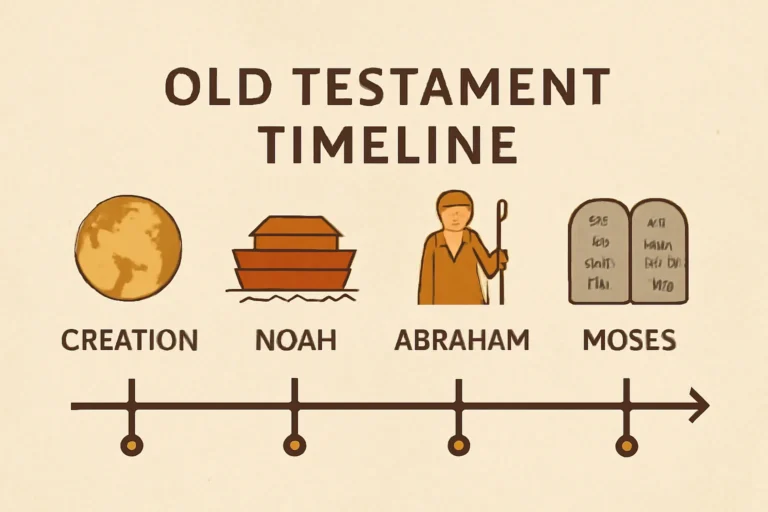
A Timeline Sketch: From Creation to Return
Patriarchs and Origins (traditional framing)
A common starting point for a broad overview is the era of the patriarchs—
Abraham, Isaac, and Jacob—and the promises that diversify into a grand narrative about blessing
the nations. The stories in Genesis set forth the idea that a special relationship with
God is established through faith, promise, and obedience. These chapters are foundational for later
understandings of peoplehood, geography, and divine call.
Exodus and Wilderness Wanderings (c. 13th–13th centuries BCE, by tradition)
The narrative turns to the Exodus, the dramatic deliverance from oppression, the
giving of the Law, and the formation of a people bound by divine instruction. The
wilderness years are framed as a school of obedience and trust, during which the community learns
to live as a people defined by holiness and covenant loyalty.
Conquest and Settlement (roughly the 12th–11th centuries BCE, varying by tradition)
After the wilderness, the land of Canaan becomes the setting for conquest, settlement, and
the gradual establishment of tribal and urban centers. This period introduces the complexities of
leadership, alliance, and the ongoing tension between dependence on divine guidance and the temptations
of political power.
United Monarchy and Temple Era (c. 11th–10th centuries BCE to the 6th century BCE)
The emergence of a unified monarchy under rulers such as Saul, David, and Solomon anchors the sense of a national project. The construction of the first temple marks a
defining moment in religious life and ritual practice. The era is characterized by political drama,
cultural achievements, and the consolidation of worship centered on the temple in Jerusalem.
Divided Kingdoms, Exile, and Return (9th–6th centuries BCE)
After Solomon, the kingdom splits, and political instability intertwines with spiritual concerns. The
fall of the northern kingdom, the reigns of various kings, and the catastrophic exile of the people culminate
in a period of reflection, repentance, and hope. The return from exile, led by leaders such as Ezra and Nehemiah, ushers in a post-exilic community with renewed emphasis on law, worship, and rebuilding.
Return, Reform, and Post-Exilic Thought (late 6th–4th centuries BCE)
The return from exile is not merely a political event but a spiritual and intellectual reorientation. The
community reconstitutes its religious life around the Torah, rebuilds the temple precincts, and engages in
renewed reflection on fidelity, justice, and hope for future renewal. While the canonical period ends
before the close of the biblical narrative, it sets the stage for how later traditions would read and
interpret these texts.
Reading the Old Testament Today: Approaches and Practical Guidance
Multiple Angles for a Rich Understanding
A brief overview of the Old Testament today can be approached from several angles:
historical, literary, theological, and devotional. Each lens emphasizes different aspects of the text
while remaining faithful to its complexity. Readers often combine approaches to gain a fuller picture.
Historical and Contextual Reading
A historical-critical approach seeks to understand the historical setting, authorship
conventions, and editorial layers that shape the text. This method helps readers see how events, laws,
and narratives reflect the concerns of particular communities at particular times. It also clarifies how
the text may have evolved across generations.
Literary and Narrative Reading
A literary reading emphasizes genre, character development, imagery, cadence, and
symbolism. It asks how a book’s form—whether poetry, narrative, or discourse—conveys its central
questions and how different voices within the text contribute to a larger conversation.
Theological and Ethical Readings
A theological reading focuses on what the text says about God’s nature, mercy, justice,
and faithfulness, as well as how humans respond to divine initiative. An ethical reading looks
at issues of justice, care for the vulnerable, and how communities live out their commitments in daily life.
Intertextual and Interfaith Perspectives
Scholars and readers often explore how the Old Testament interacts with other biblical texts,
including the New Testament, and how its themes inform Jewish and Christian traditions alike.
Recognizing cross-textual echoes—prophetic motifs, covenantal language, and motifs of exile and return—
can deepen appreciation for how these works have shaped religious imagination across centuries.
Practical Tips for Readers
Begin with a map of the canonical sections to keep track of where you are in the big picture: Law, History, Wisdom, Prophets.
Pay attention to repeated motifs such as covenant, obedience, justice, and worship.
Note the literary forms—narrative, poetry, laws, parables—and how tone shifts between sections.
Read with a purpose beyond literal interpretation; consider what each book asks readers to trust, hope for, and do.