Biblical History of Israel Timeline: A Comprehensive Chronology
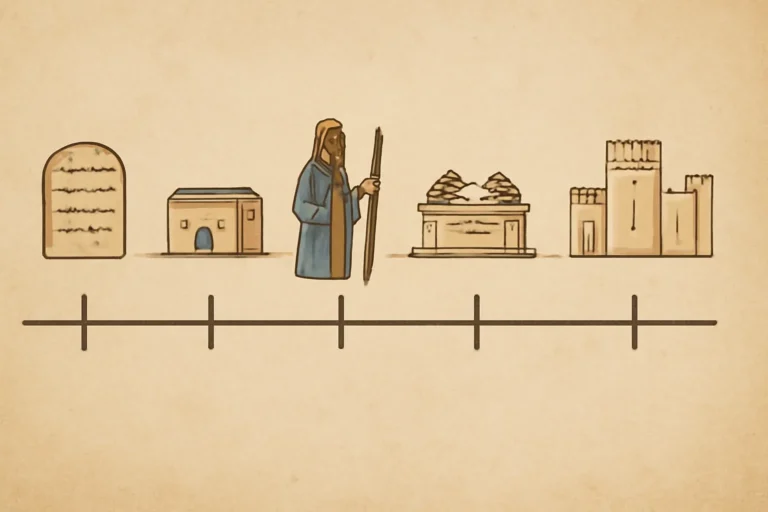
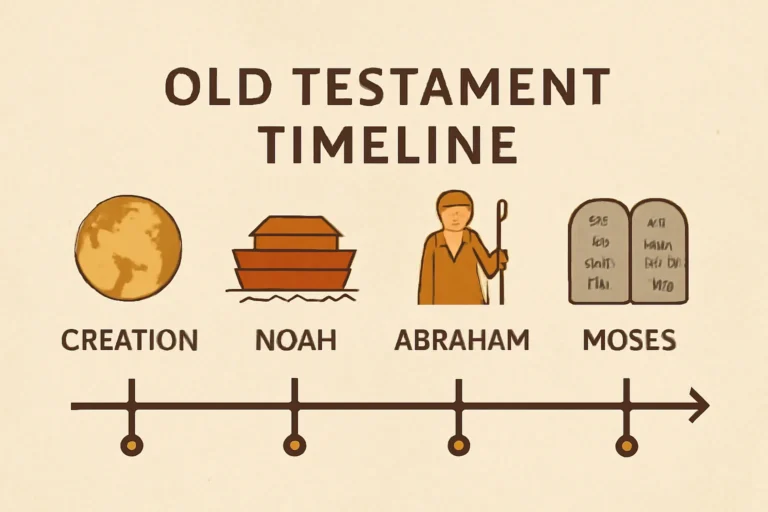
This article presents a comprehensive, chronological overview of the biblical history of Israel, tracing major events from the patriarchal narratives through the late Second Temple period. The timeline blends biblical accounts with historical context to offer a coherent sequence of events that shaped the land, its people, and their religious identity. Bold terms highlight key ideas and milestones in the unfolding story of the biblical history of Israel.
Patriarchs and Covenant Foundations (c. 2000–1600 BCE). The biblical narrative centers on the calls and covenants made with Abram/Abraham, later named Abraham, his son Isaac, and grandson Jacob, who fathers the twelve tribes of Israel. This era emphasizes the Covenant between God and the patriarchs, the promise of land, descendants, and blessing, and the familial beginnings of the people who will become Israel. The stories in this period set the theological stage for later national identity and worship.
Migration from Ur to Canaan, guided by divine instruction.
God’s binding promises to Abraham (land, offspring, blessing) that frame the future narrative.
Family dynamics, faith testing, and episodes that foreground trust in the God of Israel.
Sojourn in Egypt and the Exodus (c. 1700–1250 BCE, biblical chronology). The Hebrew people, initially a family cluster, become a growing community in the land of Egypt under shifting pharaonic regimes. The Exodus narrative recounts liberation from oppression, the crossing of the Red Sea, and the formation of a collective identity centered on worship of Yahweh and the reception of the Law at Sinai.
The liberation experience solidifies the idea of a covenantal people governed by divine statutes.
Receiving the Ten Commandments and related statutes provides the framework for communal worship, civil life, and moral code.
Wilderness wanderings prepare the people for entry into the land of Canaan.
Conquest and Settlement in Canaan (c. 1250–1050 BCE). Following the Exodus, the Israelites enter into the land; tribal allotments and settlement patterns emerge, laying the groundwork for a national federation under later leaders. The historical memory of conquest is interwoven with periods of resistance and adaptation to local powers in the land.
Consolidation of tribal territories and eventual calls for centralized leadership.
Encounter with surrounding nations and evolving religious centers beyond Canaan.
Era of the Judges (c. 1200–1020 BCE). The tribes operate in a looser confederation with charismatic leaders raised up to deliver and govern during crises. This period is marked by cycles of apostasy, repentance, and deliverance, as prophetic voices and national leaders navigate threats from neighboring powers.
Local governance under various judges as regional authority waxes and wanes.
Emergence of faithfulness to the Covenant and devotion to the central worship in the tabernacle setting.
Key milestones and themes in the patriarchal era and its immediate aftermath include the shaping of the identity of Israel as a people chosen by God, the forging of an evolving worship system, and the memory of promises that inform later expectations of a united monarchy and a lasting temple.
A Unified Monarchy: Saul, David, and Solomon in Biblical Chronology
Transition from tribal confederation to a centralized monarchy marks a major shift in biblical history. The emergence of the United Monarchy centers on three foundational figures and culminates in temple-centered worship and imperial ambitions. This section traces the arc from anointing to construction and covenantal promises renewed in a royal context.
Saul, the First King (c. 1050–1000 BCE). The anointing of Saul signals the transition from tribal leaders to a monarchic system. His reign helps unify the tribes for external threats and establishes a recognizable national structure, though his story also highlights the tension between prophetic guidance and royal authority.
Political unification under a single throne to coordinate defense and governance.
Early testing of the royal office and its relation to divine favor and prophetic discernment.
David’s Reign and the Davidic Covenant (c. 1000–970 BCE). David strengthens central authority, expands political influence, and makes Jerusalem the political and religious center. The biblical text emphasizes the Davidic Covenant, a divine promise that his throne will endure, shaping later Messianic expectations.
Consolidation of political power and military victories that expand the territory of Israel.
Establishment of Jerusalem as the capital and spiritual focus.
Bonding of religious and national identity through the royal house and an expanding court culture.
Solomon’s Reign and the First Temple (c. 970–931 BCE). Solomon, David’s son, builds the first permanent sanctuary in Jerusalem—the First Temple—and presides over a flourishing era of trade, cultural exchange, and monumental building projects. The Temple becomes the focal point of Israelite worship, sacrifice, and national ceremony.
Construction of the Temple and the consolidation of centralized worship operations.
Enhancements of urban infrastructure, diplomacy, and economic networks.
Division of labor between priestly responsibilities and royal authority, with an emphasis on covenant fidelity.
End of the United Monarchy and the transition toward a divided kingdom (c. 931 BCE). Solomon’s son Rehoboam’s reign leads to political fractures, and the kingdom splits into two entities: the northern kingdom of Israel and the southern kingdom of Judah. The biblical narrative frames this division as a consequence of idolatry and leadership failures, with lasting implications for the people and their temple culture.
Divided Kingdoms: Israel and Judah under the Shadow of Empires
With the division into Israel (the north) and Judah (the south), the biblical history of Israel timeline records a dual drama: political fragmentation and the looming pressure of regional superpowers. This era sees prophetic voices rising in response to instability, social injustice, and religious challenges, as well as the ongoing ritual and cultic life centered on the temple precincts in Jerusalem and, for Israel, a dispersed cultic memory.
Israel in the North (c. 931–722 BCE). The northern kingdom experiences rapid political consolidation and later disintegration under pressure from Assyrian power. Its capital shifts and religious centers reflect shifting alliances with neighboring peoples.
Assyrian encroachments culminate in the conquest of the Northern Kingdom (c. 722 BCE).
Destruction of regional shrines and dispersion of northern tribes into exile or assimilation into surrounding populations.
Judah in the South (c. 931–586 BCE). While remaining politically independent for a time, Judah confronts Assyrian and then Babylonian pressure. The Jerusalem Temple remains a central symbol of identity even as foreign powers impose tributary arrangements and military campaigns.
Prophetic admonitions and calls to repentance address royal and priestly leadership during turbulent times.
The destruction of Jerusalem and the Temple by Babylon in 586 BCE becomes a defining traumatic event in biblical memory.
Prophetic Voices and Covenantal Memory during the Divided Kingdoms era. Figures such as Isaiah, Amos, Hosea, and others interpret national misfortune through the lens of covenant loyalty and justice, pressing for fidelity to Torah and ethical integrity.
Exile, Return, and the Rebuilding Era
The Babylonian exile marks a watershed in biblical history. The narrative shifts from national triumph to themes of repentance, return, and rebuilding. The post-exilic period centers on how a remnant community reconstitutes worship, law, and identity under foreign rule, preparing for a renewed temple-based life and the reestablishment of communal leadership.
Babylonian Exile (586–538 BCE). The destruction of the First Temple and exile of elite and priestly families reshape religious life and communal memory. Scriptural voices interpret exile as consequence of covenant unfaithfulness, while offering hope for eventual restoration.
Cyrus the Great’s Policy and Return (539–538 BCE). The Persian king permits exiled Judeans to return to Jerusalem and rebuild the temple and city infrastructure, inaugurating a new phase of covenantal restoration under foreign sovereignty.
Zerubbabel, Ezra, and Nehemiah (late 6th to 5th centuries BCE). Leadership focuses on rebuilding the Second Temple, rededicating the altar, and promoting religious reforms. Ezra emphasizes purity of worship, while Nehemiah supervises the rebuilding of Jerusalem’s walls and civic life.
Restoration of temple worship anchors the community’s identity in even-exilic terms.
Scriptural reading, return to Torah, and social reforms shape post-exilic Jewish life.
Returnees and the Reintegration of the Community within the broader imperial framework of Persia. The post-exilic period sees a redefined priesthood, a renewed sense of corporate memory, and the laying of the groundwork for later prophetic activity.
Persian and Hellenistic Influences on the Land of Israel
As Persian influence wanes and Greek culture expands, the land experiences a series of political realignments. The biblical history of Israel timeline in this era is marked by administrative changes, the opening of Hellenistic culture, and the emergence of new challenges and opportunities for Jewish communities living under distant empires.
Persian Provincial Administration (5th–4th centuries BCE). Judea becomes a favored province within the Persian empire, with a degree of local autonomy in matters of worship and temple maintenance. The temple continues to function as a religious and cultural center, even as political authority is exercised by imperial powers.
Hellenistic Encounters following the conquests of Alexander the Great (332 BCE). Greek language, philosophy, and culture enter the region, influencing education, art, and public life. Tensions arise as Jewish preferences for covenantal law intersect with Hellenistic norms.
Hasmonean Uprising and the Maccabean Era (late 2nd–1st centuries BCE). The rededication of the temple and the emergence of the Hasmonean dynasty respond to foreign pressure and religious concerns, signaling a period of Jewish political autonomy intertwined with inner religious reform.
Hanukkah commemorates the rededication of the Temple after restored worship under Jewish leadership.
The Maccabees establish a priestly-military leadership that exercises significant political influence in Judea.
Hasmonean Rule, Roman Contact, and the Closing Phase of the Biblical Timeline
As Rome expands its influence, the land of Israel becomes a focal point of international politics. The biblical history of Israel timeline culminates in the period of Roman sovereignty, with political upheavals, architectural grandeur in temple life, and the emergence of new religious movements that lay a foundation for later Christian and Jewish developments. This section highlights the transition from regional autonomy to imperial governance and the significant historical turning points in this era.
Roman Intervention and the Annexation of Judea (63 BCE). The Roman general Pompey captures Jerusalem, and Judea becomes a client state under the broader Roman order. Local leadership continues to function under a mix of aristocratic and priestly authorities, while Rome asserts greater direct control over regional affairs.
Herodian Reign and Temple Renewal (37–4 BCE). Herod the Great undertakes ambitious building projects, including renovations to the Second Temple, expanding urban infrastructure, and consolidating power in a volatile political landscape.
Turning Points in the First Century CE. The period leading up to and including the Destruction of the Second Temple in 70 CE highlights the culmination of tensions between Jewish communities and the Roman state, accompanied by the emergence of early Christian movements and a burgeoning diaspora.
Disruptions in temple life and the erosion of centralized religious authority contribute to shifts in Jewish and early Christian identity.
The center of gravity for Jewish life gradually shifts away from the temple in Jerusalem toward synagogues and study, both within Judea and in the wider diaspora.
Bar Kokhba Revolt and Aftermath (132–135 CE). A major Jewish revolt against Roman rule culminates in suppression, dispersion, and the reconfiguration of regional governance under Roman policy, marking the end of the biblical timeline as a continuous political framework and the beginning of a long, diverse diaspora-era history.
Through-lines and Thematic Anchors in the Biblical Timeline
Across these periods, several persistent themes recur in the biblical history of Israel timeline, guiding interpretation and fostering continuity. The following themes are worth noting as you trace the chronology:
Covenant fidelity and the centrality of the Temple as the locus of worship and national identity.
The enduring importance of prophetic voices, which challenge rulers, call for repentance, and articulate visions of justice, righteousness, and hope.
The movement from a tribal to a centralized political structure, followed by periods of division, foreign domination, and eventual renewal under different governance models.
The resilience of a remnant community that seeks to preserve identity through law, worship, and memory, even in exile or under foreign rule.
Intersections of religion, politics, and culture as Jewish communities navigate assimilation, resistance, and reform across centuries.
Readers approaching the biblical history of Israel timeline should keep in mind several methodological notes to appreciate the scope and diversity of the material:
The dates presented are frequently approximate and reflect a synthesis of biblical narratives and traditional scholarly dating. Different traditions place events in varying timeframes, and historical record outside the Bible can illuminate or modify these estimates.
The narrative often blends theological interpretation with historical memory. The emphasis on covenants, temple worship, and prophetic critique reflects the way communities understood their past and their aspirations for the future.
Major milestones—such as the Exodus, the First Temple, the exile, and the Second Temple period—function as anchors in the chronology, around which other events are organized.
Geopolitical dynamics in the ancient Near East, such as Assyrian, Babylonian, Persian, Greek, and Roman spheres of influence, provide essential context for understanding how Israel’s history unfolds within a broader world.
For readers who want a compact reference, this brief outline highlights the major epochs and turning points in the biblical history of Israel timeline:
Patriarchal era and foundational covenants (c. 2000–1600 BCE).
Egyptian sojourn and the Exodus (c. 1700–1250 BCE).
Conquest and settlement in Canaan, followed by the Judges era (c. 1250–1020 BCE).
United Monarchy under Saul, David, and Solomon; building and temple worship (c. 1050–931 BCE).
Divided kingdoms: Israel and Judah, with prophetic voices and warfare (c. 931–586 BCE).
Babylonian exile and the destruction of the First Temple (586–539 BCE).
Return and rebuilding: temple restoration, reforms, and reintegration (539–332 BCE).
Persian and Hellenistic periods: cultural and political shifts, Jewish engagement with Greek culture (c. 332–164 BCE).
Hasmonean era and continued sovereignty within a complex imperial setting (late 2nd–1st centuries BCE).
Roman rule, temple life, and the late biblical timeline culminating in the destruction of the Second Temple (66–70 CE) and the Bar Kokhba revolt (132–135 CE).