Biblical Theology: A Practical Guide to Understanding Scripture
Biblical theology is a practical and transformative way to read the Bible. It invites readers to notice how God’s revelation unfolds across the pages of Scripture, from creation to new creation, and how every book, genre, and character contributes to a single, coherent drama. Rather than treating individual passages in isolation, biblical theology emphasizes the unity of Scripture and the way a narrative arc emerges when we read with the right questions in mind. This approach is not only for scholars; it is a usable framework for pastors, teachers, students, and laypeople who want to understand the Bible more deeply and apply its truths more faithfully.
At its core, biblical theology seeks to understand what the Bible itself says about God, humanity, salvation, the nations, and the end of all things. It is distinct from yet related to other theological methods:
Canonical focus: It reads Scripture in the order and structure given by the canon, paying attention to how books interpret one another within the story.
Historically aware: It recognizes how historical contexts shape the meaning of texts while still listening for the authorial intention that emerges across time.
Progressive revelation: It traces how God’s redemptive plan becomes clearer as revelation unfolds, particularly through covenants, promises, and types that point forward to fulfillment.
Several terms express the same aim with slightly different emphases. Consider these variations as semantic neighbors that enrich the conversation:
Biblical-theology (emphasizing the discipline as it pertains to the Bible itself)
Canonical theology (focusing on the canonic order and how Holy Scripture is the authoritative canon)
Theology of Scripture (noting how Scripture presents God and his redemptive work within its own pages)
Redemptive-history framework (highlighting historical moments in salvation history that culminate in the Messiah)
Narrative theology (seeing Scripture as a grand story in which God acts through people, places, and events)
A practical way to think about biblical theology is to ask: How does this text fit into the overarching storyline of God’s redemptive purposes? How does it contribute to the promises, covenants, and expectations that run through the whole Bible? When we answer these questions, we move from isolated verses to a map of Scripture that guides interpretation, preaching, mission, and personal devotion.
Core concepts and vocabulary
A robust practice of biblical theology hinges on several foundational ideas that recur across different traditions and schools. Understanding these concepts helps readers navigate the Bible’s diversity without losing sight of its unity.
Covenant theology: The Bible’s narrative is organized around covenants—God’s promises that define relationships, obligations, and blessings between God and humans. This concept helps readers see continuity and development from Adam to Noah, Abraham, Moses, David, and the New Covenant in Christ.
Promise and fulfillment: God’s promises are not casual statements but commitments that unfold through time. The fulfillment often requires waiting, faith, and obedience, culminating in the person and work of Jesus Christ.
Redemptive history: The story is a drama of rescue—God acting to heal, restore, and renew his creation. The perspective of redemptive history emphasizes how events in Israel’s law, prophets, and poetry anticipate the coming of Christ and the inclusion of the Gentiles.
Typology and fulfillment: People, events, and institutions in the Old Testament often function as types that foreshadow greater realities fulfilled in the New Testament.
Unity in diversity: The Bible includes varied genres (narrative, law, poetry, wisdom, prophecy, gospel) and cultural voices, yet it presents a singular plan under God’s kingly rule.
Canon and coherence: The Bible is not a random collection of texts but a coherent archive where each book contributes to a coherent witness about God’s character, will, and purposes.
Kingdom and people of God: Scriptures narrate God’s rule, the invitation to participate in that rule, and the formation of a people who bear witness to that reign in the present age and the age to come.
These concepts do not function as rigid boxes but as flexible lenses. They invite readers to notice where a text echoes or challenges established patterns, and they help distinguish legitimate theological inferences from interpretive overreach.
Different approaches to biblical theology
Across Christian traditions, scholars and pastors describe biblical theology with slightly different emphases. Here are several common approaches, each offering valuable insights and practical tools for understanding Scripture.
The canonical approach
The canonical approach centers the order and content of the Bible as it appears in the canon. It asks how the entire Bible bears witness to God’s saving work and how later scriptures reinterpret earlier ones in light of the fullness of revelation in Christ.
Focus on how later books interpret earlier material
Pay attention to the way new covenant expectations reshapes prior law and prophecy
Highlight cross-testament connections that illuminate the same theological themes
Progressive revelation and fulfillment
This approach emphasizes that God’s self-revelation unfolds over time. It is not that earlier revelations were incomplete, but that later revelation clarifies and expands what was already present.
Observe how promises accumulate and take on sharper focus
Track how messianic expectations move from typology toward fulfillment in Christ
Note the way the prophets speak of a future age that is inaugurated in the gospel
The thematic approach
Thematic biblical theology foregrounds recurring motifs such as exile and return, blessing and judgment, wisdom and folly, justice and mercy, and the presence of God. Thematic readers gain insight by tracing how a single theme appears across several books and genres.
Identify a theme in one book and follow its development through law, poetry, prophecy, and gospel
Use cross-references to see how different authors handle the same idea
Apply themes to contemporary life by discerning how God’s aims are expressed within the community of faith
Narrative and discourse approaches
Narrative-focused biblical theology treats Scripture as a grand storyline with actors, plots, and outcomes. Discourse-oriented methods examine the way authors argue, persuade, or exhort within their texts.
Track redemptive plot lines across patriarchs, exodus, exile, and the gospel
Notice how speakers in wisdom literature or prophets shape their arguments to address audiences
Look for climactic moments in the life of Jesus and the apostolic proclamation
Some biblical-theological approaches emphasize how prophetic voices speak into the present circumstances of their communities while pointing to ultimate fulfillment. Apocalyptic literature often uses symbols and visions to anticipate the consummation of all things in Christ.
Read prophetic books as interpreters of their own historical contexts and as foreshadowing of the end times
See how apocalyptic imagery reveals God’s cosmic sovereignty and the victory of Christ
How to read with biblical theology in mind
Reading with a biblical-theology orientation takes practice. It is less about extracting a single answer from a verse and more about listening for the Bible’s overarching message as it develops across books and eras.
Observe the text in its own context: literary genre, historical setting, audience, and purpose.
Ask interpretive questions: How does this passage relate to a preceding covenant or promise? What themes recur here? Does this text anticipate fulfillment in Christ?
Connect across the canon: Seek cross-references and thematic echoes in other books that illuminate the text’s meaning.
Consider the whole narrative: Place the section within the larger story arc from creation to new creation.
Apply responsibly: Translate the biblical-theological insights into present-day faith, worship, and mission without violating the text’s original intent.
Practical strategies that help readers cultivate a biblical-theology mindset include the following:
Make a covenant map: Track how key terms like promise, land, seed, law, king, and spirit move through the scriptures.
Track promises and their fulfillment: Distinguish conditional and unconditional aspects of covenants and note how fulfillment arrives in the person of Jesus and the gospel.
Note climactic moments: Identify turning points such as the exodus, the anointing of David, the coming of the Spirit, the death and resurrection, and the sending of the gospel to the nations.
Balance genres: Recognize how poetry, law, narrative, and prophecy contribute to the same theological truth from different angles.
Practical tools for students, teachers, and preachers
Whether preparing a sermon, leading a Bible study, or studying for academic work, the following practical tools help implement biblical-theology in everyday practice.
Cross-reference guides: Use well-maintained concordances and biblical-theology handbooks to map core themes across the canon.
Reading plans that emphasize continuity: Choose plans that arrange readings to highlight themes like exile, promise, or creation’s renewal.
Authorial intent and audience awareness: Note how a book’s purpose statement or openings and closings reveal its place in the larger narrative.
Periodization awareness: Be mindful of historical periods (patriarchal era, exile, post-exilic era, first-century context) and how they shape reading.
Application frameworks: Develop questions that translate biblical-theological insights into family life, church life, and social engagement.
Common pitfalls and how to avoid them
The value of biblical theology is immense, but several missteps can hinder clarity. Being aware of these pitfalls helps readers preserve accuracy and pastoral usefulness.
Proof-texting (pulling a verse out of its context to prove a point) can obscure the larger story and distort meaning. Always read within the book’s purpose and the canon’s arc.
Fragmented theology: Isolating texts from the broader biblical narrative leads to inconsistent conclusions. Seek the thread that runs through Scripture.
Over-systematizing: For some readers, biblical theology risks becoming a rigid taxonomy. Remember that the Bible often communicates with nuance and tension across its own pages.
Neglecting historical context: Scripture’s original setting shapes interpretation. Respect historical contexts while recognizing the unity of the final revelation in Christ.
Disregarding genre: Treating poetry as prose or prophecy as straightforward history can mislead interpretation. Genre matters, and so does the author’s intention.
Distinctive schools and debates within biblical theology
The field includes vigorous conversation about how best to articulate the Bible’s unity and diversity. Here are a few of the prominent lines of thought:
Covenant theology: Emphasizes the centrality of covenants (Adamic, Noahic, Abrahamic, Mosaic, Davidic, and the New Covenant) as the organizing framework of redemptive history.
Dispensational biblical theology: Appeals to distinct dispensations or eras in which God reveals himself and directs human responsibility; emphasizes the distinction between Israel and the church in certain traditions.
Reformed biblical theology: Often highlights the sovereignty of God in salvation history and integrates biblical-theology with broader systematic commitments, including the doctrines of grace.
Canonical-linguistic and narrative approaches: Focus on how the Bible’s own language and storytelling shape the interpretation of themes like kingship, exile, and new creation.
It is common to see overlap among these approaches. The goal is not to win a doctrinal battle but to deepen comprehension of the Bible’s message and to better communicate its relevance for faith and practice.
Biblical theology in preaching, teaching, and personal devotion
The practical benefits of biblical theology become especially clear in how it informs preaching, teaching, and daily devotion. When preachers and teachers submit their messages to the canonical story, sermons and lessons tend to become more cohesive, merciful, and transformative.
In preaching: A well-ordered narrative trajectory helps listeners see the gospel’s relevance across life’s stages—creation, fall, redemption, and restoration—rather than presenting isolated moral lessons.
In teaching: Bible study curricula built around biblical-theology themes enable participants to detect patterns, recognize fulfillment in Christ, and become more confident readers of Scripture.
In personal devotion: Individual readers experience Scripture as a coherent story that invites trust, obedience, and worship, rather than a random collection of reminders about personal morality.
A practical approach for individuals is to use a theme notebook, where you list major themes (blessing, exile, promise, presence, justice, mercy), trace where they appear in different books, and note how the New Testament reinterprets or fulfills Old Testament material.
Integrating biblical theology with other disciplines
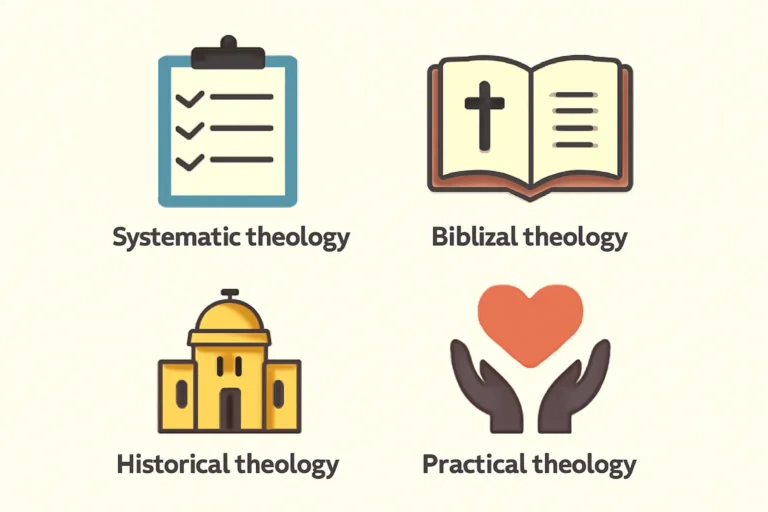
Biblical theology does not exist in a vacuum. It interacts with historical theology, exegesis, systematic theology, and pastoral practice. By integrating with these disciplines, readers gain a more robust and humane understanding of God’s revelation.
Historical theology: Helps us see how interpretations have changed over time and how the church has wrestled with difficult passages.
Exegesis: Provides careful reading of the text in its own language and setting, which grounds theological conclusions in solid interpretation.
Systematic theology: Organizes doctrinal truths (like the trinity, salvation, eschatology) in a coherent system while remaining rooted in biblical-theological exegesis.
Pastoral practice: Shapes preaching, counseling, and community life with a sensitivity to the Bible’s redemptive arc and its call to faith and obedience.
For example, a pastor may teach about God’s faithfulness by tracing it from the calling of Abraham, through the exodus, into the Davidic covenant, and finally into the work of Christ and the Spirit in the church. This kind of teaching helps congregants see how God remains steadfast and how human responses—faith, repentance, trust—fit within the ongoing narrative.
Putting biblical theology into practice
If you want to put biblical theology into your daily life, here are practical steps you can begin today:
Read with a storyline mindset: Begin by asking how a passage contributes to the big storyline of Scripture rather than merely answering a question about a single verse.
Make cross-book connections: When you read a text, note at least two parallels or contrasts you can find in other parts of the Bible.
Note covenantal language: Pay attention to terms like promise, blessing, land, seed, and king, and trace their development.
Use redemptive-historical summaries: Periodically articulate a one or two sentence summary of how the current passage advances redemption history toward Christ.
Test interpretive claims against the canon: If you propose a theological reading, check how it holds up when you read other books that engage with the same themes.
In community life, biblical theology becomes a shared language. When a church adopt a common framework for reading Scripture, members can encourage one another to see how God’s purposes advance through diverse voices, in varying historical moments, and across multiple genres.
A practical glossary for biblical theology
To help readers develop fluency in biblical-theology discourse, here is a concise glossary of frequently used terms. Understanding these terms can make discussions, sermons, and study guides more precise.
Canon: The official collection of inspired books that constitute the Bible. The canonical perspective emphasizes how these books relate to one another within God’s overarching plan.
Covenant: A binding agreement between God and humans that shapes relationship, obligations, and blessing. Covenant language drives much of the biblical narrative.
Messianic expectation: The anticipation that the promised Savior would come, deliver God’s people, and establish God’s reign.
Fulfillment: The way in which Old Testament promises and types reach their intended completion in the person and work of Jesus Christ.
Typology: A method of interpretation where someone or something in the Old Testament prefigures a greater reality fulfilled in the New Testament.
Redemptive history: The story of how God rescues and restores his creation through history, culminating in the gospel proclamation and the future new creation.
Closing reflections
The study of biblical theology invites humility and curiosity. It requires that we listen closely to the Bible’s own claims about God, human beings, sin, salvation, and the future. It challenges readers to see how a single divine narrative informs contemporary faith, worship, and mission. When done well, biblical theology does not diminish the Bible’s mystery; it helps us inhabit its mystery with greater clarity, reverence, and hope.
As you continue in the practice of biblical theology, remember that the goal is not merely intellectual assent but a transformed life shaped by the revelation of God in Jesus Christ. May you encounter the living God in the text, be conformed to the image of Christ, and participate in the Spirit-enabled mission of the church as you grow in your understanding of Scripture’s grand story.
Key takeaway: Biblical theology is a practical guide to understanding Scripture as a unified story. By following covenants, prophecies, typology, and the unfolding plan of God, readers gain not only knowledge but wisdom for faith, worship, and ministry in every season of life.