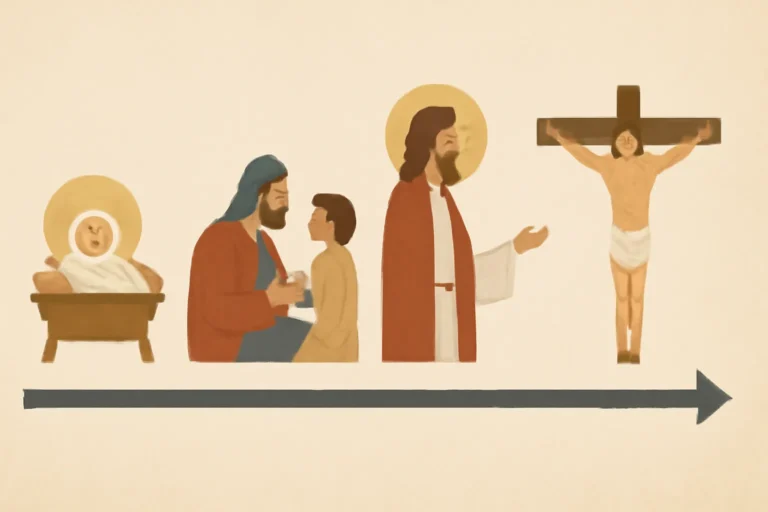
The historical timeline of Christianity begins in the first century CE, within a Jewish milieu and under the soil of Second Temple Judaism. The central events center on the teachings, life, death, and reported resurrection of Jesus of Nazareth, whom his followers proclaimed as the promised Messiah and the Son of God. Early Christians were a diverse and dynamic movement, often meeting in homes and in public synagogues, sharing a common faith, and gradually articulating a distinct identity. The earliest sources, including the Gospels and the letters attributed to Paul the Apostle, lay the groundwork for a movement that would insist on the universality of God’s offer beyond the Jewish people.
In the period typically labeled the Apostolic Age, communities formed across the Mediterranean basin. The first generations of Christians faced persecution, misunderstandings, and debates about the nature of Jesus, the role of the Mosaic Law, and how Gentile converts should be integrated. The important phase in this era is not a single event but a series of developments that produced a shared practice and a rapidly growing sense of what it means to live as followers of Christ. The Acts of the Apostles records continuity with Jewish worship in Jerusalem while also narrating the spread of the gospel outward to places such as Antioch, Corinth, and Rome.
A notable feature of this historical arc is the emergence of early writings that would eventually be recognized as authoritative canonical material. While the Gospels—the narratives about Jesus’ life and mission—are the most well known, a broad corpus of letters, sermons, and sayings circulated in early Christian communities. These writings helped crystallize core beliefs, practices, and ethical directives. The period also witnessed the formation of certain liturgical practices, baptismal rites, and a growing sense of church leadership as communities sought to preserve unity in the face of diverse cultural settings.
The First Milestones
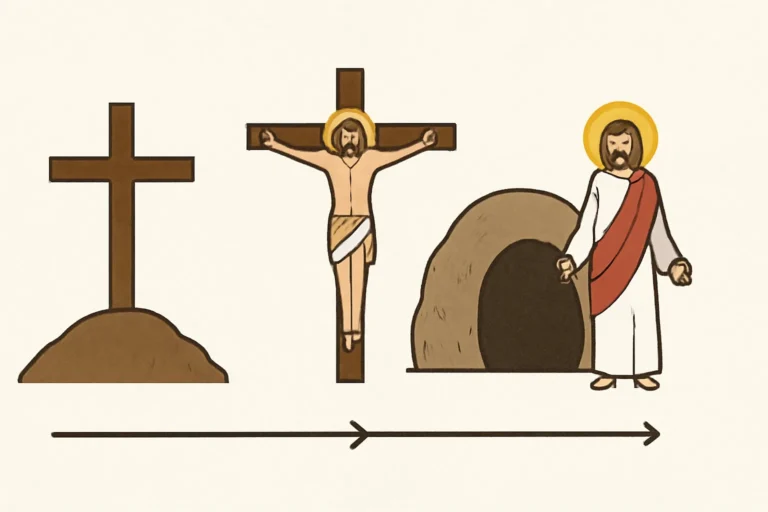
c. 30–33 CE: Crucifixion and reported resurrection of Jesus; the earliest proclamation by the apostles; Pentecost and the formation of a mission to reach both Jews and Gentiles.
c. 50 CE: The Jerusalem church and the jerusalem-centered mission to Gentiles; key letters that begin to shape Pauline theology.
c. 60–70 CE: Growing networks of Christian congregations in Asia Minor, Greece, and Rome; the destruction of the Jerusalem Temple catalyzes a shift toward a church less centered on temple worship.
Patristic Era: Formation of Doctrine and Canon
As the historical chronology of Christianity advances into the second and third centuries, the church fathers—bishops, theologians, and pastors—worked to articulate a coherent faith against a backdrop of competing philosophies and rival religious movements. This era, often labeled the Patristic period, saw the consolidation of doctrinal formulations, the drafting of creeds, and the beginning of an expansive literary production. The church sought to define who Christ was, how the Father and the Son relate in the Trinity, and how salvation is mediated through the church and its sacraments.
A central feature of this timeline is the emergence of the canonical New Testament canon as churches discerned which writings reliably transmitted apostolic teaching. Concurrently, controversial debates on the nature of Christ, the relationship between divine and human natures, and the role of grace and free will required robust theological argument. The modern reader of this historical chronology can trace how early Christians navigated questions such as how Gentile converts should be integrated, whether circumcision was binding for believers, and how to maintain unity amid diverse cultural expressions of worship.
325 CE: The First Council of Nicaea articulates the Nicene Creed, affirming the divinity of the Son and establishing a framework for Christology that would shape later debates.
381 CE: The First Council of Constantinople expands the Nicene formula and affirms the divinity of the Holy Spirit, contributing to the formulation of the Trinitarian doctrine.
431 CE: The Council of Ephesus addresses Christological controversies related to the nature and person of Christ, reinforcing the title of Mary as Theotokos (God-bearer).
451 CE: The Council of Chalcedon clarifies the two natures of Christ—fully divine and fully human—under the concept of a single person, a milestone in historic Christology.
The early Christian communities also witnessed the rise of influential theologians and bishops whose writings shaped liturgy, ethics, and ecclesial structure. Figures such as Athanasius, Augustine, and Irenaeus contributed enduring insights about grace, salvation, creation, and the church’s mission in a complex world. The Latin Fathers and the Greek Fathers carried forward a shared apostolic heritage even as languages, cultural contexts, and political realities diverged.
Late Antiquity and the Transformation of Church and State
In the centuries that follow, the Christian church navigates the transformation of the Roman Empire and the emergence of Christianized state structures. The transition from persecution to imperial endorsement alters the political and social landscape of the faith. The Constantinian shift and subsequent emperors’ patronage of Christian institutions fostered growth in church organizations, liturgical life, and the spread of monasticism. The historical timeline of Christianity in this era is marked by a careful balance between spiritual renewal and institutional fortification.
Monasticism, as a distinctive form of Christian life, arises as a response to spiritual ardor and social change. Early monastic communities in the Egyptian desert and in households across the Mediterranean nurture disciplines of prayer, study, and ascetic practice. These monastic movements contribute to preserving Christian writing, translating texts, and fostering education, while also shaping the aesthetics and spirituality of church life for centuries to come.
4th–5th centuries: The rise of monastic figures such as Anthony of Egypt and Benedict of Nursia shapes Western monasticism; monasteries become centers of learning, manuscript culture, and social service.
4th–8th centuries: The Christianization of Europe proceeds through missionary activity and political alliances, expanding the footprint of Christian communities from Iberia to the British Isles and beyond.
Medieval Christianity: Institutions, Culture, and Reform
The medieval period in the historical timeline of Christianity is defined by the consolidation of the church as a major institutional power within medieval Europe, the development of scholastic theology, and the shaping of liturgical and sacramental life. The papacy grows as a central figure in spiritual leadership and political influence, while archbishops, bishops, and local churches organize dioceses and parishes. The liturgical year takes shape with fixed feasts, seasons such as Advent and Lent, and sacred rites that mark the life cycle of believers.
Intellectual culture flourishes as theologians wrestle with reconciling faith with reason. Universities emerge from cathedral schools, and the dialectical method of inquiry—though sometimes controversial—ushers in significant advances in biblical interpretation, moral theology, and natural philosophy. The broader society witnesses the interplay of Christian conviction with feudal structures, Christian art and music, and the power of monasteries to shape education and charitable works.
Crusades, Schisms, and Reform Calls
1095–1291: The Crusades mobilize Christian armies under papal authority, with long-term consequences for East–West relations, interreligious dynamics, and the perception of Christian mission abroad.
1054: The Great Schism formalizes the division between the Roman Catholic Church in the West and the Orthodox Church in the East, a watershed in the historical chronology of Christianity that echoes through the centuries.
12th–14th centuries: Scholastic thought, led by figures such as Thomas Aquinas, seeks to articulate faith through reason, integrating Aristotelian philosophy with Christian doctrine.
Reformation Era: Reform, Disagreement, and New Traditions
The early modern period marks a dramatic turn in the historical timeline of Christianity as calls for reform, theological debate, and institutional critique lead to lasting changes in church life, worship, and governance. The Protestant Reformation challenges a range of practices and doctrinal positions, arguing for a return to scripture as the ultimate authority and emphasizing justification by faith. This upheaval creates a multiplicity of Christian confessions, including Lutheran, Reformed, Anglican, and Anabaptist streams, each with distinctive theological emphases and ecclesial structures.
Concurrently, the Catholic Reformation—often called the Counter-Reformation—responds with internal renewal, doctrinal clarifications, and reforms in discipline and education. The Council of Trent (mid-16th century) crystallizes Catholic doctrine on scripture and tradition, the sacraments, and the role of saints, while new religious orders, such as the Jesuits, become influential in education and missionary work. This period ushers in a new era of ecclesial self-understanding and global outreach.
Key Reformers, Creeds, and Sacred Texts
1517: Martin Luther’s Ninety-Five Theses catalyze the Protestant Reformation, challenging indulgences and calling for reform of church practices.
1534: The English Reformation leads to the establishment of the Church of England, with distinctive episcopal structures and liturgical reforms.
1545–1563: The Council of Trent formalizes Catholic doctrinal positions and reforms church discipline, signaling a coherent Catholic response to Protestant criticisms.
Global Expansion and Modern Christianity
The era from the 15th through the 19th centuries marks unprecedented globalization of Christian faith and institutions. European explorers, missionaries, and colonists carried Christian ideas to the Americas, Africa, Asia, and Oceania. This spread stimulated translation of the Bible into numerous languages, the establishment of churches and schools, and engagement with indigenous cultures in complex and often troubling ways. The historical trajectory of Christianity in this period is not merely about expansion but about adaptation, encounter, conflict, and synthesis.
The modern era introduces new movements—evangelical revivals, modern biblical criticism, and the rise of secular states that shape church-state relations in new ways. The century of enlightenment, scientific discovery, and political revolutions prompts Christians to rethink the historical relationship between faith and reason, often giving rise to renewed apologists, reformers, and social activists.
Missionary Networks and Global Churches
17th–19th centuries: Missionary societies and colonial networks spread Christianity across continents, often resulting in new church bodies and indigenous Christian expressions.
19th–20th centuries: Christian denominations consolidate in many regions, while social reform movements—such as abolition of slavery, education, and healthcare—are shaped in part by Christian communities.
1962–1965: The Second Vatican Council modernizes Catholic liturgy, fosters ecumenism, and invites renewed engagement with the modern world and other faiths.
Ecumenism, Modern Theologies, and Contemporary Diversity
In the contemporary period the historical chronology of Christianity reflects a growing emphasis on unity, dialogue, and mutual accountability among different Christian traditions. The ecumenical movement seeks greater cooperation across denominations while respecting real doctrinal differences. Theological debates continue on topics such as salvation, the nature of the church, gender and ordination, creation care, and human rights. The global church is marked by remarkable diversity in worship styles, governance structures, social witness, and liturgical language.
The late 20th and early 21st centuries witness the emergence of new Christian expressions—indigenous churches, Bible-focused movements, Pentecostal and charismatic renewals, and contextual theologies that address local cultures and socio-political realities. The digital revolution also changes how communities study scripture, share sermons, and practice faith, enabling transnational networks and virtual communities that cross traditional boundaries.
Key Contemporary Milestones
1962–1965: The Second Vatican Council introduces reforms in liturgy, ecumenism, and Catholic engagement with the modern world, influencing Catholic practices and relations with other Christian traditions.
late 20th century–present: Global Pentecostal and charismatic movements rise to prominence, reshaping patterns of worship, evangelism, and community life across nations.
late 20th–early 21st centuries: Ecumenical initiatives intensify, cultural contexts expand, and interfaith dialogue grows as Christians participate in broader conversations about ethics, peace, and human flourishing.
Comparative Perspectives: Variations in the Christian Historical Timeline
Several strands of the historical chronology of Christianity reveal different emphases depending on geographic region, confessional tradition, and historical sources. For instance, the Western medieval timeline foregrounds the papacy, scholastic influence, and ritual development, while the Eastern Christian narrative emphasizes the continuity of the Byzantine liturgical and theological heritage, as well as the pivotal role of ecumenical councils. Protestant histories highlight reform, scripture-centered authority, and the emergence of congregational life, while postcolonial and liberation theologies foreground issues of justice, oppression, and social transformation. The result is a rich tapestry of timelines that intersect, diverge, and converge in ways that illuminate the broad scope of Christian history.
Enduring Themes Across the Timeline
Scripture and Tradition: The ongoing conversation about how divine revelation is transmitted in biblical text and in church teaching.
Ecclesiology: The evolving understanding of church leadership, governance, sacramental life, and communal identity.
Mission: The drive to witness, serve, and translate faith into local contexts while maintaining fidelity to core beliefs.
Dialogue with Science: The negotiation of scientific insights with faith commitments, particularly in modern times.
Key Dates and Milestones in a Consolidated Timeline
For readers seeking a consolidated view, the following list captures pivotal moments across the broad arc of Christian history. This is not exhaustive but provides anchors for the comprehensive overview of the discipline.
c. 30–33 CE: Jesus’ ministry, crucifixion, reported resurrection, and initial proclamation by the apostles.
c. 50 CE: Gentile inclusion debates in early Christian communities; Pauline missions expand to the Gentiles.
325 CE: First Council of Nicaea—Christology and the formula of faith take a decisive shape.
381 CE: Constantinople I expands the creed and clarifies the Spirit’s presence in the Trinity.
431 CE: Council of Ephesus affirms Mary as Theotokos and clarifies Christological language.
451 CE: Council of Chalcedon defines the two natures of Christ in one person.
5th–9th centuries: Rise of Western monasticism and the consolidation of Latin Christian identity.
1054: The Great Schism formalizes East–West ecclesial separation.
1517: Luther’s Ninety-Five Theses ignite the Protestant Reformation.
1545–1563: Council of Trent initiates the Catholic Reformation and doctrinal clarifications.
1962–1965: Vatican II opens ecumenical dialogue and modernizes Catholic engagement with the world.
16th–19th centuries: Global Christian expansion through missions and colonial-era settlements.
This extensive overview of the historical timeline of Christianity reflects a faith tradition that has evolved through centuries of doctrinal debate, institutional development, regional adaptation, and global engagement. By examining the chronology across eras—from the Apostolic Age through patristic articulation, medieval consolidation, reform movements, and modern globalization—one can appreciate how Christianity has transformed in response to internal dynamics and external cultures. The broad term timeline of Christian history is thus a useful umbrella for studying the faith’s growth, challenges, and resilience over two millennia.
For researchers and readers seeking a take-away, key takeaways from this historical survey include the centrality of the person of Jesus, the role of major councils in shaping doctrine, the persistent tension between church authority and scriptural authority, and the ongoing process by which Christianity has engaged with culture, power, and modernity. The developmental timeline of Christianity is not a linear narrative but a complex weave of continuity and change, with each era contributing to a broader and deeper understanding of faith, worship, and service in the world.