Sects of Christianity: A Guide to Denominations and Beliefs
Christianity is not a single monolithic faith but a vast family of communities, each with its own history, worship style, governance, and interpretation of scripture. The word sect is often used in everyday language, but scholars prefer terms like denomination, tradition, or church to describe distinct streams within the broader Christian movement. This guide surveys major traditions, explains how they began, outlines core beliefs, and highlights common practices. It emphasizes variation and continuity alike, showing how different groups claim to follow the same Jesus while living out faith in different ways.
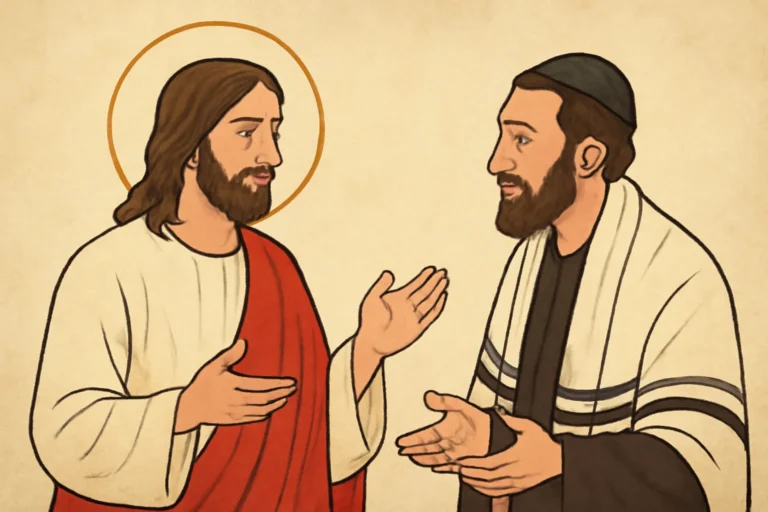
Early Christianity emerged in a Jewish context and quickly diversified as churches formed in different regions and cultures. Over the centuries, doctrinal disagreements, political shifts, and cultural changes produced distinct churches and denominations. Some decisive axes of difference include:
Authority—whether scripture alone, or scripture plus sacred tradition and church teaching, or a mix of both, guides belief and practice.
Ecclesiology—how leadership is organized, whether there is a central authority (like a pope) or a more congregational or synodal structure.
Sacraments or ordinances—the number and meaning of rites such as baptism and the Eucharist.
Christology—understanding of who Jesus is, including debates about the Trinity, nature of Christ, and mediating saints.
Justification and salvation—whether salvation is by faith alone, by grace, through works, or through a combination of factors.
Church practice and worship—the form and style of liturgy, music, architecture, and daily spiritual disciplines.
Across these dimensions, theologians and laypeople alike have sought to remain faithful to what they understand as the core message of Jesus, while adapting to new languages, cultures, and historical moments. The following sections group the Christian family into recognizable clusters—classic branches, reform-era movements, restorationist efforts, and nontrinitarian or alternative currents—each with its own distinctive profile of beliefs and practices.
Classical branches: the oldest families of the Christian faith
Roman Catholicism
The Roman Catholic Church stands out for its claim of apostolic succession traced to the apostles and the bishop of Rome, whom Catholics regard as the successor of Peter. Its structure is hierarchical, with the pope at the apex, followed by cardinals, archbishops, bishops, and priests. Major features include a sacramental life centered on the Eucharist (Mass) and a tradition that blends scripture with Sacred Tradition and magisterial teaching.
Sacraments—Catholics recognize seven: Baptism, Confirmation, Eucharist, Penance (Reconciliation), Anointing of the Sick, Holy Orders, and Matrimony.
Mary and the saints—veneration of Mary and the saints as intercessors and exemplars, not as deities.
Authority—the Church’s teaching authority, expressed through the Magisterium, guides interpretation of scripture.
Tradition—a long living memory of worship and doctrine that accompanies the Bible.
Eastern Orthodoxy
Eastern Orthodoxy centers on the liturgical life of the church, mysticism, and a conciliar approach to authority. It emphasizes the theosis (divinization) process as the goal of Christian life and maintains a rich tradition of icons and chant-filled worship.
Sacraments and mystagogy—seven sacraments and a deep sacramental awareness in worship.
Church governance—autocephalous (independent) national churches united in communion, led by patriarchs or highest bishops rather than a single universal head.
Liturgy—the Divine Liturgy, often in the local vernacular but deeply traditional in form and symbolism.
Tradition and unity—a strong emphasis on continuity with early church practice and a shared faith across diverse cultures.
Oriental Orthodoxy
Oriental Orthodox Churches—including the Coptic, Armenian, Ethiopian, and Syriac traditions—hold to miaphysite Christology, emphasizing the unity of divine and human natures in Christ. They split from the Chalcedonian churches in the 5th century over Christological formulations but remain brothers in many aspects of worship and spirituality.
Christology—the belief that Christ has one united nature rather than two natures in union (defined at the Council of Chalcedon, but contested by Oriental Orthodoxy).
Worship—ancient liturgies, often sung or chanted in Syriac, Coptic, Ge’ez, or Armenian, with strong devotional arts and processional rituals.
Communion and sacraments—the sacraments are central, though the number and naming may differ slightly from other traditions.
Anglicanism represents a middle path, often described as a via media between Catholic and Protestant streams. The Anglican Communion encompasses a wide range of practices from high Church to low Church and evangelical to Anglo-C Catholic expressions.
Authority—a balance of scripture, tradition, and reason; governance is usually episcopal, with bishops, priests, and deacons.
Worship—the Book of Common Prayer shapes liturgy, though local churches may adapt language and music.
Doctrine—creeds such as the Nicene and Apostles’ Creed are affirmed, while debates on topics like ordination and liturgical reform continue in different regions.
Protestant traditions: reform, revival, and diversity
The Reformation of the 16th century reoriented many Christian communities around principles like sola fide (faith alone), sola scriptura (scripture alone), and the priesthood of all believers. From those seeds grew a wide array of denominations and movements that emphasized personal faith, biblical study, and reform of church structures.
Lutheranism
Lutheranism follows the teachings of Martin Luther and centers on justification by faith apart from works, while retaining a strong sense of the gospel’s clarity in the preached Word and the sacraments.
Justification by faith as the means of salvation.
Two sacraments recognized on a broad basis: Baptism and the Lord’s Supper.
Liturgy—varies by region but often preserves a high view of the word, music, and the sermon.
Reformed and Presbyterian traditions
Reformed and Presbyterian churches trace their theological foundations to John Calvin and other Reformers who emphasized covenant theology, the sovereignty of God, and the authority of scripture. Their governance typically features a representative structure of elders rather than a hierarchical monarchy.
Covenant theology—the idea of God’s relationship with humanity through defined covenants.
Predestination and divine sovereignty are often discussed as part of theological training and preaching.
Presbyterian polity—a system of church governance organized by elected elders at multiple levels.
Anabaptists, Mennonites, Amish, and related groups
Anabaptist communities revived practices of adult baptism, a voluntary church, and often pacifism and simple living. Over time, groups such as Mennonites, Amish, and Hutterites developed distinctive ways of worship, community, and technology use.
Baptism by immersion, usually upon profession of faith.
Separation of church and state as a core principle in many communities.
Nonviolence and conscientious objection in many Anabaptist streams.
Methodism and the holiness tradition
Methodism emerged from Anglican revival movements led by John and Charles Wesley, placing emphasis on personal conversion, sanctification, and methodical spiritual disciplines. The movement became highly organized and gave rise to international connexional structures and a vast missionary network.
Arminian theology—a focus on human free will within God’s grace.
Holiness movement—emphasizing a second work of grace leading to a holy life.
Chesapeake to global reach—a model of organized mission and lay involvement.
Baptist traditions
Baptists emphasize believers’ baptism by immersion and congregational governance. They often stress religious liberty, the separation of church and state, and the authority of local congregations to determine doctrine and practice.
Believer’s baptism—only after a conscious profession of faith.
Congregational polity—each local church governs itself, though associations and conventions provide mutual support.
Bible-centered—a strong emphasis on scripture as the ultimate authority.
Pentecostal and Charismatic movements
Pentecostalism and the broader Charismatic movement focus on the experiential work of the Holy Spirit, including baptism in the Holy Spirit, speaking in tongues, prophecy, and miracles as signs of ongoing divine activity in the church.
Baptism in the Spirit—often seen as a distinct experience from water baptism.
Spiritual gifts—emphasis on gifts such as tongues, healing, and prophecy.
Ecumenical reach—these movements have influenced and revived many traditional denominations through renewed worship and evangelism.
Several groups identify themselves as restoring the original church or as offering an alternative Christian interpretation. They often challenge long-standing normative beliefs about authority, doctrine, or the nature of God and Christ.
The Latter-day Saints and other restorationists
Restorationism in the 19th century sought to reestablish a form of Christianity seen as having been lost or corrupted. The largest and best-known example is The Church of Jesus Christ of Latter-day Saints (LDS Church), which adds a number of unique scriptures (such as the Book of Mormon) and a distinct view of priesthood authority, revelation, and family eternal progression.
Scriptural canon—additional texts alongside the Bible, with ongoing revelation claimed by leaders.
Priesthood and temple worship—distinct priesthood offices and temple ordinances.
Affirmation of family and eternal relationships—emphasis on eternal families and posterity.
Other restorationist groups include the Community of Christ (formerly Reorganized Church of Jesus Christ of Latter Day Saints), which shares some LDS roots but has distinct governance and fewer theological claims about new scripture.
Unitarianism, Universalism, and other nontrinitarian currents
Several streams reject the traditional Trinitarian formula or adopt a more inclusive theological stance. These include Unitarian Universalism, various Christadelphian branches, and Jehovah’s Witnesses in their own classification as nontrinitarian Christian groups.
Unitarian Universalism—a liberal, often pluralistic tradition that permits broad beliefs about God, Jesus, and revelation, with diverse sources of spiritual insight.
Christadelphians—biblically centered nontrinitarian groups who practice Bible study and congregational meals without formal sacraments.
Jehovah’s Witnesses—nontrinitarian, with distinctive beliefs about God’s name, Jesus, the Bible’s interpretation, and eschatology.
Distinctive beliefs and practices across sects
While there is considerable variety, several themes recur across Christian families. Below are representative contrasts in beliefs and worship styles that help distinguish major groups.
Scripture vs tradition—Some communities privilege scripture alone as the rule of faith (sola scriptura), while others hold that Tradition and teaching authority are indispensable companions to the Bible.
Authority structures—From the hierarchy of the Roman papacy to the elders in Presbyterian settings to the congregational sovereignty of many Baptist churches, church governance shapes life and mission.
Sacraments and ordinances—Most traditions practice baptism and the Eucharist in some form, but the meaning, method (immersion vs infant sprinkling), and frequency vary widely.
Justification and salvation—debates about whether salvation is by faith alone, grace alone, or a combination that includes ethical living and confession.
Liturgy and worship—from formal, sacramental liturgy to contemporary, informal praise bands, worship styles reflect theological emphasis and cultural context.
Ethics and social witness—stances on pacifism, nonviolence, gender roles, sexuality, economic justice, and care for the vulnerable show the public face of each tradition.
The global picture: where these expressions meet the world
Across the world, Christian groups adapt to local languages, cultures, and history. In Africa, Asia, the Americas, Europe, and Oceania, you will find:
Inculturated worship—hymns, prayers, and artwork that blend local sensibilities with Christian faith.
Mission and service—many communities emphasize service to the poor, healthcare, education, and relief work.
Ecumenism—efforts to collaborate across traditions for common social good, interfaith dialogue, and shared humanitarian goals.
Some regions exhibit remarkable synthesis, where soldiers of different denominations worship together in shared spaces, or where a single city hosts services from Catholic, Orthodox, Protestant, and independent churches. These collaborations reveal a flexible and dynamic landscape in which doctrinal boundaries are often porous in daily life, even when doctrinal lines remain distinct in official teaching.
How to study denominations ethically and accurately
For readers seeking a deeper understanding of sects and movements, here are some practical guidelines:
Read sources from multiple sides—history texts, theological essays, official church statements, and seasoned journalism provide complementary views.
Consider historical context—many beliefs emerged in response to social, political, or intellectual challenges of their time.
Differentiate between belief and practice—a tradition’s official creed may differ from how individual members live out faith.
Respect religious self-understanding—avoid shorthand labels; ask how a community defines itself and why.
Common misconceptions and clarifications
Because the history of Christian divisions is long and complex, misunderstandings are common. Some clarifications help readers approach the topic with nuance:
Not all divisions imply hostility—some splits arose from genuine theological disagreements or pastoral concerns, not from inherent malice.
Heretical labeling is historically loaded—term usage depends on perspective; what one tradition calls heresy, another may call a rightful reform.
Unity and diversity—many Christians emphasize core shared convictions (such as the life, death, and resurrection of Jesus) while allowing a broad spectrum of interpretation on secondary matters.
Glossary of key terms you’ll encounter
Understanding the language helps navigate discussions about Christianity’s many streams. Here are concise definitions you’ll encounter often:
Sacraments or ordinances—rituals deemed outward signs of inward grace or commitments, such as baptism and the Eucharist.
Apostolic succession—the belief that church authority is transmitted through a historic lineage of bishops dating back to the apostles.
Creeds—confessional statements (e.g., the Nicene Creed) that summarize essential Christian beliefs.
Justification—the act by which a person is made righteous before God in a theological sense.
Sanctification—the process of growing in holiness and aligning one’s life with God’s will.
Theosis—a term in Orthodox theology describing the process of becoming more like God through grace.
Encounters with modern ecumenism and interfaith dialogue
In recent decades, many Christian communities have engaged in ecumenism—efforts to promote Christian unity and cooperation across denominational lines. Shared concerns such as poverty alleviation, racial justice, environmental stewardship, and global missions have led to unprecedented collaboration. At the same time, doctrinal differences persist, and respectful dialogue requires careful listening and a willingness to articulate distinct beliefs without demonizing others.
Interfaith dialogue also shapes Christian identity in a pluralistic world. Christians often interact with Muslims, Jews, Buddhists, Hindus, and others, seeking common ground around values like compassion, truth-telling, and social service, while maintaining distinctive beliefs about God, Jesus, and salvation.
The Christian family, in all its denominational variety, invites both loyalty and inquiry. For many believers, faith is a journey of trust in God’s grace, reinforced by scripture, worship, community, and service. For others, it is a scholarly pursuit to understand how humans have interpreted the life, teachings, death, and resurrection of Jesus across time and cultures. Either way, recognizing the breadth of Christians’ commitments—whether centered on sacramental life, reforming zeal, restorationist claims, or nontrinitarian interpretations—helps foster a more informed and respectful religious citizenship. By exploring the rich tapestry of churches, sects, and movements, readers can better understand how communities across the globe articulate hope, justice, and devotion in pursuit of what they believe is true about God and humanity.