Birth of Jesus Historical Context: A Brief Historical Overview
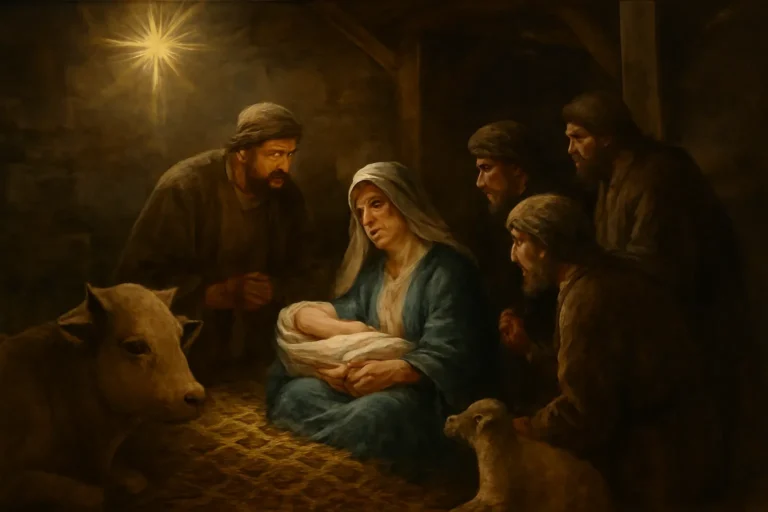
The birth of Jesus, often described in the nativity narratives, occurs at a crossroads of empire, religion, and everyday life in the eastern Mediterranean world of the mid‑first century CE. To understand this event historically is to situate it within a complex matrix of political authority, local leadership, migratory patterns, economic life, and evolving religious expectations. This overview uses a synthesis of biblical texts, non‑biblical sources, archaeology, and historical method to illuminate the major strands that shaped the setting for the young Jesus and the communities that would interpret his life in later decades.
The goal here is not to settle every question about the precise moment of Jesus’ birth, but to articulate the kinds of historical currents that shaped birth narratives, the places those stories situate themselves, and the people who would later claim significance for the figure born in Bethlehem and raised in Nazareth. In doing so, we use a broad vocabulary—terms like Nativity, Jesus’ birth, Christ’s birth, and birth of the Messiah—to reflect the variety of ways ancient authors and later Christian interpreters speak about this event. The historical landscape includes the Roman Empire, local dynasties like the Herodian line, provincial governance in Judea and Galilee, and the vibrant religious life of Second Temple Judaism.
The Geopolitical Landscape of First-Century Judea and Galilee
In the time frame commonly associated with the birth of Jesus, the lands of Judea, Galilee, and surrounding regions were integrated into the Roman Empire and characterized by a layered system of authority. Roman officials set boundaries, collect taxes, and maintain order, while local leaders navigated loyalty to Rome with their own agendas. The political architecture of the period helps explain why the Gospel narratives emphasize both imperial figures and local rulers in the infancy story and its aftermath.
Roman Rule and Local Governance
The Roman Empire ruled the eastern Mediterranean with a system of provinces, ever mindful of maintaining public order and ensuring revenue. Augustus, the first emperor, established a framework of governance that encouraged relative stability—a climate sometimes described as Pax Romana but also marked by heavy taxation and administrative scrutiny in outlying regions.
In the Palestinian client context, local decisions often rested with governors, procurators, and local powers who had to balance imperial demands with the needs and loyalties of Jewish and Syrian populations. This dynamic is relevant to the Gospel accounts that narrate interactions with figures like Pontius Pilate and other magistrates.
Economic life in the countryside—farming, crafts, and trade—was shaped by imperial and regional demands, yet it was anchored in villages and towns where families, synagogues, and markets provided daily structure.
Herodian Rule and Local Dynasties
The Herodian Dynasty—a client kingship established by Rome—dominated Judea and parts of the region during the latter part of the Second Temple period. Herod the Great, who reigned roughly from 37 BCE to 4 BCE, is a central figure for understanding the period’s politics and religion: his ambitious building programs, court intrigues, and sometimes brutal realpolitik created an environment where new religious claims could capture attention and provoke response from both the ruling establishment and the populace. The timing of Herod’s death around 4 BCE is particularly significant for placing the traditional events of the nativity in a precise historical window, even as the Gospel accounts themselves differ on chronology.
Beyond Herod, the broader Herodian family and allied elites operated in a world where loyalty to Rome, service to local communities, and religious authority often overlapped and collided. The interplay between the Herodian leadership and the temple establishment in Jerusalem shaped how religious actors spoke about messianic expectations, temple purification, and the calendar—factors that would permeate the early Christian memory of Jesus’ birth and early years.
Economic and Social Conditions
Small-scale farmers, artisans, and itinerant workers formed the backbone of rural life in Galilee and parts of Judea. Economic pressures, seasonal cycles, and local taxation affected daily life and community relations.
Trade networks tied inland villages to Mediterranean port cities, creating interaction zones where ideas, religious teachings, and political rumors circulated with speed. The social texture included expectant families and communities orienting themselves toward religious festivals, temple ritual, and synagogue life.
Migration to larger towns or even pilgrimage to Jerusalem for festivals intensified social dynamics in the years surrounding birth narratives, when families might be judged by outsiders, political watchers, or religious authorities as to loyalty and orthodoxy.
The Second Temple period was a prolific era for Jewish religious life, marked by a variety of movements, debates, and institutions. The community from which the early Christian movement emerged was shaped by temple rites, scripture interpretation, and a wide spectrum of expectation about the role of the Messiah. The nativity story sits within this religious ecosystem, where questions about the nature of salvation, the identity of the coming agent of redemption, and the relationship between law, purity, and divine intervention were actively discussed, taught, and performed.
Pharisees, Sadducees, Essenes, Zealots
The Pharisees emphasized oral tradition, law interpretation, and lay piety. They were influential in synagogues and in everyday religious life, shaping expectations about ritual purity and the interpretation of prophetic texts.
The Sadducees tended to align with priestly interests and temple-centered worship, focusing on the written Torah and ritual authority within Jerusalem’s temple complex. Their worldview intersected with political considerations of the Herodian and Roman authorities.
The Essenes represented a reform movement associated with a monastic-like community in certain desert settings, focusing on purity, eschatology, and a distinctive interpretation of scriptural texts.
The Zealots sought to resist foreign rule through political agitation and rebellion, a current that helps contextualize the various expectations about the Messiah as a political figure in some strands of Jewish thought.
Messianic Expectation and Temple Worship
Expectations about a coming figure—often described in terms like Messiah or anointed one—took form in diverse ways. Some communities anticipated a political liberator who would restore national sovereignty; others looked for a more spiritual or prophetic fulfillment that would reorient worship, purity, and covenant life. The temple in Jerusalem remained a central symbol of covenantal life for many Jews, even as various groups debated how divine presence and divine promises should be realized in a changing world. Against this backdrop, the narratives about a child born in Bethlehem and raised in Nazareth acquire meaning as part of a broader discourse about God’s activity in history and the surprising ways that divine purposes unfold in ordinary life.
Geographical Settings and the Nativity Narrative
Geography matters in the historical study of the birth of Jesus. The places named in the nativity accounts—Bethlehem, Nazareth, and Jerusalem—are not merely backdrops; they represent centers of memory, pilgrimage, and political significance. Bethlehem’s role as the prophesied birthplace, Nazareth’s function as a lived site of growth and family life, and Jerusalem’s religious and political gravity all converge in the story’s settings, shaping how communities remembered and interpreted the events surrounding Jesus’ infancy and early years.
Bethlehem and Nazareth
Bethlehem, referred to in biblical texts as the birthplace of David, becomes a symbol of messianic fidelity in the Gospel tradition. Its rural, clan-based identity matters for understanding why a birth in a modest setting could carry extraordinary significance within Jewish expectations about the Messiah.
Nazareth, a Galilean village, serves as Jesus’ household and youth milieu. Its relatively small status in imperial geography underscores the paradox often highlighted by early Christian writers: a child born in an obscure place can be identified with cosmic or salvific purposes.
Sources, Chronology, and Scholarly Debates
Historical inquiry into the birth of Jesus can be approached from many angles. The primary sources include Gospel narratives that contain infancy material, while external sources from the period and later centuries provide additional data points. The question of chronology—how to align Gospel timelines with historical events—has spurred extensive scholarly discussion, and the field continues to evolve as new archaeological and textual findings come to light.
Gospel Accounts and Historical Reliability
The birth narratives in Matthew and Luke present two distinct but complementary portraits, each with its own theological emphasis, setting, and audience. Matthew emphasizes fulfillment of prophecy and the involvement of Herod; Luke highlights universal mercy and the pastoral context of shepherds and census timing.
Historically, scholars note that the Gospel writers do not provide a fixed, contemporary date for Jesus’ birth. They instead arrange material to communicate theological truths, while aiming to situate Jesus within the broader story of Israel and the Roman world.
Critical inquiry often distinguishes between the theological purposes of the narratives and the historical facts that might underlie them. This approach seeks to identify kernels of historical memory—for example, the existence of Jesus as a figure within a Jewish milieu and the likelihood of a real social and religious movement that followed him.
Non‑biblical references from the ancient world—such as Roman administrative records, inscriptions, and later historians—offer a framework for understanding the broader environment in which the early Christian communities formed. While direct references to Jesus’ birth are sparse, there are important allusions to the historical context, religious dynamics, and political realities of Roman Judea that help anchor the narrative in a real world setting.
Textual comparisons with contemporaneous writings reveal a shared vocabulary about kingship, prophecy, temple life, and messiah-like expectations. These parallels help scholars gauge how birth narratives could resonate with readers who recognized familiar motifs from their own religious and cultural landscapes.
Archaeology, Epigraphy, and External Accounts
Archaeology and epigraphy—along with literary sources from the Roman world—provide crucial corroboration and context for understanding the period of Jesus’ birth. While archaeology cannot verify every detail of a gospel infancy story, it can illuminate life in towns and villages, the scale of taxation, housing patterns, and daily livelihoods. In the broader sense, material culture helps us imagine the texture of life in First-Century Palestine, where family lineages, synagogue attendance, and temple life created a dense social fabric around which early Christian ideas emerged.
Material Culture and Daily Life
Household architecture, like humble living spaces and courtyard enclosures, informs us about the settings in which a child could be born and raised in a family marked by traditional Jewish practices.
Artifacts and inscriptions from the era reveal networks of trade, language use (Aramaic, Hebrew, and Greek were in circulation), and the movement of people—factors that contributed to how communities understood and transmitted stories of Jesus’ early life.
Dates, Chronology, and the Historical Timeline
The dating of Jesus’ birth remains a central scholarly topic, with a commonly cited range placing the event in the late 4 BCE to early 1 CE window. This span derives from multiple strands of evidence, including Herod’s death date, census practices described in Luke, and cross‑textual comparisons with Roman historical records. The exact year is less important for historical analysis than the recognition that the event occurred within a specific, politically charged moment in the eastern Mediterranean world. In this sense, the birth of Christ can be read as a defining moment in the way communities framed religious identity and political memory under imperial rule.
Herod the Great’s death around 4 BCE provides a commonly used terminus ante quem for the infancy narratives in Matthew and Luke.
Augustan stability and provincial governance shaped the lived reality of Judeans and Galileans, affecting how people understood authority, taxation, and the limits of political power.
Festivals, pilgrimage, and temple life created recurring points of contact for people who would later retell the story of Jesus’ early life as part of a broader Christian memory.
Theological Significance and Cultural Impact
Beyond the historical details, the birth of Jesus carried, and continues to bear, profound theological significance. For early Christians, the birth narrative signaled the arrival of a divine presence in human history, a turning point in how people understand salvation, covenant fidelity, and the fulfillment of biblical prophecy. The use of titles like Messiah, Son of God, and King in later Christian interpretation reflects how communities reimagined the event in light of Jesus’ life, death, and claimed resurrection. The historical backdrop—Roman rule, Herodian governance, and Second Temple religious currents—shaped these interpretations by providing a language and framework through which early Christians could articulate their beliefs and address their audience’s concerns about identity, loyalty, and hope in a challenging era.
In modern scholarship, the birth of Jesus is studied not only as a religious memory but as a cultural anchor that helped shape early Christian communities and their self‑understanding within a broader world. Historical inquiry acknowledges the diversity of early Christian voices and recognizes that the nativity stories were shaped in part by the communities that produced them, their languages, and their goals. Contemporary researchers examine how these narratives functioned as tools for memory, catechesis, and mission—how they helped interpret Jesus’ significance for Jews and Gentiles alike, and how they contributed to the formation of a distinct religious movement within the broader first‑century Mediterranean landscape.
Scholars emphasize that biblical authors wrote with theological aims: to proclaim faith, articulate identity, and persuade communities of the meaning of Jesus’ life. The result is a narrative that blends memory with interpretation, fact with message.
Cross‑editions and textual criticism show how infancy material may reflect earlier oral traditions that were later compiled into canonical gospels. This helps explain differences between the two infancy accounts and what each author wished to emphasize.
Archaeology and non‑biblical sources continue to refine our understanding of the regional context, enabling historians to ask better questions about population, livelihoods, and social networks during the early first century.
Any careful historical treatment of the birth of Jesus must acknowledge a number of complexities. The narratives do not function as modern historical biographies; instead, they are theological and literary compositions that engage with memory, expectation, and identity. Some of the major points of nuance include:
The coincidence of political events with religious anticipation, where an imperial census and a royal appointment might be read symbolically as signs within a wider pattern of divine providence.
The role of urban and rural centers in shaping how communities remembered a birth: Bethlehem’s messianic symbolism contrasts with Nazareth’s ordinary life as the place where Jesus grows into a public figure.
The interplay between Jewish law and Roman administration—how families navigated questions of purity, temple life, taxation, and legal obligation in a way that later Christian writers framed as meaningful signs about Jesus’ vocation.
Final Reflections on the Nativity Context
The historical context of the birth of Jesus is not a single, narrow message but a mosaic of interwoven histories. It requires us to read the infancy narratives with historical sensitivity, recognizing both the human circumstances in which a child was born and the ways in which early communities interpreted that birth as part of a larger divine drama. The broader setting—Roman rule, the Herodian political apparatus, Second Temple religious life, and the daily realities of Judea and Galilee—continues to inform the way scholars and readers today think about the nativity. In studying this topic, readers gain a richer sense of how religious memory is formed, how communities negotiate power and faith, and how a seemingly simple birth story can become a central hinge in the development of a major world faith.
In sum, the birth of Jesus did not occur in a vacuum. It emerged from a world of kings and governors, legal codes and temple rites, crowded markets and quiet villages, all of which contributed to a moment that would resonate through history. By examining the historical context, we gain a more nuanced appreciation for the nativity’s enduring appeal. We also learn how scholars across centuries have sought to balance faith, text, archaeology, and history in order to render a fuller picture of this pivotal event in world history.
Key terms to remember when exploring the birth of Jesus and its context include nativity, Bethlehem, Nazareth, Jerusalem, Herod the Great, Pontius Pilate, Augustus, Roman Empire, Second Temple Judaism, and messianic expectation. Each of these elements helps frame how the infancy narratives were produced, transmitted, and interpreted within early Christian communities and how those communities understood their own place within a larger historical and religious landscape. The birth of Jesus, viewed through this historical lens, becomes more than a singular event—it becomes a focal point around which ancient memory and modern faith converge.