The phrase seven-year tribulation refers to a prophetic period described in several New Testament and Old Testament passages, most commonly interpreted within evangelical and premillennial circles as a future time of intense hardship, persecution, and spiritual testing before the return of Jesus Christ. In many traditions, this period lasts seven years, though precise lengths, boundaries, and initiating events are debated among scholars, theologians, and churches. The central question that animates much discussion is when does the seven-year tribulation start? and what events, signs, or covenants mark its beginning. This article surveys the major biblical foundations, the ways scholars interpret the timeline, the typical sequence of events associated with the Tribulation, and the practical implications for readers who want to understand the topic more clearly.
Key biblical passages and terms
Understanding the timeline of the Tribulation hinges on several core scriptures. Two strands often interact in discussion: prophecies tied to the book of Daniel and passages from the Synoptic Gospels and the book of Revelation. The basic terms frequently highlighted include Daniel’s week (often called the “seventy weeks” prophecy), the covenant with many, the Abomination of Desolation, and the appearance or removal of the Antichrist. Different traditions translate these ideas in various ways, but the common thread is an anticipated period that leads to Christ’s return and the establishment of God’s kingdom.
Daniel’s week and the covenant motif
The book of Daniel speaks of a period often interpreted as a seven-year span in prophetic chronology. The key reference is the prophecy of seventy weeks (Daniel 9:24–27), which many readers understand as a divinely determined timeline culminating in significant redemptive events. In many interpretations, the half of the week signals a dramatic intensification of conflict or a mid-point event that intensifies persecution. Critics and commentators note that the precise dating is difficult and heavily dependent on interpretive framework, but the language clearly highlights a pivotal, finite period that God uses to accomplish specific purposes in human history.
New Testament foundations: warnings and signs
In the New Testament, passages such as Matthew 24, 2 Thessalonians 2, and the Book of Revelation shape expectations about the Tribulation. Jesus speaks of birth pains and deceptive signs that precede a climactic eschatological moment. Paul describes a coming deception and the subsequent revelation of a powerful figure who opposes God. Revelation presents a complex, symbolic sequence of judgments that believers often map onto a broader end-times chronology. In many traditions, these texts are read together to describe a defined era with distinctive trials that prepare the way for Christ’s return.
Possible starting markers: how scholars define the start
One of the most debated questions in eschatology is what event initiates the seven-year period commonly referred to as the Tribulation. Different schools of thought emphasize different markers. Here are the major lines of interpretation, presented with their typical rationale:
The covenant with many (Daniel 9:27) as the initiating event
In the most widely cited view within dispensational premillennialism, the start of the seven-year tribulation is marked by a covenant or peace agreement made with many, possibly involving a political or international alignment. This event is seen as signaling a transition in which the antichrist rises to power, offering a false sense of security to the nations. Proponents argue that this covenant unlocks the seven-year clock described in Daniel 9:27, after which the period of intense tribulation unfolds until Christ’s return. Supporters emphasize the word confirming or committing as signaling a formal treaty that sets the stage for further prophecies to be fulfilled. Critics, however, caution that interpreting a specific modern treaty as the exact Daniel 9:27 fulfillment can overstep textual boundaries and neglect the symbolic nature of prophetic language.
Prewrath and midtribulation positions often locate the start of the Tribulation in relation to the appearance of the Antichrist or the abomination of desolation, rather than a peace covenant. These views stress later markers and emphasize that the most intense judgment occurs in the middle or late phases.
Amillennial and some postmillennial interpreters may regard the Tribulation as a symbolic or metaphorical period tied to the church age, rather than a discrete future seven-year window. In these approaches, the focus is less on a fixed timeline and more on ongoing spiritual warfare and the ultimate victorious return of Christ.
Other scholars highlight a timeline framework in which the start is inseparable from the ministry of the gospel, the spread of proclamation to all nations, and the rise of spiritual deception, not merely a political treaty.
Timeline and sequence of events: a widely cited framework
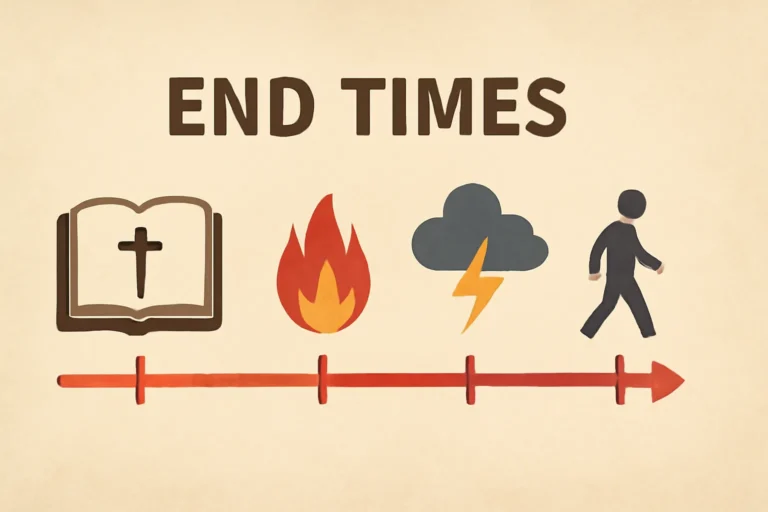
Many readers find it helpful to understand the Tribulation by looking at a proposed sequence of events. The following outline reflects a commonly taught progression in many evangelical circles, though it is important to reiterate that exact chronology is debated and not universally agreed upon. The aim here is to present a coherent narrative that readers can compare against their study of scripture and church teaching.
Rise of deceptive peace efforts and an era of geopolitical realignment. This stage is characterized by ambitious treaties, rebuild of trust among nations, and a sense that international cooperation will bring lasting security.
The appearance of a charismatic leader who negotiates, mediates, and gains broad support. In dispensational readings, this figure is often identified with the Antichrist.
The breaking of the covenant or the revelation of a governing plan that concentrates power and begins the period of intensified pressure and testing for believers and nonbelievers alike.
The Abomination of Desolation and the desecration of sacred space. This marker signals a mid-point in many interpretive schemes and is associated with intensified persecution of the faithful.
The Great Tribulation—a peak of suffering, plagues, and cosmic disturbances described in apocalyptic language. This is the most intense phase of persecution and judgment in many timelines.
Cosmic signs and the proclamation of the gospel to every nation, tribe, and language. In many views, the gospel advances in unprecedented ways even amid judgment, highlighting a theological paradox of judgment and opportunity for faith.
The Second Coming of Christ, delivering faithful followers and defeating the forces of evil.
The Millennial Reign (in premillennial frameworks) or the subsequent consummation of God’s kingdom, followed by the final judgment and the establishment of a new heaven and new earth.
Signs indicating the approach of the Tribulation
Many interpreters point to a constellation of signs that are said to herald the approaching start of the Tribulation. These signs are drawn from biblical texts and later interpretive traditions. While not all Christians interpret these signs as literal, they serve as a framework for reading current world events through a biblical lens. Commonly cited indicators include:
Global political upheaval and the emergence of a unifying political vision that promises security and peace.
Intensifying persecution of Christians and minority groups in some regions, along with rising religious intolerance.
The rebuilding of a temple in Jerusalem or other temple-related prophetic expectations, depending on interpretation.
Increased deception and doctrinal error within religious communities, including false teachings and counterfeit signs of spiritual power.
Global communication of the gospel reaching diverse populations, even as moral and spiritual decline is noted in society.
Natural and cosmic disturbances described in apocalyptic language, including unusual celestial phenomena and severe natural events.
Practical note on signs
It is important to approach these signs with caution. For many readers, signs are best understood as calls to watchfulness and faithful living rather than precise predictors of a calendar date. Interpreting signs helps believers stay prepared—to maintain spiritual discipline, prioritize mission, and remain hopeful in the face of uncertainty.
Divergent views among scholars and churches
Across Christian traditions, there are multiple interpretive frameworks for the Tribulation, each with its own logic about the start date, the sequence of events, and the meaning of prophetic symbols. Here are the major families of view with brief descriptions:
Dispensational premillennialism — The Tribulation begins with a formal covenant, followed by a seven-year period of judgment and a climactic return of Christ at the end of the period. This view emphasizes a future, clearly delineated sequence and a literal interpretation of prophetic numbers and symbols.
Traditional premillennialism — Similar in some respects to dispensationalism but may place less emphasis on a distinct pre-tribulation rapture. The Tribulation is real and future, with a literal fulfillment in a future era.
Amillennialism — The Tribulation is not a future, seven-year interval but a symbolic description of the church age’s spiritual warfare. The focus is on Christ’s first and second comings, not a continuous seven-year clock.
Postmillennialism — Emphasizes the triumph of the gospel over time and situates eschatological events at or after Christ’s return, often interpreting prophetic symbols in a more symbolic or allegorical way.
Prewrath and midtribulation positions — These approaches place the start and midpoints of the Tribulation at different points in relation to the appearance of the Antichrist and the abomination of desolation, emphasizing different watershed moments for believers’ experience of persecution and deliverance.
As readers grapple with the topic, several common questions recur. Below are concise responses that reflect the range of traditional Christian teaching, while acknowledging ongoing scholarly debate. This section uses a practical Q&A format to help readers think through the material critically.
When does the seven-year tribulation start in biblical terms?
The biblical text does not give a single, universal calendar date. For some readers, the starting point is the covenant with many (Daniel 9:27), a formal agreement that marks the transition into a period of increasing tension. For others, the start is tied to the appearance of the Antichrist or the desecration associated with the Abomination of Desolation. The diversity of views reflects the prophetic genre’s symbolic language and diverse interpretive traditions.
Is it possible to know the exact date?
Most mainstream Christian theologians agree that the exact date of the Tribulation’s start is hidden from believers. The biblical writers emphasize vigilance and readiness rather than date-setting. In this sense, the question is less about a precise day and more about recognizing the trajectory of events and living in faithful readiness.
What happens after the Tribulation begins?
The sequence often described includes escalating tribulation, the rise of a world leader, the emergence of persecution of faithful believers, a mid-point event, intensified judgments, and finally the Second Coming of Christ. Different traditions place emphasis on different markers and interpret the events in Revelation with varying degrees of literalism.
Do all Christians agree on these events?
No. There is a broad spectrum of interpretation across denominations, from futurist readings with a literal seven-year clock to symbolic readings that view these prophecies as spiritual truths applicable to every generation. This diversity underscores the importance of studying scripture, consulting trusted theologians, and staying humble about the limits of human knowledge on such a complex topic.
Even when there is disagreement about the exact starting date or timeline, most Christian traditions agree on the practical call to live with vigilant faith. Here are some core applications many believers find helpful in light of eschatological teaching:
Spiritual preparedness: cultivate daily prayer, Scripture reading, and discernment to stay faithful amid pressure and deception.
Church solidarity: maintain supportive relationships within the body of Christ, engage in mutual accountability, and pursue unity despite doctrinal differences.
Mission and proclamation: invest in sharing the gospel and serving those in need, recognizing that times of testing can be opportunities for witness.
Hope and perseverance: keep hope anchored in the return of Christ and in God’s faithfulness, even when world events look turbulent.
Critical engagement with sources: study biblical texts alongside reputable commentaries and scholarly works to understand different viewpoints and avoid simplistic conclusions.
How the timing of the Tribulation affects pastoral practice
Pastors and teachers who address eschatology often frame their preaching around two themes: watchfulness and discipleship. In times of uncertainty, congregations may benefit from sermons and small-group studies that:
Explore biblical prophecies in their literary context and historical setting, avoiding sensationalism.
Encourage ethical living, justice, and compassion in the face of global crises.
Provide clear guidance on Christian hope grounded in Christ’s victory over evil.
Understanding the discussion about the start of the Tribulation benefits from clear definitions. Here are concise explanations of frequently used terms:
Tribulation — A period of intense trial and judgment described in biblical prophecy, often envisioned as lasting seven years in certain traditions.
Antichrist — A figure described in biblical texts who opposes God and exalts himself, seen by many readers as a central antagonist during the Tribulation.
Abomination of Desolation — A prophesied act of desecration associated with a blasphemous abomination, frequently connected to mid-tribulation expectations.
Covenant with many — A treaty or agreement described in Daniel 9:27 that some interpret as launching the seven-year period.
Premillennialism — A framework that expects Christ to return before (or at the threshold of) an earthly millennium, often with a literal seven-year Tribulation.
Amillennialism — A framework that interprets prophetic language more symbolically, often seeing the church age as the fulfillment of spiritual eschatology rather than a fixed future timeline.
When wrestling with questions like when does the seven-year tribulation start, a few methodological notes can help readers navigate the complexity:
Compare multiple biblical passages across Daniel, Jesus’ teaching in the Gospels, Paul’s letters, and Revelation to see how the pieces fit together rather than relying on a single verse.
Be aware of the interpretive framework you bring. A reader’s tradition often shapes how they read prophecy. Acknowledging your lens helps in fair assessment of alternatives.
Distinguish between descriptive prophecy (what the text says will happen) and prescriptive exhortation (how believers should live now). The primary moral takeaway is often practical and devotional rather than a precise calendar.
Consult scholarly resources, including commentaries from different theological perspectives, to gain a balanced view and avoid oversimplification.
Historical perspectives and contemporary discourse
Throughout church history, Christians have periodically revisited eschatological expectations in response to world events, scientific advances, and geopolitical changes. The ongoing conversation includes academic debates, popular books, and sermon series that address questions about the start of the Tribulation. Contemporary discourse often reflects a tension between maintaining readiness and avoiding speculation about exact timelines. For readers who want to engage deeply, it can be helpful to:
Read primary biblical texts in multiple translations to appreciate nuances in wording.
Examine how prominent theologians from different traditions interpret Daniel, Matthew 24–25, 2 Thessalonians 2, and Revelation.
Stay grounded in the core Christian call to faithfulness, justice, and love as the world navigates uncertainty.
Putting it all together: a balanced approach to the start of the Tribulation
In sum, the question when does the 7 year tribulation start remains a central issue of eschatology with no universally agreed-upon date. The most common threads in discussion include the possible identification of a covenant with many as a trigger (Daniel 9:27), the rise of a prominent figure who exercises deceptive authority (the Antichrist), and the related events like the Abomination of Desolation and the onset of The Great Tribulation. However, there are meaningful variations across traditions about the exact starting point, the sequence of events, and the meaning of prophetic symbols. What endures across these perspectives is a shared emphasis on living with vigilance, faithfulness, and hope, trusting that God remains sovereign over history and that Christ will return to redeem and renew all things.
Final considerations for readers
If you are exploring this topic for personal study, teaching, or pastoral work, consider the following guiding questions as you continue your research:
What does the text say clearly, and what is interpretive inference?
How do different biblical authors treat the same themes of deception, endurance, and divine judgment?
How might future world events be understood in light of biblical signs without turning prophecy into mere prediction?
How can a church cultivate resilience, compassion, and mission in anticipation of eschatological teaching?